
• Home
  • Latest
  • Fortune 500
  • Finance
  • Tech
  • Leadership
  • Lifestyle
  • Rankings
  • Multimedia
TechAI

$1.7 trillion chip giant Nvidia just gained over $100 billion in value after a blowout quarter, but this mega-bearish analyst says the tech industry is in an AI bubble

Paolo Confino
By
Paolo Confino
Paolo Confino
Reporter
Down Arrow Button Icon
Paolo Confino
By
Paolo Confino
Paolo Confino
Reporter
Down Arrow Button Icon
February 21, 2024, 8:45 PM ET
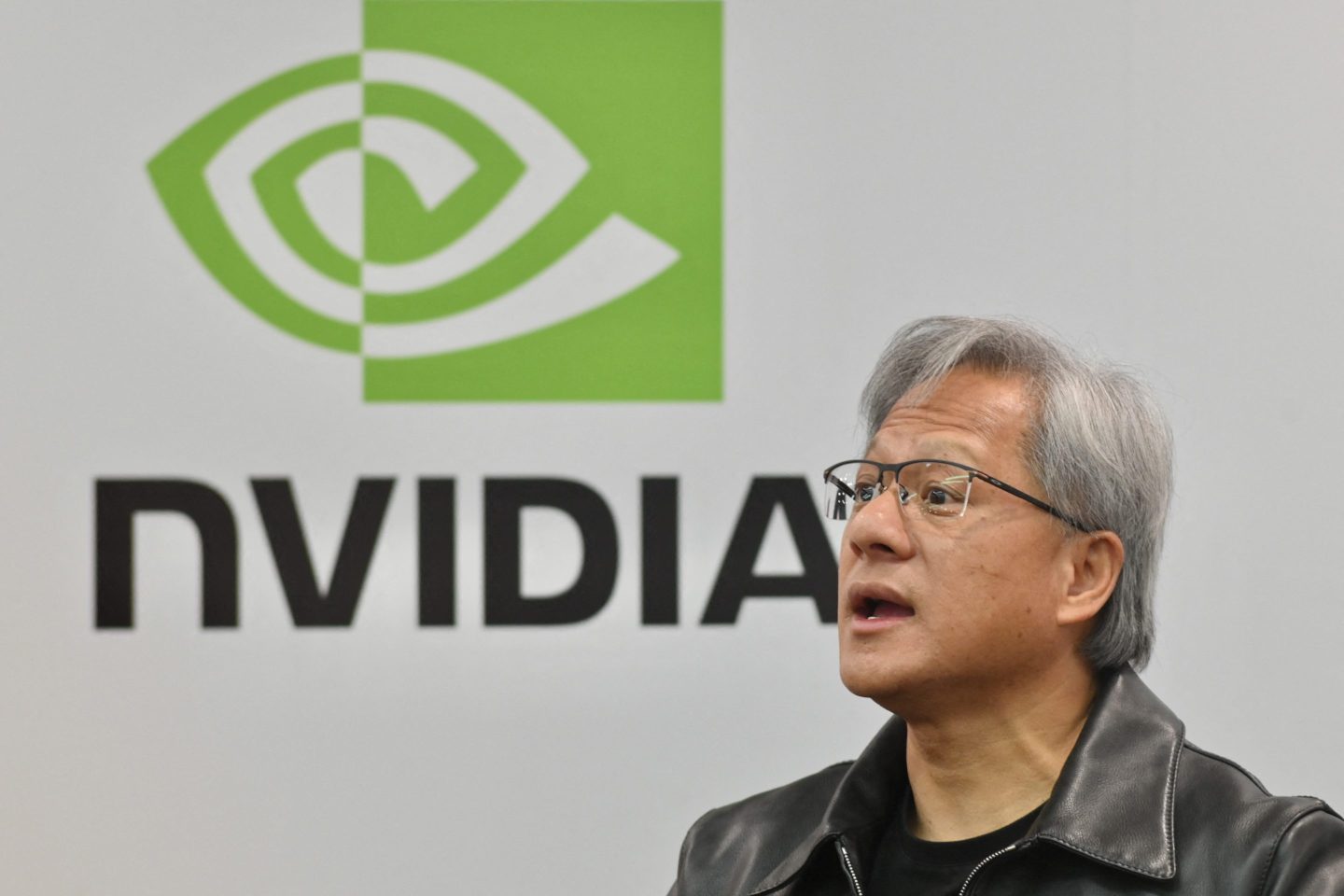
Nvidia CEO Jensen Huang
Nvidia CEO Jensen Huang.Sam Yeh

Investors have long had a love affair with U.S. tech stocks, from the boom cycle of the late 1990s and early 2000s that famously ended with the dotcom crash, to the AI-induced heights of Nvidia’s current stock rally. Love affairs, though, often end badly, and this one could leave investors nursing both an aching wallet and a broken heart. Artificial intelligence has officially thrust the U.S. tech industry into a bubble, and Silicon Valley could be on the precipice of another crash, according to an analyst note from BCA Research chief strategist Dhaval Joshi. 

Recommended Video

“We are in an AI bubble,” Joshi tells Fortune. “We’ve been wowed by some of the results.” 

Few stocks embodied that wow factor like the $1.7 trillion AI chip giant Nvidia, which reported earnings on Wednesday, blowing analyst expectations out of the water. The chipmaker—dubbed “the most important stock on planet earth” by a Goldman Sachs analyst—reported revenues of $22.1 billion during the last quarter, compared to a forecast of $20.6 billion. Revenues for the company’s data center chips, used in AI models and generative AI applications, reflected increased demand and reached $18.4 billion, up 27% from the third quarter and 409% compared to last year. Stock prices rose 7% in post-market trading, adding over $100 billion of value. 

“Accelerated computing and generative AI have hit the tipping point,” said Nvidia founder and chief executive Jensen Huang in a press release. “Demand is surging worldwide across companies, industries, and nations.”

While Joshi didn’t comment on Nvidia specifically, its outstanding results can be seen as evidence for his case. 

The tech sector is trading at a 75% premium to the global stock market, according to Joshi’s calculations in an analyst note published last week. Its scorching-hot growth became the backbone on which much of the rest of the U.S. stock market’s growth was built and drove the Nasdaq to near-record highs last year, just 6.5% off its all-time high in November 2021. In 2023, the so-called Magnificent Seven, which comprises Nvidia, Apple, Microsoft, Alphabet, Meta, Amazon, and Tesla, contributed two thirds of the S&P 500’s total market gains. 

And while those gains are impressive and remunerative for savvy investors, they’re unsustainable, according to Joshi. 

Unlike Nvidia, some companies won’t be able to live up to the lofty expectations the market sets. That could spell trouble because valuations and stock prices are often measured against expectations as much as actual results. If the major tech companies that make up much of the sector’s (and the economy’s) growth miss out on analyst expectations, they could drag others down with them. While he cautions against underestimating AI as a whole, Joshi believes the market is pricing in far too much productivity growth from the new technology. And when new innovations fail to live up to those expectations, the market will punish the companies that made them.  

“Because these handful of stocks have become such a massive percentage of the market cap, any disappointment there is mathematically going to have an impact on the overall index,” Joshi says. 

In order for the U.S. tech sector to avoid bubble territory, it would have to continue trading at a 10% premium to the market—a scenario which Joshi sees as unlikely. 

Joshi doesn’t blame the market for valuing tech companies so highly. In fact, they’ve proven their worth over the last 10 years by achieving stellar results time and time again. In the last decade the stocks of premier tech firms have soared. For example, since February 2014 Nvidia’s stock has risen 14,927%, Microsoft’s 964%, and Apple’s 875%. The numbers pale in comparison to the still-robust 163% the S&P 500 returned over the last 10 years. Even though he doesn’t believe it will continue, he says it is rational for the market to keep pricing in more explosive growth in tech. 

“If you get very strong earnings growth for one or two years, the market thinks of it the other way: ‘This can’t be sustained,’” Joshi says. “So if anything, you give it a low valuation, because you say these are abnormally high earnings.” But if the market sees 10 years of outstanding performance it no longer considers those results abnormal, coming to expect them in perpetuity, Joshi says. 

For Joshi, though, the last 10 years of blockbuster earnings growth were, in fact, abnormal—in large part because the bulk of that growth was a result of the network effect, which allowed a select few firms to balloon in size and effectively gain control of a market. Amazon captured the market for online shopping, Google did the same for search, and Meta cornered the market in online communication, Joshi writes in his note. 

“Once you have networks, you have winners and losers,” he says. “Those winners become natural monopolies, and if you’re a natural monopoly, then you’re in a very strong position to grow your profits.”

Without a clear indication that the network effect will translate to the world of AI, those companies won’t have the same dominant position, Joshi argues. “The market is saying, ‘Hey, the baton is going to be passed on now to generative AI and that will continue the trend for the next five to 10 years.’ I’m very cynical about that because there is no network effect in generative AI.” 

There is the possibility that some especially popular AI tools could see a network effect if they attract more users because they’ll be able to train themselves on all the tasks they get asked to perform. 

Even without AI, the benefits of the network effect could be reduced in the near future because of a push from elected officials to regulate Big Tech. “The Web 2.0 revolution has reached its limit because of consumer backlash and much harder, tougher regulation about what data you can collect and how you can use it.”  

In Europe, the EU has already passed several landmark pieces of legislation meant to break up some of the power that tech giants like Apple and Alphabet already have over the market. In the U.S., despite there being no national privacy law, there is an unprecedented level of bipartisan and public support for a series of new laws that would limit the amount and type of data that tech companies can collect on users.  

But despite the hurdles Joshi sees on the horizon for tech, he doesn’t anticipate the whole sector will come crashing down as it did in the dotcom bust. In fact, it will continue to outpace the overall market, just at a slower pace. That could still mean tough losses for investors, especially as the market eventually readjusts for a tech sector that no longer delivers hundredfold returns.  

To be sure, whether or not the market is in the midst of an AI bubble is still hotly debated. Joshi isn’t alone in thinking there is one. Morgan Stanley cautioned against racing headfirst into AI, lest investors not have an adequate lay of the land before the bubble bursts. Meanwhile Goldman Sachs and others argue that soaring returns aren’t a bubble, just the market rewarding the future of technology. 

As for what investors should do to mitigate the risks of a possible AI bubble, Joshi has some simple advice: Invest in other parts of the market like health care and luxury goods. 

Join us at the Fortune Workplace Innovation Summit May 19–20, 2026, in Atlanta. The next era of workplace innovation is here—and the old playbook is being rewritten. At this exclusive, high-energy event, the world’s most innovative leaders will convene to explore how AI, humanity, and strategy converge to redefine, again, the future of work. Register now.
About the Author
Paolo Confino
By Paolo ConfinoReporter

Paolo Confino is a former reporter on Fortune’s global news desk where he covers each day’s most important stories.

See full bioRight Arrow Button Icon

Latest in Tech

Finance
Lorem ipsum dolor sit amet, consectetur adipiscing elit, sed do eiusmod tempor incididunt ut labore et dolore magna aliqua. Ut enim ad minim veniam
By Fortune Editors
October 20, 2025
Finance
Lorem ipsum dolor sit amet, consectetur adipiscing elit, sed do eiusmod tempor incididunt ut labore et dolore magna aliqua. Ut enim ad minim veniam
By Fortune Editors
October 20, 2025
Finance
Lorem ipsum dolor sit amet, consectetur adipiscing elit, sed do eiusmod tempor incididunt ut labore et dolore magna aliqua. Ut enim ad minim veniam
By Fortune Editors
October 20, 2025
Finance
Lorem ipsum dolor sit amet, consectetur adipiscing elit, sed do eiusmod tempor incididunt ut labore et dolore magna aliqua. Ut enim ad minim veniam
By Fortune Editors
October 20, 2025
Finance
Lorem ipsum dolor sit amet, consectetur adipiscing elit, sed do eiusmod tempor incididunt ut labore et dolore magna aliqua. Ut enim ad minim veniam
By Fortune Editors
October 20, 2025
Finance
Lorem ipsum dolor sit amet, consectetur adipiscing elit, sed do eiusmod tempor incididunt ut labore et dolore magna aliqua. Ut enim ad minim veniam
By Fortune Editors
October 20, 2025

Most Popular

Finance
Lorem ipsum dolor sit amet, consectetur adipiscing elit, sed do eiusmod tempor incididunt ut labore et dolore magna aliqua. Ut enim ad minim veniam
By Fortune Editors
October 20, 2025
Finance
Lorem ipsum dolor sit amet, consectetur adipiscing elit, sed do eiusmod tempor incididunt ut labore et dolore magna aliqua. Ut enim ad minim veniam
By Fortune Editors
October 20, 2025
Finance
Lorem ipsum dolor sit amet, consectetur adipiscing elit, sed do eiusmod tempor incididunt ut labore et dolore magna aliqua. Ut enim ad minim veniam
By Fortune Editors
October 20, 2025
Finance
Lorem ipsum dolor sit amet, consectetur adipiscing elit, sed do eiusmod tempor incididunt ut labore et dolore magna aliqua. Ut enim ad minim veniam
By Fortune Editors
October 20, 2025
Finance
Lorem ipsum dolor sit amet, consectetur adipiscing elit, sed do eiusmod tempor incididunt ut labore et dolore magna aliqua. Ut enim ad minim veniam
By Fortune Editors
October 20, 2025
Finance
Lorem ipsum dolor sit amet, consectetur adipiscing elit, sed do eiusmod tempor incididunt ut labore et dolore magna aliqua. Ut enim ad minim veniam
By Fortune Editors
October 20, 2025
Rankings
  • 100 Best Companies
  • Fortune 500
  • Global 500
  • Fortune 500 Europe
  • Most Powerful Women
  • Future 50
  • World’s Most Admired Companies
  • See All Rankings
Sections
  • Finance
  • Leadership
  • Success
  • Tech
  • Asia
  • Europe
  • Environment
  • Fortune Crypto
  • Health
  • Retail
  • Lifestyle
  • Politics
  • Newsletters
  • Magazine
  • Features
  • Commentary
  • Mpw
  • CEO Initiative
  • Conferences
  • Personal Finance
  • Education
Customer Support
  • Frequently Asked Questions
  • Customer Service Portal
  • Privacy Policy
  • Terms Of Use
  • Single Issues For Purchase
  • International Print
Commercial Services
  • Advertising
  • Fortune Brand Studio
  • Fortune Analytics
  • Fortune Conferences
  • Business Development
About Us
  • About Us
  • Editorial Calendar
  • Press Center
  • Work At Fortune
  • Diversity And Inclusion
  • Terms And Conditions
  • Site Map
  • Facebook icon
  • Twitter icon
  • LinkedIn icon
  • Instagram icon
  • Pinterest icon

Most Popular

placeholder alt text
North America
'I meant what I said in Davos': Carney says he really is planning a Canada split with the U.S. along with 12 new trade deals
By Rob Gillies and The Associated PressJanuary 28, 2026
17 hours ago
placeholder alt text
C-Suite
Fortune 500 CEOs are no longer giving employees an A for effort. Now they want proof of impact
By Claire ZillmanJanuary 28, 2026
1 day ago
placeholder alt text
Real Estate
Ryan Serhant thinks the American Dream was just a 'slogan created by banks,' but it was really about FDR, the Great Depression, and an economic crisis
By Sydney Lake and Nick LichtenbergJanuary 26, 2026
3 days ago
placeholder alt text
Commentary
Yes, you're getting a bigger tax refund. Your kids won't thank you for the $3 trillion it's adding to the deficit
By Daniel BunnJanuary 26, 2026
3 days ago
placeholder alt text
Personal Finance
Current price of silver as of Tuesday, January 27, 2026
By Joseph HostetlerJanuary 27, 2026
2 days ago
placeholder alt text
Success
As AI wipes out desk jobs, Citigroup CEO Jane Fraser says the company is training 175,000 employees to ‘reinvent themselves’ before their roles change forever
By Emma BurleighJanuary 27, 2026
2 days ago

© 2026 Fortune Media IP Limited. All Rights Reserved. Use of this site constitutes acceptance of our Terms of Use and Privacy Policy | CA Notice at Collection and Privacy Notice | Do Not Sell/Share My Personal Information
FORTUNE is a trademark of Fortune Media IP Limited, registered in the U.S. and other countries. FORTUNE may receive compensation for some links to products and services on this website. Offers may be subject to change without notice.


Latest in Tech

Big TechRetail
Amazon is closing its futuristic Go and Fresh stores—showing logistics and tech aren’t enough to make old-school retail work
By Phil WahbaJanuary 29, 2026
9 minutes ago
Big TechTesla
Tesla reveals $2 billion investment in Elon Musk’s xAI and officially kills the Model S and Model X
By Jessica MathewsJanuary 28, 2026
6 hours ago
Bald man with glasses and black shirt.
Big TechFortune 500
Microsoft demand backlog doubles to $625 billion thanks to OpenAI, but hefty spending and slower revenue growth spook investors
By Amanda GerutJanuary 28, 2026
7 hours ago
MagazineSamsung
How Samsung’s first-ever chief design officer is reinventing the electronics giant for the AI age
By Nicholas GordonJanuary 28, 2026
9 hours ago
Mark Zuckerberg, chief executive officer of Meta Platforms Inc
AIMeta
Meta beats on Q4 revenue as Mark Zuckerberg predicts a ‘major AI acceleration’ in 2026—with up to $135 billion in capex spending to match
By Sharon GoldmanJanuary 28, 2026
10 hours ago
ServiceNow CEO Bill McDermott
InvestingServiceNow
ServiceNow stock falls despite earnings beat as CEO Bill McDermott tries to get investors to stop thinking of it as a SaaS company
By Jeremy KahnJanuary 28, 2026
11 hours ago