As if proximity bias weren’t a big enough problem, there’s another reason to be wary of avoiding the office altogether: If your boss doesn’t know you personally, they won’t stick their neck out to save your job.
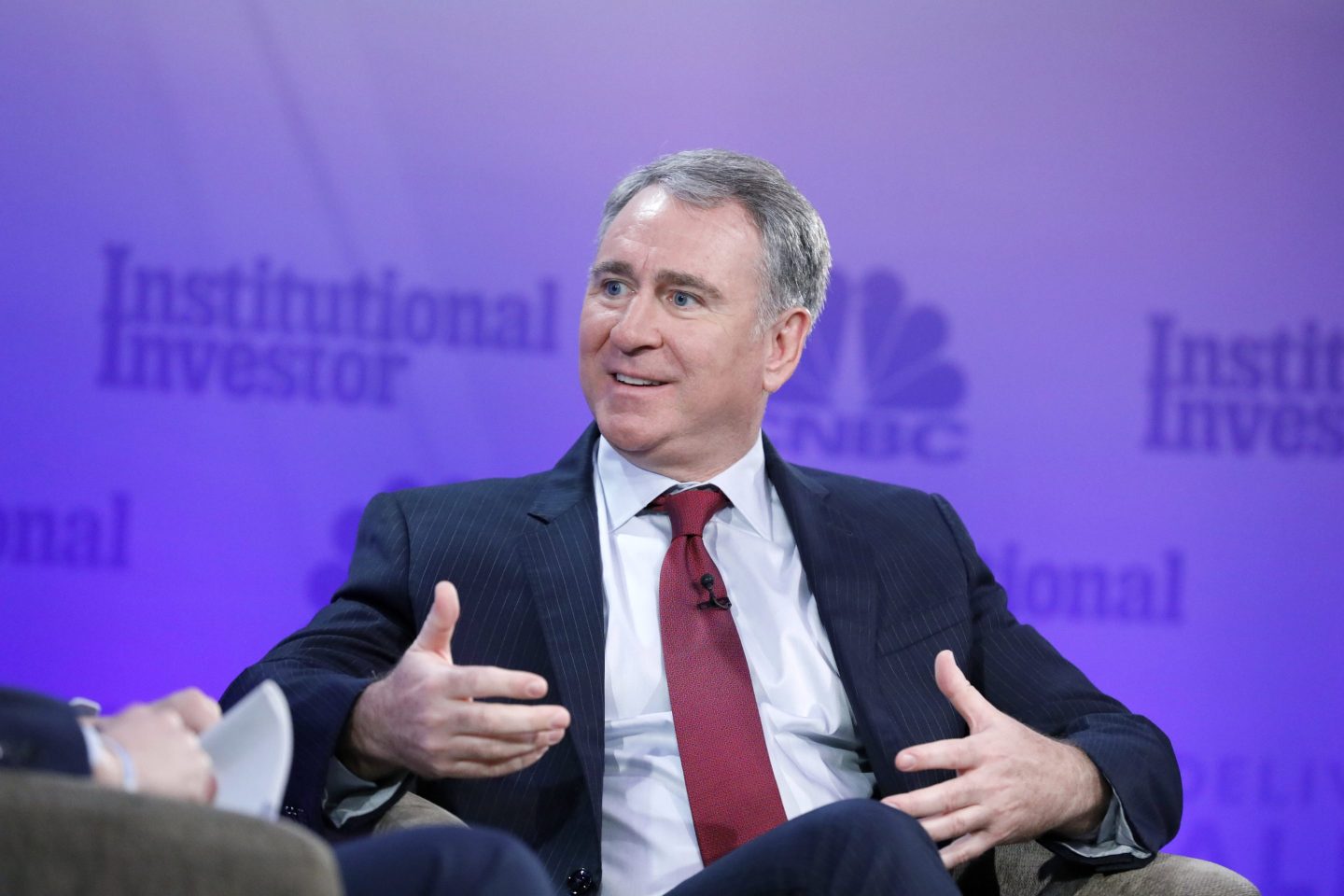
That’s according to Ken Griffin, the founder, CEO, co-chief investment officer, and majority owner of hedge fund giant Citadel. In a semi- or fully remote work environment, “the cultural or social contract that holds people together…is unquestionably weaker,” Griffin said on Tuesday at the Citadel Securities Global Macro Conference, per Bloomberg News. “That worries me in terms of willingness of corporate America to make cuts in the workforce.”
A disconnected—some might say unfeeling—workplace will be a “wild card” as industry leaders try to guess the unemployment rate going forward, Griffin went on. For his part, Griffin predicts unemployment will climb from 3.9% to hit the “low 4s” next year. But that still may be a modest estimate if bosses feel much more free to nix their employees if they never have to look them in the eye.
Indeed, we’ve entered the “era of remote layoffs,” University of Pennsylvania Wharton School of Management professor Peter Cappelli told Fortune’s Chloe Berger recently, in which saying goodbye to a worker over email or Zoom can be significantly less daunting. “If you’re a remote worker anyway, the idea that we’re gonna call you into the office just to lay you off is kind of cruel,” Cappelli added. PepsiCo., Google, and McDonald’s did just that.
On some level, Griffin agrees. “We have all read about companies that are firing thousands of people on Zoom calls,” he said. “There is no sense of ‘That is Jane who has worked down the hall from me for years. I will go the extra distance to try to keep Jane here.’” Rather, CEOs may feel emboldened to give an unceremonious send-off to workers who they didn’t get to know personally. “‘Here is the email to all, here is the video conference with a bunch of people, goodbye.’”
In-person workers still get a leg up—for better or worse
While Griffin’s description of a boss may be a bit more crass than most bosses would care to see themselves, it does hold a kernel of truth. Because remote work is still, in large part, in its infancy (just 5% of workers were fully remote prior to the pandemic) many bosses are still wrapping their heads around the idea of managing people they can’t see. As a result, some of the more intransigent managers have run into a whole host of issues. They’re more likely to micromanage, give their remote workforce less independence, and many even admit to spying on the workers whose desks they can’t pop by.
In a 2022 survey by virtual presentation company Prezi, over two-thirds of professionals said they believed in-person workers at their company get preferential treatment. Proximity bias used to be a niche problem, Prezi’s CEO Jim Szafranski told Fortune at the time. “But the moment we all went remote, that niche problem became a mainstream problem.”
That kind of favoritism might not even be conscious, but it can shake out to serious disadvantages for people who don’t primarily work in an office. Think: Missed promotions, less one-on-one time with company leaders, and lessened likelihood of being considered or thought of for key opportunities.
“Managers, like most people, tend to gravitate toward convenience,” Fortune’s Amber Burton wrote last year. “It’s a natural instinct, but one that can quickly breed inequity if an inclusive culture isn’t intentionally set by top brass.” That’s because flexible work is by far the preferred arrangement among women, workers of color, disabled workers, parents and caregivers—but offering up flexible arrangements stands to benefit everyone.
Yet Griffin’s comments lay bare an undeniable truth about in-person work, which even the pro-flexibility experts at WFH Research can admit: The collaboration, mentoring, and socializing you can get in the office is simply impossible to replicate remotely, which might make the lost sleep and gained commute (kind of) worth it. In-office workers, an April 2023 WFH Research report found, spent 25% more time on career development than their remote counterparts. They also spend more time mentoring or getting mentored themselves, and developing their professional skill set.
Griffin himself is a longstanding advocate of coming to work, even if it means less free time. He has credited his multinational hedge fund’s record-breaking $16 billion haul to its large-scale return to office mandate. He called in-person work “really powerful” in driving his business forward. It’s been his party line for years; early-career workers are “making a grave mistake not being back at work,” he told Bloomberg in 2021. Indeed, he added, the lost development opportunities for the younger cohort will “cost us dearly over the decades to come.”
“Bottom line, personal interactions among colleagues diminish by a significant amount when someone works from home,” WFH Research heads Nick Bloom and Jose Maria Barrero wrote in the April report. “That is a cost workers and firms pay in terms of slower on-the-job learning, in exchange for the flexibility and personal autonomy gained when working from home.”
When push comes to layoffs, as Griffin might suggest, it could also cost them their jobs.