Macau’s gamblers are hitting the tables again—and that’s proving to be good news for the casinos serving them.
The city, the only place in China that allows gambling, has had a tough few years. Travel plunged as both Macau and mainland China, its largest source of visitors, imposed tough quarantine restrictions. Casino revenue crashed, dropping Macau below its U.S. rival, Las Vegas, for the first time in years. And a regulatory crackdown targeted the Chinese high rollers who kept gaming companies flush with cash.
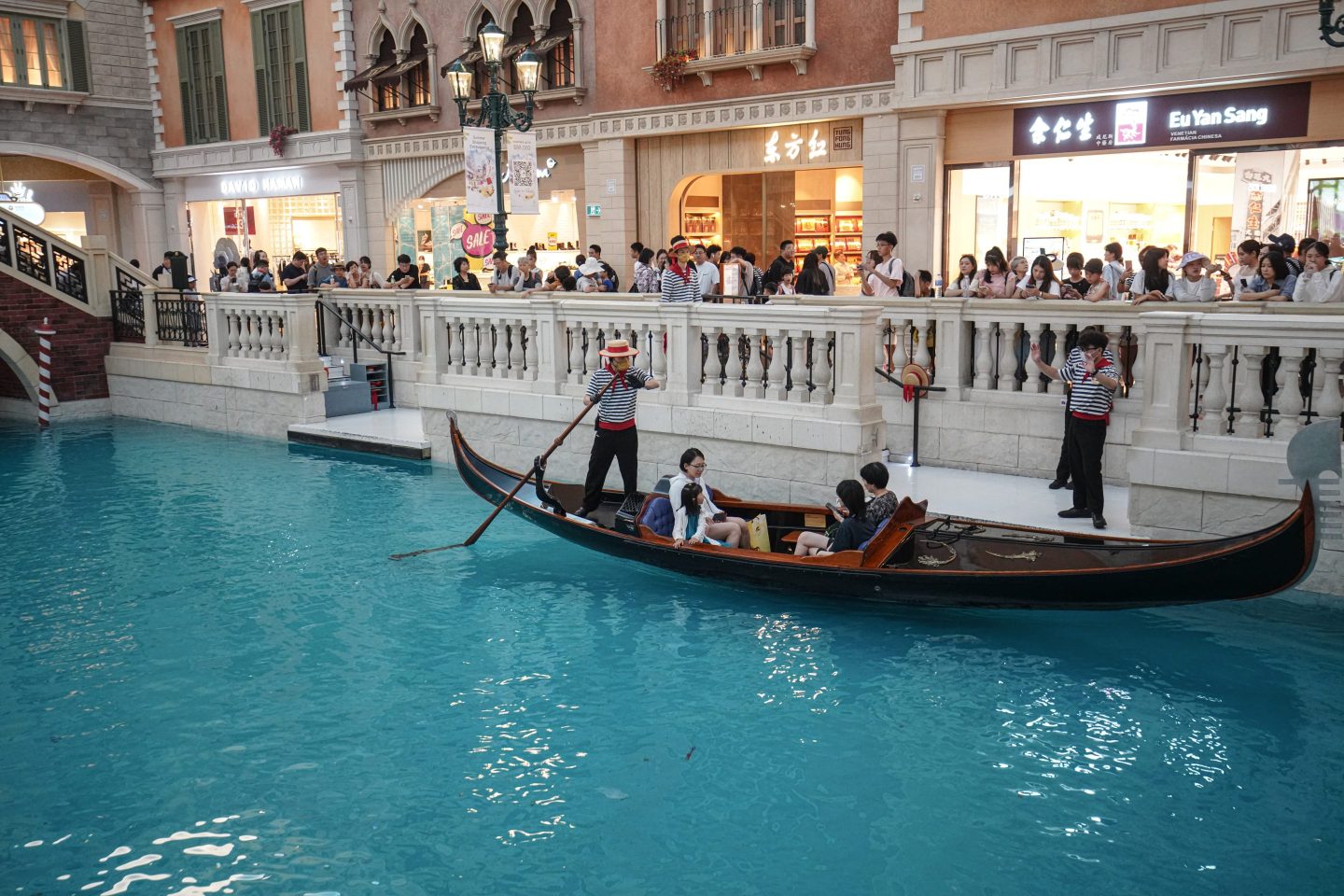
But punters are now flocking back to a newly opened Macau. And that energy is showing up in gaming company earnings, most recently with Las Vegas Sands, owner of Macau resorts like the Venetian and the Londoner.
On Wednesday, the U.S.-based company reported $2.8 billion in revenue for the most recent quarter, beating analyst estimates of $2.72 billion and over double the $1.01 billion reported last year. Shares in the gaming company rose over 5% in extended trading, following the release of the company’s earnings.
CEO Robert Goldstein said in a statement that he was “pleased” to see travel recover in Macau and Singapore, where the company operates another casino, and that the firm was “deeply enthusiastic about our opportunities for growth in both markets in the years ahead.”
Other Macau casinos are seeing a recovery, too. MGM China, which also operates in Macau, reported unaudited revenue of $1.2 billion for the first half of the year, double the amount from the year before. (MGM will report its latest quarterly earnings at the end of the month.) SJM Holdings, which runs the Grand Lisboa Palace Resort, is also reporting a 127% year-on-year jump in revenue for the first six months of 2023.
Despite its name, Las Vegas Sands makes the bulk of its revenue from Asia. Sheldon Adelson, its billionaire founder, pivoted to Asia with large investments in Macau and Singapore. The company no longer owns any properties on the Las Vegas Strip, after it sold the Venetian Resort in Las Vegas to VICI Properties and Apollo Global Management in a deal that was completed in 2022.
“Asia remains the backbone of the company,” Goldstein said back in 2021.
Macau is the only region in China where casino gambling is legal. (The city, like its neighbor Hong Kong, operates under a different legal structure from that of mainland China). Before the COVID pandemic, the gaming industry contributed over half the city’s GDP and employed about 17% of the city’s 600,000 residents. Macau’s casinos generated about $36 billion in revenue in 2019; Nevada, despite being home to Las Vegas, reported just under $12 billion in gambling revenue over the same period.
Yet the complete collapse of travel during the pandemic hit the city hard. Macau, like other jurisdictions in China, imposed strict weeks-long quarantines on arrival, including from the neighboring city of Hong Kong. Just 5.9 million people visited Macau in 2020, down from 39 million just one year earlier.
Beijing also cracked down on so-called junkets, organized tours that allegedly help high rollers evade capital controls and move large sums of money back and forth across the border with Macau. Authorities have arrested two high-profile junket operators since November 2021.
Macau is also looking for ways to diversify its economy away from gambling, with the city’s administration secretary, Cheong Weng Chon, asking gaming companies to invest “in non-gaming businesses” after renewing their casino licenses last year. As part of its renewal, Sands promised to invest $3.8 billion in new facilities over the next decade with more than 90% going to non-casino attractions.
The repeal of COVID controls is allowing tourists to come back and start gambling. Quarantine-free travel across the land border with mainland China resumed in August 2022, and Macau removed all quarantine restrictions in January.
Gaming revenue in Macau crossed $2 billion in August, again overtaking Nevada and Las Vegas, which reported $1.2 billion in revenue. And China’s crackdown means a different kind of visitor is going to Macau: With the junket market effectively extinct, it’s now mass-market tourists who are heading to the city to gamble, shop, and enjoy themselves, according to the Wall Street Journal.
Sands’ better-than-expected quarter comes despite arrivals not fully returning to pre-pandemic levels. In its earnings statement, the company said arrivals from mainland China, excluding the neighboring province of Guangdong, were now at 72% of pre-pandemic levels.
Las Vegas Sands owns five properties in Macau including its big moneymaker, the Venetian Macao.
Singapore, the home of Sands’ Marina Bay Sands resort, is also seeing tourist numbers recover. There were more than 1.1 million international arrivals to the city-state in September, a 44.5% increase compared with the same period last year.