• Home
  • Latest
  • Fortune 500
  • Finance
  • Tech
  • Leadership
  • Lifestyle
  • Rankings
  • Multimedia
EnvironmentCalifornia

Apple and Patagonia love Gavin Newsom’s move to make big firms disclose their emissions—Chevron and Exxon are going to have to fess up

By
Lily Hsueh
Lily Hsueh
and
The Conversation
The Conversation
Down Arrow Button Icon
By
Lily Hsueh
Lily Hsueh
and
The Conversation
The Conversation
Down Arrow Button Icon
October 10, 2023, 2:28 PM ET
Gavin Newsom
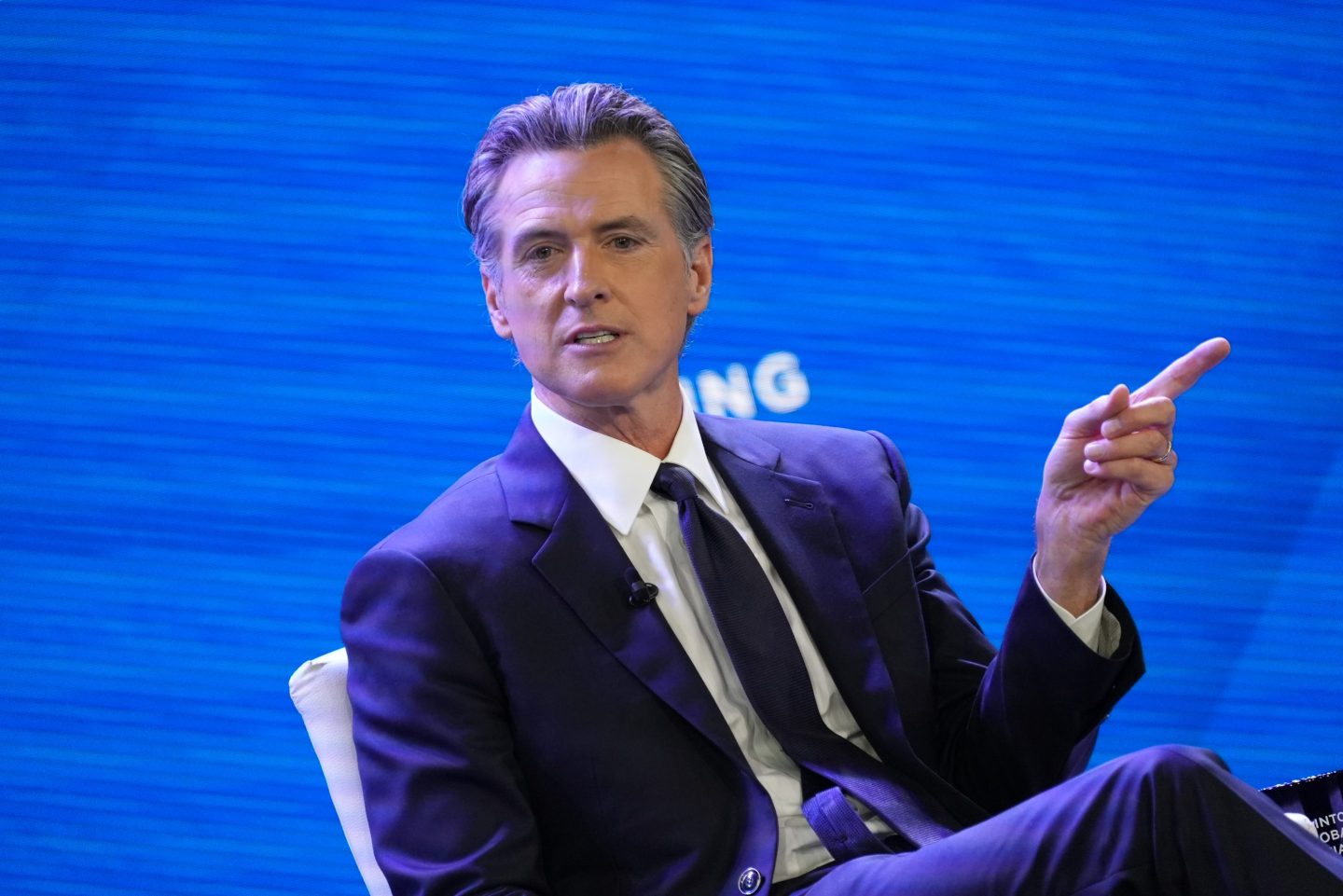
California Gov. Gavin Newsom just took a huge step forward on greenhouse gas emissions.John Nacion/WireImage

Many of the world’s largest public and private companies will soon be required to track and report almost all of their greenhouse gas emissions if they do business in California – including emissions from their supply chains, business travel, employees’ commutes and the way customers use their products.

Recommended Video

That means oil and gas companies like Chevron will likely have to account for emissions from vehicles that use their gasoline, and Apple will have to account for materials that go into iPhones.

It’s a huge leap from current federal and state reporting requirements, which require reporting of only certain emissions from companies’ direct operations. And it will have global ramifications.

California Gov. Gavin Newsom signed two new rules into law on Oct. 7, 2023. Under the new Climate Corporate Data Accountability Act, U.S.- companies with annual revenues of $1 billion or more will have to report both their direct and indirect greenhouse gas emissions starting in 2026 and 2027. The California Chamber of Commerce opposed the regulation, arguing it would increase companies’ costs. But more than a dozen major corporations endorsed the rule, including Microsoft, Apple, Salesforce and Patagonia.

The second law, the Climate-Related Financial Risk Act, requires companies generating $500 million or more to report their financial risks related to climate change and their plans for risk mitigation.

As a professor of economics and public policy, I study corporate environmental behavior and public policy, including whether disclosure laws like these work to reduce emissions. I believe California’s new rules represent a significant step toward mainstreaming corporate climate disclosures and potentially meaningful corporate climate actions.

Many big corporations are already reporting

Most of the companies covered by California’s climate disclosure rules are multinational corporations. They include technology companies such as Apple, Google and Microsoft; giant retailers like Walmart and Costco; and oil and gas companies such as ExxonMobil and Chevron.

Many of these large corporations have been preparing for mandatory disclosure rules for several years.

Close to two-thirds of the companies listed in the S&P 500 index voluntarily report to CDP, formerly called the Carbon Disclosure Project. CDP is a nonprofit that surveys companies on behalf of institutional investors about their carbon management and plans to reduce carbon emissions.

Many of them also face reporting requirements elsewhere, including in the European Union, the United Kingdom, New Zealand, Singapore and cities like Hong Kong.

Moreover, some of the same U.S. companies, notably banks and asset managers that operate or sell products in Europe, have already started to comply with the EU’s Sustainable Finance Disclosure Regulation. Those regulations require companies to report how sustainability risks are integrated into investment decision-making.

While California isn’t the first place to mandate climate disclosures, it is the fifth-largest economy in the world. So, the state’s new laws are poised to have substantial influence worldwide. Subsidiaries of companies that didn’t have to report their emissions before will now be subject to disclosure requirements. California is in effect exercising its immense market leverage to establish climate disclosures as standard practice in the U.S. and beyond.

California also has a history of being a test bed for future federal U.S. policies. The U.S. government is considering broader emissions reporting requirements. But California’s new rules go further than either the U.S. Securities and Exchange Commission’s proposed corporate climate disclosure rules or President Joe Biden’s proposed disclosure rules for federal contractors.

The most controversial part of the new disclosure rules involves scope 3 emissions. These are emissions from a company’s suppliers and its consumers’ use of its products, and they are notoriously difficult to track accurately.

California’s new emissions reporting law directs the California Air Resources Board, which will develop the regulations and administer them, to allow some leeway in scope 3 reporting as long as the reports are made with a reasonable basis and disclosed in good faith. It’s also important to note that at this point the disclosure laws don’t require companies to cut these emissions, only to report them. But tracking scope 3 emissions does highlight where companies could pressure suppliers to make changes.

What can disclosures achieve?

The plethora of climate disclosure mandates globally suggest that policymakers and investors around the world perceive climate disclosures as driving actions that protect the environment. The big question is: Do disclosure rules actually work to reduce emissions?

My research shows that voluntary carbon disclosure systems like CDP’s that focus on reporting corporate sustainability outputs, such as having science-based emissions targets, tend not to be as effective as those that focus on outcomes, such as a company’s actual carbon emissions.

For example, a company could earn an A or B grade from CDP and still increase its entitywide carbon emissions, notably when it does not face regulatory pressure.

In contrast, a recent study of the U.K.’s 2013 disclosure mandate for U.K.-incorporated listed firms found that companies reduced their operational emissions by about 8% relative to a control group, with no significant changes to their profitability. When companies report their emissions, they can gain important knowledge about inefficiencies in their operations and supply chains that weren’t evident before.

Ultimately, a well-designed disclosure program, whether voluntary or mandatory, needs to focus on consistency, comparability and accountability. Those traits allow companies to demonstrate that their climate pledges and actions are real and not just a front for greenwashing.

Lily Hsueh is Associate Professor of Economics and Public Policy, Arizona State University.

This article is republished from The Conversation under a Creative Commons license. Read the original article.

Join us at the Fortune Workplace Innovation Summit May 19–20, 2026, in Atlanta. The next era of workplace innovation is here—and the old playbook is being rewritten. At this exclusive, high-energy event, the world’s most innovative leaders will convene to explore how AI, humanity, and strategy converge to redefine, again, the future of work. Register now.
About the Authors
By Lily Hsueh
See full bioRight Arrow Button Icon
By The Conversation
See full bioRight Arrow Button Icon

Latest in Environment

Finance
Lorem ipsum dolor sit amet, consectetur adipiscing elit, sed do eiusmod tempor incididunt ut labore et dolore magna aliqua. Ut enim ad minim veniam
By Fortune Editors
October 20, 2025
Finance
Lorem ipsum dolor sit amet, consectetur adipiscing elit, sed do eiusmod tempor incididunt ut labore et dolore magna aliqua. Ut enim ad minim veniam
By Fortune Editors
October 20, 2025
Finance
Lorem ipsum dolor sit amet, consectetur adipiscing elit, sed do eiusmod tempor incididunt ut labore et dolore magna aliqua. Ut enim ad minim veniam
By Fortune Editors
October 20, 2025
Finance
Lorem ipsum dolor sit amet, consectetur adipiscing elit, sed do eiusmod tempor incididunt ut labore et dolore magna aliqua. Ut enim ad minim veniam
By Fortune Editors
October 20, 2025
Finance
Lorem ipsum dolor sit amet, consectetur adipiscing elit, sed do eiusmod tempor incididunt ut labore et dolore magna aliqua. Ut enim ad minim veniam
By Fortune Editors
October 20, 2025
Finance
Lorem ipsum dolor sit amet, consectetur adipiscing elit, sed do eiusmod tempor incididunt ut labore et dolore magna aliqua. Ut enim ad minim veniam
By Fortune Editors
October 20, 2025

Most Popular

Finance
Lorem ipsum dolor sit amet, consectetur adipiscing elit, sed do eiusmod tempor incididunt ut labore et dolore magna aliqua. Ut enim ad minim veniam
By Fortune Editors
October 20, 2025
Finance
Lorem ipsum dolor sit amet, consectetur adipiscing elit, sed do eiusmod tempor incididunt ut labore et dolore magna aliqua. Ut enim ad minim veniam
By Fortune Editors
October 20, 2025
Finance
Lorem ipsum dolor sit amet, consectetur adipiscing elit, sed do eiusmod tempor incididunt ut labore et dolore magna aliqua. Ut enim ad minim veniam
By Fortune Editors
October 20, 2025
Finance
Lorem ipsum dolor sit amet, consectetur adipiscing elit, sed do eiusmod tempor incididunt ut labore et dolore magna aliqua. Ut enim ad minim veniam
By Fortune Editors
October 20, 2025
Finance
Lorem ipsum dolor sit amet, consectetur adipiscing elit, sed do eiusmod tempor incididunt ut labore et dolore magna aliqua. Ut enim ad minim veniam
By Fortune Editors
October 20, 2025
Finance
Lorem ipsum dolor sit amet, consectetur adipiscing elit, sed do eiusmod tempor incididunt ut labore et dolore magna aliqua. Ut enim ad minim veniam
By Fortune Editors
October 20, 2025
Rankings
  • 100 Best Companies
  • Fortune 500
  • Global 500
  • Fortune 500 Europe
  • Most Powerful Women
  • Future 50
  • World’s Most Admired Companies
  • See All Rankings
Sections
  • Finance
  • Leadership
  • Success
  • Tech
  • Asia
  • Europe
  • Environment
  • Fortune Crypto
  • Health
  • Retail
  • Lifestyle
  • Politics
  • Newsletters
  • Magazine
  • Features
  • Commentary
  • Mpw
  • CEO Initiative
  • Conferences
  • Personal Finance
  • Education
Customer Support
  • Frequently Asked Questions
  • Customer Service Portal
  • Privacy Policy
  • Terms Of Use
  • Single Issues For Purchase
  • International Print
Commercial Services
  • Advertising
  • Fortune Brand Studio
  • Fortune Analytics
  • Fortune Conferences
  • Business Development
About Us
  • About Us
  • Editorial Calendar
  • Press Center
  • Work At Fortune
  • Diversity And Inclusion
  • Terms And Conditions
  • Site Map
  • Facebook icon
  • Twitter icon
  • LinkedIn icon
  • Instagram icon
  • Pinterest icon

Latest in Environment

A Very Large Crude Carrier from Greece unloads in China in 2020.
Energycrude oil
The Trump administration is touting approvals for oil-exporting hubs in the Gulf of Mexico—but no one seems to want to build them
By Jordan BlumFebruary 10, 2026
55 minutes ago
LawDonald Trump
Trump torpedoed Biden’s $1 billion plan to save American salmon, leaving species ‘on the brink of extinction’
By Claire Rush and The Associated PressFebruary 6, 2026
4 days ago
sam wolf
Commentaryactivist investing
Activist investors are more dangerous to CEOs than ever. Here are 3 ways to safeguard your leadership
By Sam WolfFebruary 5, 2026
5 days ago
Nevada Assemblyman Howard Watts
LawThe Boring Company
Key Nevada legislator says lawmakers will push for independent audit of altered public record in Nevada OSHA’s Boring Company inspection 
By Jessica MathewsFebruary 4, 2026
5 days ago
electricity
EnvironmentElectricity
Over a million people are losing power during a freezing snowstorm while data centers nearby guzzle electricity
By Nikki Luke, Conor Harrison and The ConversationFebruary 4, 2026
5 days ago
thiel
PoliticsBillionaires
Peter Thiel warns the Antichrist and apocalypse are linked to the ‘end of modernity’ currently happening—and cites Greta Thunberg as a driving example
By Nick LichtenbergFebruary 4, 2026
6 days ago

Most Popular

placeholder alt text
C-Suite
Meet Jody Allen, the billionaire owner of the Seattle Seahawks, who plans to sell the team and donate the proceeds to charity
By Jake AngeloFebruary 9, 2026
14 hours ago
placeholder alt text
AI
As billionaires bail, Mark Zuckerberg doubles down on California with $50 million donation
By Sydney LakeFebruary 9, 2026
16 hours ago
placeholder alt text
Economy
China might be beginning to back away from U.S. debt as investors get nervous about overexposure to American assets
By Eleanor PringleFebruary 9, 2026
21 hours ago
placeholder alt text
Economy
Elon Musk warns the U.S. is '1,000% going to go bankrupt' unless AI and robotics save the economy from crushing debt
By Jason MaFebruary 7, 2026
3 days ago
placeholder alt text
Commentary
America marks its 250th birthday with a fading dream—the first time that younger generations will make less than their parents
By Mark Robert Rank and The ConversationFebruary 8, 2026
2 days ago
placeholder alt text
Economy
Russian officials are warning Putin that a financial crisis could arrive this summer, report says, while his war on Ukraine becomes too big to fail
By Jason MaFebruary 8, 2026
1 day ago

© 2026 Fortune Media IP Limited. All Rights Reserved. Use of this site constitutes acceptance of our Terms of Use and Privacy Policy | CA Notice at Collection and Privacy Notice | Do Not Sell/Share My Personal Information
FORTUNE is a trademark of Fortune Media IP Limited, registered in the U.S. and other countries. FORTUNE may receive compensation for some links to products and services on this website. Offers may be subject to change without notice.