There hasn’t been a fight like this since the Yankees and Red Sox rivalry peaked in ’04.
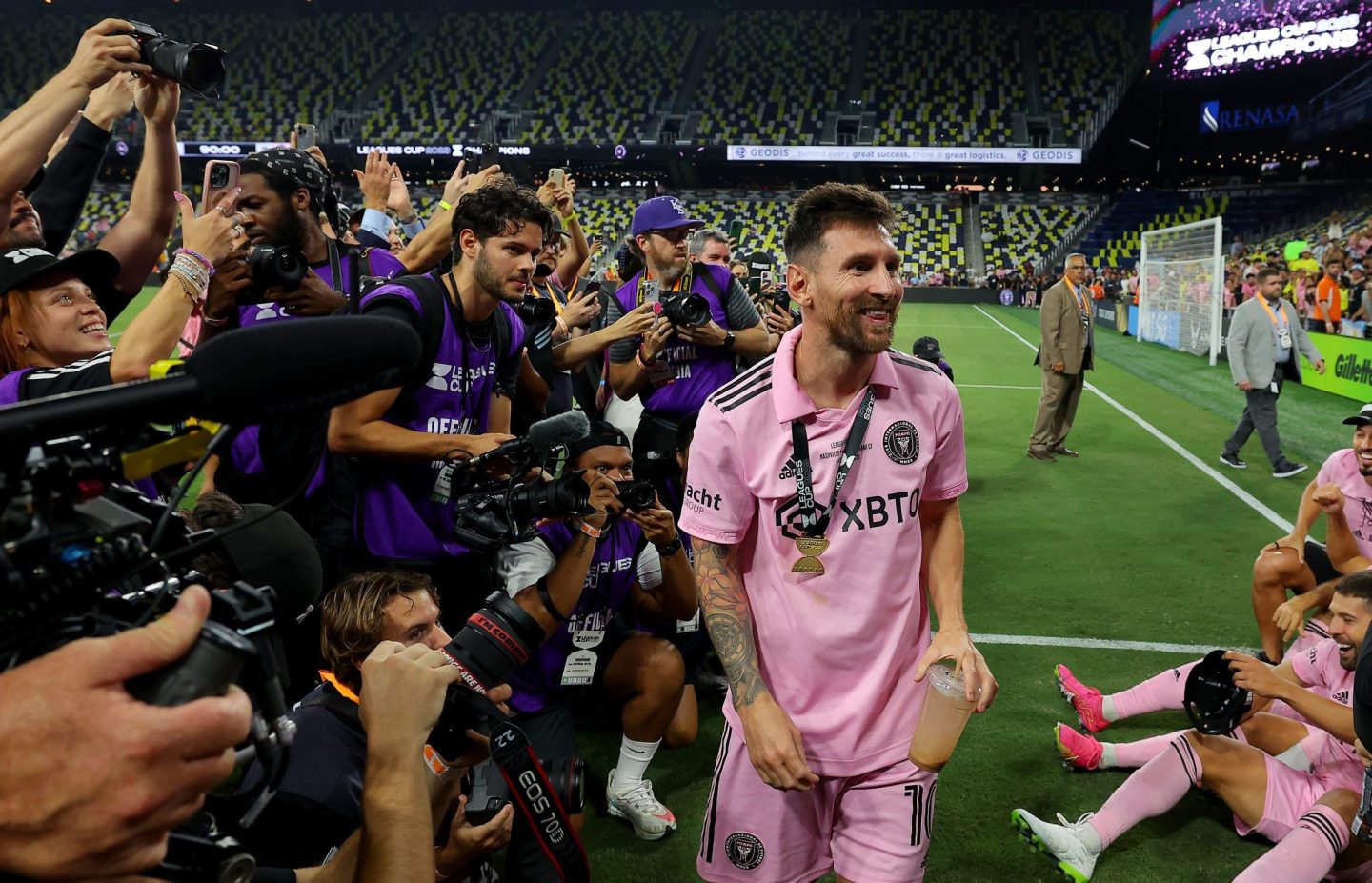
Amazon Prime snapped up the rights to Thursday Night Football, replacing Fox and NFL Network. YouTube scooped the Sunday Ticket, or out-of-market NFL games on Sundays, from DirecTV’s 30-year grasp. And Apple seized exclusive rights to Friday Night Baseball and Major League Soccer, including helping persuade superstar player Lionel Messi to join Miami’s team to create blockbuster programming.
Live sports have become a key battleground in the streaming wars that will decide the entertainment landscape for decades to come. It’s among the few kinds of entertainment left that millions of people will make time for in their ever-busier schedules and pay top dollar to watch.
In an effort to attract new subscribers and lock in existing ones, the tech industry’s streaming giants are using their deep pockets to buy up exclusive rights to big-time pro sports. They’re facing off against the cable and broadcasting incumbents—ESPN, CBS, NBC, and Fox, which have been pushing into streaming for years, but have only recently started making a full-court press into streaming sports now that it’s clear online has won. “Sports are absolutely critical,” Bank of America analyst Jessica Reif Ehrlich tells Fortune.
The fight comes after more than a decade of consumers increasingly canceling their cable and satellite TV subscriptions in favor of streaming services. Even if some events remain on traditional television, it’s a foregone conclusion that streaming will soon become home to the bulk of live sports.
Amazon has used its deep pockets to sign deals for a variety of pro sports. In addition to its $1 billion annual NFL deal, it exclusively broadcasts some WNBA games and Europe’s top soccer tournament, the Champions League. By adding sports to its streaming lineup, Amazon is hoping to drive new subscribers to Prime, its all-encompassing e-commerce package. Those subscribers are more likely to shop with Amazon and do so more frequently.
Meanwhile, Apple is using its war chest to score a few home runs rather than a bunch of singles. Eddy Cue, who leads the company’s streaming business, has said he wants to buy rights for sports that have a global reach, rather than games that appeal to only a specific country or region. It’s unclear exactly how many subscribers the MLS deal added, but Messi’s first game in September drove 110,000 subscribers in one day to Apple’s streaming service, Apple TV+, the Wall Street Journal reported.
In deciding who to sell the soccer rights to, MLS executive Seth Bacon’s response reflects the frenzy to dominate sports streaming. “If you could name a company, we talked to them about our media rights,” he tells Fortune. In the end, the iPhone maker ended up offering the distribution, recognition, quality, and marketing that the MLS was looking for. “They’re the biggest subscription seller in the world,” Bacon says. “Now, it’s less about where to position ourselves in the media landscape and more about continually improving the offering we have.”
Apple and Amazon declined interview requests.
Meanwhile, Alphabet’s YouTube is pushing a different strategy: providing “a comprehensive offering to sports fans,” Jon Cruz, YouTube’s sports partnerships head, tells Fortune. In addition to the Sunday Ticket, it offers YouTube TV, a cable substitute that gives subscribers access to local games playing on ABC, CBS, and more. Teams and leagues can share highlights and behind-the-scenes content through their YouTube channels, and creators provide commentary on their own. The company declined to share data on Sunday Ticket viewership or subscriber numbers. “It was a leap that was quite large and different from some of the others we’ve taken in the past,” Cruz said about buying the NFL rights. “But we take solace in seeing the fandom [grow].”
Can old dogs learn new tricks?
Meanwhile, legacy media companies are scrambling to keep up with the shift in consumer behavior by trying to outbid the digital-first companies for online sports rights. Despite proclaiming streaming as the future, they have been slow to transition sports viewing to wholly online.
Part of the delay is due to internal politics and economics. Emphasizing streaming, at least in the short term, is a big money loser, and it also means cannibalizing their existing and profitable broadcasting and cable businesses. “None of the traditional media companies are profitable in streaming, so as they transition their businesses, sports are absolutely critical,” Reif Ehrlich tells Fortune. Exclusive sports rights on streaming can attract subscribers and big advertisers, which will help recoup money lost from leaving cable.
Amazon and Apple have been aggressive in pursuing expensive sports rights, but traditional media companies have held their own, Reif Ehrlich said. Many simultaneously broadcast games across cable and streaming to reach a larger audience.
The parent companies behind Peacock (owned by NBC parent Comcast) and Paramount+ (owned by CBS parent Paramount Global) have taken a similar approach in simulcasting games and acquiring exclusive rights for streaming. They both show NFL games across their television channels and streaming platforms. Peacock will exclusively air the first NFL playoff game in January, and Paramount+ is the sole broadcaster for Premier League soccer games in Mexico and some Central American countries.
Max (owned by TBS and TNT parent Warner Bros. Discovery) is in a similar position, but has taken a different approach. It plans an add-on sports tier for its service later this year, costing an extra $9.99 per month, that will show the same games as its cable partners, including NBA, MLB, and March Madness games. “Our peers are essentially giving away sports for free,” JB Perrette, Warner Bros. Discovery sports head, told the Wall Street Journal. “That is not the right model.”
ESPN recently inked new deals with the NHL and the powerhouse SEC conference for college football and basketball, after ending two of the longest media relationships in the industry. It declined to renew rights for the MLS and Big Ten football and basketball, reportedly because it was unwilling to pay for nonexclusive soccer and the increased price that came with the college league. The move shows ESPN is not afraid to sever ties with longtime partners to protect its profitability.
Disney, ESPN’s parent, has largely kept the sports network separate from its sister streaming service, ESPN+, which has a handful of its own rights and rarely simulcasts the same programs as its cable partner. Executives agree ESPN’s future isn’t in linear television. “Taking our ESPN flagship channels direct-to-consumer is not a matter of if but when,” Disney CEO Bob Iger said during an August earnings call. Disney is looking for another company to take a minority stake in ESPN to aid this launch, which isn’t expected until at least 2025.
Traditional media companies have different motivations than the tech sharks that are new to the game. They generate revenue from ads and subscriptions, so they need full, year-round sports schedules to make money, according to Reif Ehrlich. “That’s why the NBA and football are critical,” she says, because they fill programming slots for most of the year and attract big advertisers.
The NBA’s rights will be the subject of the next high-profile sports rights battle. The league’s existing contract with Disney and Warner Bros. Discovery expires at the end of the 2025 season, and nearly every major media player has reportedly expressed interest.
Still, one powerhouse—Netflix—remains on the sidelines. While the company has reportedly held talks with sports leagues about acquiring rights, it hasn’t brought any home. Netflix hasn’t found a way to make live sports profitable, co-CEO Ted Sarandos said during the company’s January earnings call. Instead, the company is producing related programming that isn’t as time sensitive—docuseries following athletes through their seasons, like Formula 1: Drive to Survive; Break Point, a series that follows pro tennis; and Full Swing, which gives an inside look at the PGA tour. “We want to engage the sports junkie, but we also want to engage a casual viewer or a non-fan by telling the stories that are beyond [those of] a live game,” Gabe Spitzer, Netflix’s vice president of nonfiction sports, tells Fortune.
Spitzer wouldn’t disclose whether Netflix will bid on live sports in the future. The game plan is to tell more global sports stories through docuseries, he said. While the company isn’t talking about its plans in live sports, Reif Ehrlich says, “Never say never.”