• Home
  • News
  • Fortune 500
  • Tech
  • Finance
  • Leadership
  • Lifestyle
  • Rankings
  • Multimedia
Commentarysuccess

Burnout is attacking our brains and making it harder to excel at work. ‘Deliberate calm’ can help us adapt

By
Jacqueline Brassey
Jacqueline Brassey
and
Aaron de Smet
Aaron de Smet
Down Arrow Button Icon
By
Jacqueline Brassey
Jacqueline Brassey
and
Aaron de Smet
Aaron de Smet
Down Arrow Button Icon
September 19, 2023, 6:55 AM ET
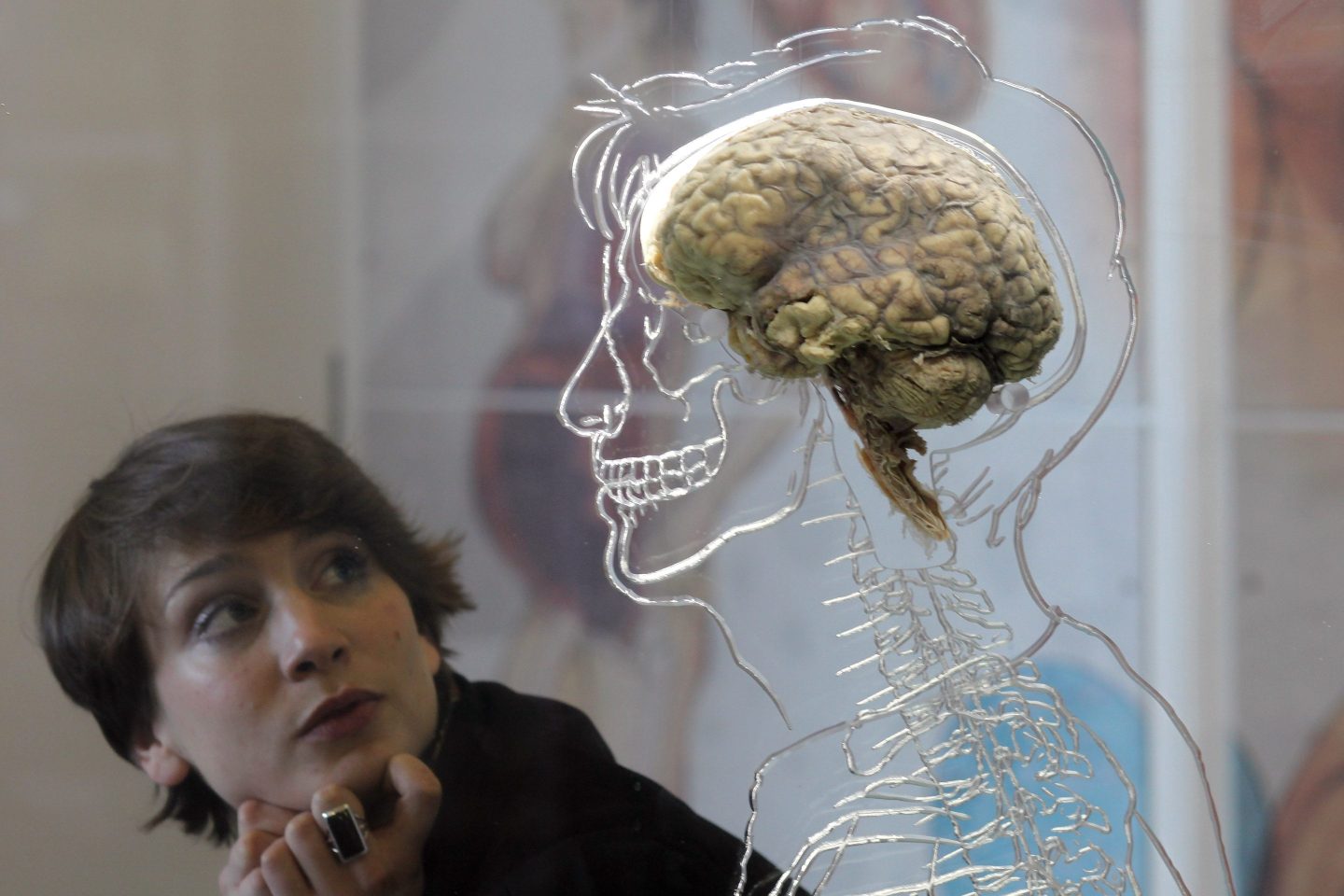
As stress rises, the prefrontal cortex, which is involved in executive functions such as planning, working memory, emotion processing, and cognitive flexibility, can become challenged.
As stress rises, the prefrontal cortex, which is involved in executive functions such as planning, working memory, emotion processing, and cognitive flexibility, can become challenged. Matt Cardy - Getty Images

We’ve all learned to be resilient. The pandemic taught us that if nothing else. We’ve learned to get back up after a setback, to keep pressing forward, put in the time, do the work, and carry on. That’s no longer enough.

Think back to a couple of weeks before your last vacation. You were trying to wrap up a million projects at work before heading out while juggling shopping, travel plans, and perhaps even feeling sick. Your attention was divided as you bounced from task to task. You might have lost your temper, forgotten recent conversations, or slept poorly.

This happens regularly to many of us–throughout the year. A recent McKinsey Health Institute survey found that a quarter of workers are suffering from burnout symptoms. Nearly a third are experiencing distress. For many people, short-term memory is on overdrive. Without enough time to recover, nothing has time to be processed into long-term memory, which leads to feelings of being overwhelmed. In response, we move into a protective mindset instead of one that is open and ready to learn.

When the challenges we’re facing are familiar, this protective mindset may be fine. However, much of what we’re facing today–supply chain challenges, economic uncertainty, accelerated technological change–may be unfamiliar. We need to be able to think with an open mind, access the executive functioning part of our brain, innovate, and learn to succeed in high-stakes, unfamiliar situations.

According to scientific research, when our brain predicts that we will stay safe, it’s easy to be calm and ready to learn. However, if our brain predicts danger, we want to find refuge in what we already know has worked for us in the past. As stress rises, the prefrontal cortex, which is involved in executive functions such as planning, working memory, emotion processing, and cognitive flexibility, can become challenged. At the very moments when we most need to learn and adapt, we physically can’t.

The good news is there is a way to interrupt this cycle, make better decisions under stress, and lessen the experience of burnout: deliberate calm. “Deliberate” refers to the choice you have in how you experience and react to any given situation. “Calm” refers to staying focused and present under pressure, amidst volatility, without being swept away by your instinctive reactions. Deliberate calm improves your ability to rise to the occasion and act with intention and purpose during the most stressful, unfamiliar situations we can imagine.

If you learn to practice deliberate calm, you’ll first learn to achieve dual awareness–an understanding of what you’re thinking, feeling, and experiencing on the inside and what’s happening around you, on the outside. You’ll learn to read situations objectively to determine what’s most needed in each one and avoid falling into your reflexive traps.

Over time, through the regular practice of deliberate calm, you’ll build emotional self-regulation skills and learning agility even during periods of high stress.

This approach goes beyond the familiar (and important) idea of resilience (the ability to bounce back) and focuses on adaptability, which is more about taking a challenge and turning it into an opportunity to advance–bouncing forward. Higher levels of adaptability in the workplace are associated with better performance, confidence, and creative output. Indeed, adaptability may be the single most important predictor of individual performance and potential. Adaptability is also crucial for psychological and physical well-being and is linked to higher levels of overall life satisfaction and reduced burn-out. In our work with global companies, we have seen precisely these outcomes.

Even so, employers generally seem content to value adaptability rather than to develop it. Nine out of 10 of employers who responded to our survey agreed that adaptability is a top workplace skill–but only one out of 10 offers related capability building. Through deliberate calm, we can change adversity into action and accomplishment.

Jacqueline Brassey is a co-leader at the McKinsey Health Institute and a senior knowledge expert in the Luxembourg office. Aaron de Smet is a senior partner in McKinsey & Company’s New Jersey office. They are co-authors, with Michiel Kruyt, of Deliberate Calm: How to Learn and Lead in a Volatile World.

The opinions expressed in Fortune.com commentary pieces are solely the views of their authors and do not necessarily reflect the opinions and beliefs of Fortune.

Did your workplace make our list of the 100 Best Companies to Work For? Explore this year's list.
About the Authors
By Jacqueline Brassey
See full bioRight Arrow Button Icon
By Aaron de Smet
See full bioRight Arrow Button Icon

Latest in Commentary

Alex Amouyel is the President and CEO of Newman’s Own Foundation
Commentaryphilanthropy
Following in Paul Newman and Yvon Chouinard’s footsteps: There are more ways for leaders to give it away in ‘the Great Boomer Fire Sale’ than ever
By Alex AmouyelDecember 7, 2025
19 hours ago
Amit Walia
CommentaryM&A
Why the timing was right for Salesforce’s $8 billion acquisition of Informatica — and for the opportunities ahead
By Amit WaliaDecember 6, 2025
2 days ago
Steve Milton is the CEO of Chain, a culinary-led pop-culture experience company founded by B.J. Novak and backed by Studio Ramsay Global.
CommentaryFood and drink
Affordability isn’t enough. Fast-casual restaurants need a fandom-first approach
By Steve MiltonDecember 5, 2025
3 days ago
Paul Atkins
CommentaryCorporate Governance
Turning public companies into private companies: the SEC’s retreat from transparency and accountability
By Andrew BeharDecember 5, 2025
3 days ago
Matt Rogers
CommentaryInfrastructure
I built the first iPhone with Steve Jobs. The AI industry is at risk of repeating an early smartphone mistake
By Matt RogersDecember 4, 2025
4 days ago
Jerome Powell
CommentaryFederal Reserve
Fed officials like the mystique of being seen as financial technocrats, but it’s time to demystify the central bank
By Alexander William SalterDecember 4, 2025
4 days ago

Most Popular

placeholder alt text
Real Estate
The 'Great Housing Reset' is coming: Income growth will outpace home-price growth in 2026, Redfin forecasts
By Nino PaoliDecember 6, 2025
2 days ago
placeholder alt text
AI
Nvidia CEO says data centers take about 3 years to construct in the U.S., while in China 'they can build a hospital in a weekend'
By Nino PaoliDecember 6, 2025
2 days ago
placeholder alt text
Economy
The most likely solution to the U.S. debt crisis is severe austerity triggered by a fiscal calamity, former White House economic adviser says
By Jason MaDecember 6, 2025
1 day ago
placeholder alt text
Economy
JPMorgan CEO Jamie Dimon says Europe has a 'real problem’
By Katherine Chiglinsky and BloombergDecember 6, 2025
1 day ago
placeholder alt text
Big Tech
Mark Zuckerberg rebranded Facebook for the metaverse. Four years and $70 billion in losses later, he’s moving on
By Eva RoytburgDecember 5, 2025
3 days ago
placeholder alt text
Politics
Supreme Court to reconsider a 90-year-old unanimous ruling that limits presidential power on removing heads of independent agencies
By Mark Sherman and The Associated PressDecember 7, 2025
16 hours ago
Rankings
  • 100 Best Companies
  • Fortune 500
  • Global 500
  • Fortune 500 Europe
  • Most Powerful Women
  • Future 50
  • World’s Most Admired Companies
  • See All Rankings
Sections
  • Finance
  • Leadership
  • Success
  • Tech
  • Asia
  • Europe
  • Environment
  • Fortune Crypto
  • Health
  • Retail
  • Lifestyle
  • Politics
  • Newsletters
  • Magazine
  • Features
  • Commentary
  • Mpw
  • CEO Initiative
  • Conferences
  • Personal Finance
  • Education
Customer Support
  • Frequently Asked Questions
  • Customer Service Portal
  • Privacy Policy
  • Terms Of Use
  • Single Issues For Purchase
  • International Print
Commercial Services
  • Advertising
  • Fortune Brand Studio
  • Fortune Analytics
  • Fortune Conferences
  • Business Development
About Us
  • About Us
  • Editorial Calendar
  • Press Center
  • Work At Fortune
  • Diversity And Inclusion
  • Terms And Conditions
  • Site Map

© 2025 Fortune Media IP Limited. All Rights Reserved. Use of this site constitutes acceptance of our Terms of Use and Privacy Policy | CA Notice at Collection and Privacy Notice | Do Not Sell/Share My Personal Information
FORTUNE is a trademark of Fortune Media IP Limited, registered in the U.S. and other countries. FORTUNE may receive compensation for some links to products and services on this website. Offers may be subject to change without notice.