• Home
  • News
  • Fortune 500
  • Tech
  • Finance
  • Leadership
  • Lifestyle
  • Rankings
  • Multimedia
Successremote work

Workers and bosses are reaching a truce as hybrid work becomes the new norm among the biggest companies in the U.S.

Alicia Adamczyk
By
Alicia Adamczyk
Alicia Adamczyk
Senior Writer
Down Arrow Button Icon
Alicia Adamczyk
By
Alicia Adamczyk
Alicia Adamczyk
Senior Writer
Down Arrow Button Icon
September 12, 2023, 8:00 AM ET
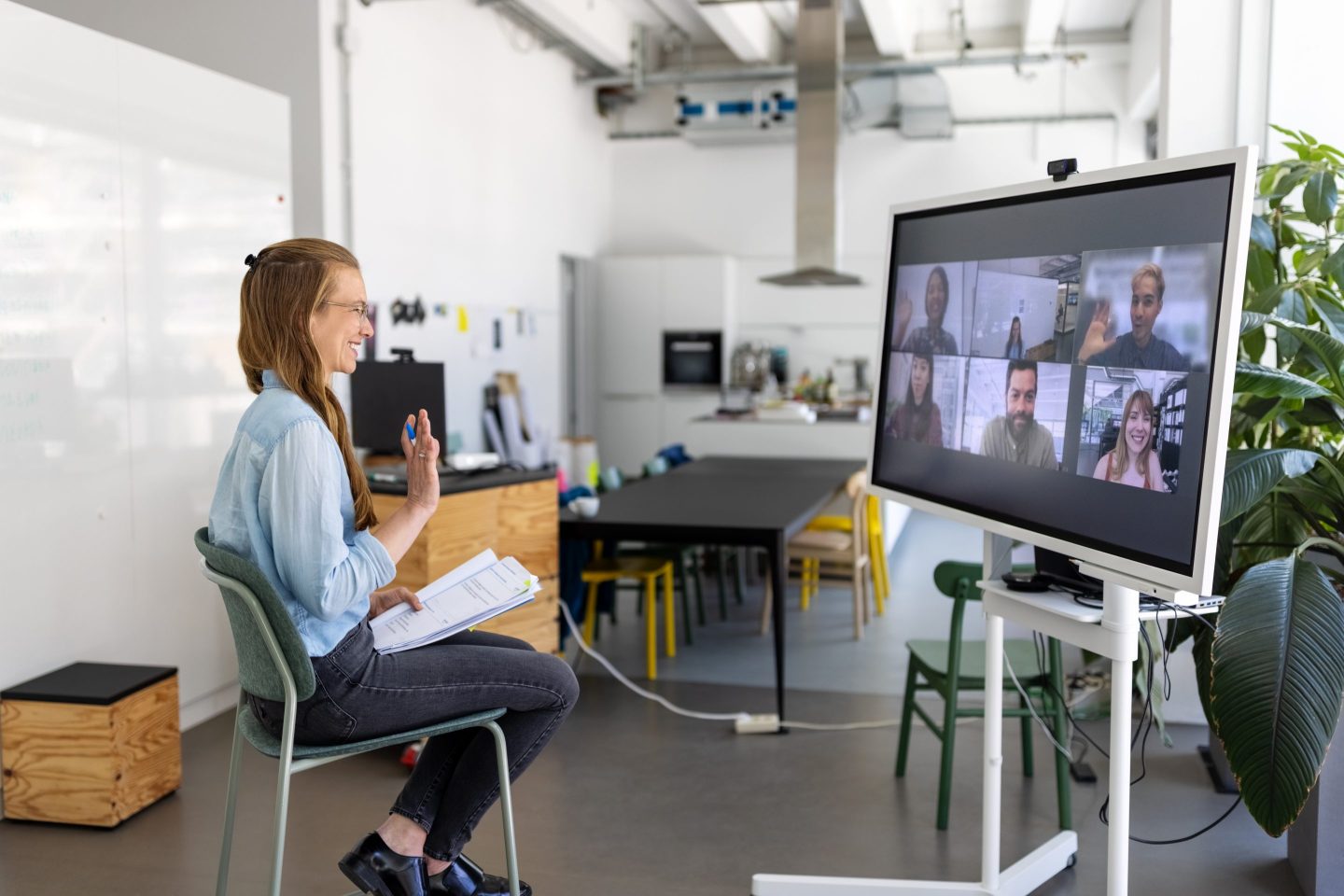
Female professional having online meeting with team
Many large public companies offer hybrid work arrangements.Luis Alvarez—Getty Images

As workplaces grapple with the now annual post–Labor Day return-to-office debate, it may seem like companies have finally had enough with remote work. Come work in person or find a new job, bosses seem to be saying. No, really. They mean it this time.

Recommended Video

But those attention-grabbing proclamations obscure what’s happening in many workplaces. In fact, the largest companies have embraced hybrid work, according to the September Flex Report from remote work platform Scoop. The report finds 82% of Fortune 500 companies in the company’s Flex Index—which has information on 293 of those companies—offer workplace flexibility, the most common arrangement by far being two to three days required in the office.

On the most flexible side of things are companies like 3M and Allstate, which allow employees to work out their own schedule. In the middle are organizations like Chipotle and Disney, which have hybrid schedules for corporate employees. The least flexible, which require employees in office full-time, include Goldman Sachs and Tesla, according to reports.

The Fortune 500 is a ranking of the largest U.S. companies by revenue and was devised by this publication in 1955. Scoop uses it as a benchmark because “small companies look to the Fortune 500 as leaders to aspire to be one day, and public companies look to see what the Fortune 500 is doing when evaluating their own business practices,” which this reporter will not dispute.

In general, large public companies are much more likely to offer flexible work policies than private organizations, according to the report. This is true in every industry Scoop tracks.

And the larger the Fortune 500 company, the more likely they are to offer what Scoop calls a “structured hybrid” work policy—meaning requiring a few set days in office (typically some combination of Tuesday through Thursday). “That will cement structured hybrid as the go-to model for large companies over time,” the report reads.

“Every year we do this dance around Labor Day. Will there be a big shift back” in the office, Rob Sadow, Scoop’s CEO and cofounder, tells Fortune. “I don’t think it will be that big of a shift. It’s settling into some kind of hybrid routine.”

Workers and bosses are on the same page more than you think

There are many reasons for this, says Sadow, including that decision-making is much more spread out in a large public company than in a private company. Whereas the private company’s policies may be dictated by a single executive, there are often differences between teams, managers, and locations in a public company.

Scoop collects data on the workplace policies of over 4,000 companies. It does this a few ways: Employees (with a company email) may submit information on their own, which Scoop then follows up on. It also pays attention to news reports on the biggest companies and scours career listings to learn about the policies. Finally, it reaches out to companies directly to let them know they will be included and gives them the option to update or clarify their policies.

The findings of the report first surprised Sadow, given all of the headlines about bosses cracking down on remote work. But they make sense, he says. After all, large public companies often have teams all over the country or all over the world. They are used to working with colleagues remotely.

Plus, public companies “have higher growth-rate targets and expectations, so they have higher talent needs,” he says. “Job seekers are clear that flexibility is important to them.”

The survey’s findings further underscore the truce that employers and employees are reaching, he says.

“A lot of the coverage and discussion is on the CEOs who are pushing really hard on full time in office, and there are a lot of readers interested in that,” he says. “But in reality, employees and employers are less far apart than it may seem.”

That trend has been noted by other research, including that of Nick Bloom, a Stanford professor who leads the WFH Research group and who has been studying remote work for two decades. Hybrid work environments will continue to win out, he posits, particularly in big companies that want to remain competitive.

Scoop’s research has previously found that newer companies—those founded since 2000—are also more likely than older companies to offer workplace flexibility.

“If you see companies that are as big and reputable as Fortune 500 being this flexible, and you see the newer companies being this flexible, it’s a pretty clear sign of where we’re heading,” he says. “That gives me some belief that this is where we’re largely going to stay. There may be some outliers who do more or less, but I think we’re pretty settled.”

Fortune Brainstorm AI returns to San Francisco Dec. 8–9 to convene the smartest people we know—technologists, entrepreneurs, Fortune Global 500 executives, investors, policymakers, and the brilliant minds in between—to explore and interrogate the most pressing questions about AI at another pivotal moment. Register here.
About the Author
Alicia Adamczyk
By Alicia AdamczykSenior Writer
LinkedIn iconTwitter icon

Alicia Adamczyk is a former New York City-based senior writer at Fortune, covering personal finance, investing, and retirement.

See full bioRight Arrow Button Icon

Latest in Success

Jensen Huang
SuccessBillionaires
Nvidia CEO Jensen Huang admits he works 7 days a week, including holidays, in a constant ‘state of anxiety’ out of fear of going bankrupt
By Jessica CoacciDecember 4, 2025
14 hours ago
Successphilanthropy
‘Have they given enough? No’: Melinda French Gates rips into billionaire class, saying Giving Pledge has fallen short
By Sydney LakeDecember 4, 2025
14 hours ago
Geoffrey Hinton gestures with his hands up
Successthe future of work
‘Godfather of AI’ says Bill Gates and Elon Musk are right about the future of work—but he predicts mass unemployment is on its way
By Preston ForeDecember 4, 2025
15 hours ago
Factory worker on assembly line.
SuccessGen Z
Nearly 4 million new manufacturing jobs are coming to America as boomers retire—but it’s the one trade job Gen Z doesn’t want
By Emma BurleighDecember 4, 2025
15 hours ago
SuccessWealth
Meet Luana Lopes Lara: The 29-year-old ex-ballerina spent summers working for Ray Dalio and Ken Griffin—now she’s the youngest female self-made billionaire
By Orianna Rosa RoyleDecember 4, 2025
16 hours ago
Boston Celtics head coach Joe Mazzulla stands on the court with his arms folded
Workplace CultureLeadership
You don’t need to have fun at work—take it from NBA head coach Joe Mazzulla: ‘Fun is a cop-out sometimes when things aren’t going well’
By Dave SmithDecember 4, 2025
20 hours ago

Most Popular

placeholder alt text
Economy
Two months into the new fiscal year and the U.S. government is already spending more than $10 billion a week servicing national debt
By Eleanor PringleDecember 4, 2025
19 hours ago
placeholder alt text
Success
‘Godfather of AI’ says Bill Gates and Elon Musk are right about the future of work—but he predicts mass unemployment is on its way
By Preston ForeDecember 4, 2025
15 hours ago
placeholder alt text
North America
Jeff Bezos and Lauren Sánchez Bezos commit $102.5 million to organizations combating homelessness across the U.S.: ‘This is just the beginning’
By Sydney LakeDecember 2, 2025
3 days ago
placeholder alt text
Success
Nearly 4 million new manufacturing jobs are coming to America as boomers retire—but it's the one trade job Gen Z doesn't want
By Emma BurleighDecember 4, 2025
15 hours ago
placeholder alt text
Success
Nvidia CEO Jensen Huang admits he works 7 days a week, including holidays, in a constant 'state of anxiety' out of fear of going bankrupt
By Jessica CoacciDecember 4, 2025
14 hours ago
placeholder alt text
Health
Bill Gates decries ‘significant reversal in child deaths’ as nearly 5 million kids will die before they turn 5 this year
By Nick LichtenbergDecember 4, 2025
1 day ago
Rankings
  • 100 Best Companies
  • Fortune 500
  • Global 500
  • Fortune 500 Europe
  • Most Powerful Women
  • Future 50
  • World’s Most Admired Companies
  • See All Rankings
Sections
  • Finance
  • Leadership
  • Success
  • Tech
  • Asia
  • Europe
  • Environment
  • Fortune Crypto
  • Health
  • Retail
  • Lifestyle
  • Politics
  • Newsletters
  • Magazine
  • Features
  • Commentary
  • Mpw
  • CEO Initiative
  • Conferences
  • Personal Finance
  • Education
Customer Support
  • Frequently Asked Questions
  • Customer Service Portal
  • Privacy Policy
  • Terms Of Use
  • Single Issues For Purchase
  • International Print
Commercial Services
  • Advertising
  • Fortune Brand Studio
  • Fortune Analytics
  • Fortune Conferences
  • Business Development
About Us
  • About Us
  • Editorial Calendar
  • Press Center
  • Work At Fortune
  • Diversity And Inclusion
  • Terms And Conditions
  • Site Map

© 2025 Fortune Media IP Limited. All Rights Reserved. Use of this site constitutes acceptance of our Terms of Use and Privacy Policy | CA Notice at Collection and Privacy Notice | Do Not Sell/Share My Personal Information
FORTUNE is a trademark of Fortune Media IP Limited, registered in the U.S. and other countries. FORTUNE may receive compensation for some links to products and services on this website. Offers may be subject to change without notice.