• Home
  • News
  • Fortune 500
  • Tech
  • Finance
  • Leadership
  • Lifestyle
  • Rankings
  • Multimedia
Environmentclimate change

Scorching temperatures made this summer a record breaker and raise fears about even more warming that could ‘wreak havoc worldwide’

By
Jamey Keaten
Jamey Keaten
,
Seth Borenstein
Seth Borenstein
and
The Associated Press
Down Arrow Button Icon
By
Jamey Keaten
Jamey Keaten
,
Seth Borenstein
Seth Borenstein
and
The Associated Press
Down Arrow Button Icon
September 6, 2023, 2:20 PM ET
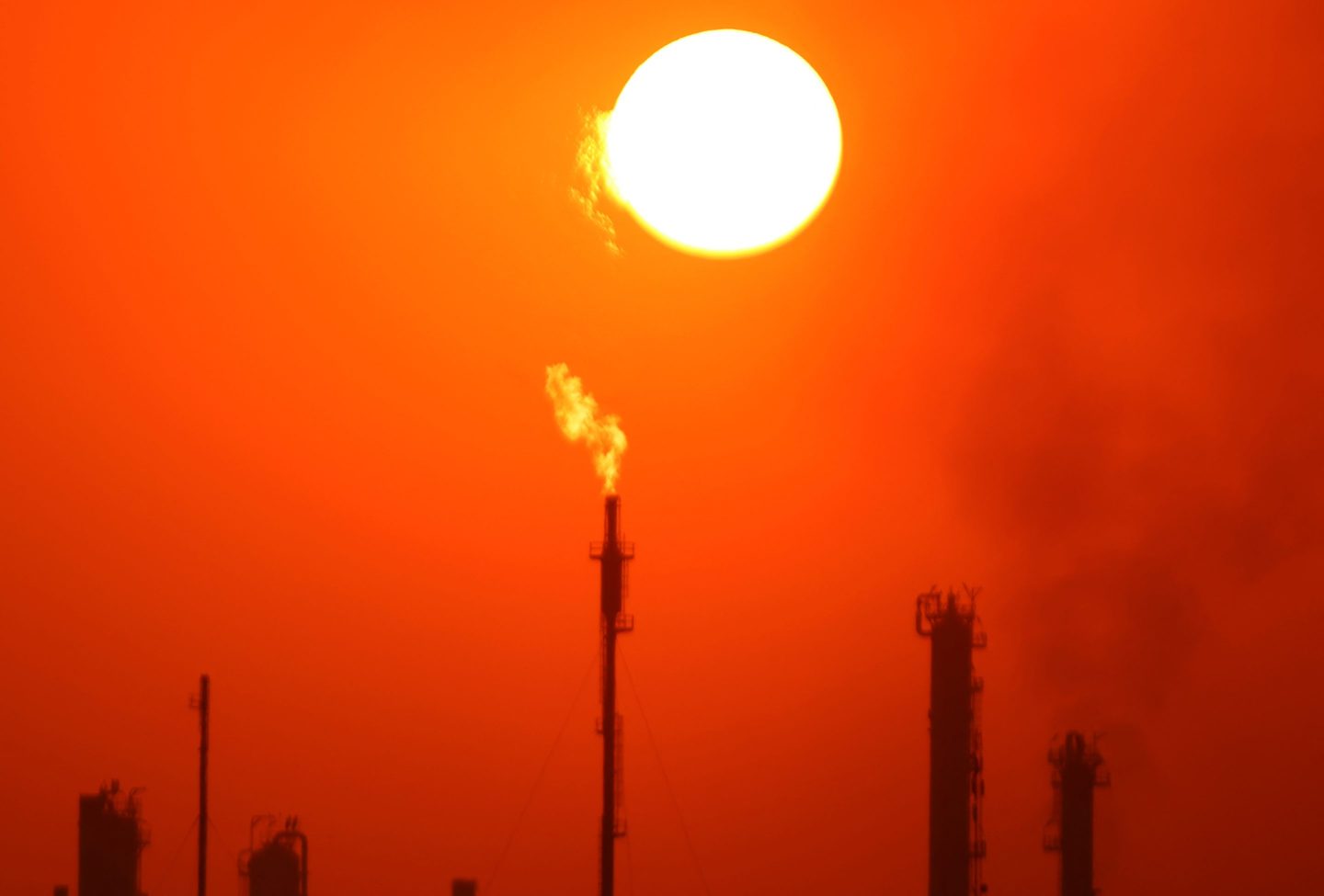
Summer temperatures broke records this year.
Summer temperatures broke records this year. Allen J. Schaben / Los Angeles Times via Getty Images

Earth has sweltered through its hottest Northern Hemisphere summer ever measured, with a record warm August capping a season of brutal and deadly temperatures, according to the World Meteorological Organization.

Recommended Video

Last month was not only the hottest August scientists ever recorded by far with modern equipment, it was also the second hottest month measured, behind only July 2023, WMO and the European climate service Copernicus announced Wednesday.

August was about 1.5 degrees Celsius (2.7 degrees Fahrenheit) warmer than pre-industrial averages. That is the threshold that the world is trying not to pass, though scientists are more concerned about rises in temperatures over decades, not merely a blip over a month’s time.

The world’s oceans — more than 70% of the Earth’s surface — were the hottest ever recorded, nearly 21 C (69.8 F), and have set high temperature marks for three consecutive months, the WMO and Copernicus said.

“The dog days of summer are not just barking, they are biting,” United Nations Secretary-General Antonio Guterres said in a statement. “Climate breakdown has begun.”

So far, 2023 is the second hottest year on record, behind 2016, according to Copernicus.

Scientists blame ever warming human-caused climate change from the burning of coal, oil and natural gas with an extra push from a natural El Nino, which is a temporary warming of parts of the Pacific Ocean that changes weather worldwide. Usually an El Nino, which started earlier this year, adds extra heat to global temperatures but more so in its second year.

Climatologist Andrew Weaver said the numbers announced by WMO and Copernicus come as no surprise, bemoaning how governments have not appeared to take the issue of global warming seriously enough. He expressed concern that the public will just forget the issue when temperatures fall again.

“It’s time for global leaders to start telling the truth,” said Weaver, a professor at the School of Earth and Ocean Sciences at the University of Victoria in Canada. “We will not limit warming to 1.5 C; we will not limit warming to 2.0 C. It’s all hands on deck now to prevent 3.0 C global warming — a level of warming that will wreak havoc worldwide.”

Copernicus, a division of the European Union’s space program, has records going back to 1940, but in the United Kingdom and the United States, global records go back to the mid 1800s and those weather and science agencies are expected to soon report that the summer was a record-breaker.

“What we are observing, not only new extremes but the persistence of these record-breaking conditions, and the impacts these have on both people and planet, are a clear consequence of the warming of the climate system,” Copernicus Climate Change Service Director Carlo Buontempo said.

Scientists have used tree rings, ice cores and other proxies to estimate that temperatures are now warmer than they have been in about 120,000 years. The world has been warmer before, but that was prior to human civilization, seas were much higher and the poles were not icy.

So far, daily September temperatures are higher than what has been recorded before for this time of year, according to the University of Maine’s Climate Reanalyzer.

While the world’s air and oceans were setting records for heat, Antarctica continued to set records for low amounts of sea ice, the WMO said.

“Antarctic sea ice extent was literally off the charts, and the global sea surface temperature was once again at a new record,” WMO’s secretary-general, Petteri Taalas, said in a statement released to the media. “It is worth noting that this is happening BEFORE we see the full warming impact of the El Nino event, which typically plays out in the second year after it develops.”

A strong El Nino coincided with the all-time high temperatures in 2016. The U.N. weather agency earlier this year rolled out predictions that suggest Earth would within the next five years have a year that averages 1.5 degrees Celsius warmer than in the mid 19th century. Each year at or near 1.5 matters.

It also predicted 98% chance of breaking the 2016 record between now and 2027.

The new readings on high global temperatures came as WMO released Wednesday its latest bulletin on air quality and climate, noting that extreme heat, compounded by wildfires and desert dust, has had a measurable impact on air quality, human health and the environment.

WMO scientific adviser Lorenzo Labrador lamented the deteriorating air quality around the globe and cited “record-breaking wildfire season” in many parts of the world, including western Canada and Europe.

“If heat waves increase as a result of El Nino, we may probably expect a further degradation in air quality as a whole,” he said.
Fortune Brainstorm AI returns to San Francisco Dec. 8–9 to convene the smartest people we know—technologists, entrepreneurs, Fortune Global 500 executives, investors, policymakers, and the brilliant minds in between—to explore and interrogate the most pressing questions about AI at another pivotal moment. Register here.
About the Authors
By Jamey Keaten
See full bioRight Arrow Button Icon
By Seth Borenstein
See full bioRight Arrow Button Icon
By The Associated Press
See full bioRight Arrow Button Icon

Latest in Environment

coal
EnvironmentCoal
‘You have an entire culture, an entire community that is also having that same crisis’: Colorado coal town looks anxiously to the future
By Brittany Peterson, Jennifer McDermott and The Associated PressDecember 6, 2025
2 days ago
data center
EnvironmentData centers
The rise of AI reasoning models comes with a big energy tradeoff
By Rachel Metz, Dina Bass and BloombergDecember 5, 2025
2 days ago
Jaguar
EnvironmentArizona
‘This species is recovering’: Jaguar spotted in Arizona, far from Central and South American core
By Susan Montoya Bryan and The Associated PressDecember 5, 2025
3 days ago
Steve Jobs holds up the first iPod Nano
Big TechApple
Apple is experiencing its biggest leadership shake-up since Steve Jobs died, with over half a dozen key executives headed for the exits
By Dave SmithDecember 5, 2025
3 days ago
Paul Atkins
CommentaryCorporate Governance
Turning public companies into private companies: the SEC’s retreat from transparency and accountability
By Andrew BeharDecember 5, 2025
3 days ago
Four years ago, BKV started buying up the two Temple power plants in Texas—located between Austin and Dallas—which now total 1.5 gigawatts of electricity generation capacity—enough to power more than 1.1 million homes, or a major data center campus. There is room to expand.
Energypower
How a Texas gas producer plans to exploit the ‘megatrend’ of power plants for AI hyperscalers
By Jordan BlumDecember 5, 2025
3 days ago

Most Popular

placeholder alt text
Real Estate
The 'Great Housing Reset' is coming: Income growth will outpace home-price growth in 2026, Redfin forecasts
By Nino PaoliDecember 6, 2025
2 days ago
placeholder alt text
AI
Nvidia CEO says data centers take about 3 years to construct in the U.S., while in China 'they can build a hospital in a weekend'
By Nino PaoliDecember 6, 2025
2 days ago
placeholder alt text
Economy
The most likely solution to the U.S. debt crisis is severe austerity triggered by a fiscal calamity, former White House economic adviser says
By Jason MaDecember 6, 2025
1 day ago
placeholder alt text
Economy
JPMorgan CEO Jamie Dimon says Europe has a 'real problem’
By Katherine Chiglinsky and BloombergDecember 6, 2025
1 day ago
placeholder alt text
Big Tech
Mark Zuckerberg rebranded Facebook for the metaverse. Four years and $70 billion in losses later, he’s moving on
By Eva RoytburgDecember 5, 2025
3 days ago
placeholder alt text
Politics
Supreme Court to reconsider a 90-year-old unanimous ruling that limits presidential power on removing heads of independent agencies
By Mark Sherman and The Associated PressDecember 7, 2025
16 hours ago
Rankings
  • 100 Best Companies
  • Fortune 500
  • Global 500
  • Fortune 500 Europe
  • Most Powerful Women
  • Future 50
  • World’s Most Admired Companies
  • See All Rankings
Sections
  • Finance
  • Leadership
  • Success
  • Tech
  • Asia
  • Europe
  • Environment
  • Fortune Crypto
  • Health
  • Retail
  • Lifestyle
  • Politics
  • Newsletters
  • Magazine
  • Features
  • Commentary
  • Mpw
  • CEO Initiative
  • Conferences
  • Personal Finance
  • Education
Customer Support
  • Frequently Asked Questions
  • Customer Service Portal
  • Privacy Policy
  • Terms Of Use
  • Single Issues For Purchase
  • International Print
Commercial Services
  • Advertising
  • Fortune Brand Studio
  • Fortune Analytics
  • Fortune Conferences
  • Business Development
About Us
  • About Us
  • Editorial Calendar
  • Press Center
  • Work At Fortune
  • Diversity And Inclusion
  • Terms And Conditions
  • Site Map

© 2025 Fortune Media IP Limited. All Rights Reserved. Use of this site constitutes acceptance of our Terms of Use and Privacy Policy | CA Notice at Collection and Privacy Notice | Do Not Sell/Share My Personal Information
FORTUNE is a trademark of Fortune Media IP Limited, registered in the U.S. and other countries. FORTUNE may receive compensation for some links to products and services on this website. Offers may be subject to change without notice.