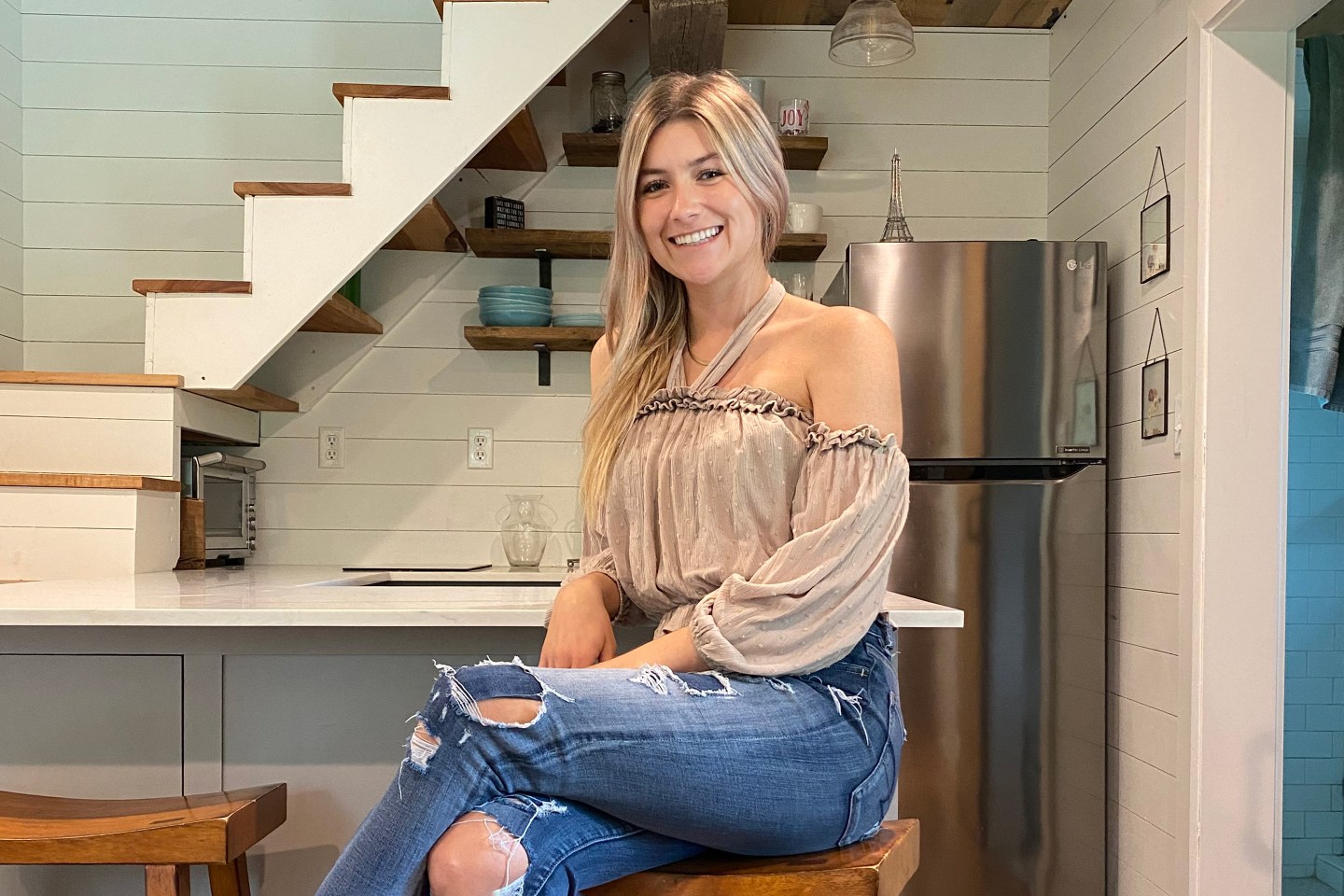
In fifth grade, Mckean Matson recalls, she and a friend wanted to build a fort in the backyard of her parents’ house in College Station, Texas. They pushed together her swing set and slide, but then her dad walked over to them and said, “Why don’t we actually build a fort?” Little did she know that the 350-square-foot result would later become her home for five years, delaying her journey into the housing market.
After living in a dorm during her freshman year of college, Matson’s parents gave her two options: She could either rent a place of her own or live in the “tiny house” in their backyard rent-free for as long as she needed. “This was kind of like, you can be on your own, but when you’re ready, you can move,” Matson told Fortune. Looking back now, she says, “I would not have changed it for the world.”

For the next five years, Matson lived in the backyard fort and gained close to 100,000 followers on TikTok, where she posted housing and “tiny living” content. She says she gets tons of messages from her followers asking for advice, and a lot of them are young adults looking to save money in a historically unaffordable housing market. Some even requested blueprints to replicate her house for themselves.
It’s hard to put a number on how much Matson’s saved, but the average rent for all bedrooms and property types in College Station is $1,800, per Zillow. She says her friends typically pay around $800 a month for a bedroom in a shared apartment—that equates to $48,000 over a five-year timespan. A studio comparable to Matson’s tiny house would be closer to $1,200, meaning she could have saved as much as $72,000 over those five years. She also eats her mom’s home-cooked meals every day, Matson says, so she’s saved on food, too.
The savings go a bit further than that, too.
She recalls that it took her and her dad around eight months to turn the fort into her tiny home. They did everything themselves, except for the granite countertops. Her parents paid for everything, from the construction costs to furnishing (she says there wasn’t much to furnish because it’s so small). Matson said she thinks it cost them less than $100,000.
And now it’s helped her buy her own house.
Growing up, Matson said she always saw her dad build everything by hand. He owns a hardwood flooring company, and that’s where she currently works, making around $60,000 a year. Just two months ago, she closed on a three-bedroom, two bathroom house that’s 10 minutes away from her parents.
“It’s a lot for one person,” she says, especially given she was living in a 350 square-foot house, and now she’s living in a 1,500-square-foot, three bedroom, two bathroom house. Matson says she put down 3% (roughly $7,500) on her $250,000 new home. With a 30-year fixed rate at 6.87%, her monthly mortgage payment is over $2,000, which she says is “insane.” The average home value in College Station is slightly above $325,600, an increase of 6.4% over the past year, per Zillow.
Matson’s experience isn’t an anomaly—adults have been increasingly moving in with their parents for the past five decades, according to a 2022 report from Pew Research Center. Following the onset of the pandemic, 2020 was the first time since the Great Depression that over half of all Americans under 29 were living with their parents, and most said their motivation was to save money. With home prices rising more than 40% on a national level during the Pandemic Housing Boom, and still rising in some markets, many young adults are getting priced out and have no choice but to live with their family.
Those younger people who live with their parents typically live inside their parents’ home, but arrangements like Matson’s are becoming more common. Two professors of architecture at Miami University have advocated for Matson’s style of housing, also known as an accessory dwelling unit, or ADU. Although, the City of Huntington Beach attempted to ban ADUs but rescinded that ban after the State of California filed a lawsuit against the city.
“If I had to rent, there’s no way I would have been able to purchase a home,” Matson said. “I don’t think I would [have been] able to purchase for another five to seven years.”
If interest rates hadn’t shot up from their pandemic lows along with home prices, it might’ve been a different story, Matson added, given she doesn’t absolutely love the home she just bought but figured it was a good investment. Either way, she says she wouldn’t be where she’s at today without her parents’ help.
“My parents didn’t grow up with a whole lot of money, they started from nothing and paid cash for their whole entire house to be built,” Matson said. “They didn’t want me to ever have to go through that, and so they wanted to set me up.”
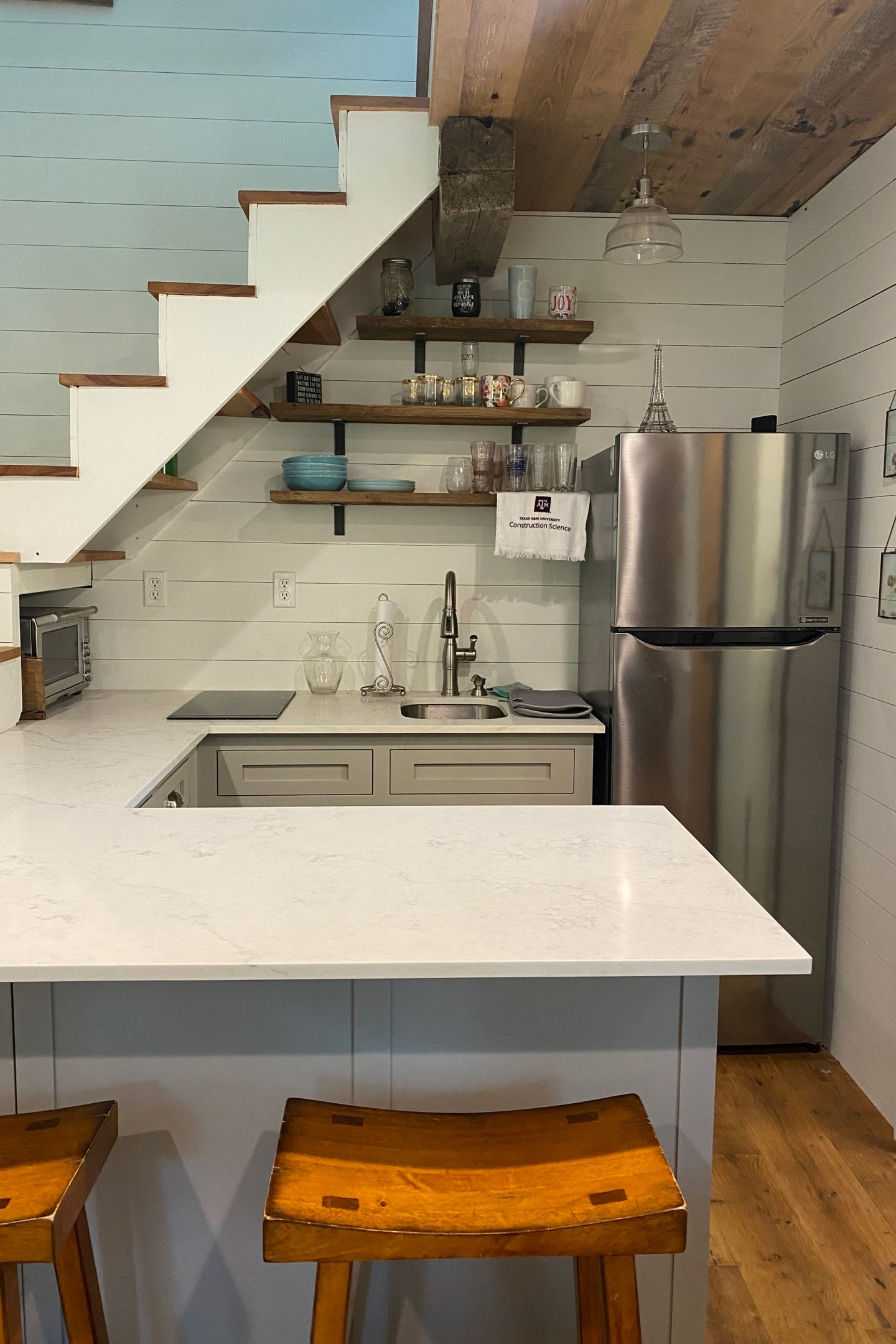
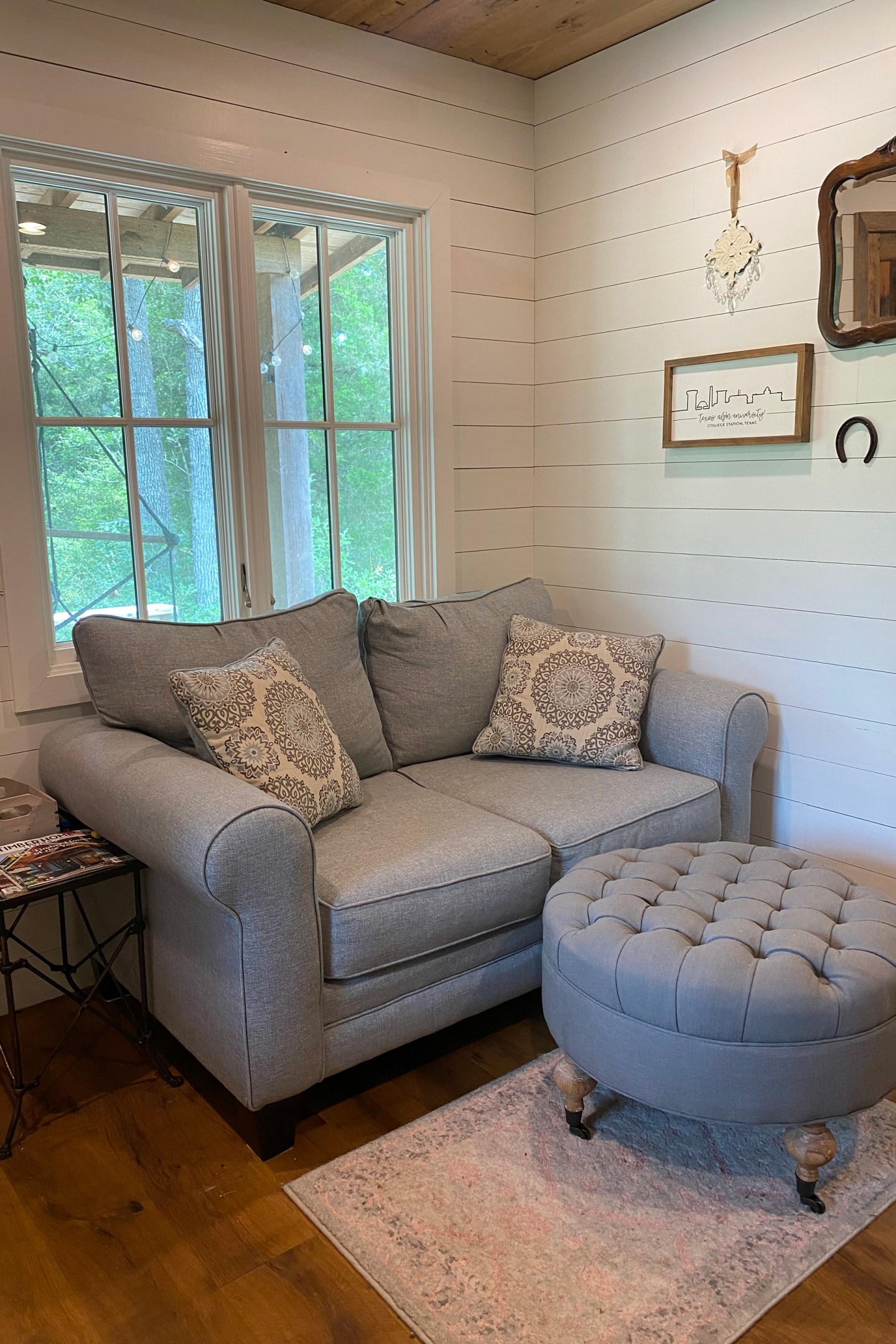
Matson says she loved everything about the process of building the tiny house with her dad, including choosing the paint colors and scrolling through Pinterest for inspiration. Downstairs, Matson says, there’s a loveseat, two barstools across from her countertop, and a narrow fridge that’s made for tiny houses. Upstairs, there’s a full bed, a dresser, a clothing rack, and pretty much no storage space.
But of course it’s called a tiny house for a reason—it’s small. In one of Matson’s TikTok videos, you can see that one large package takes up the whole living room and kitchen, while Matson says that not putting away her laundry for one day means not being able to walk anywhere or do anything. Overall, she said it was “no big deal” to live in her parents’ backyard, although she said throwing girls’ nights was pretty challenging in such a small house.
Now that she’s in the process of moving, she’s cutting back on her spending while shopping for used furniture to fill her new house—tiny living didn’t prepare her for how expensive furniture would be, she says. Despite life getting more expensive, she says she’s glad she took this step.
“I felt like, I’m 24 years old, at some point, I need to move out of my parents backyard,” Matson said. Still, she added that she’s told her parents she would return to live in a family compound one day, where she might not be as physically close to them as her previous situation but would be at least surrounded by family—which Matson really enjoys.
As for her tiny house? It’s getting a new tenant soon: Her 22-year old brother, along with his wife.