Good morning!
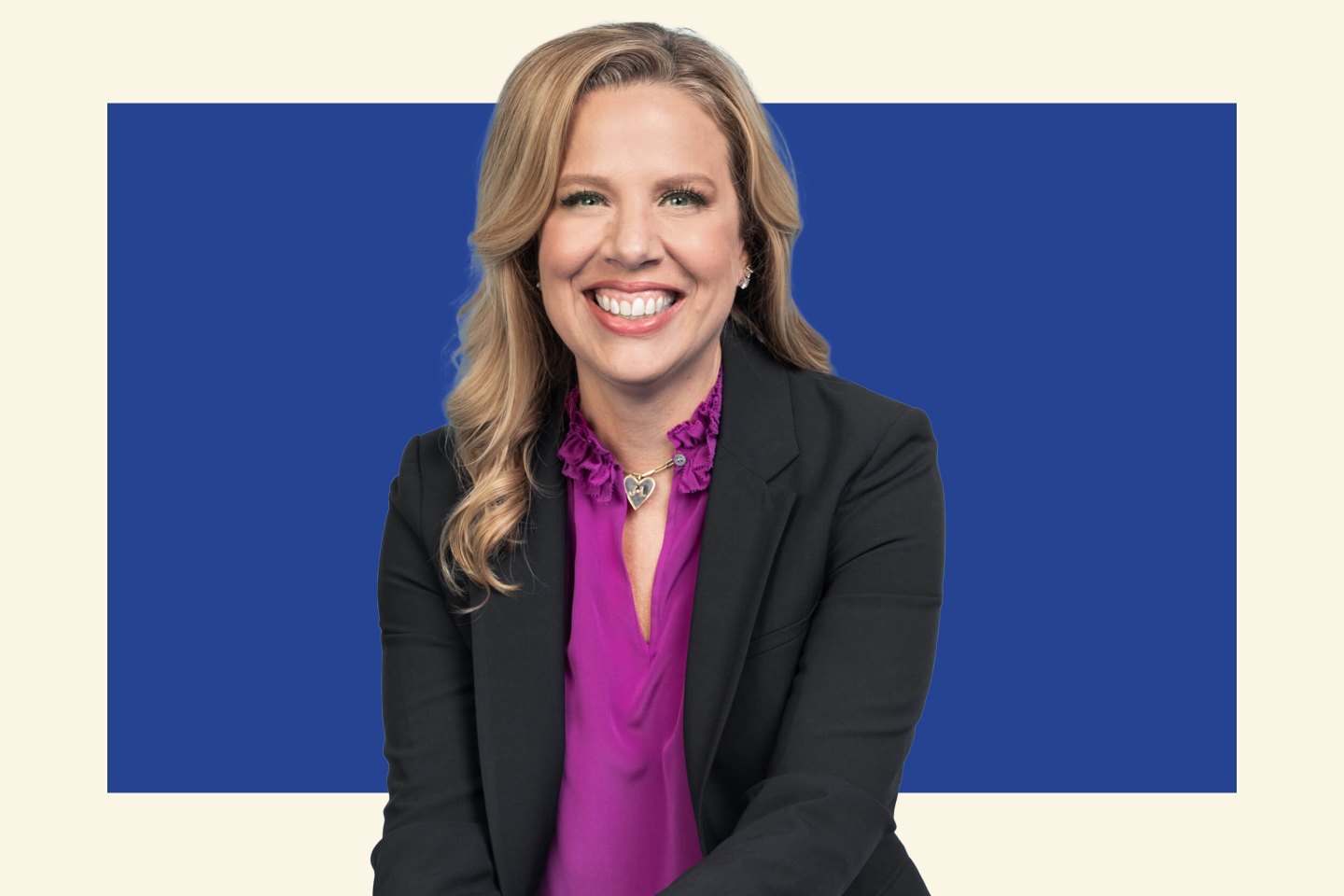
Even if your company is not engaged in mass layoffs, the dour economic outlook has prompted many HR teams to batten down the hatches and pivot their talent strategy to prioritize internal transitions. ServiceNow’s chief people officer Jacqui Canney is doing just that.
The enterprise software company filled nearly 1,500 open roles with internal candidates in 2022. Canney has spent much time strategizing how to redistribute talent in an increasingly cost-conscious and uncertain environment. For her, it’s all about investing in employee development, doubling down on early talent, and championing a high-functioning people analytics team.
Editor’s note: ServiceNow is the sponsor of CHRO Daily. This interview has been edited and condensed for clarity.
Fortune: ServiceNow filled nearly 1,500 open roles with internal candidates in 2022. What do you credit most for the shift?
Jacqui Canney: The culture. We created a system to enable mobility—processes, rules, tools, and all those things that allow people to figure out if there’s a role they’re interested in. But it’s a cultural shift when you have that much mobility because it means managers are open to letting their team move around. I give huge credit to my talent acquisition and development team for ensuring opportunities were well-known internally.
What role does talent development play in encouraging internal mobility, and how does it help during an economic downturn?
Investing in our current employees is a big part of our talent strategy right now because the talent market is still very fierce. Great people have a lot of opportunities, and I don’t take that for granted. Once you’re here, we want to build you up so that you can meet your potential. We also believe and know from our surveys that people want career development.
We built a development program that we call Leadership Through Innovation. It allows our employees to grow as people leaders because we all know there’s nothing more complicated than being a people leader right now. We’re investing in [managers], so they have the competence to lead their teams, whether it’s through adversity, crisis, or the normal day job.
How are you thinking about redistributing talent as a cost-saving strategy?
With intention, we are recruiting interns, college grads, and non-traditional grads to come into the organization and to work to train them to be job ready, whether in sales, product, HR, or finance. We see that as an important lever for us to redistribute talent.
We’re also looking at skills. We’re working with our leaders to understand what skills we have today, what skills we need for tomorrow and our path to shifting those skills. We’re right in the middle of that work right now.
You mentioned interns—some companies tend to invest less in internship programs during economic downturns. Why is this still a key part of ServiceNow’s talent strategy?
Getting the leadership team to agree that internships are an important part of our talent strategy wasn’t hard. I believe people have long memories, wherever they are in their careers, thus, keeping your intern program is an important part of your strategy.
I think cutting back on internships is a short-term cost-saving effort that ultimately you regret because the universities and places where you recruit own the relationship with their community, their students, and the caretakers of that community. So if you’re a company, that’s a great partner. They help you get access to those students or the community. And if you’re not going to be a great partner, I could see how they could influence how much airtime or branding you get on the campus. That’s an important relationship I wouldn’t want to deteriorate for short-term gain.
What else do you think is vital for HR leaders to hold onto that they might be tempted to throw out the window in uncertain economic times?
Real investment in learning and development. You want the people in your company to thrive now more than ever, have greater productivity, and have great experiences. As a CHRO, I’m working side-by-side with the business to build these experiences, and that’s through learning and development. People remember when you invest in them, and I will always bet on that ROI.
What have you leaned upon most as an HR leader in the face of uncertainty?
I have a great people analytics function that operates as the warning sign or the positive signal when we’re on the right path or need to switch course a bit. That’s my early warning system. We also partner with the finance team to put finance and HR data together. We meet frequently, and that’s how we can make a change before it becomes too hard.
What’s an example of the latest signal you’ve responded to?
Productivity in sales. The quicker sales team members are productive, the quicker we get sales. We measured how many months somebody needed to be in their role to gauge when they would become productive, and we saw that it doesn’t necessarily have to do with time—it’s how they built their skills. So if we can shrink the time to get them the skills, we see they’re productive quicker and can get them going. I’d say those early warning signals from people analytics are how we have shifted to shrink that time to have quicker productivity.
Amber Burton
amber.burton@fortune.com
@amberbburton
Reporter's Notebook
The most compelling data, quotes, and insights from the field.
Jobless claims were down last week, with applications dropping by 3,000 to 192,000—the lowest level in three weeks. It’s another sign that employers are making a more concerted effort to hold onto the talent they already have in a tight labor market.
“Many economists point to that practice, known as ‘labor hoarding,’ as a reason why claims remain historically low despite mounting economic uncertainty.” —Bloomberg
Around the Table
A round-up of the most important HR headlines, studies, podcasts, and long-reads.
- The number of workers who went on strike in 2022 rose by 50% compared to the year before, according to the Worker Institute at Cornell. Axios
- Seasoned professionals are increasingly taking on part-time leadership roles; they're known as fractional executives. Wall Street Journal
- Amazon employees said the company’s return-to-office mandate “shattered their trust” in leadership. Washington Post
- Wells Fargo laid off some top-performing mortgage bankers just days after sending them to a Palm Desert, Calif. retreat. CNBC
Watercooler
Everything you need to know from Fortune.
Working overtime. The Supreme Court ruled an oil rig worker was eligible for overtime pay even though he already earned about $200,000 a year. —The Associated Press
Real estate efficiency. Google asked employees to alternate the days they come into the office so that people can share desks. —Eleanor Pringle
Endless vacation. Critics of unlimited PTO say it results in employees taking fewer days off. —Jo Constantz
‘Resimercial.’ The latest trend in redesigning offices is to make them feel more like home with comfortable furniture, plush rugs, and even fireplaces. —Jane Thier
This is the web version of CHRO Daily, a newsletter focusing on helping HR executives navigate the needs of the workplace. Today’s edition was curated by Paolo Confino. Sign up to get it delivered free to your inbox.