As the largest U.S. design and architecture firm with almost $2 billion in global revenue last year, Gensler hears daily from major corporate clients desperate to figure out what the workspaces of the future should look like to finally get employees back to the office in greater numbers.
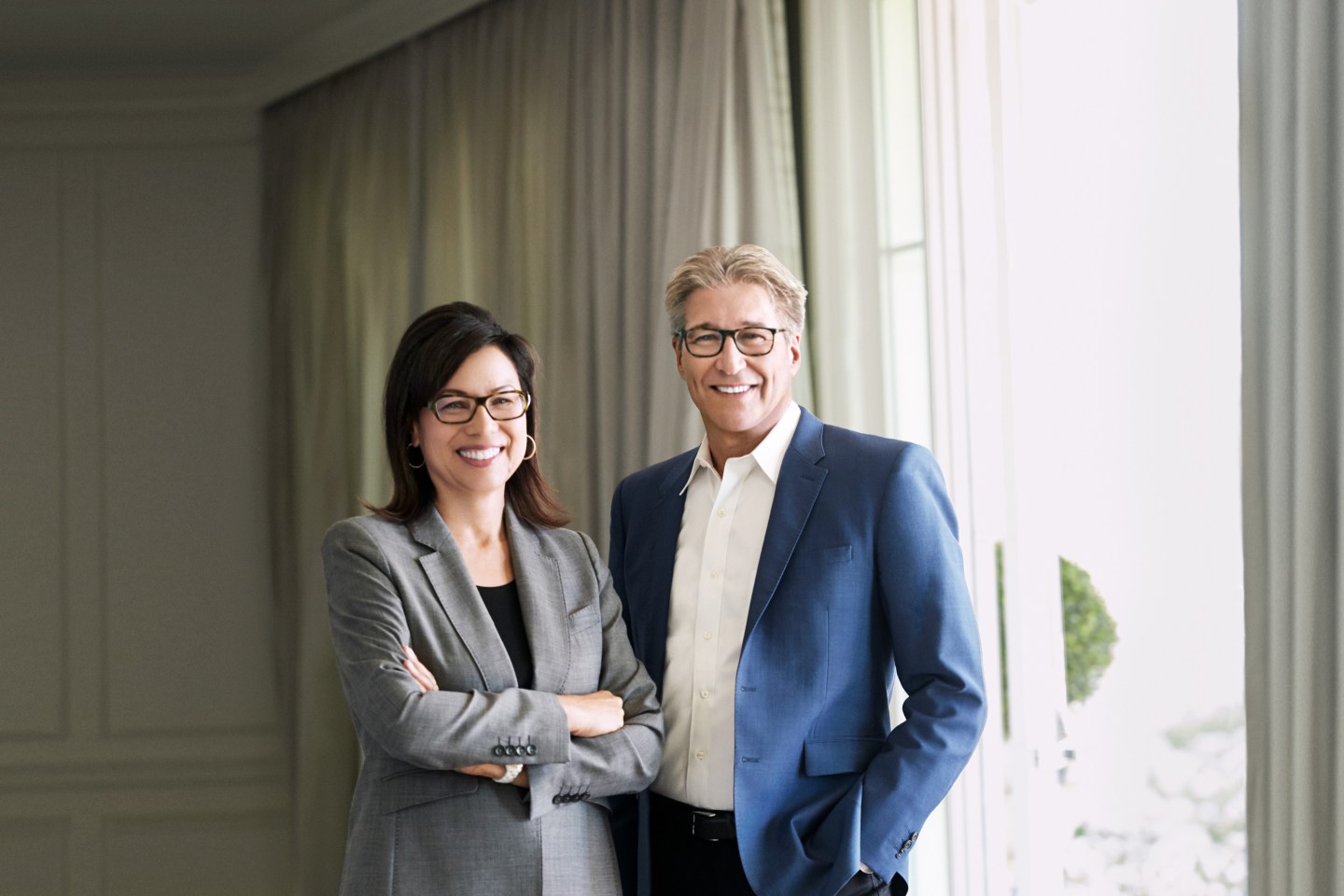
Gensler co-CEOs Diane Hoskins and Andy Cohen say that while many clients are looking to pull back on office space due to still-low attendance, they want to significantly redesign the space they will keep.
Gensler’s 2023 design forecast, released in January, predicts that more companies will want offices that offer employees a variety of spaces, including some that provide the privacy and quiet needed for a few hours of deep work—but which open-floor plans have made almost impossible. That means incorporating touches such as better acoustics to dampen noise. The new design approach to offices also includes more flexible meeting spaces of different sizes, some of which could host remote workers when visiting company headquarters.
The theory is that more workers will gladly come to the office if they feel they can still do their best work and collaborate productively with colleagues face-to-face. Gensler, whose large U.S. projects in recent years have included Delta Air Lines’s new terminal at New York’s La Guardia airport, AT&T’s massive Dallas campus, and Adobe’s Seattle office, found in a December survey of workplaces that 83% of employees would return to the office at least one more day per month if the office space offered them the quiet and room they crave.
Surveyed chief executives noted that although the workplace remains a crucial tool in attracting top talent, it has to be rethought. “We really believe strongly that this is a moment for design. It’s not business as usual,” says Hoskins.
This interview has been edited and condensed for clarity.
Fortune: In the late 2010s, we saw employers plunk down fortunes on lavish offices with the latest amenities. And yet U.S. return-to-office rates have only now inched back up past the 50% mark. Did employers and design firms miss something in what employees really want?
Diane Hoskins: The pandemic was definitely a sea-change moment, but lots of people were already dissatisfied with their offices. Our 2019 workplace survey found that the perception of workplace effectiveness for getting work done was at an all-time low because workers had trouble focusing. There was dissatisfaction with the “densification” of the office, so there were major cracks that we started to see in 2013 but got even wider by 2019.
My hunch has long been that one of the main irritants for employees with work-from-home preference is that open floor plans offer little privacy and cramped spaces. What is the thinking now?
Andy Cohen: Gensler does work for about 4,000 clients a year, so we know what trends they are looking out for. We see this desire to make the office a destination and the opposite of an obligation. What that looks like now is creating a sense of choice in the workplace. The open floor plan was ubiquitous in big cities like New York City, which meant rows and rows of desks. Now we’re removing those rows of desks and adding team collaboration rooms, cafes, and areas like hotel lobbies, so people have different places to work and are untethered to their desks. But yes, densification was a major issue in the last 10 years before COVID. In 2010, U.S. office density was 250 square feet per person but had gone down to 80 square feet right before COVID.
So we can expect less space but better space?
Cohen: Clients are saying to us now, ‘We might take less room moving forward, but the allocation will be very different with those collaboration spaces and teaming spaces.’ Collaboration time fell 40% during COVID because of work from home, and our clients want to improve that. They keep asking, ‘How do we promote culture? How do we promote our mission?’ And that comes through the design of the workplace.
Are popular amenities used to court younger workers over the last decade, like foosball tables, now passé? What about fads we saw, like courtyards connected by bridges?
Hoskins: There has been a bit of a herd effect in touches that became trends because what worked for one company got replicated, and companies saw them as fashion statements. But most important is that spaces support collaboration and solo work. We saw places where people had to wear headphones to concentrate because colleagues worked so close together. Spaces must also be ergonomic with proper seating so someone can spend hours working. And offices need acoustical properties that allow employees to focus without interruption. And finally, it’s essential to have a social environment with high-tech spaces where employees can participate virtually too. It’s a much more complex effort to design the workplace today.
One big complaint from the work-from-home crowd has been tough commutes, impeding a return-to-office life. Part of your practice is advising local governments on public transportation projects. What are you telling them?
Cohen: We have to invest back in mass transit because it’s a major issue. Not surprisingly, the people living the greatest distances from the office are the ones who want to work from home because commuting time has a major impact on their quality of life. And in big cities, we see more people returning to one person per car because of safety perception, so mass transit is really important.
Your recent report highlights that employers are fleeing to quality buildings. What does this mean for city centers if older buildings can’t keep up with today’s amenities?
Hoskins: The vacancy rate is actually very, very low for buildings 20 years old or younger. And when you look at the older buildings in our cities, the vacancy rate is more like 30%, 40%, so it’s definitely a tale of two paradigms. There can become a vicious cycle for older buildings as they lose tenants, and companies go to newer ones. Those buildings might not be able to get the financing needed to do upgrades, thus starting a downward spiral. Add rising interest rates, and stranded assets are becoming a reality in U.S. cities.
So do you have a bleak outlook for cities?
Hoskins: We will see a significant transformation in our cities, but that isn’t necessarily bad. We were brought on to help rethink the entire Inner Harbor of Baltimore, and that’s only possible because a lot of key assets in the Inner Harbor have gone back to the bank and been bought by developers who have the resources to build the kind of buildings needed for today’s economy. It’s all possible because of the devaluation of old assets. We’re very bullish on cities, but we also recognize there are big challenges.
Get to know Hoskins and Cohen:
- Cohen and Hoskins have been co-CEOs since 2005, an unusually long time for a management setup that typically falters quickly.
- Hoskins got the design bug as a five-year-old when her mother enrolled her in an Art Institute of Chicago program.
- Cohen, reared in Long Island, New York, joined Gensler’s Los Angeles office in 1981 at age 25 and was mentored by the firm’s namesake founder.
Learn how to navigate and strengthen trust in your business with The Trust Factor, a weekly newsletter examining what leaders need to succeed. Sign up here.