• Home
  • Latest
  • Fortune 500
  • Finance
  • Tech
  • Leadership
  • Lifestyle
  • Rankings
  • Multimedia
Commentary

I am an expert on diversity in mainstream media. Here’s why leaving Twitter helps the racists

By
Marcus Ryder
Marcus Ryder
Down Arrow Button Icon
By
Marcus Ryder
Marcus Ryder
Down Arrow Button Icon
December 8, 2022, 11:59 AM ET
Marcus Ryder, MBE, is the head of external consultancies at the Sir Lenny Henry Centre for Media Diversity.
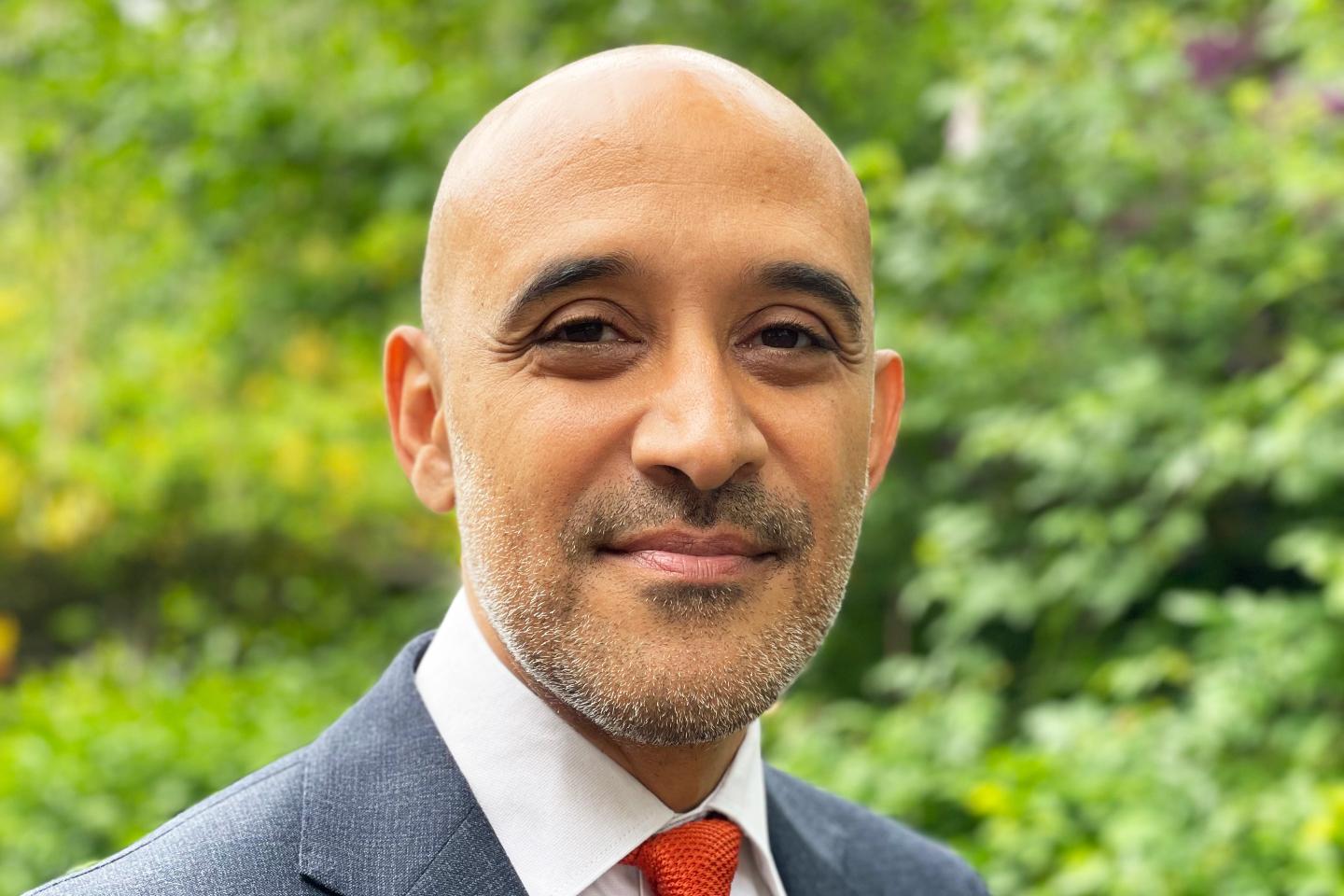
Marcus Ryder, MBE, is the head of external consultancies at the Sir Lenny Henry Centre for Media Diversity.Courtesy of Marcus Ryder

Have you heard of people wanting to leave Twitter because they “care so much about the increase in racism and bigotry on the platform?”

Yes? In the vast majority of cases, that’s their privilege showing.

Since Elon Musk officially took over Twitter on Oct. 27, posts containing racist and bigoted language have increased on the social media platform. In the first week alone of Musk’s reign, the n-word was used  26,228 times in tweets and retweets–three times the 2022 average, according to a report from the Center for Countering Digital Hate. The use of another highly offensive term commonly used to attack transgender people saw a 53% increase in its use compared to the 2022 average. Hate language against gay people has also markedly increased. And according to the New York Times, antisemitic posts referring to Jews or Judaism soared “more than 61% in the two weeks after Mr. Musk acquired the site.”

In the following weeks, hate-mongering extremists and people guilty of spreading serious misinformation have also had their accounts reactivated.

These developments, and numerous others, have prompted many liberal voices to either leave the platform or threaten to do so.

While this might seem like a strong “anti-racist” point to make, in reality, it is invariably made from a position of privilege. And it will hurt people from the most disenfranchised communities–including people of color, LGBTQ+ people, women and disabled people–that people leaving the platform supposedly care about.

Let me explain, with an example.

A few days ago I was invited onto a mainstream TV program in the U.K. owned by one of the most powerful media moguls in the world to talk about the popular Christmas film Love Actually.

The film’s director had recently commented, 20 years after its release, that he was embarrassed by its lack of diversity.

I work for the U.K.’s most prominent research centre examining media diversity, so I accepted the invitation to join the program. It was a mistake.

Three minutes into the interview, the presenter started shouting over me and not allowing me to make my points. It was a car crash of an interview (and to be honest, not my finest hour).

However, after the interview, I was able to go on Twitter and detail the points I wanted to make. I had agency and control over my own voice.

Other social media platforms may exist, but Twitter is acknowledged to be the “virtual town square.” The likes of Instagram, Facebook, LinkedIn, or TikTok still do not serve the purpose of being a platform where the wider public can hear a wide range of people’s views and engage on political, social, and economic issues of the day.

The reality is that without Twitter, the only way people can make their voices heard by a wider public is by going onto the platforms that existed before Twitter, and that means mainstream media outlets such as newspapers, radio stations, and television.

These mainstream media platforms, like the one I appeared on to discuss Love Actually, are overwhelmingly controlled by a tiny stratum of society. In the U.K., this means white, non-disabled, heterosexual men, living in and around London. In our book, Access All Areas – The Diversity Manifesto for TV and Beyond, Sir Lenny Henry and I explained that these strata are less than 3% of the population–and that’s before you even factor in class.

In 2020, the Press Gazette published research by Women in Journalism showing that in one week in July 2020, the U.K.’s 11 biggest newspapers failed to feature a single byline by a Black journalist on their front pages. Only a quarter of the front-page bylines went to women. Overall, only six of the 174 bylines they examined were credited to journalists of color.

Yet, and perhaps incredulously, this was a week in which there were front-page news–stories about Black Lives Matter, the replacement of the toppled statue of the slave trader Edward Colston in Bristol, and the appeal over the revoked British citizenship of Shamima Begum. People of color and women were simply not given the space to frame these stories.

In broadcast, we see a similar dearth of people of color and other groups having agency to explain and frame the world as they (we) see it. For instance, in the U.K. there is not one single major television news bulletin that is headed by a person of color or a visibly disabled person, irrespective of the political affiliations or leanings of the channel or journalists.

Contrast the role Twitter played in giving Black people from all political backgrounds a voice during the global Black Lives Matter protests. The hashtag #BlackLiveMatter was popularised on Twitter and the video of George Floyd’s death in police custody was first publicized on Twitter. It is a relatively straightforward argument to make that without Twitter, the murder of George Floyd would not have become a catalyst for social change.

Until another social media platform emerges that can replace Twitter as a means by which people of color and people from underrepresented groups can directly reach a wider audience, Twitter remains important. People leaving Twitter are tacitly accepting the dominance of the white, non-disabled, heterosexual men in mainstream media, whether they are “left-wing” or “right-wing.” Those leaving Twitter are implying they are comfortable with underrepresented groups’ voices being silenced.

My experience of working in broadcast media for over 30 years has made me wary of believing that the mainstream media will ever give Black and underrepresented voices equal access to their platforms, at least in the short-to-medium term.

After the interview about Love Actually, the news organization clipped what I consider to be the most incendiary part of the interview and posted it on Twitter with a headline that I believe misrepresented my position.

That was immediately followed by a few hours of Twitter comments criticizing me. It was unpleasant. I cursed the platform and Elon Musk. But after I posted my rebuttal on Twitter–and regained my voice–I recognized I would rather endure a few hostile–and even possibly racist–tweets than lose my voice altogether.

And that’s why I’m staying on Twitter. Racism and bigotry are rife elsewhere too–they’re just often less obvious.

Marcus Ryder, MBE, is the head of external consultancies at the Sir Lenny Henry Centre for Media Diversity. He is the author of Access All Areas–A Diversity Manifesto for TV and Beyond and Black British Lives Matter.

The opinions expressed in Fortune.com commentary pieces are solely the views of their authors and do not necessarily reflect the opinions and beliefs of Fortune.

More must-read commentary published by Fortune:

  • Elon Musk knows what he’s doing. Here’s the real value he sees in Twitter
  • Americans think wages should rise to match inflation–and they’re right. It’s time to dispel the wage-price spiral myth
  • It’s not the jobs, stupid
  • Biden crowned world energy czar as diplomacy triumphs over Putin’s tantrums

Our new weekly Impact Report newsletter examines how ESG news and trends are shaping the roles and responsibilities of today's executives. Subscribe here.

About the Author
By Marcus Ryder
See full bioRight Arrow Button Icon

Latest in Commentary

Finance
Lorem ipsum dolor sit amet, consectetur adipiscing elit, sed do eiusmod tempor incididunt ut labore et dolore magna aliqua. Ut enim ad minim veniam
By Fortune Editors
October 20, 2025
Finance
Lorem ipsum dolor sit amet, consectetur adipiscing elit, sed do eiusmod tempor incididunt ut labore et dolore magna aliqua. Ut enim ad minim veniam
By Fortune Editors
October 20, 2025
Finance
Lorem ipsum dolor sit amet, consectetur adipiscing elit, sed do eiusmod tempor incididunt ut labore et dolore magna aliqua. Ut enim ad minim veniam
By Fortune Editors
October 20, 2025
Finance
Lorem ipsum dolor sit amet, consectetur adipiscing elit, sed do eiusmod tempor incididunt ut labore et dolore magna aliqua. Ut enim ad minim veniam
By Fortune Editors
October 20, 2025
Finance
Lorem ipsum dolor sit amet, consectetur adipiscing elit, sed do eiusmod tempor incididunt ut labore et dolore magna aliqua. Ut enim ad minim veniam
By Fortune Editors
October 20, 2025
Finance
Lorem ipsum dolor sit amet, consectetur adipiscing elit, sed do eiusmod tempor incididunt ut labore et dolore magna aliqua. Ut enim ad minim veniam
By Fortune Editors
October 20, 2025

Most Popular

Finance
Lorem ipsum dolor sit amet, consectetur adipiscing elit, sed do eiusmod tempor incididunt ut labore et dolore magna aliqua. Ut enim ad minim veniam
By Fortune Editors
October 20, 2025
Finance
Lorem ipsum dolor sit amet, consectetur adipiscing elit, sed do eiusmod tempor incididunt ut labore et dolore magna aliqua. Ut enim ad minim veniam
By Fortune Editors
October 20, 2025
Finance
Lorem ipsum dolor sit amet, consectetur adipiscing elit, sed do eiusmod tempor incididunt ut labore et dolore magna aliqua. Ut enim ad minim veniam
By Fortune Editors
October 20, 2025
Finance
Lorem ipsum dolor sit amet, consectetur adipiscing elit, sed do eiusmod tempor incididunt ut labore et dolore magna aliqua. Ut enim ad minim veniam
By Fortune Editors
October 20, 2025
Finance
Lorem ipsum dolor sit amet, consectetur adipiscing elit, sed do eiusmod tempor incididunt ut labore et dolore magna aliqua. Ut enim ad minim veniam
By Fortune Editors
October 20, 2025
Finance
Lorem ipsum dolor sit amet, consectetur adipiscing elit, sed do eiusmod tempor incididunt ut labore et dolore magna aliqua. Ut enim ad minim veniam
By Fortune Editors
October 20, 2025
Fortune Secondary Logo
Rankings
  • 100 Best Companies
  • Fortune 500
  • Global 500
  • Fortune 500 Europe
  • Most Powerful Women
  • World's Most Admired Companies
  • See All Rankings
  • Lists Calendar
Sections
  • Finance
  • Fortune Crypto
  • Features
  • Leadership
  • Health
  • Commentary
  • Success
  • Retail
  • Mpw
  • Tech
  • Lifestyle
  • CEO Initiative
  • Asia
  • Politics
  • Conferences
  • Europe
  • Newsletters
  • Personal Finance
  • Environment
  • Magazine
  • Education
Customer Support
  • Frequently Asked Questions
  • Customer Service Portal
  • Privacy Policy
  • Terms Of Use
  • Single Issues For Purchase
  • International Print
Commercial Services
  • Advertising
  • Fortune Brand Studio
  • Fortune Analytics
  • Fortune Conferences
  • Business Development
  • Group Subscriptions
About Us
  • About Us
  • Press Center
  • Work At Fortune
  • Terms And Conditions
  • Site Map
  • About Us
  • Press Center
  • Work At Fortune
  • Terms And Conditions
  • Site Map
  • Facebook icon
  • Twitter icon
  • LinkedIn icon
  • Instagram icon
  • Pinterest icon

Latest in Commentary

francis
CommentaryFlorida
Former Miami Mayor Francis Suarez: Why I’m joining Stephen Ross and Ken Griffin in betting big on ambitious business leaders
By Francis SuarezMay 1, 2026
12 hours ago
valerie
CommentaryLayoffs
Tesla’s former HR chief: the AI layoff panic Is built on a false premise—here’s what most workers need to know
By Valerie Capers WorkmanMay 1, 2026
13 hours ago
tamas
CommentaryPolymarket
SEON CEO: Prediction markets can forecast the future. Can they survive their own manipulation problem?
By Tamas KadarMay 1, 2026
16 hours ago
sundar
Commentary250 Years of Innovation
America at 250: immigration and the making of an innovative nation
By Nasser KazeminyMay 1, 2026
18 hours ago
Derek Kilmer
CommentaryEconomics
The U.S. economy is booming — just not where 50 million Americans live
By Derek KilmerMay 1, 2026
18 hours ago
hegseth
CommentaryMilitary
America shot its arsenal empty in 2 wars. Now it needs Beijing’s permission to reload
By Steve H. Hanke and Jeffrey WengApril 30, 2026
1 day ago

Most Popular

Scott Bessent on financial literacy: 'it drives me crazy' to see young men in blue-collar construction jobs playing the lottery
Personal Finance
Scott Bessent on financial literacy: 'it drives me crazy' to see young men in blue-collar construction jobs playing the lottery
By Fatima Hussein and The Associated PressMay 1, 2026
13 hours ago
China dominates the world's lithium supply. The U.S. just found 328 years' worth in its own backyard
North America
China dominates the world's lithium supply. The U.S. just found 328 years' worth in its own backyard
By Jake AngeloApril 30, 2026
1 day ago
The U.S. economy is booming — just not where 50 million Americans live
Commentary
The U.S. economy is booming — just not where 50 million Americans live
By Derek KilmerMay 1, 2026
18 hours ago
Accenture's Julie Sweet blew up 50 years of company history. She says the hardest part is still ahead
Conferences
Accenture's Julie Sweet blew up 50 years of company history. She says the hardest part is still ahead
By Nick LichtenbergApril 29, 2026
3 days ago
Apple cofounder Ronald Wayne—whose stake would be worth up to $400 billion had he not sold it in 1976—says that at 91, he has no regrets
Success
Apple cofounder Ronald Wayne—whose stake would be worth up to $400 billion had he not sold it in 1976—says that at 91, he has no regrets
By Preston ForeApril 27, 2026
4 days ago
Current price of oil as of May 1, 2026
Personal Finance
Current price of oil as of May 1, 2026
By Joseph HostetlerMay 1, 2026
14 hours ago

© 2026 Fortune Media IP Limited. All Rights Reserved. Use of this site constitutes acceptance of our Terms of Use and Privacy Policy | CA Notice at Collection and Privacy Notice | Do Not Sell/Share My Personal Information
FORTUNE is a trademark of Fortune Media IP Limited, registered in the U.S. and other countries. FORTUNE may receive compensation for some links to products and services on this website. Offers may be subject to change without notice.