Hi, Peter Vanham here in rainy Geneva, filling in for Alan.
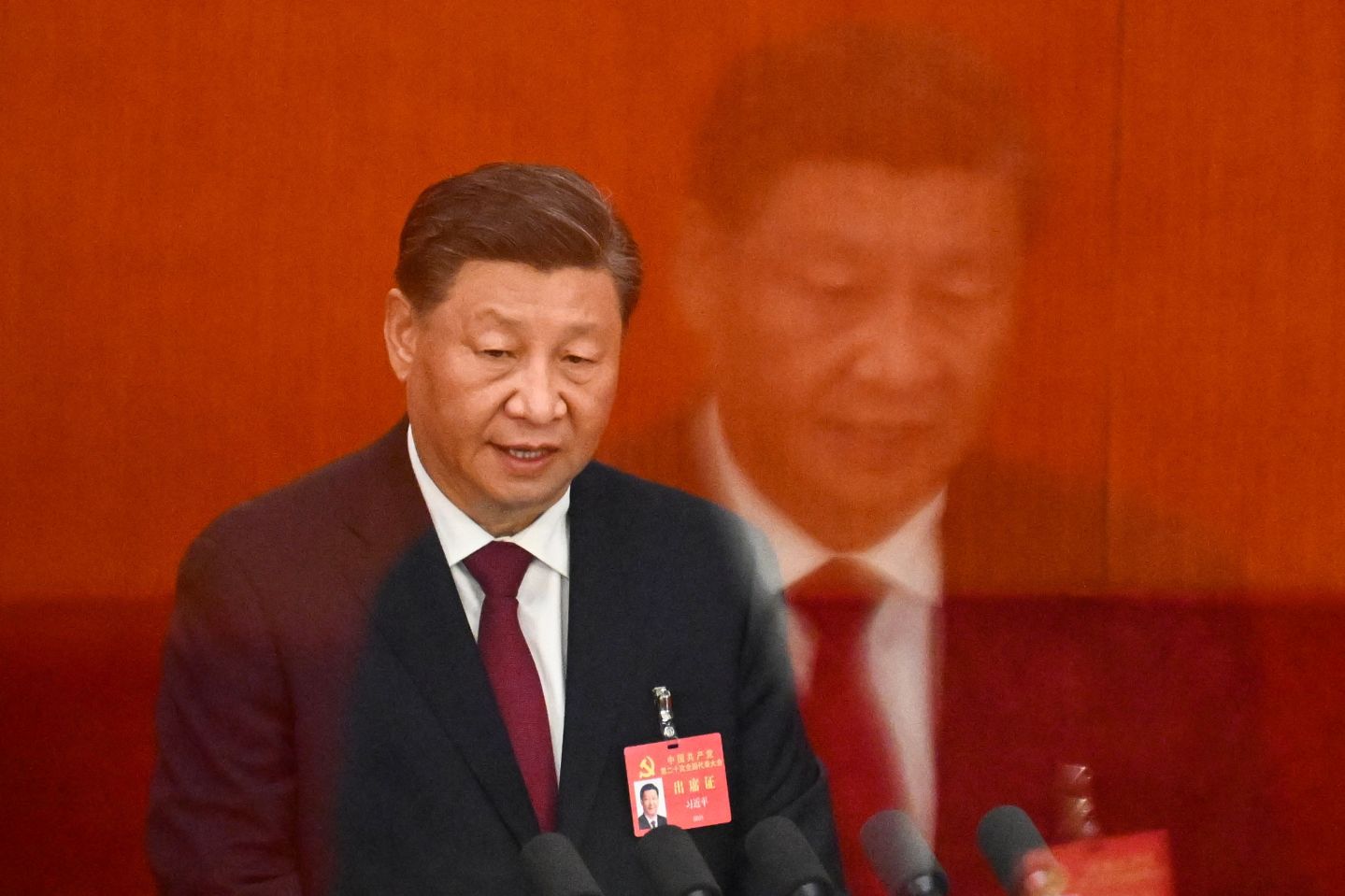
On Saturday, Xi Jinping will most likely be reelected as head of China’s Communist Party, tacking another five years onto his hard-line tenure. Whoever else comes and goes in the Politburo Standing Committee, back in Washington there’s growing sentiment that it’s time to move from economic integration to containment of China. But what does that mean for U.S. business?
One possible consequence is that the U.S. and its NAFTA and EU trading partners could move decisively to so-called friend-shoring, a doctrine in which any product—from electric vehicles to microchips to oil and gas—would need to come from countries that share the U.S.’s values and principles. It would mean an end to trading with Russia and China, and down the line, perhaps even some OPEC members.
Among Western leaders, “friend-shoring” certainly is gaining momentum. This week, Canada’s Deputy Prime Minister Chrystia Freeland said that “friend-shoring is here” and that Canada “should aim to have [economic] dependency with a fellow democracy.” In the U.S., Treasury Secretary Janet Yellen already said in July she favored increased trade with “trusted” allies. And last week, the Biden administration showed what that meant in practice: It banned U.S.-based companies from selling advanced microchips to China.
Companies with a high exposure to China and other nondemocratic countries might hope that the obsession with “friend-shoring” will blow over. But public sentiment could also shift more permanently to protectionism. As FT columnist Rana Foroohar noted this week, “The fact that both Republicans and Democrats are rethinking trade policy says something important: The idea that trade was primarily a pathway to global peace and unity…is over.”
On the bright side, one place where U.S. manufacturers will find more goodwill than ever is Germany. The two countries are respectively each other’s fifth and first trading partner, and if current sentiment is a guide, the relationship can still grow. According to a recent Pew Research survey, a record 82% of Germans say relations with the U.S. are good, and both U.S. Republicans and Democrats see Germany as a partner on various matters, from energy to the environment and in dealing with Russia and China.
Has the era of “friend-shoring” truly begun then? As a lover of history, I would add one note of caution to the hurrah sentiment, and it’s this: Over the centuries, golden eras of global powers tended to coincide with times they were trading with each other. It was true for the Roman and Chinese empires in ancient times, for Britain and the U.S. in the 19th century, and indeed for China and the U.S. until now.
Conversely, empires tend to decline when they turn to autarky, or restrict themselves to protectionism or mercantilism. It may be one reason why some U.S. investors and entrepreneurs, such as Ray Dalio and Elon Musk, continue to favor trade and integration with China amid the changing tide. To find out why, you can listen to Dalio’s Leadership Next interview with Alan Murray, recorded last month, on Apple or Spotify.
More news below.
Peter Vanham
@petervanham
peter.vanham@fortune.com
TOP NEWS
Tesla targets
Tesla posted its highest-ever quarterly revenue yesterday—$21.5 billion, up 55% year on year—but it still fell short of analyst expectations. The car firm also cut its full-year growth expectations, saying it would just miss its target of increasing vehicle deliveries by 5% this year. Tesla CFO Zach Kirkhorn blamed production and distribution changes for that. Wall Street Journal
China and Taiwan
China could invade Taiwan this year or next, according to Admiral Mike Gilday, head of the U.S. Navy. “I don’t mean at all to be alarmist,” he told the Atlantic Council yesterday. “It’s just that we can’t wish that away.” There have been previous warnings in the U.S. that such an event could happen by 2027, and China expert Bonnie Glaser said it was “irresponsible” of Gilday to predict an invasion before 2024. Financial Times
COVID vaccines
The European Medicines Agency has finally recommended the authorization of Moderna’s and Pfizer/BioNTech’s COVID vaccines for children as young as 6 months. The move comes months after similar authorization was granted in the U.S. The EMA also approved the rollout—for those age 12 and over—of Moderna booster shots that target the BA.4 and BA.5 Omicron variants as well as the original COVID virus. Reuters
AROUND THE WATERCOOLER
From TikTok to JPMorgan, these companies are ending lavish employee perks amid economic uncertainty, by Paige McGlauflin
An exclusive cohort controls one-third of all Fortune 500 board seats. Here’s why that’s a problem, by Lila MacLellan
Goldman Sachs’ anti-remote-work CEO has almost brought office work back to pre-pandemic levels—but insists he ‘doesn’t want rules,’ by Christiaan Hetzner
Biden is trying to drive down gas prices ahead of tough midterms: ‘They’re not falling fast enough,’ by the Associated Press
Record wind and solar production in Europe offset 11 billion euros in natural gas costs this year, but it’s too little to end the energy crisis, by Tristan Bove
This edition of CEO Daily was edited by David Meyer.
This is the web version of CEO Daily, a newsletter of must-read insights from Fortune CEO Alan Murray. Sign up to get it delivered free to your inbox.