• Home
  • Latest
  • Fortune 500
  • Finance
  • Tech
  • Leadership
  • Lifestyle
  • Rankings
  • Multimedia
Commentary

More than a million women have left the workforce. The Fed needs to consider them as it defines ‘full employment’

By
Katica Roy
Katica Roy
Down Arrow Button Icon
By
Katica Roy
Katica Roy
Down Arrow Button Icon
September 6, 2022, 5:02 AM ET
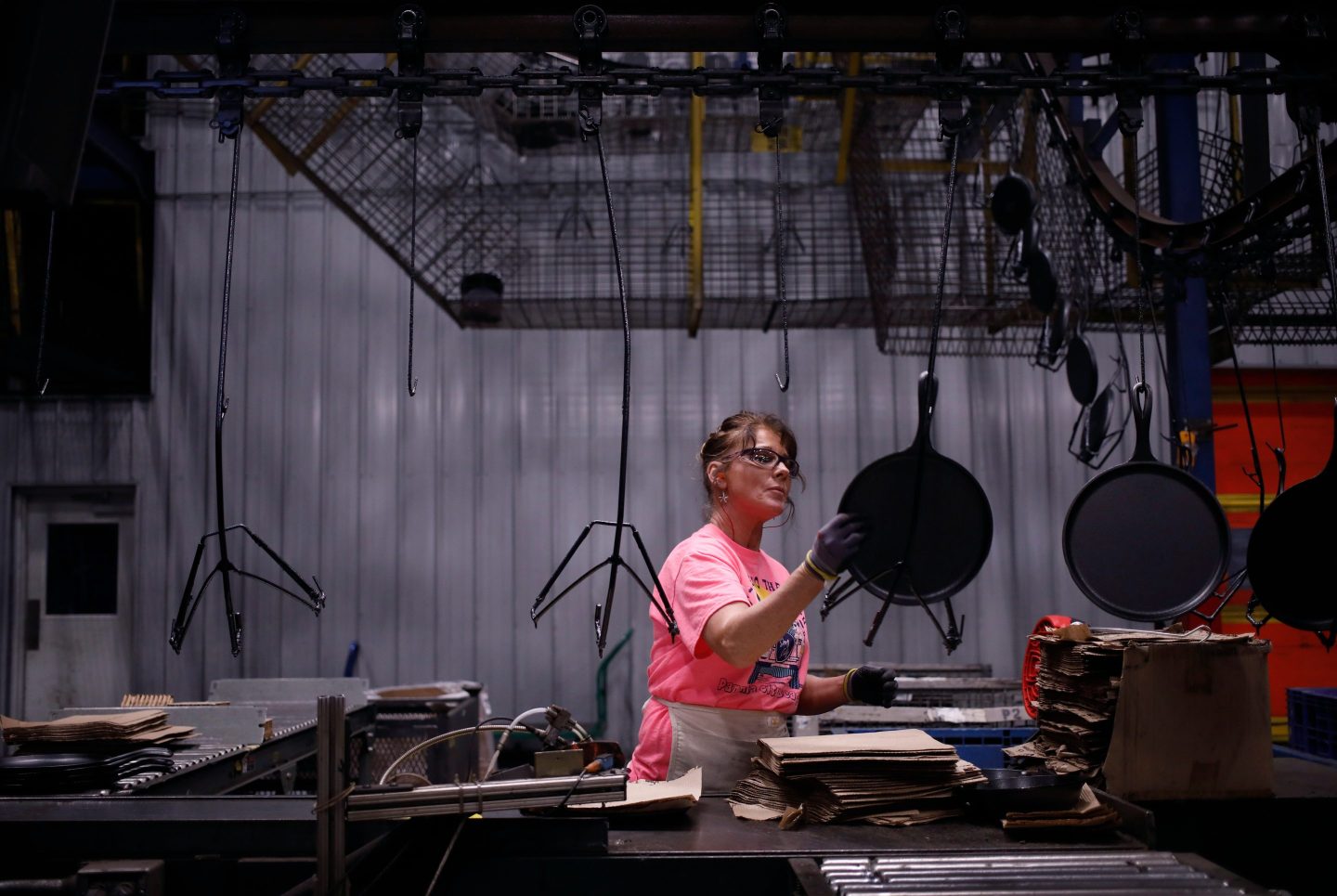
Women's workforce participation has not recovered to pre-pandemic levels. Meanwhile, record numbers of jobs are left unfilled.
Women's workforce participation has not recovered to pre-pandemic levels. Meanwhile, record numbers of jobs are left unfilled.Luke Sharrett—Bloomberg/Getty Images

“Mission accomplished” in monetary policy is a moving target. The Fed’s mandate of maximum employment and price stability exists within a dynamic economic system with diverse economic players. While we shouldn’t expect policymakers to hit a bullseye, we should expect them to use the most accurate and efficient tools available.      

In the case of maximum employment, the Fed aims to achieve the fullest level of employment without spiking inflation. The sweet spot for maximum employment falls between 4.1% and 4.7% unemployment rate. Some unemployment, such as frictional or transient cyclical unemployment, supports our economy by stabilizing wages and thus attenuating inflation, hence why an unemployment rate closer to 0 is never the goal. 

July’s aggregate unemployment rate logged in at 3.5%, well below the recommended maximum employment range. This level of unemployment screams “too hot—take action.” And indeed, the Fed heard the call. Already this year they’ve set the fastest pace of interest rate hikes in four decades to cool off the economy. September’s Federal Open Market Rates meeting will continue the trend. However, the meaning of the call changes if we look at the disaggregated data.

The folly of gender-ignorant indicators

When we deal in percentages that control for population growth, women’s labor force participation rate was 59.2% on the eve of the pandemic. As of Sep. 2, 2022, it’s 58.4%. That means the U.S. labor force has lost 1.067 million women since February 2020. If we include these missing women in August’s unemployment figures, women’s unemployment rate would be 4.6%, or at the upper limit of maximum employment.    

That’s all women. For Black women, counting the 309,000 of them missing from the labor force since the start of the pandemic, their unemployment rate is 8.5%. For Latinas, counting the 252,000 of them missing from the labor force since the start of the pandemic, their unemployment rate is 6.1%. Perhaps economists shouldn’t have been so quick to herald the historic low headline 3.7% unemployment level for Latinas last month.

The disaggregated economic indicators aren’t saying “cool down”. In some cases, they’re saying “heat up.” So how should we act on these seemingly conflicting signals without triggering undue chaos?      

An equitable solution

Disaggregated data matters because it sharpens our view of the economy. A sharper view of the economy matters because it optimizes decision-making. For instance, if we brought back the 1.067 million women missing from the labor force since February 2020, we could close the worker-to-open-job gap by almost 25%.

This, in turn, would keep the economy from overheating by lowering the demand for workers. As it stands, our economy has nearly two open jobs for every jobseeker, and employers must raise wages to attract and retain workers. Cue the wage-price spiral.

Instead of hiking interest rates to cool down the economy (an inequitable “solution” that hurts women and people of color the most), the gender and race disaggregated data suggests a different, more equitable solution: We should increase the labor supply by bringing the 1.067 million missing women back into the workforce. Doing so would stabilize prices, ensure a more inclusive recovery, and jumpstart equitable economic growth.

We all pay the price for gender-ignorant policy making. Women have added $2 trillion to the US economy since 1970 by increasing their labor force participation. The pandemic has siphoned off 63% of that progress, or $1.26 trillion worth of economic potential.

Failing to create policies to bring women back into the labor force is a dereliction of fiduciary responsibility because it keeps gender equity’s $3.1–trillion potential trapped in the cracks of our economy. It also means the Fed isn’t living up to its congressional mandate to “aim for maximum employment and price stability.”

We can overcome gender ignorance by applying the intersectional gender lens to economic data. Then we can use this more precise view of the economy to inform more efficient, more effective, and more equitable policies.

Katica Roy is the CEO of Pipeline.

The opinions expressed in Fortune.com commentary pieces are solely the views of their authors and do not reflect the opinions and beliefs of Fortune.

More must-read commentary published by Fortune:

  • Amazon and Walmart want the FAA to let them use part of your property. Here’s how drone delivery companies are coming for your airspace
  • Howard Schultz once spoke of the ‘reservoir of trust’ he had with Starbucks employees–but his war on unions risks destroying that bond
  • Why India could single-handedly shape the future of e-commerce this summer
  • Here’s how the pandemic-fueled surge in gaming is reshaping our understanding of its effects on mental health
  • Stop calling them ‘job creators’

Sign up for the Fortune Features email list so you don’t miss our biggest features, exclusive interviews, and investigations.
About the Author
By Katica Roy
See full bioRight Arrow Button Icon

Latest in Commentary

Finance
Lorem ipsum dolor sit amet, consectetur adipiscing elit, sed do eiusmod tempor incididunt ut labore et dolore magna aliqua. Ut enim ad minim veniam
By Fortune Editors
October 20, 2025
Finance
Lorem ipsum dolor sit amet, consectetur adipiscing elit, sed do eiusmod tempor incididunt ut labore et dolore magna aliqua. Ut enim ad minim veniam
By Fortune Editors
October 20, 2025
Finance
Lorem ipsum dolor sit amet, consectetur adipiscing elit, sed do eiusmod tempor incididunt ut labore et dolore magna aliqua. Ut enim ad minim veniam
By Fortune Editors
October 20, 2025
Finance
Lorem ipsum dolor sit amet, consectetur adipiscing elit, sed do eiusmod tempor incididunt ut labore et dolore magna aliqua. Ut enim ad minim veniam
By Fortune Editors
October 20, 2025
Finance
Lorem ipsum dolor sit amet, consectetur adipiscing elit, sed do eiusmod tempor incididunt ut labore et dolore magna aliqua. Ut enim ad minim veniam
By Fortune Editors
October 20, 2025
Finance
Lorem ipsum dolor sit amet, consectetur adipiscing elit, sed do eiusmod tempor incididunt ut labore et dolore magna aliqua. Ut enim ad minim veniam
By Fortune Editors
October 20, 2025

Most Popular

Finance
Lorem ipsum dolor sit amet, consectetur adipiscing elit, sed do eiusmod tempor incididunt ut labore et dolore magna aliqua. Ut enim ad minim veniam
By Fortune Editors
October 20, 2025
Finance
Lorem ipsum dolor sit amet, consectetur adipiscing elit, sed do eiusmod tempor incididunt ut labore et dolore magna aliqua. Ut enim ad minim veniam
By Fortune Editors
October 20, 2025
Finance
Lorem ipsum dolor sit amet, consectetur adipiscing elit, sed do eiusmod tempor incididunt ut labore et dolore magna aliqua. Ut enim ad minim veniam
By Fortune Editors
October 20, 2025
Finance
Lorem ipsum dolor sit amet, consectetur adipiscing elit, sed do eiusmod tempor incididunt ut labore et dolore magna aliqua. Ut enim ad minim veniam
By Fortune Editors
October 20, 2025
Finance
Lorem ipsum dolor sit amet, consectetur adipiscing elit, sed do eiusmod tempor incididunt ut labore et dolore magna aliqua. Ut enim ad minim veniam
By Fortune Editors
October 20, 2025
Finance
Lorem ipsum dolor sit amet, consectetur adipiscing elit, sed do eiusmod tempor incididunt ut labore et dolore magna aliqua. Ut enim ad minim veniam
By Fortune Editors
October 20, 2025
Fortune Secondary Logo
Rankings
  • 100 Best Companies
  • Fortune 500
  • Global 500
  • Fortune 500 Europe
  • Most Powerful Women
  • Future 50
  • World’s Most Admired Companies
  • See All Rankings
Sections
  • Finance
  • Fortune Crypto
  • Features
  • Leadership
  • Health
  • Commentary
  • Success
  • Retail
  • Mpw
  • Tech
  • Lifestyle
  • CEO Initiative
  • Asia
  • Politics
  • Conferences
  • Europe
  • Newsletters
  • Personal Finance
  • Environment
  • Magazine
  • Education
Customer Support
  • Frequently Asked Questions
  • Customer Service Portal
  • Privacy Policy
  • Terms Of Use
  • Single Issues For Purchase
  • International Print
Commercial Services
  • Advertising
  • Fortune Brand Studio
  • Fortune Analytics
  • Fortune Conferences
  • Business Development
About Us
  • About Us
  • Editorial Calendar
  • Press Center
  • Work At Fortune
  • Diversity And Inclusion
  • Terms And Conditions
  • Site Map
Fortune Secondary Logo
  • About Us
  • Editorial Calendar
  • Press Center
  • Work At Fortune
  • Diversity And Inclusion
  • Terms And Conditions
  • Site Map
  • Facebook icon
  • Twitter icon
  • LinkedIn icon
  • Instagram icon
  • Pinterest icon

Latest in Commentary

putin
CommentaryRussia
Exclusive analysis: we looked at the 400 western firms still in Russia. Their paltry size strips Putin’s bluff bare naked
By Jeffrey Sonnenfeld, Stephen Henriques, Jake Waldinger and Giuseppe ScottoFebruary 27, 2026
12 hours ago
roth
CommentaryLeadership
The AI resource reallocation challenge: How can companies capture the value of time?
By Erik RothFebruary 27, 2026
15 hours ago
will
CommentaryAdvertising
I’m one of America’s top pollsters and I’ve got a warning for the AI companies: customers aren’t sold on ads
By Will JohnsonFebruary 27, 2026
17 hours ago
the pitt
CommentaryDEI
‘The Pitt’: a masterclass display of DEI in action 
By Robert RabenFebruary 26, 2026
2 days ago
david booth
CommentaryMarkets
3 lessons from investing’s ‘moneyball’ moment
By David BoothFebruary 25, 2026
3 days ago
CommentaryCulture
Gen Z’s enthusiasm for all things touchable is resurrecting the analog economy—and costing parents
By Luba KassovaFebruary 24, 2026
3 days ago

Most Popular

placeholder alt text
Innovation
An MIT roboticist who cofounded bankrupt robot vacuum maker iRobot says Elon Musk’s vision of humanoid robot assistants is ‘pure fantasy thinking’
By Marco Quiroz-GutierrezFebruary 25, 2026
2 days ago
placeholder alt text
Success
Jeff Bezos says being lazy, not working hard, is the root of anxiety: ‘The stress goes away the second I take that first step’
By Sydney LakeFebruary 25, 2026
2 days ago
placeholder alt text
Commentary
'The Pitt': a masterclass display of DEI in action 
By Robert RabenFebruary 26, 2026
2 days ago
placeholder alt text
Economy
Trump claims America is ‘winning so much.’ The IMF agrees, adding that Trump’s trade policies are the only thing holding it back from even more
By Tristan BoveFebruary 26, 2026
1 day ago
placeholder alt text
Economy
It’s more than George Clooney moving to France: America is becoming the ‘uncool’ country that people want to move away from
By Nick LichtenbergFebruary 27, 2026
18 hours ago
placeholder alt text
Success
Gen Z Olympic champion Eileen Gu says she rewires her brain daily to be more successful—and multimillionaire founder Arianna Huffington says it really does work
By Orianna Rosa RoyleFebruary 25, 2026
2 days ago

© 2026 Fortune Media IP Limited. All Rights Reserved. Use of this site constitutes acceptance of our Terms of Use and Privacy Policy | CA Notice at Collection and Privacy Notice | Do Not Sell/Share My Personal Information
FORTUNE is a trademark of Fortune Media IP Limited, registered in the U.S. and other countries. FORTUNE may receive compensation for some links to products and services on this website. Offers may be subject to change without notice.










