• Home
  • Latest
  • Fortune 500
  • Finance
  • Tech
  • Leadership
  • Lifestyle
  • Rankings
  • Multimedia
CommentaryStarbucks

Howard Schultz once spoke of the ‘reservoir of trust’ he had with Starbucks employees–but his war on unions risks destroying that bond

By
Aron Solomon
Aron Solomon
Down Arrow Button Icon
By
Aron Solomon
Aron Solomon
Down Arrow Button Icon
August 15, 2022, 11:49 AM ET
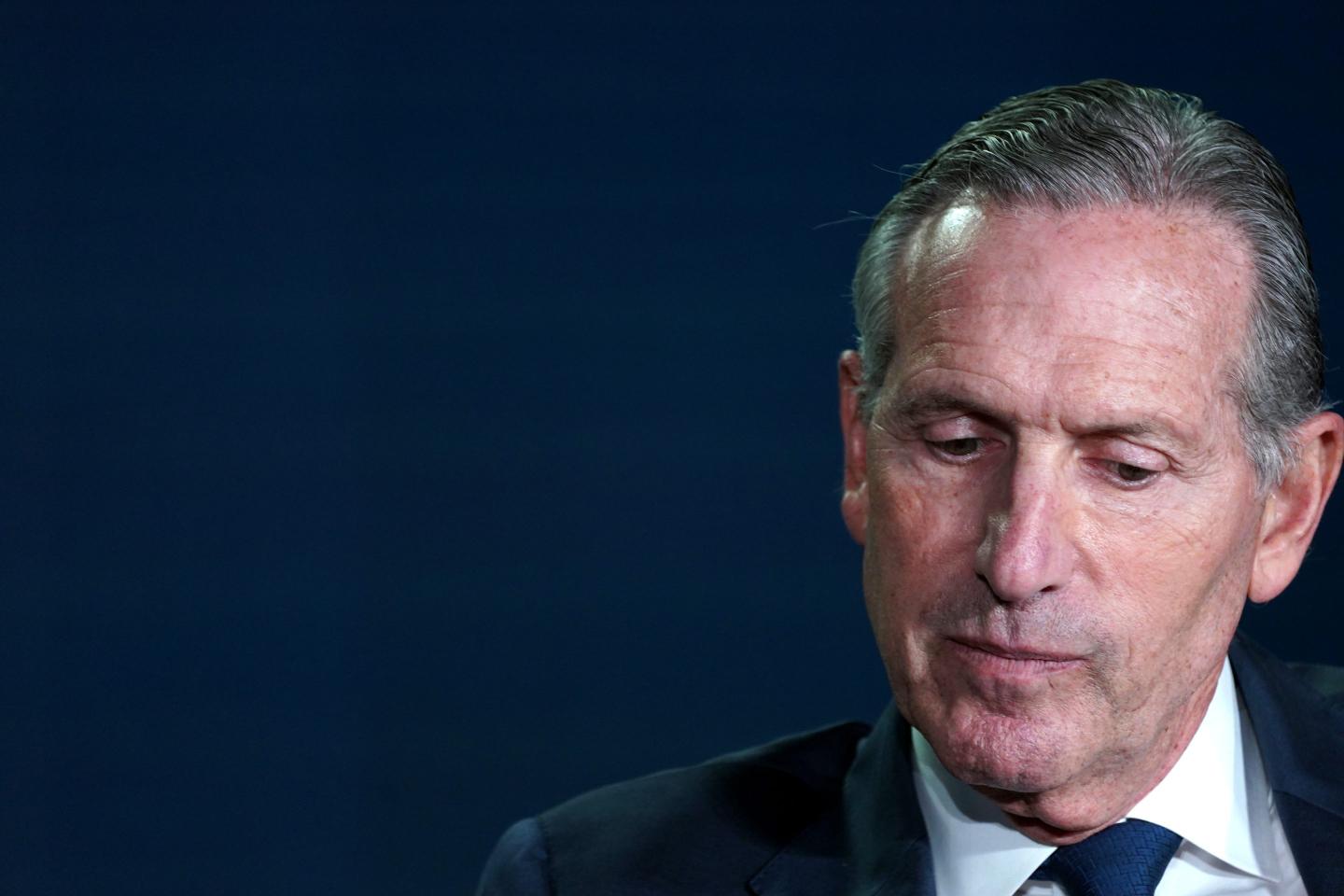
Howard Schultz speaks onstage
Starbucks returning CEO Howard Schultz is shutting down 16 chain locations across the U.S. after workers reported incidents of drug use at certain locations.Leigh Vogel—Getty Images/The New York Times

When, four short months ago, I wrote an op-ed about the uncertain future of Starbucks, I honestly would not have predicted that things would implode this quickly.

I imagined that Howard Schultz would return to the company as a faithful caretaker who would do what he historically did best: be a likable leader with a fantastic ability to relate to people.

However, in a mid-July letter to employees, interim CEO Howard Schultz set forth his bold vision of the future. Part of his plan for Starbucks to re-imagine its business is to close locations. Last week, videos of employee walkouts went viral–a massive blow to the company’s reputation.

While Starbucks claims that stores are being closed for safety and security reasons, there is another reality at play: The company is locked in a fight to the finish with a surprisingly resilient nascent employee union movement.

The narrative being woven by Starbucks is one of employee safety. As The Wall Street Journal reported, Starbucks was responding to employee reports of drug use in bathrooms by customers and the general public. Initially, Starbucks informed workers that they could deny bathroom access or reduce store operations for safety in these locations.

The same week that Schultz proclaimed the future, Starbucks announced that 16 locations would be shuttered this month. The company is closing six locations in Seattle, another six in Los Angeles, two in Portland, and one each in Washington and Philadelphia. These stores were not unprofitable–and Starbucks has made it clear that this won’t be the end of the closures.

To a critical eye, Starbucks’ positioning is difficult to believe. While workplace safety needs to always be front of mind, many less-than-deal Starbucks locations haven’t been entirely safe for employees for years. What is new is the intersection of some of these locations and a burgeoning union movement.

It’s a little too convenient to craft a new narrative when these very cities are forming part of the foundation of the Starbucks unionization movement. Two of the stores that will be closing recently voted to unionize. At the same time, in the quaint college town of Ithaca, NY, the Starbucks union claims a store is being closed in retaliation for employees voting to unionize.

As Charlie Cartwright, a lawyer who represents employees injured in the workplace, puts it: “Workplace safety is critically important and should drive corporate decision-making where employees are at risk. At the same time, union-busting takes various forms, including closing business locations where employees have chosen to unionize.”

This also needs to be viewed within the totality of the labor battles at Starbucks over the past few months. Issues range from a complaint alleging that the company threatened to stop gender-affirming health benefits to the NLRB having to urge Starbucks to reinstate three Phoenix workers subjected to unfair labor practices relating to union membership. What started as a series of small battles between Starbucks and employees has escalated into a full-scale war.

To navigate these troubled waters, Starbucks needs the reflective Howard Schultz of this iconic 2010 Harvard Business Review interview. Asked what the most significant challenge he faced after returning to the helm in 2008, Schultz shared this prescient view: “The challenge was how to preserve and enhance the integrity of the only assets we have as a company: our values, our culture and guiding principles, and the reservoir of trust with our people.”

Today, this is Starbucks’ greatest failure. The complete absence of trust between Starbucks employees and management has taken all meaning out of one of Schultz’s most beloved terms: “partners.” That’s what Starbucks’s massive PR machine calls their workers.

Even if Starbucks eventually “wins” by shuttering locations and using every union-busting technique, the company will ultimately lose. The Starbucks culture is irrevocably broken–and for many workers, the greatest irony is that the person in charge of fixing it today is the one who actually broke it.

For those who have watched the company closely for years, this is one of the most incredible failed opportunities in American business history. Culture-building is unbelievably hard, but in building the brand, Starbucks had found ways to build the culture.

The same Starbucks stories that are hollow today were once part of its foundation. The ability for their employees to work their way up the ranks of the business to transform what might have started as a part-time job into a career was part of the neo-American dream. Throw in the opportunity to earn a degree, and Starbucks was on to something.

Until they couldn’t help getting in their own way. One day all of this will be required reading in business schools–but today, it’s a cold brew for Starbucks employees to swallow.

In his HBR interview, Schultz shared a personal and professional revelation he hoped would allow Starbucks to avoid the kind of situation it faces today:

“The decisions we had to make were very difficult, but first there had to be a time when we stood up in front of the entire company as leaders and made almost a confession–that the leadership had failed the 180,000 Starbucks people and their families.”

This would be an excellent idea for the latest incarnation of a Schultz-led Starbucks to re-visit. There never needed to be such a profoundly adversarial relationship between the company and its workers.

Aron Solomon, JD, is the chief legal analyst for Esquire Digital, the editor of Today’s Esquire, and a Pulitzer Prize-nominated writer. He has taught entrepreneurship at McGill University and the University of Pennsylvania and was elected to Fastcase 50, recognizing the top 50 legal innovators in the world.

The opinions expressed in Fortune.com commentary pieces are solely the views of their authors and do not reflect the opinions and beliefs of Fortune.

More must-read commentary published by Fortune:

  • Here come the Roarin’ 20s. Invest until it hurts
  • The recession is already here—if you’re a woman
  • Why India could single-handedly shape the future of e-commerce this summer
  • Here’s how the pandemic-fueled surge in gaming is reshaping our understanding of its effects on mental health
  • Stop calling them ‘job creators’

Sign up for the Fortune Features email list so you don’t miss our biggest features, exclusive interviews, and investigations.

About the Author
By Aron Solomon
See full bioRight Arrow Button Icon

Latest in Commentary

Finance
Lorem ipsum dolor sit amet, consectetur adipiscing elit, sed do eiusmod tempor incididunt ut labore et dolore magna aliqua. Ut enim ad minim veniam
By Fortune Editors
October 20, 2025
Finance
Lorem ipsum dolor sit amet, consectetur adipiscing elit, sed do eiusmod tempor incididunt ut labore et dolore magna aliqua. Ut enim ad minim veniam
By Fortune Editors
October 20, 2025
Finance
Lorem ipsum dolor sit amet, consectetur adipiscing elit, sed do eiusmod tempor incididunt ut labore et dolore magna aliqua. Ut enim ad minim veniam
By Fortune Editors
October 20, 2025
Finance
Lorem ipsum dolor sit amet, consectetur adipiscing elit, sed do eiusmod tempor incididunt ut labore et dolore magna aliqua. Ut enim ad minim veniam
By Fortune Editors
October 20, 2025
Finance
Lorem ipsum dolor sit amet, consectetur adipiscing elit, sed do eiusmod tempor incididunt ut labore et dolore magna aliqua. Ut enim ad minim veniam
By Fortune Editors
October 20, 2025
Finance
Lorem ipsum dolor sit amet, consectetur adipiscing elit, sed do eiusmod tempor incididunt ut labore et dolore magna aliqua. Ut enim ad minim veniam
By Fortune Editors
October 20, 2025

Most Popular

Finance
Lorem ipsum dolor sit amet, consectetur adipiscing elit, sed do eiusmod tempor incididunt ut labore et dolore magna aliqua. Ut enim ad minim veniam
By Fortune Editors
October 20, 2025
Finance
Lorem ipsum dolor sit amet, consectetur adipiscing elit, sed do eiusmod tempor incididunt ut labore et dolore magna aliqua. Ut enim ad minim veniam
By Fortune Editors
October 20, 2025
Finance
Lorem ipsum dolor sit amet, consectetur adipiscing elit, sed do eiusmod tempor incididunt ut labore et dolore magna aliqua. Ut enim ad minim veniam
By Fortune Editors
October 20, 2025
Finance
Lorem ipsum dolor sit amet, consectetur adipiscing elit, sed do eiusmod tempor incididunt ut labore et dolore magna aliqua. Ut enim ad minim veniam
By Fortune Editors
October 20, 2025
Finance
Lorem ipsum dolor sit amet, consectetur adipiscing elit, sed do eiusmod tempor incididunt ut labore et dolore magna aliqua. Ut enim ad minim veniam
By Fortune Editors
October 20, 2025
Finance
Lorem ipsum dolor sit amet, consectetur adipiscing elit, sed do eiusmod tempor incididunt ut labore et dolore magna aliqua. Ut enim ad minim veniam
By Fortune Editors
October 20, 2025
Fortune Secondary Logo
Rankings
  • 100 Best Companies
  • Fortune 500
  • Global 500
  • Fortune 500 Europe
  • Most Powerful Women
  • World's Most Admired Companies
  • See All Rankings
  • Lists Calendar
Sections
  • Finance
  • Fortune Crypto
  • Features
  • Leadership
  • Health
  • Commentary
  • Success
  • Retail
  • Mpw
  • Tech
  • Lifestyle
  • CEO Initiative
  • Asia
  • Politics
  • Conferences
  • Europe
  • Newsletters
  • Personal Finance
  • Environment
  • Magazine
  • Education
Customer Support
  • Frequently Asked Questions
  • Customer Service Portal
  • Privacy Policy
  • Terms Of Use
  • Single Issues For Purchase
  • International Print
Commercial Services
  • Advertising
  • Fortune Brand Studio
  • Fortune Analytics
  • Fortune Conferences
  • Business Development
  • Group Subscriptions
About Us
  • About Us
  • Press Center
  • Work At Fortune
  • Terms And Conditions
  • Site Map
  • About Us
  • Press Center
  • Work At Fortune
  • Terms And Conditions
  • Site Map
  • Facebook icon
  • Twitter icon
  • LinkedIn icon
  • Instagram icon
  • Pinterest icon

Latest in Commentary

Duncan Tait, CEO of Inchcape
Europecar manufacturing
“Competition is good for the industry”. Inchcape CEO’s case for optimism in automotive’s next chapter
By Duncan TaitApril 30, 2026
11 minutes ago
agentic
CommentaryAI agents
Why your data infrastructure — not your AI model — will determine whether Agentic AI scales
By Jeffrey Sonnenfeld, Stephen Henriques, Catherine Dai and Zander JeinthanuttkanontApril 30, 2026
3 hours ago
hoskins
Commentaryoffices
Gensler Co-Chair: Hot-desking was supposed to save money. It may be costing you your culture
By Diane HoskinsApril 30, 2026
4 hours ago
tillis
CommentaryCongress
Thom Tillis: Free markets built American prosperity. Government intervention puts it at risk
By Thom Tillis and John StanfordApril 30, 2026
6 hours ago
iran
CommentaryIran
The Strait of Hormuz is a data problem, not just a military one
By Erik Bethel and Ami DanielApril 30, 2026
6 hours ago
hollywood
CommentaryMarketing
I spent 20 years learning to navigate an industry. Then I built a campaign for the man who’s dismantling it
By Matti YahavApril 29, 2026
1 day ago

Most Popular

Apple cofounder Ronald Wayne—whose stake would be worth up to $400 billion had he not sold it in 1976—says that at 91, he has no regrets
Success
Apple cofounder Ronald Wayne—whose stake would be worth up to $400 billion had he not sold it in 1976—says that at 91, he has no regrets
By Preston ForeApril 27, 2026
3 days ago
Jamie Dimon gets candid about national debt: ‘There will be a bond crisis, and then we’ll have to deal with it’
Economy
Jamie Dimon gets candid about national debt: ‘There will be a bond crisis, and then we’ll have to deal with it’
By Eleanor PringleApril 29, 2026
1 day ago
‘They left me no choice’: Powell isn’t going anywhere—blocking Trump from another Fed appointee
Banking
‘They left me no choice’: Powell isn’t going anywhere—blocking Trump from another Fed appointee
By Eva RoytburgApril 29, 2026
20 hours ago
‘The cost of compute is far beyond the costs of the employees’: Nvidia executive says right now AI is more expensive than paying human workers
AI
‘The cost of compute is far beyond the costs of the employees’: Nvidia executive says right now AI is more expensive than paying human workers
By Sasha RogelbergApril 28, 2026
2 days ago
‘Take the money and run’: Johns Hopkins economist Steve Hanke on why the UAE quit OPEC
Energy
‘Take the money and run’: Johns Hopkins economist Steve Hanke on why the UAE quit OPEC
By Shawn TullyApril 29, 2026
1 day ago
Google Cloud revenue is now 18% of Alphabet's business. Is this the beginning of the end of Google's search identity?
Big Tech
Google Cloud revenue is now 18% of Alphabet's business. Is this the beginning of the end of Google's search identity?
By Alexei OreskovicApril 29, 2026
13 hours ago

© 2026 Fortune Media IP Limited. All Rights Reserved. Use of this site constitutes acceptance of our Terms of Use and Privacy Policy | CA Notice at Collection and Privacy Notice | Do Not Sell/Share My Personal Information
FORTUNE is a trademark of Fortune Media IP Limited, registered in the U.S. and other countries. FORTUNE may receive compensation for some links to products and services on this website. Offers may be subject to change without notice.