• Home
  • Latest
  • Fortune 500
  • Finance
  • Tech
  • Leadership
  • Lifestyle
  • Rankings
  • Multimedia

Trendingnow

1

Current price of oil as of June 15, 2026

2

Current price of silver as of Monday, June 15, 2026

3

Hundreds of Stanford students walked out of their grad ceremony to protest Google CEO’s commencement speech. It wasn’t all about AI

1

Current price of oil as of June 15, 2026

2

Current price of silver as of Monday, June 15, 2026

3

Hundreds of Stanford students walked out of their grad ceremony to protest Google CEO’s commencement speech. It wasn’t all about AI
MagazineHong Kong

Singapore, Tokyo, and Shanghai all dream of replacing Hong Kong as Asia’s top financial center. Here’s how they compare

By
Clay Chandler
Clay Chandler
Executive Editor, Asia
Down Arrow Button Icon
By
Clay Chandler
Clay Chandler
Executive Editor, Asia
Down Arrow Button Icon
August 4, 2022, 5:30 AM ET
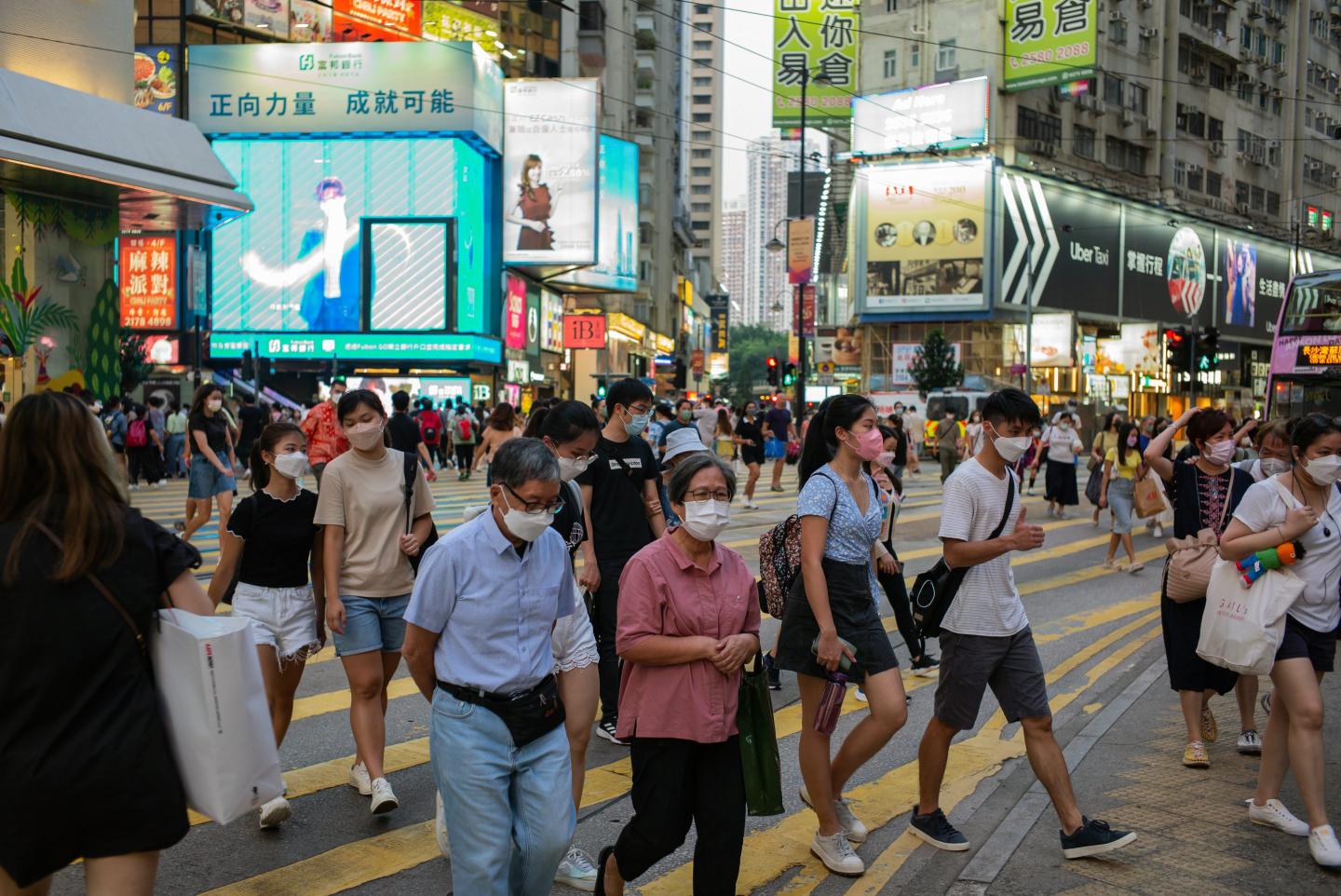
In the Causeway Bay area of Hong Kong, China, on July 31, 2022.
In the Causeway Bay area of Hong Kong, China, on July 31, 2022.Billy H.C. Kwok—Bloomberg/Getty Images
Add Fortune on Google for similar content.

Hong Kong’s COVID quarantines and new curbs on civil liberties have damaged the former British colony’s image as “Asia’s World City,” sparked an expat exodus, and stoked rival cities’ ambitions of replacing Hong Kong as the region’s preeminent financial hub.

But dethroning Hong Kong as Asia’s financial capital won’t be easy. None of the three cities most frequently mentioned as potential alternatives—Singapore, Tokyo, and Shanghai—can match Hong Kong’s unique combination of cultural and commercial attributes. All, for different reasons, face daunting challenges in attracting global talent.
Read more: China’s tech crackdown, a national security law, and an expat exodus have pummeled Hong Kong. Can this CEO save the city?

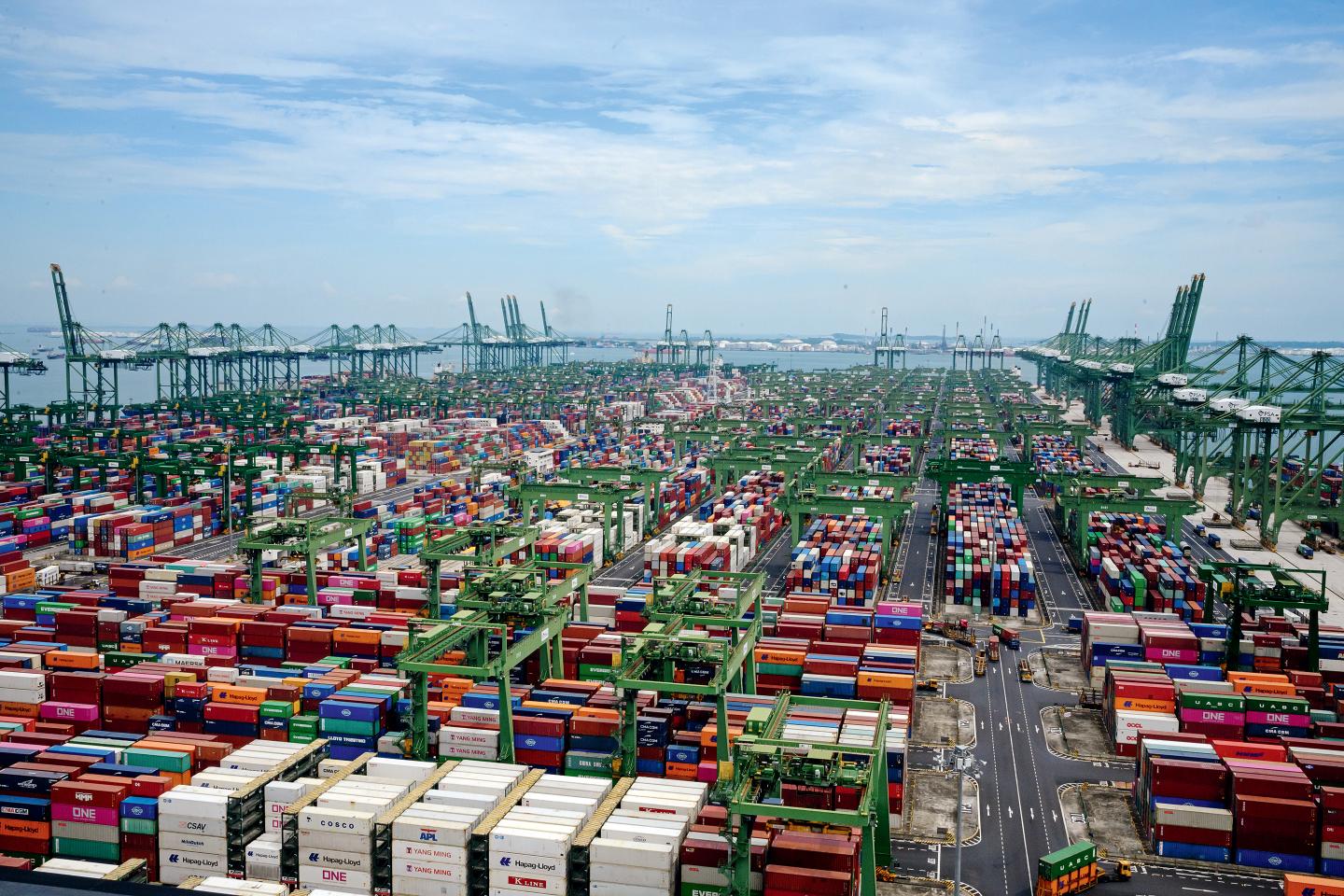
Containers are loaded on the premises of the port operator PSA, the Port of Singapore Authority (PSA).
Singapore’s port, with 1,000 berths and 300 cranes, is No. 2 in the world by volume.
Bernd von Jutrczenka—Picture Alliance/Getty Images

Singapore

Consider Singapore, often cited as the most likely refuge for the thousands of expat executives who have fled Hong Kong over the past two years. Like Hong Kong, Singapore is a former British colony with a British commercial code, and a world-class airport with easy connections to other Asian cities. English and Chinese are widely spoken. International school standards are high, taxes are low. Southeast Asia has become an increasingly attractive business destination for Western companies. And, unlike Hong Kong, Singapore in April lifted the border restrictions it introduced early in the COVID pandemic to allow entry to all vaccinated travelers.

And yet, as Bloomberg recently reported, the influx of bankers into Singapore from Hong Kong has turned out to be “more of a trickle than a flood.” Global companies seeking to shift staff to Singapore say they’ve encountered unexpected resistance from immigration authorities in the form of stricter visa requirements, new hiring restrictions, and other bureaucratic obstacles. Transferees who did win visas say they’re scrambling to find housing, with rental prices for private properties leased by expats surging as much as 40% over the past year. New arrivals to Singapore are often stunned to discover that, if they want to purchase a car in the city, they must first bid on a state-issued “certificate of entitlement” that this month cost a record-high $82,000. That’s on top of the price of the car itself. In Singapore, midrange cars can cost five times as much as in the U.S.; in Singapore a Toyota Camry retails for $132,000, compared with $28,000 in the States.

For bankers and brokers, Singapore’s biggest drawback is its dinky stock market. The Singapore exchange is home to fewer than 700 companies with a total market capitalization of less than $700 billion; Hong Kong’s stock exchange has more than 2,500 companies and a market cap of over $5 trillion.

Pros of Singapore

–Easing COVID travel restrictions
–First-rate infrastructure, including the world’s top-ranked airport 
–The new hub of choice for events like the Formula 1 Grand Prix 
–An efficient launching pad for doing business in Southeast Asia
–No tax on capital gains
–English is widely spoken

 Cons of Singapore

–Far from China; the nearest Chinese city is five hours away by plane
–A tiny stock exchange, with fewer than 700 listed companies and a market capitalization of less than $700 billion
–An immigration system in which employment visas for foreign staff are hard to come by

Tokyo

Tokyo was the region’s dominant financial center until the implosion of Japan’s speculative asset bubble in the 1990s. Both central and Tokyo metropolitan government leaders have said they want Tokyo to reclaim its old position as Asia’s finance capital. It’s not an unreasonable goal. Tokyo, with 38 million people, is Asia’s most populous city, the capital of the world’s third-largest economy, and home to 47 Fortune Global 500 companies. Tokyo boasts the world’s most punctual network of trains and subways. Once sky-high rents and property prices have declined steadily over the past several decades and are now significantly lower than those in Hong Kong. And the yen’s 20% decline against the U.S. dollar this year is a potential boon for expat bankers paid in greenbacks.

But those considerable advantages are offset by the fact that Tokyo has few foreign residents, and few Japanese speak foreign languages. The Tokyo Stock Exchange, with 2,200 companies and a market cap of more than $5 trillion, is comparable to Hong Kong’s in size, but includes only four non-Japanese companies. Japan’s long economic stagnation has made it an unattractive destination for global investors, and the Tokyo exchange has little appeal for investors seeking to bet on continued growth in China.

But for global bankers, brokers, and asset managers, the real dealbreaker is taxes. Japan’s top personal income tax rate is 55%. Capital gains, which are untaxed in Hong Kong and Singapore, are treated as income in Japan.

Pros of Tokyo

–Japan is the world’s third-largest economy and home to 47 Fortune Global 500 companies
–High-caliber infrastructure, with the world’s most punctual network of trains and subways
–Once sky-high rents and property values have declined and, by Hong Kong standards, seem almost affordable
–A weak currency that has plunged 20% against the dollar this year, a boon for expat bankers paid in USD

Cons of Tokyo

–Small expat population; few Japanese speak English
–Its large stock exchange—with 2,200 companies and a market cap of more than $5 trillion—features few non-Japanese companies

Shanghai

Official vows that Shanghai would eventually eclipse Hong Kong as Asia’s financial capital go back decades but gained momentum after the global financial crisis. In 2009, Zhou Xiaochuan, then governor of China’s central bank, told a prominent Chinese financial forum that China “needs an international financial center” to match its rising influence in global finance and that Shanghai was the best candidate. The Shanghai skyline, which sprouted skyscrapers throughout the 1990s and 2000s, now looks the part. The Shanghai Stock Exchange, with a market cap of $7 trillion, is the world’s third-largest and hosts 85 Fortune Global 500 firms.

But Shanghai, like Tokyo, functions almost exclusively as a marketplace for domestic companies and investors. For financiers, the disadvantages to setting up shop in Shanghai are numerous and significant. At the top of the list is China’s commitment to a “COVID-zero” approach to combating the coronavirus, leaving residents at risk of extended citywide lockdowns in the event of a minor outbreak. China’s borders remain effectively closed to non-Chinese travelers. It doesn’t help that China has a digital firewall to block internet access to overseas websites; the wall can be hurdled using a VPN, but connections are slow and unreliable.

Top tax rates on China’s mainland are nearly as high as those in Japan. China’s legal system is opaque and unpredictable. Mainland stock exchanges, though huge, are dominated by unsophisticated retail investors and often behave more like casinos than markets. Another significant drawback: China’s strict capital controls mean that foreign investors who profit on the Shanghai exchange can’t bring their money home.

Pros of Shanghai

–Its stock exchange, with total market cap of about $7 trillion, is the world’s third-largest and features 85 Global 500 companies 
–A government pledge to make the city one of the world’s leading financial hubs

Cons of Shanghai

–Chinese exchanges, dominated by retail investors who trade heavily on rumor, are highly volatile
–A COVID-zero policy that has shut out foreign travelers and subjected residents to mass lockdowns
–Strict capital controls; profits earned in China have to stay there
–Personal income tax rates of up to 45%
–The Great Firewall, which restricts internet access to websites outside China

A version of this article appears in the August/September 2022 issue of Fortune with the headline, “Which city will be the next Hong Kong?”

Sign up for the Fortune Features email list so you don’t miss our biggest features, exclusive interviews, and investigations.

About the Author
By Clay ChandlerExecutive Editor, Asia

Clay Chandler is executive editor, Asia, at Fortune.

See full bioRight Arrow Button Icon
Add Fortune on Google for similar content.

Latest from the Magazine

Finance
Lorem ipsum dolor sit amet, consectetur adipiscing elit, sed do eiusmod tempor incididunt ut labore et dolore magna aliqua. Ut enim ad minim veniam
By Fortune Editors
October 20, 2025
Finance
Lorem ipsum dolor sit amet, consectetur adipiscing elit, sed do eiusmod tempor incididunt ut labore et dolore magna aliqua. Ut enim ad minim veniam
By Fortune Editors
October 20, 2025
Finance
Lorem ipsum dolor sit amet, consectetur adipiscing elit, sed do eiusmod tempor incididunt ut labore et dolore magna aliqua. Ut enim ad minim veniam
By Fortune Editors
October 20, 2025
Finance
Lorem ipsum dolor sit amet, consectetur adipiscing elit, sed do eiusmod tempor incididunt ut labore et dolore magna aliqua. Ut enim ad minim veniam
By Fortune Editors
October 20, 2025
Finance
Lorem ipsum dolor sit amet, consectetur adipiscing elit, sed do eiusmod tempor incididunt ut labore et dolore magna aliqua. Ut enim ad minim veniam
By Fortune Editors
October 20, 2025
Finance
Lorem ipsum dolor sit amet, consectetur adipiscing elit, sed do eiusmod tempor incididunt ut labore et dolore magna aliqua. Ut enim ad minim veniam
By Fortune Editors
October 20, 2025

Most Popular

Finance
Lorem ipsum dolor sit amet, consectetur adipiscing elit, sed do eiusmod tempor incididunt ut labore et dolore magna aliqua. Ut enim ad minim veniam
By Fortune Editors
October 20, 2025
Finance
Lorem ipsum dolor sit amet, consectetur adipiscing elit, sed do eiusmod tempor incididunt ut labore et dolore magna aliqua. Ut enim ad minim veniam
By Fortune Editors
October 20, 2025
Finance
Lorem ipsum dolor sit amet, consectetur adipiscing elit, sed do eiusmod tempor incididunt ut labore et dolore magna aliqua. Ut enim ad minim veniam
By Fortune Editors
October 20, 2025
Finance
Lorem ipsum dolor sit amet, consectetur adipiscing elit, sed do eiusmod tempor incididunt ut labore et dolore magna aliqua. Ut enim ad minim veniam
By Fortune Editors
October 20, 2025
Finance
Lorem ipsum dolor sit amet, consectetur adipiscing elit, sed do eiusmod tempor incididunt ut labore et dolore magna aliqua. Ut enim ad minim veniam
By Fortune Editors
October 20, 2025
Finance
Lorem ipsum dolor sit amet, consectetur adipiscing elit, sed do eiusmod tempor incididunt ut labore et dolore magna aliqua. Ut enim ad minim veniam
By Fortune Editors
October 20, 2025
Fortune Secondary Logo
Rankings
  • 100 Best Companies
  • Fortune 500
  • Global 500
  • Fortune 500 Europe
  • Most Powerful Women
  • World's Most Admired Companies
  • See All Rankings
  • Lists Calendar
Sections
  • Finance
  • Fortune Crypto
  • Features
  • Leadership
  • Health
  • Commentary
  • Success
  • Retail
  • Mpw
  • Tech
  • Lifestyle
  • CEO Initiative
  • Asia
  • Politics
  • Conferences
  • Europe
  • Newsletters
  • Personal Finance
  • Environment
  • Magazine
  • Education
Customer Support
  • Frequently Asked Questions
  • Customer Service Portal
  • Privacy Policy
  • Terms Of Use
  • Single Issues For Purchase
  • International Print
Commercial Services
  • Advertising
  • Fortune Brand Studio
  • Fortune Analytics
  • Fortune Conferences
  • Business Development
  • Group Subscriptions
About Us
  • About Us
  • Press Center
  • Work At Fortune
  • Terms And Conditions
  • Site Map
  • About Us
  • Press Center
  • Work At Fortune
  • Terms And Conditions
  • Site Map
  • Facebook icon
  • Twitter icon
  • LinkedIn icon
  • Instagram icon
  • Pinterest icon

Latest from the Magazine

REE Corp. chair Nguyen Thi Mai Thanh spent 40 years navigating Vietnam’s economy. Here’s what she thinks comes next
MagazineVietnam
REE Corp. chair Nguyen Thi Mai Thanh spent 40 years navigating Vietnam’s economy. Here’s what she thinks comes next
By Nicholas GordonJune 16, 2026
5 hours ago
Vietnam is becoming the hottest tourist hotspot in Southeast Asia—and trying to avoid Thailand’s mistakes
Magazinetourism
Vietnam is becoming the hottest tourist hotspot in Southeast Asia—and trying to avoid Thailand’s mistakes
By Angelica AngJune 16, 2026
5 hours ago
More than manufacturing: Vietnam has hopes to become Asia’s next cultural powerhouse
MagazineMedia
More than manufacturing: Vietnam has hopes to become Asia’s next cultural powerhouse
By Lee WilliamsonJune 16, 2026
5 hours ago
Vietnam’s economy is one of the fastest-growing in the world. Can it make the leap into the ranks of middle-income countries?
MagazineVietnam
Vietnam’s economy is one of the fastest-growing in the world. Can it make the leap into the ranks of middle-income countries?
By Nicholas GordonJune 16, 2026
8 hours ago
The Southeast Asia 500 has a new engine: Vietnam
MagazineSoutheast Asia 500
The Southeast Asia 500 has a new engine: Vietnam
By Andrew StaplesJune 15, 2026
15 hours ago
The $1 billion game that says AI can’t replace human creativity
MagazineGaming
The $1 billion game that says AI can’t replace human creativity
By Kamal AhmedJune 15, 2026
1 day ago

Most Popular

Current price of oil as of June 15, 2026
Personal Finance
Current price of oil as of June 15, 2026
By Joseph HostetlerJune 15, 2026
1 day ago
Current price of silver as of Monday, June 15, 2026
Personal Finance
Current price of silver as of Monday, June 15, 2026
By Joseph HostetlerJune 15, 2026
1 day ago
Hundreds of Stanford students walked out of their grad ceremony to protest Google CEO’s commencement speech. It wasn’t all about AI
Big Tech
Hundreds of Stanford students walked out of their grad ceremony to protest Google CEO’s commencement speech. It wasn’t all about AI
By Tristan BoveJune 15, 2026
22 hours ago
Team USA star Ricardo Pepi grew up in a trailer in El Paso—and his parents pawned their car title to fuel his soccer dream. Now, he’s in the World Cup
Success
Team USA star Ricardo Pepi grew up in a trailer in El Paso—and his parents pawned their car title to fuel his soccer dream. Now, he’s in the World Cup
By Preston ForeJune 15, 2026
23 hours ago
Meet Gwynne Shotwell, the engineer-turned-COO who runs SpaceX in platform heels and is now worth over $2 billion
Startups & Venture
Meet Gwynne Shotwell, the engineer-turned-COO who runs SpaceX in platform heels and is now worth over $2 billion
By Eva RoytburgJune 15, 2026
1 day ago
Current price of gold as of June 15, 2026
Personal Finance
Current price of gold as of June 15, 2026
By Danny BakstJune 15, 2026
1 day ago

© 2026 Fortune Media IP Limited. All Rights Reserved. Use of this site constitutes acceptance of our Terms of Use and Privacy Policy | CA Notice at Collection and Privacy Notice | Do Not Sell/Share My Personal Information
FORTUNE is a trademark of Fortune Media IP Limited, registered in the U.S. and other countries. FORTUNE may receive compensation for some links to products and services on this website. Offers may be subject to change without notice.