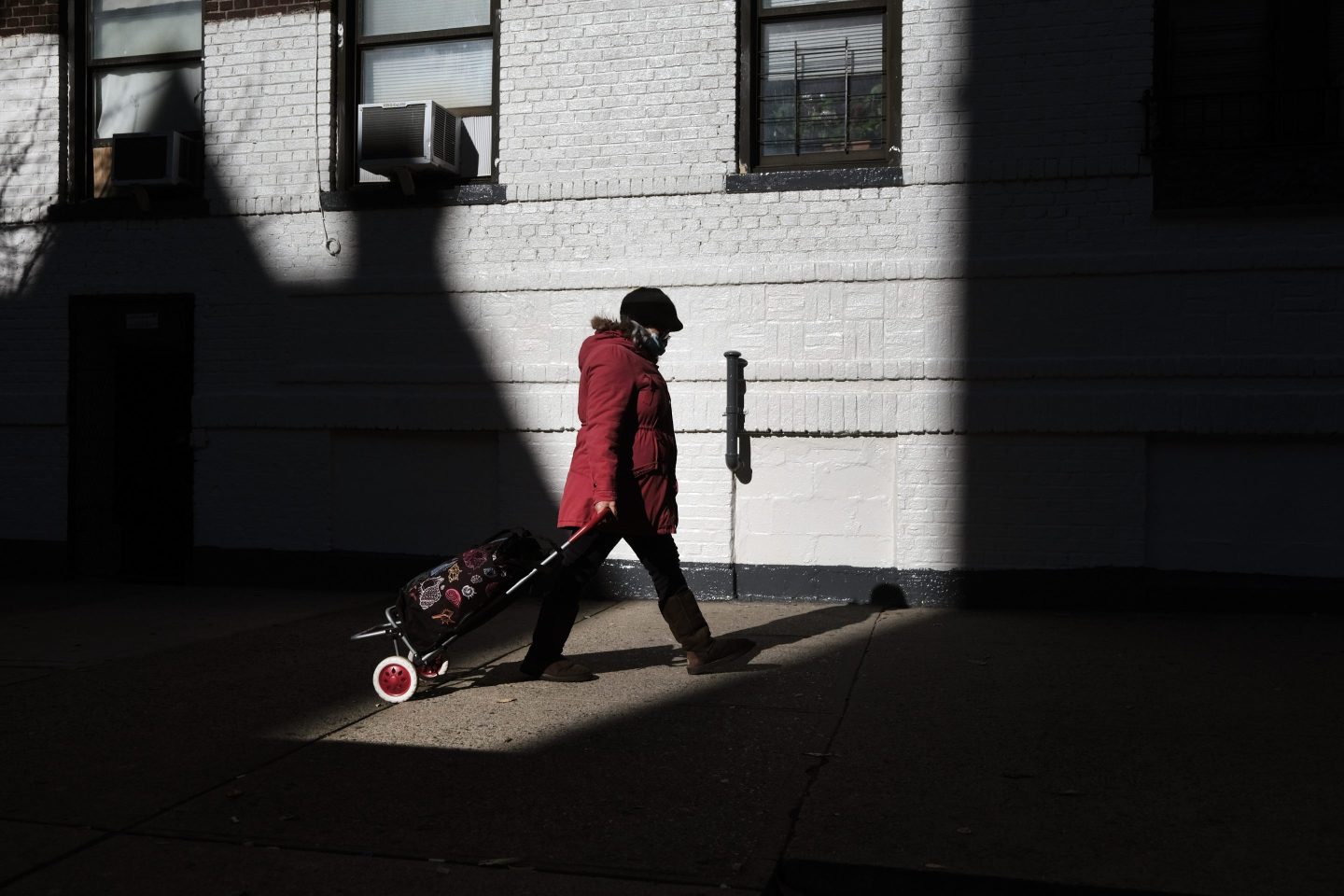
Nearly one of every 10 Americans lives in a medical desert–a place without ready access to emergency care, pharmacies, or sometimes even primary care doctors. It’s time for business to acknowledge the problem, and, better yet, get to work fixing it.
Many of these medical deserts are in urban neighborhoods filled with poverty. Others are in rural areas that are spread out and hard to reach. Either way, the reality is that 30 million Americans struggle daily to access the medical services that most of the country takes for granted.
Our company dispatches drivers and home health care aides to at-risk and underserved populations. They bring back dispatches from an America that is often overlooked, if not ignored: people with disabilities who require wheelchairs and crutches, elderly shut-ins who need outside help for food and medicine, the poor without cars who can’t get to far-away vaccine clinics, and the infirm on oxygen bottles.
While the rest of America was locked down and steeling itself against a pandemic, our company was driving 300,000 people to vaccine appointments, transporting 40,000 patients infected with COVID-19 to doctors and hospitals, and delivering more than two million meals alongside many community organizations.
Nearly two-thirds of Americans live paycheck to paycheck–and one in seven live in poverty. We watched the pandemic exacerbate their isolation, and deepen the disparities between those of us who have and those who do not. So many vulnerable people were, quite simply, stuck where they were, with even less access to the products and services they needed to survive.
Making matters worse, many live in urban deserts–neighborhoods with few pharmacies to fill prescriptions, few supermarkets with fresh fruits and vegetables, and few medical providers that allow for consistency of care. Poor diet leads to poor health, which leads to poorer prospects for education or employment. Zip code could be more important than genetic code when it comes to health and health care.
For instance, free care isn’t actually free if it prevents you from earning your hourly wage. We found many people choosing a COVID vaccine based on how many afternoons they’d be required to take off work to get a shot. Or whether they could afford a babysitter once, twice, or at all.
For lower-income and minimum-wage workers, vaccine type was a huge consideration. We saw a strong preference for the Johnson & Johnson one-and-done shot, which was the most convenient for people with tightly scheduled hourly wage jobs. But that vaccine also was the least effective medically–another case of economic pressures forcing a personal health compromise.
On top of all that, vaccine deserts were another, seemingly unanticipated issue, along with a lack of COVID testing centers in certain neighborhoods. The result? Already vulnerable populations were made even more so. In a nation where one of every three eligible Americans is still not fully vaccinated, urging someone to get a vaccine isn’t the same as making it possible for them to get one.
Options, alternatives, and easy access are often luxuries for the most vulnerable among us. We saw this firsthand time and again during COVID in a way and on a scale that hadn’t been apparent before the pandemic. We saw suffering and stoicism–and came away with a new sense of what our services should look like.
We came to realize, as everyone working in the health care realm should, that the only approach that will work long term is a holistic one. We have to see where vulnerable populations are and meet them there. That’s the only real way to figure out the why and what can be done.
Going forward, everything has to be assessed as part of a whole. Transportation, meals, health care, home monitoring, personal mobility help, and remote monitoring factor into the quality of life and care equation. All of it matters. There are so many possibilities for intervention before a clinical or medical one, which is too often the first step rather than one of last resort.
We can’t just look at individuals anymore. We have to see this as societal. We can’t just treat patients, we have to treat a system that has led to vast inequities in health care and health outcomes. We must stop leaving so many behind.
We in the supportive care community need to see ourselves as a part of a whole. No one who lived through the last two years would call this luck. But it is fortuitous. It’s an opportunity both for us and the people who rely on us. We can do better. We must do better.
Daniel E. Greenleaf is the president and CEO of Modivcare, a health care services company based in Colorado.
The opinions expressed in Fortune.com commentary pieces are solely the views of their authors and do not reflect the opinions and beliefs of Fortune.
More must-read commentary published by Fortune:
- COVID got me. Will it come for you?
- Why remote work will win this fall
- A list of companies supporting abortion rights after the Roe v. Wade ruling shows which firms are stepping up, and why
- Career hoarding is on the rise—but it comes at a cost
- Venture capital is hard–and it’s supposed to be











