I couldn’t help but stare at the snowcapped peaks towering over a valley on fire, all on top of a table in front of me. The flames resembled a lava flow, slowly scorching fields as they moved toward a forest.
But the scene wasn’t real.
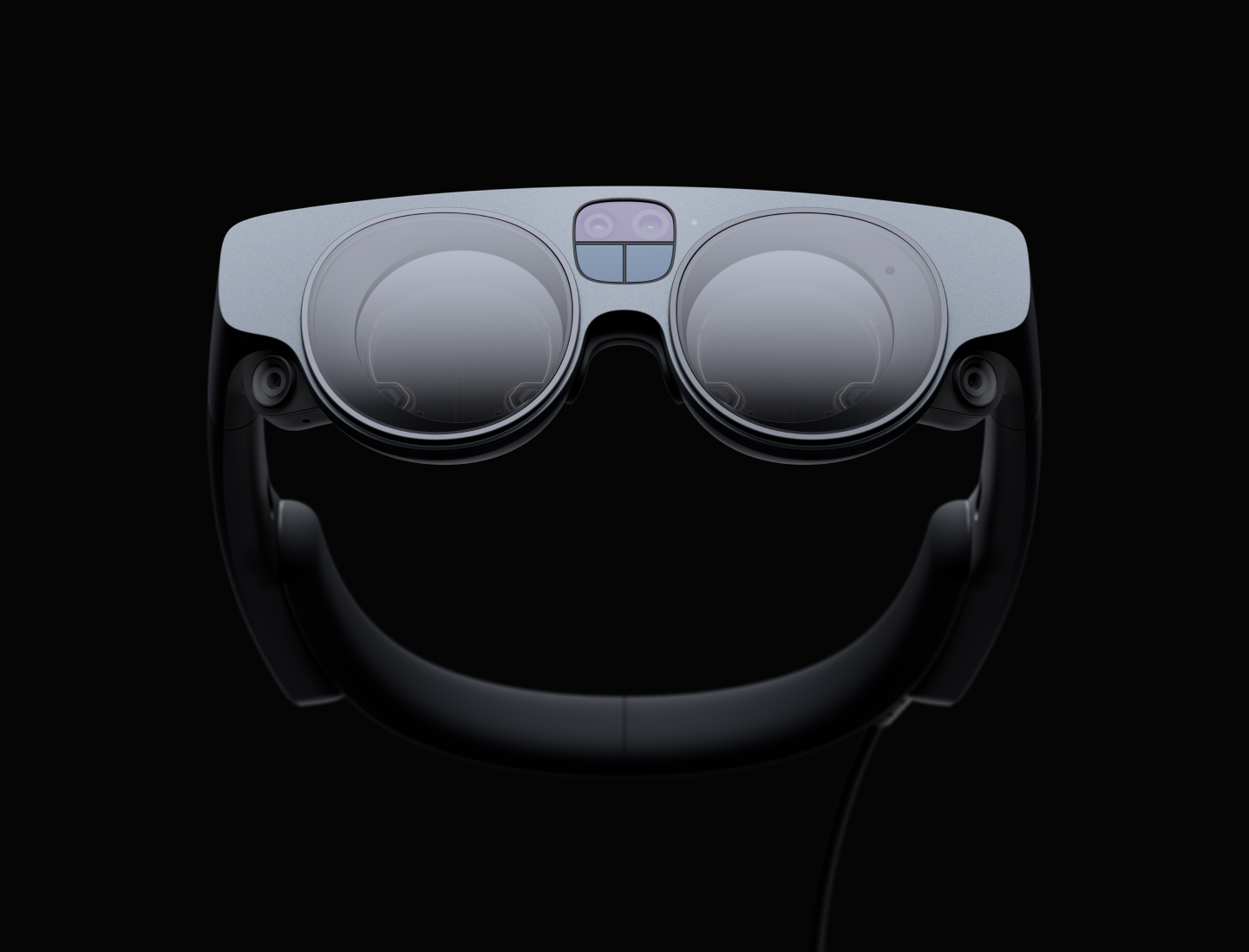
It was all digital graphics, beamed from an augmented reality headset from Magic Leap that covered my eyes. The company plans to release the headset, Magic Leap 2, sometime during the summer at an undisclosed price.
The new product comes as enthusiasm about AR and its sibling technology, virtual reality, is high, a consequence of rising interest in the so-called metaverse. The metaverse is an immersive virtual world that can be accessed through VR or AR headsets.
Mark Zuckerberg recently rebranded Facebook’s parent company to Meta in the belief that the metaverse is the future of computing. Other companies like Disney, Epic Games, and Microsoft have also promoted the technology, reviving enthusiasm for virtual worlds that had ebbed recently after the initial buzz around six years ago.
At that time, companies like Oculus VR (which Meta bought in 2014) and HTC were just beginning to sell VR headsets. While some consumers bought those headsets, primarily for video gaming, they weren’t as popular as had been hoped or put to other uses such as in the workplace for training or marketing.
Despite the latest metaverse buzz, Magic Leap CEO Peggy Johnson is reluctant to associate her company with the term. She acknowledged the “hype around that word,” but added that she wants Magic Leap to stay “focused on our plan” of pitching its technology to corporate customers rather than consumers.
Still, Johnson said the metaverse concept has returned the spotlight to VR and AR, and she believes that her company’s headsets will play a significant role in whatever comes next. She just doesn’t want to tie too much of Magic Leap’s image to the metaverse concept in case the trend sputters.
Johnson is avoiding the marketing strategy of her predecessor, Rony Abovitz, who founded Magic Leap and promoted the company’s technology as life-changing and borderline spiritual. The company’s technology ultimately flopped as a consumer device, leading to Abovitz’s departure in 2020, followed by a $500 million investment round in which the company’s private valuation plunged from $6.7 billion to $2 billion, according to deal-tracking service PitchBook.
“We’re focused on delivering what we are saying we are delivering,” Johnson said.
What is the Magic Leap 2 like?
Magic Leap 2 is a noticeable improvement over the older version, and is capable of more colorful imagery. Additionally, its wider field of vision lets users see more of the digital world merged into the physical one, making the device more immersive.
The older Magic Leap headset and competing HoloLens 2 headset sold by Microsoft, where Johnson previously worked, have smaller fields of vision, and are therefore unable to display as many graphics.
The new headset also has a dimming feature that lets users darken the background of their surroundings so that digital graphics appear brighter and more prominent. Additionally, people can adjust the translucence of what they see. For instance, I altered an image of a giant Rolex watch so that it obscured Johnson from my view. By tweaking the settings further, I was able to see Johnson through the Rolex.
Magic Leap 2 comes with a hand controller that enables so-called inside-out tracking. With that technology, users don’t have to wave their arms directly in front of the visor in order to manipulate objects using a digital cursor, for instance. Instead, they can interact with the digital graphics in a more comfortable manner with their arms closer to their sides. Meta is reportedly planning similar inside-out tracking for a future VR headset and its related hand controllers.
Still, Magic Leap 2 is imperfect. For example, its lenses tended to make the view a bit dark, as if I were wearing sunglasses. And the graphics would occasionally gyrate and flutter, albeit much less noticeably than previous AR demonstrations I’ve experienced on competing headsets, like the older HoloLens. Indeed, AR technology has improved considerably over the past few years.
To power Magic Leap 2, users must wear a computing device over their shoulders that is akin to camera bag. It can also be affixed around their waists. While wearing it, I could feel a fan in the device blowing air out. Johnson said the fan wouldn’t be as noticeable by the time the Magic Leap 2 is released.
Is AR ready for business?
Johnson said that that Magic Leap is pitching its products to business customers in health care, defense, and manufacturing. She compared the AR market to the early mobile phone market, in which businesses adopted the technology more quickly than consumers.
Johnson believes consumers will be more ready to use the technology after Magic Leap and its rivals produce smaller headsets, akin to the size of conventional glasses. But for now, workers who are used to wearing goggles at work, like those in factories, will be more inclined to wear AR headsets, Johnson said.
Existing Magic Leap customers include Farmers Insurance, Ericsson, Cisco, and health care tech firms like SentiAR and SyncThink.
During a demo, Magic Leap showed off how firefighters could use the headset for 3D visualizations of wind currents to better anticipate how forest fires may spread. The idea is for customers to use publicly available data, like satellite imagery and weather information, to create immersive experiences that display information in more compelling formats than PowerPoint presentations or more conventional data-visualization tools.
The corporate appetite for these kinds of AR applications is unclear. But Johnson claimed that demand is higher than ever.
“You basically have the state of the technology right now delivering real value to enterprises,” Johnson said. Whether there are enough of those customers to finally make AR and VR headsets mainstream in the workplace remains to be seen.
Never miss a story: Follow your favorite topics and authors to get a personalized email with the journalism that matters most to you.