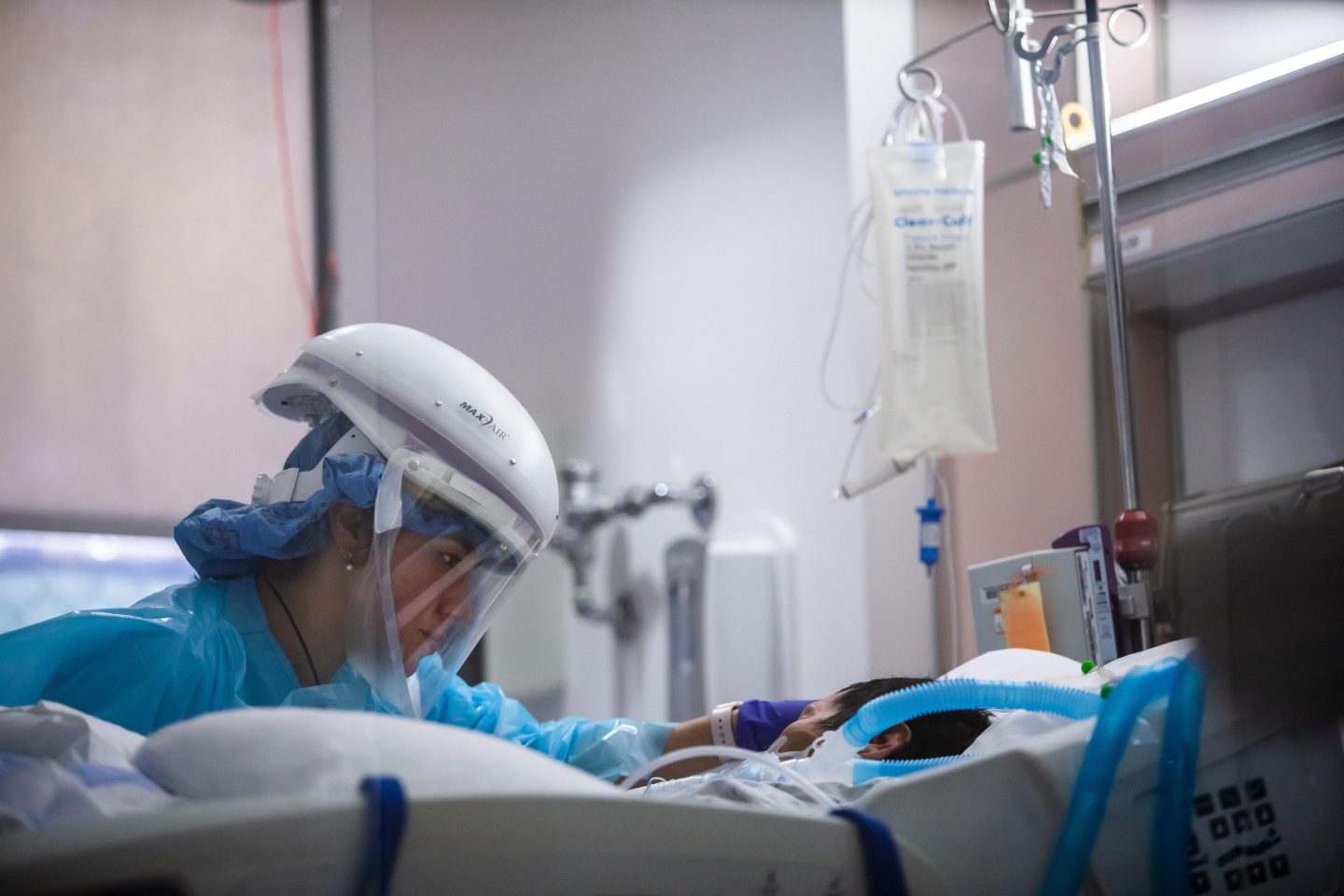
COVID-19 has stressed healthcare workers everywhere. In the U.S., a majority of them say they are burnt out from fighting the pandemic, and 30% say they’ve considered quitting. But if there’s a bright side, it’s that we have lionized these workers and the immense contributions they have made, boosting recruitment. Applications to medical schools, for example, are up roughly 20% in countries like the U.S., Canada, and Britain.
As a result, we’re entering an era of renewal. Hospitals and clinics will be replacing large numbers of experienced doctors and nurses with fresh blood. This volume of turnover is both fraught and thrilling: We’ll be losing a giant trove of experience and knowledge at a time of great peril. But we’ll also be training the frontline heroes of tomorrow.
To navigate this transition, it’s going to be vitally important that our newcomers have the intelligence to become great practitioners. While that often means great grades, our young doctors and nurses will also need a broader palette of skills. Patients have always asked for a level of “bedside manner,” but tomorrow’s healthcare professionals will require resilience, empathy, communication, collaboration, and digital aptitude. The pandemic has only underlined how important this is.
The current flood of applicants is an opportunity to reflect on what we want from our future doctors and nurses. It all starts with our nursing and medical schools, where admissions committees are currently making decisions on applications for next year.
These programs provide the first screening and training for our future lifesavers. They must sift carefully through the candidates, choose the best and the brightest, then mold them into professionals with the skills to thrive in a very challenging field. This is their chance to redefine the meaning of “best” according to society’s current needs.
Schools have always put disproportionate weight on raw grades and cognitive scores, including the standardized Medical College Admission Test. In doing so, they have given short shrift to some of those other attributes–in effect, leaving them up to chance.
That needs to change. A student needs more than marks in the 90s to succeed as a doctor or nurse. Admissions officers must pay closer attention to the other strengths these applicants bring to the table.
Our loved ones should be cared for by professionals who see them as humans, beyond their symptoms. How many stories have we heard recently about patients taking their last breaths alone in a hospital ward, isolated from anyone who could advocate for them, hold their hand, talk them through their anguish? These are moments that transcend charts and drips. No matter how good their grades are, every aspiring doctor or nurse needs empathy and communications skills to meet their patients’ human needs.
It’s also critical that these jobs are staffed by people with the passion and resilience to make it through the grueling hours and situations these jobs demand. The past 18 months have made exceptional demands of frontline doctors and nurses, and I wouldn’t blame anyone who finds themselves ready to retire or change fields. But young people applying to nursing and medical schools need to understand that this is not an easy calling. At the best of times, residency is notoriously challenging, with long hours, graveyard shifts, and low pay. And while medicine has a reputation for high pay, compensation is much less than it used to be.
“Perhaps, on the bright side, we know that today’s up-and-coming physicians are motivated not by money, but by a love of medicine and helping others,” one recent analysis of the industry concludes. The admissions process needs to make that a higher priority.
This is a big ask for our schools, many of which are saddled with antiquated tools that are ill-suited for choosing the future of medicine. Tests are subject to structural racism and implicit bias. Many schools ask for letters of recommendation, but these are notoriously gamed and don’t necessarily reveal the best candidates. Interviews are subject to similar biases. And while schools have traditionally paid a lot of attention to extracurricular activities, it’s known to put underprivileged candidates at a disadvantage.
How can a small admissions department accurately measure the soft skills and potential of an individual student in a sea of applications? In my experience working with 400 schools across the United States, Canada, and Australia, there is no silver bullet–no single assessment that can predict a student’s future.
Nursing and medical schools simply need to get better at gathering information and pulling it together more meaningfully to properly balance academic and non-academic abilities. They need to tear down the silos, organize their data, measure the unmeasured, and strip away the bias.
The other piece of the puzzle, of course, is to nurture these softer skills after students begin their training. Our schools need to develop early warning systems and provide clear direction for students who need more work. They need to track their students’ progress, help them fill in the gaps, and empower them to learn how to be more resilient, more empathic, more collaborative–and better communicators.
Very few of us are weeds, capable of growth in any soil. Most require the right conditions to be our best selves, and aspiring doctors and nurses are no different. The future of medicine is about choosing the right people for the soil, then doing everything possible to help them thrive.
Dr. Kelly Dore is an associate professor at McMaster University, faculty of health sciences, and co-founder of Altus Assessments. Dr. Dore presented research on how response format affects performance in situational judgment tests at the AAMC’s Learn Serve Lead conference on Nov. 8.
Subscribe to Fortune Daily to get essential business stories straight to your inbox each morning.











