In August, President Biden enjoyed a major victory on the path toward advancing his “Build Back Better” agenda when the Senate passed the $1 trillion bipartisan infrastructure bill, following months of negotiations and setbacks. Lost in the celebration (and debate), however, is the reality that the greater hope for boosting American competitiveness and long-term prosperity lies in using our global influence and private capital to tackle the dire infrastructure need in the developing world.
Catalyzing private investment with a federally funded green infrastructure bank may have been written out of the domestic bill, but mobilizing private-sector capital to finance sustainable infrastructure in developing countries, especially across the African continent, makes humanitarian, environmental, and strategic sense. It also offers the potential for an aging U.S. population to realize greater returns on retirement savings through reallocation, away from an increasingly pricey domestic stock market and from banks paying record-low interest rates. Public-private partnerships for the developing world represent an opportunity for America to do good while doing well.
President Biden and his G7 counterparts took a step in this direction when they launched the Build Back Better World (B3W) Partnership—a global, market-led proposal to generate inclusive growth, mitigate climate change, and curb China’s hegemony by addressing a purported $40-trillion-plus shortage of infrastructure services in low- and middle-income nations.
But the plan to Build Back Better will be a bridge to nowhere if “better” does not include better data, specifically from the World Bank. Here President Biden can generate a significant win, with no extra price tag. He can, and must, use the U.S. Treasury’s outsize influence to compel the bank to step up its collection and dissemination of data on prospective infrastructure returns in developing nations. Presently, the only comprehensive source of such estimates (for roads and electricity) is a paper commissioned by the bank more than two decades ago, based on data from 1985.
Updating these data is critical. Although there is great demand for infrastructure financing throughout the developing world, opportunities for sustainable and profitable investment are not ubiquitous. Given prospective risks and rewards associated with investing in poor-country infrastructure, savers and investors need current, reliable information to distinguish countries that possess the fundamentals and governance to efficiently and profitably absorb private infrastructure investment, from those that do not.
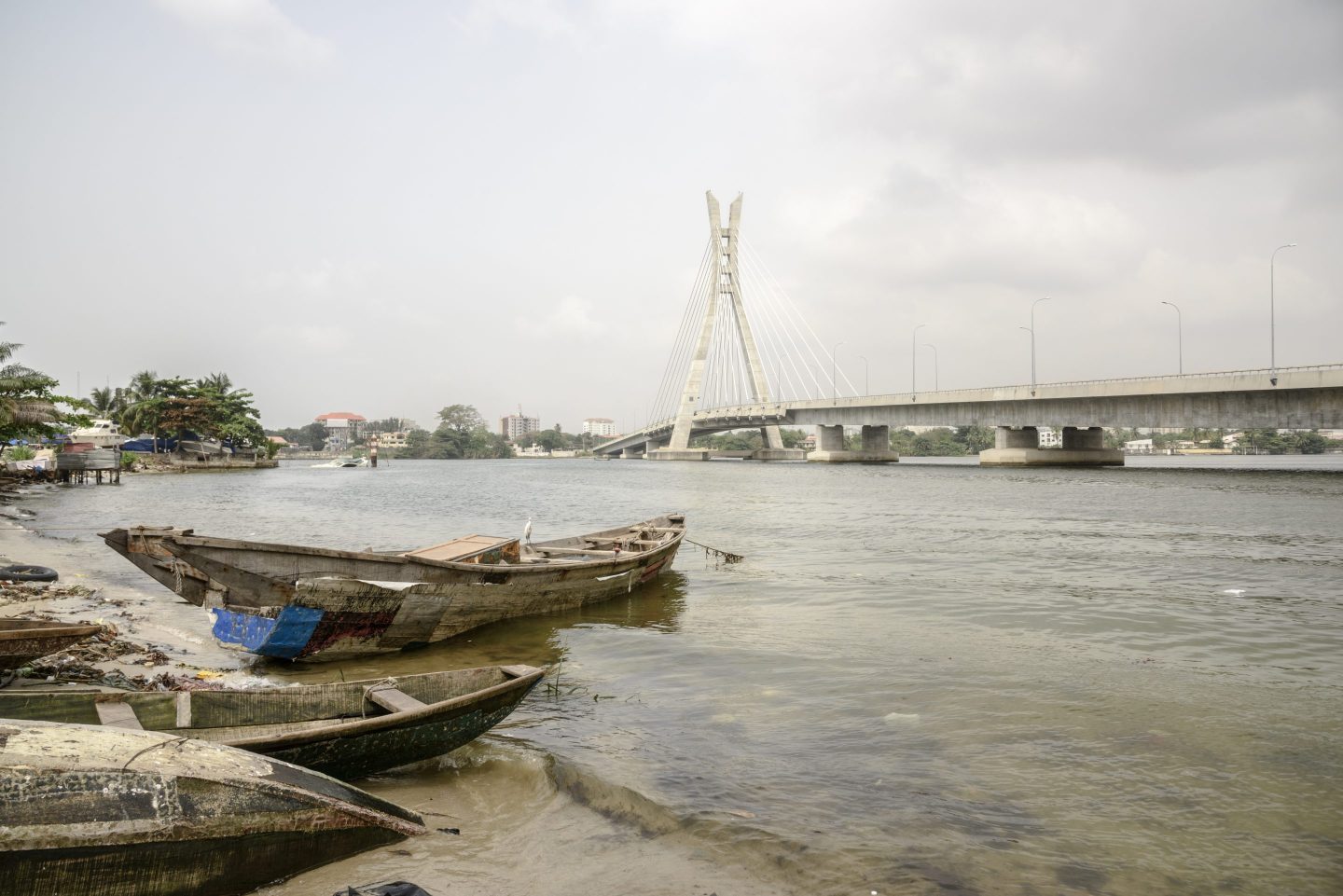
To understand the magnitude of the challenge, as well as the opportunity, consider the following: An estimated 940 million people in poor countries lack access to electricity. One billion people live more than two kilometers from an all-weather road. This infrastructure shortage is most acute in poor countries undergoing population explosions. In contrast to the aging demographic profile of much of the developed world, a country such as Nigeria, whose population ranks seventh globally, is projected to see its population expand almost 3% per year from now until 2030. Over that same period, the United Nations estimates that emerging economies combined will add 1.7 million eligible workers per month to their labor force.
Why should Americans care what happens to the infrastructure in Nigeria or similar countries throughout sub-Saharan Africa, Asia, and the Middle East? Financing roads and power in countries with booming supplies of labor can trigger decade-long periods of rapid economic growth that would benefit American enterprise and lift the global economy. The UN also forecasts that between 2000 and 2030, 2 billion people in emerging and developing countries will have migrated from rural to urban areas. Without efficient, climate-friendly infrastructure, the demographic and rural-urban shifts will lead to overcrowding, rising carbon dioxide emissions, and an ever-greater exodus of workers from poor countries that lack the capacity to generate jobs for their local populations. Building green infrastructure in developing countries therefore also provides a way to reduce immigration pressure on the U.S.
Examining the facts reveals just how good (or bad) infrastructure investment could be. Research using the World Bank’s data from 1985 shows that for a subset of emerging and developing nations at that time, the average return on investment in infrastructure (e.g., paved roads and electricity) was up to 10 times greater than the return on private capital investments (i.e., the stock market) in rich nations. The extreme shortage of infrastructure that persists in the developing world today suggests that returns could be higher yet for countries with good governance and fundamentals. But the reality is also that fewer than one in seven countries from the 1985 data set were efficient investment targets for both roads and electricity. This hardly supports a call for flooding the developing world with investment to close an imagined infrastructure “financing gap” everyplace there is need.
For years, development banks have touted the benefits of private, rich-country capital financing the need for infrastructure in the developing world. It is therefore all the more unconscionable that despite its own “Billions to Trillions” investment pitch that began in 2015, successive presidents and boards of the World Bank have failed to marshal the talent under their direction to produce a common, current repository of infrastructure return estimates that governments and private-sector investors can use to make fact-based decisions about where (that is, in which countries and for which specific projects) investment is efficient and profitable. We need updated tables, not taglines, if we are to successfully address the infrastructure challenges in poor countries and, in so doing, generate greater prosperity and a more secure future for the developing world, the U.S., other economically advanced nations, and our planet.
Peter Blair Henry is W.R. Berkley professor of economics & finance and dean emeritus at NYU Stern School of Business, author of Turnaround: Third World Lessons for First World Growth, and founder of the Ph.D. Excellence Initiative.
Subscribe to Fortune Daily to get essential business stories straight to your inbox each morning.