If you’re looking for profitability here, turn away.
Oatly CEO Toni Petersson says the maker of oat milk is prioritizing growth over hitting the green for now.
“If the company’s priorities are between growth and profitability, it is always going to be growth for us,” said Petersson, who took his business public via an IPO in May, and has grown his business to encompass products such as plant-based yogurt and ice cream. Having made millions in 2020 by striking deals putting its oat-based milk directly in coffee shops and selling consumers on its sustainability as a product, the company, backed by the likes of Blackstone and Oprah Winfrey, has also fattened shareholder’s wallets since its public debut. Oatly’s stock has risen nearly 59% since its IPO, valuing the business at about $16.3 billion.
Though the company lost $60.4 million last year on revenue of $421.4 million, investors like Eric Melloul, chairman of the board and managing director at Verlinvest, are not pushing for profitability yet either. “We felt like we wanted to put the mission first, and the economics will come,” said Melloul. And perhaps there is business strategy there too: Sustainability as it turns out, sells, especially among the next generation of consumers.
And that much, Oatly is well aware of. “Generation Z and Millennials will become the dominant global generations in the coming years, bringing to the market a new set of values and expectations. These combined factors are driving a clear rapid, accelerating growth and influx of new consumers to the plant-based dairy market,” the company’s filing to go public stated.
Petersson, Melloul, Fortune Senior Editor Beth Kowitt and I talked earlier this week. Here are excerpts of our conversation, edited for clarity.
So through Oatly’s recent history, the company has dealt often with production shortages. Why is that?
PETERSSON: It’s a combination of a couple of things here. COVID-19 was the main delay we had recently where we needed experts traveling to our new facilities (being built in Utah), but couldn’t.
We also saw growth happening already back in 2019, which accelerated during the pandemic in 2020. That is driven by the whole movement that we see globally where people are more cautious about what they consume and about their own impact on the planet.
So it makes it a little bit harder to try to predict and forecast.
I have a pandemic related question. Your path to market has always been through coffee houses first. When everything shut down, how did you change your approach? Did you find new ways of working?
PETERSSON: So 35% of our business at that time, when the pandemic struck, came from coffee shops with China accounting for more than 50%. And we were just sitting there wondering, what do we do now? We ended up producing more and selling more than planned. In the U.S., Sweden, U.K., Germany, it got absorbed into the grocery trade and in China, it got absorbed into e-commerce. And China also opened earlier than anywhere else in the world.
Speaking of international markets, what is your expansion strategy there? You were just a European company to start off with.
MELLOUL: When it comes to the X Factor, I believe it has to come from the bottom up—a lot of ideas interestingly [came from there]. Tony and I went to China and the U.S. trying to find the right people for the business. So a Chinese leader came with the fantastic idea of creating a character for non-dairy milk, right? Which didn’t exist in China.
Same thing in the U.S. The company also launched soft-serve ice cream into stadiums. That idea didn’t come from the top, but from someone who raised his hand and said this is the people we want to be targeting and this is the product.
So as an investor, we have to create space for bottom-up idea generation—it is absolutely critical.
So no micromanaging allowed. Oatly’s IPO prospectus states that a liter of Oatly product results in 80% less green gas emissions than cow’s milk. One pain point I’d imagine though the carbon footprint due to transporting the product—are there initiatives there to minimize that issue?
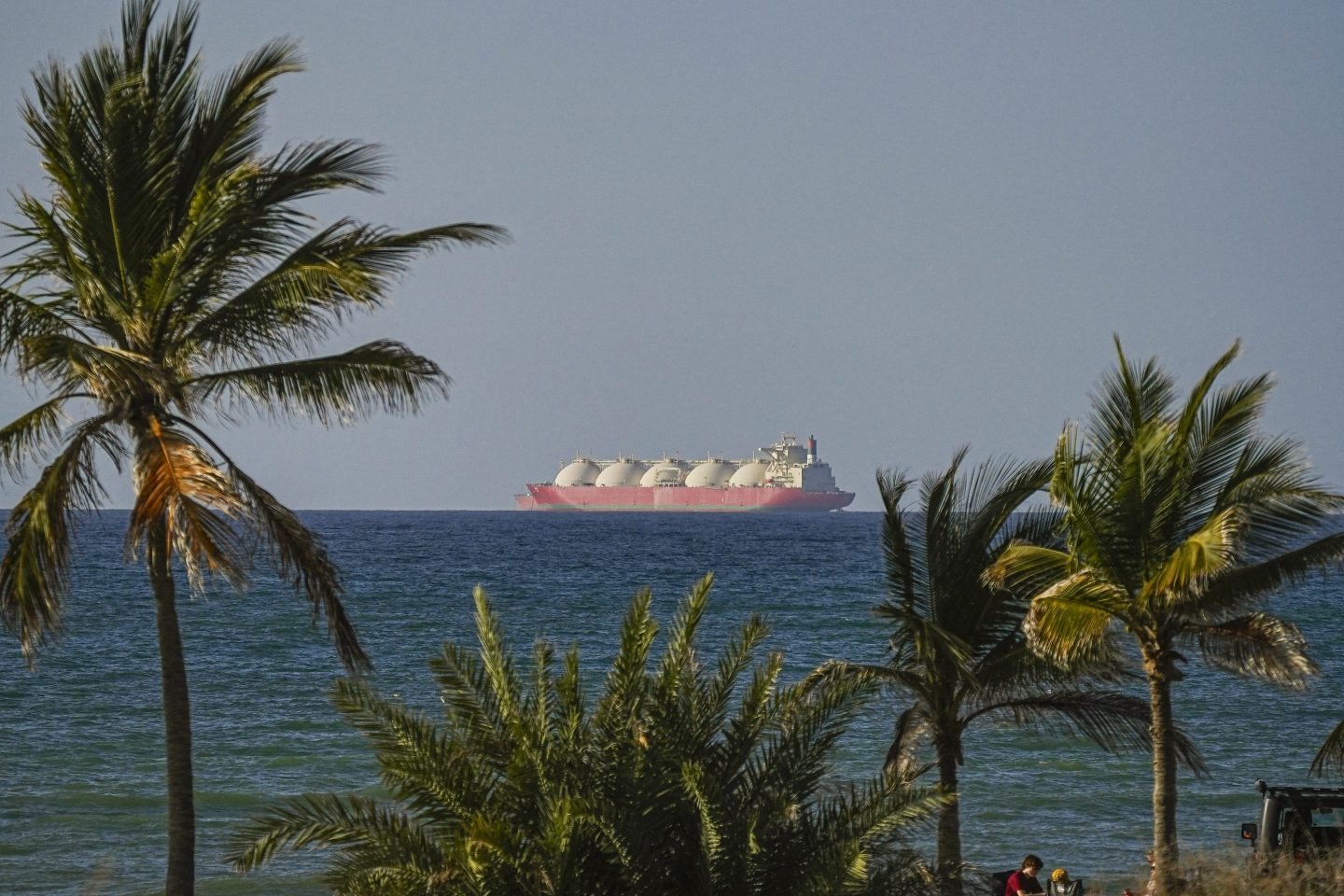
PETERSSON: We have a very, very good understanding of where we need to improve. Yes, transportation is one. Right now, we’re actually shipping from Europe to Asia, so that is going to be taken care of as soon as we build the plants in Singapore and Mainland China.
We also have a number of projects with farmers to reduce their animal-based production. In one example we tried that with a farmer in Sweden (to produce oats over livestock) and after only one year, that very farm could feed three times more people while reducing land usage and their carbon footprint by half—and became more profitable. That is now something we are hoping to scale it up.
It’s not that we’re perfect, we’re so far away from being perfect, but our ambitions are true and genuine.
MELLOUL: We also invested in electric trucks. There were a lot of questions about this decision, but we felt that we wanted to put the mission first and over time, the economics will come.
In speaking with other food tech investors, several see plant-based burgers and milk alternatives as first or second generation compared to methods like fermentation and cellular agriculture that are considered say, third generation. I was joking with an investor that they were thinking about it as IBM to Apple.
MELLOUL: I really believe there will be room in the market for a number of different ways of going after technology, even in milk, right.
But I must tell you, as first and foremost a food investor, that food is about functionality. The mainstream consumer wants taste, performance, and sustainability. The way to drive conversation is with a food product people can recognize. There are a lot of niche players attacking the market in many different ways, but what I see in oat milk is the very beginning of a trend.
And what do you call generation one? I think we turned out to be generation three simply by virtue of scale and size.
PETERSSON: I couldn’t agree more. Consumers don’t care about that—they care about having great tasting products.
Toni, you’ve also spoken extensively on building a brand. You’ve also had to protect it via a lawsuit just a few days ago against Glebe Farm Group, a U.K.-based family farm, for its oat-based beverage. That raises the question of how much of a moat then the company has against competitors?
PETERSSON: We have been actively protecting our trademark since 2014. I think that in any case like that, if you come to that point, you probably emptied all the possibilities. I guess that’s the normal course of running a business. It’s probably increased as we have become more popular, and our group becomes more and more mainstream to people.
You are not profitable yet. And investors have wondered how you plan to get there. What is the roadmap?
PETERSSON: To be honest, growth is what we are prioritizing. And we are going to continue to do that for a number of years because the potential is so big—and we will try to gain as much market share as we can.
But we also understand you have to prove yourself and you cannot do good for the world without being profitable.