• Home
  • Latest
  • Fortune 500
  • Finance
  • Tech
  • Leadership
  • Lifestyle
  • Rankings
  • Multimedia
CommentaryGlobalization

What globalization will look like after COVID

By
Annette Rippert
Annette Rippert
Down Arrow Button Icon
By
Annette Rippert
Annette Rippert
Down Arrow Button Icon
June 10, 2021, 5:30 AM ET
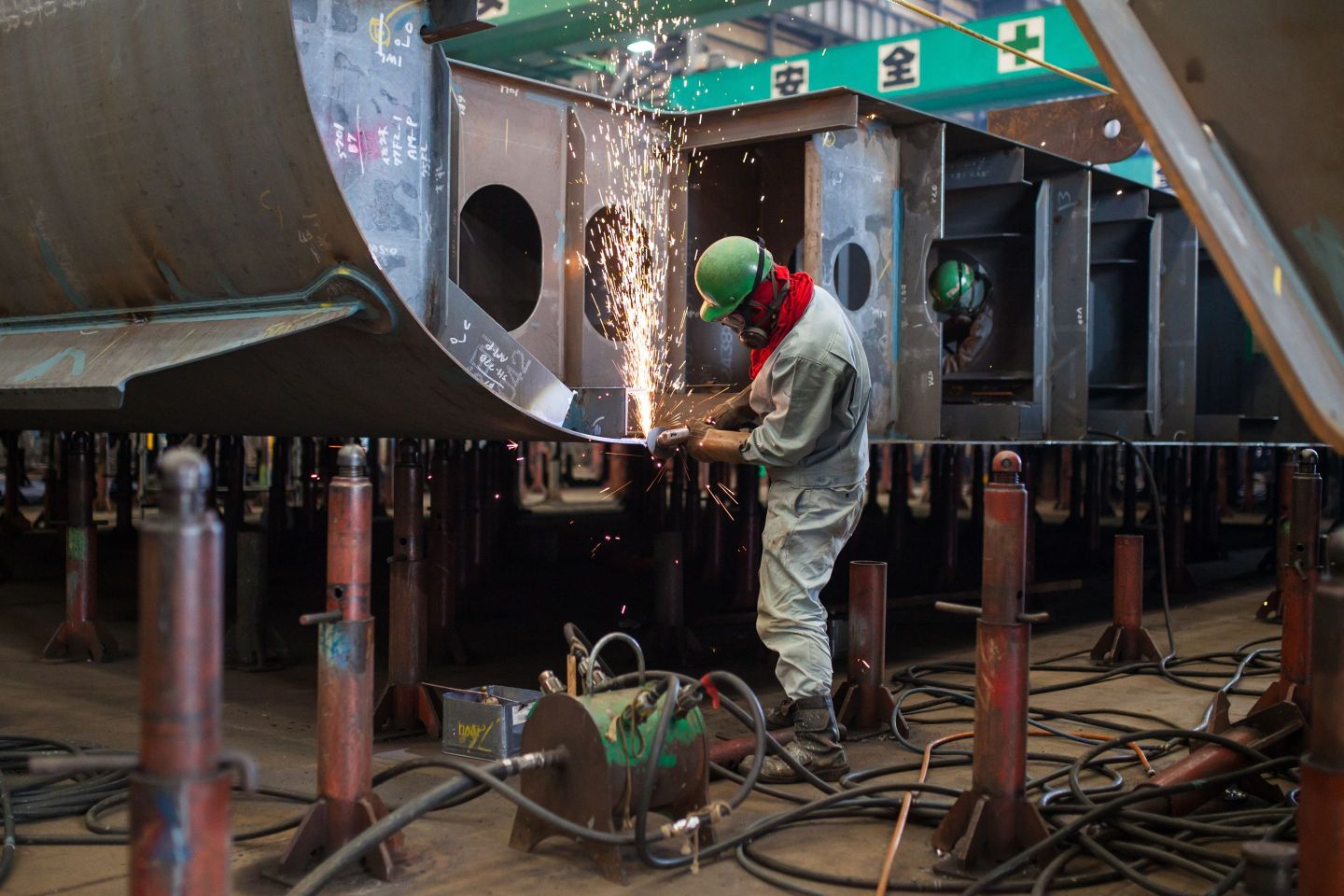
“The pandemic has upended our sense of ‘where,’ taking the concept of location out of globalized experiences,” with major implications for business leaders, writes Annette Rippert.
“The pandemic has upended our sense of ‘where,’ taking the concept of location out of globalized experiences,” with major implications for business leaders, writes Annette Rippert.Courtesy of Getty Images

Common wisdom a year-plus into the pandemic holds that globalization is in retreat. COVID’s rapid spread revealed the infectious dangers of a hypermobile world. Supply chains cracked, countries went into lockdown, and a new brand of nationalism appeared to redefine politics around the world. 

But another lesson from the crisis is how deeply absorbed globalization has become in our economic and cultural DNA. Scientists cooperated across borders to invent treatments and vaccines at a pace unprecedented in world history. Even as we hunkered down in our own countries, international Internet traffic soared; trade and capital flows are rebounding beyond our expectations. And while there have been serious manufacturing and shipping disruptions, we should pause to reflect on how surprisingly well global trade still worked.

Accenture’s inaugural Business Futures research reveals that this interconnected global economy is far from retreating, but instead is morphing into a distinctive next phase that will make globalization look radically different than it did in 2019. The pandemic has upended our sense of “where”—both socially and economically—taking the concept of location out of globalized experiences. 

Those poised to lead in this next stage of globalization will be the companies that are pushing decision-making authority to the people at the “edges” of their operations around the world; those that are heavily deploying artificial intelligence to see changes coming before they happen; and those blending virtual and physical environments to connect people and places—without the need for physical travel.

Netflix is an example of a global company pushing creative and decision-making authority to the edges of its operations. Guess where its No. 1 watched show in 2020 originated? Not Hollywood. The Spanish-language thriller TV series La Casa de Papel, or Money Heist, was produced in Madrid. 

Since setting eyes on international expansion, Netflix has trusted local teams to function within a highly entrepreneurial culture of “radical candor and transparency,” discussed by CEO Reed Hastings in his book No Rules Rules. The company gives employees access to information that most businesses would never share with rank-and-file staff, and empowers what it calls “informed captains” to seal multimillion-dollar deals without C-suite sign-off, speeding production. Edge-thinking has enabled Netflix to stay close to fast-changing viewer tastes around the world. In 2020, 83% of new subscriptions were from outside the U.S. and Canada.

Edge organizations borrow from the principle behind “edge” computing—creating speed by moving processing closer to the point of use. Likewise, in this next phase of globalization, smart organizations aren’t reacting to the supply-chain issues of 2020 by going home. Instead, they can break the physical limits of their supply chains—reducing costs and maximizing flexibility—by marrying headquarter-driven technology with local production. 

Winsun, a Chinese tech-construction company, deploys 3D technology to print building components on site—ranging from COVID-19 isolation units to modest houses—in more than 10 countries, with dramatically reduced costs. In Malawi, the joint venture 14Trees is using 3D printing to rapidly build schools in remote villages. 

In this stage of globalization, business leaders need to break a lifelong habit of focusing on historical data and start learning from the future. What does this mean? Organizations must use new data sets —from both inside and outside their walls—that are processed by A.I.-based analysis designed to find patterns and better anticipate future trends. 

That’s precisely how Canadian health company BlueDot foresaw the gravity of COVID-19 before others. On Dec. 31, 2019—a week before the World Health Organization released its first report on the virus—BlueDot published a warning about COVID-19 and its potentially devastating impact. Since then, the company’s platform users have stayed ahead of the changing events by feeding its algorithm with real-time, wide-ranging data—from government health care sources to airline ticket data to livestock health reports to news reports in 65 languages—updated every 15 minutes.  

The best examples of organizations taking location out of the globalization equation are those that are developing what we call “real virtualities,” technologies that blend the virtual and physical worlds. Current virtual reality (VR) technology mostly engages our senses of vision and hearing; over time, it will engage all of our senses. Virtual worlds will become increasingly realistic, imbued with a greater sense of the physical, engaging smell and feel as well as sight and sound.

We now know that crossing borders is not only a physical experience. It can also be a virtual one. Austin’s renowned film/music/technology festival, South by Southwest (SXSW), “virtualized” its 2021 annual event by borrowing popular virtual gaming technology. Delegates could cruise Congress Avenue and the Red River Cultural District, meet with renowned filmmakers, and attend a concert afterparty inside a virtual Notre Dame. 

Real virtualities will become vital to organizations needing to innovate and build team spirit globally, as well as domestically, as portions of their workforce continue to work remotely. Those organizations will increasingly rely on tools such as Microsoft Mesh, which uses HoloLens technology and/or VR headsets to bring a holographic version of your coworkers into your living room in 3D.

As we move to this next stage of globalization, a thriving world economy will require intentional decision-making on the part of business and government leaders. Decisions made over the next 12 to 18 months could determine the difference between thriving and struggling to survive in the next five years. Those of us who strategically adapt to this next stage are more likely to take the lead in generating a burst of innovation and productivity, more resilient and sustainable economies, and a reconnected world for business, for our people and our communities. 

Where the world lands will be a matter of choice—of choices and decisions to be made by leaders and powered by their people. Will organizations choose to change, reinventing their futures in the process? Or will they embrace the familiar? Neither outcome is inevitable.

Annette Rippert is group chief executive, strategy & consulting, at Accenture. The company’s inaugural Business Futures report is based on input from more than 400 researchers worldwide, our global community of thousands of managing directors, and a survey of over 2,600 C-suite executives. 

Join us at the Fortune Workplace Innovation Summit May 19–20, 2026, in Atlanta. The next era of workplace innovation is here—and the old playbook is being rewritten. At this exclusive, high-energy event, the world’s most innovative leaders will convene to explore how AI, humanity, and strategy converge to redefine, again, the future of work. Register now.
About the Author
By Annette Rippert
See full bioRight Arrow Button Icon

Latest in Commentary

Finance
Lorem ipsum dolor sit amet, consectetur adipiscing elit, sed do eiusmod tempor incididunt ut labore et dolore magna aliqua. Ut enim ad minim veniam
By Fortune Editors
October 20, 2025
Finance
Lorem ipsum dolor sit amet, consectetur adipiscing elit, sed do eiusmod tempor incididunt ut labore et dolore magna aliqua. Ut enim ad minim veniam
By Fortune Editors
October 20, 2025
Finance
Lorem ipsum dolor sit amet, consectetur adipiscing elit, sed do eiusmod tempor incididunt ut labore et dolore magna aliqua. Ut enim ad minim veniam
By Fortune Editors
October 20, 2025
Finance
Lorem ipsum dolor sit amet, consectetur adipiscing elit, sed do eiusmod tempor incididunt ut labore et dolore magna aliqua. Ut enim ad minim veniam
By Fortune Editors
October 20, 2025
Finance
Lorem ipsum dolor sit amet, consectetur adipiscing elit, sed do eiusmod tempor incididunt ut labore et dolore magna aliqua. Ut enim ad minim veniam
By Fortune Editors
October 20, 2025
Finance
Lorem ipsum dolor sit amet, consectetur adipiscing elit, sed do eiusmod tempor incididunt ut labore et dolore magna aliqua. Ut enim ad minim veniam
By Fortune Editors
October 20, 2025

Most Popular

Finance
Lorem ipsum dolor sit amet, consectetur adipiscing elit, sed do eiusmod tempor incididunt ut labore et dolore magna aliqua. Ut enim ad minim veniam
By Fortune Editors
October 20, 2025
Finance
Lorem ipsum dolor sit amet, consectetur adipiscing elit, sed do eiusmod tempor incididunt ut labore et dolore magna aliqua. Ut enim ad minim veniam
By Fortune Editors
October 20, 2025
Finance
Lorem ipsum dolor sit amet, consectetur adipiscing elit, sed do eiusmod tempor incididunt ut labore et dolore magna aliqua. Ut enim ad minim veniam
By Fortune Editors
October 20, 2025
Finance
Lorem ipsum dolor sit amet, consectetur adipiscing elit, sed do eiusmod tempor incididunt ut labore et dolore magna aliqua. Ut enim ad minim veniam
By Fortune Editors
October 20, 2025
Finance
Lorem ipsum dolor sit amet, consectetur adipiscing elit, sed do eiusmod tempor incididunt ut labore et dolore magna aliqua. Ut enim ad minim veniam
By Fortune Editors
October 20, 2025
Finance
Lorem ipsum dolor sit amet, consectetur adipiscing elit, sed do eiusmod tempor incididunt ut labore et dolore magna aliqua. Ut enim ad minim veniam
By Fortune Editors
October 20, 2025
Fortune Secondary Logo
Rankings
  • 100 Best Companies
  • Fortune 500
  • Global 500
  • Fortune 500 Europe
  • Most Powerful Women
  • Future 50
  • World’s Most Admired Companies
  • See All Rankings
Sections
  • Finance
  • Fortune Crypto
  • Features
  • Leadership
  • Health
  • Commentary
  • Success
  • Retail
  • Mpw
  • Tech
  • Lifestyle
  • CEO Initiative
  • Asia
  • Politics
  • Conferences
  • Europe
  • Newsletters
  • Personal Finance
  • Environment
  • Magazine
  • Education
Customer Support
  • Frequently Asked Questions
  • Customer Service Portal
  • Privacy Policy
  • Terms Of Use
  • Single Issues For Purchase
  • International Print
Commercial Services
  • Advertising
  • Fortune Brand Studio
  • Fortune Analytics
  • Fortune Conferences
  • Business Development
About Us
  • About Us
  • Editorial Calendar
  • Press Center
  • Work At Fortune
  • Diversity And Inclusion
  • Terms And Conditions
  • Site Map
Fortune Secondary Logo
  • About Us
  • Editorial Calendar
  • Press Center
  • Work At Fortune
  • Diversity And Inclusion
  • Terms And Conditions
  • Site Map
  • Facebook icon
  • Twitter icon
  • LinkedIn icon
  • Instagram icon
  • Pinterest icon

Latest in Commentary

world's fair
CommentaryRobots
Something big is happening in AI, but panic is the wrong reaction
By Peter CappelliFebruary 28, 2026
15 hours ago
putin
CommentaryRussia
Exclusive analysis: we looked at the 400 western firms still in Russia. Their paltry size strips Putin’s bluff bare naked
By Jeffrey Sonnenfeld, Stephen Henriques, Jake Waldinger and Giuseppe ScottoFebruary 27, 2026
2 days ago
roth
CommentaryLeadership
The AI resource reallocation challenge: How can companies capture the value of time?
By Erik RothFebruary 27, 2026
2 days ago
will
CommentaryAdvertising
I’m one of America’s top pollsters and I’ve got a warning for the AI companies: customers aren’t sold on ads
By Will JohnsonFebruary 27, 2026
2 days ago
the pitt
CommentaryDEI
‘The Pitt’: a masterclass display of DEI in action 
By Robert RabenFebruary 26, 2026
3 days ago
david booth
CommentaryMarkets
3 lessons from investing’s ‘moneyball’ moment
By David BoothFebruary 25, 2026
4 days ago

Most Popular

placeholder alt text
Success
Japanese companies are paying older workers to sit by a window and do nothing—while Western CEOs demand super-AI productivity just to keep your job
By Orianna Rosa RoyleFebruary 27, 2026
1 day ago
placeholder alt text
Middle East
Iran is now on 'death ground' amid existential threat from U.S. attacks and could 'go big' in retaliation, former NATO commander warns
By Jason MaFebruary 28, 2026
9 hours ago
placeholder alt text
Success
Walmart exec says U.S. workforces needs to take inspiration from China where ‘5 year-olds are learning DeepSeek’
By Preston ForeFebruary 27, 2026
2 days ago
placeholder alt text
AI
The week the AI scare turned real and America realized maybe it isn't ready for what's coming
By Nick LichtenbergFebruary 28, 2026
16 hours ago
placeholder alt text
Personal Finance
Current price of gold as of February 27, 2026
By Danny BakstFebruary 27, 2026
1 day ago
placeholder alt text
Law
China's government intervenes to show Michigan scientists were carrying worms, not biological materials
By Ed White and The Associated PressFebruary 26, 2026
2 days ago

© 2026 Fortune Media IP Limited. All Rights Reserved. Use of this site constitutes acceptance of our Terms of Use and Privacy Policy | CA Notice at Collection and Privacy Notice | Do Not Sell/Share My Personal Information
FORTUNE is a trademark of Fortune Media IP Limited, registered in the U.S. and other countries. FORTUNE may receive compensation for some links to products and services on this website. Offers may be subject to change without notice.