• Home
  • Latest
  • Fortune 500
  • Finance
  • Tech
  • Leadership
  • Lifestyle
  • Rankings
  • Multimedia
RetailLowe's

How Lowe’s and Home Depot plan to keep growing even after the COVID home improvement boom

Phil Wahba
By
Phil Wahba
Phil Wahba
Senior Writer
Down Arrow Button Icon
Phil Wahba
By
Phil Wahba
Phil Wahba
Senior Writer
Down Arrow Button Icon
November 20, 2020, 12:00 PM ET
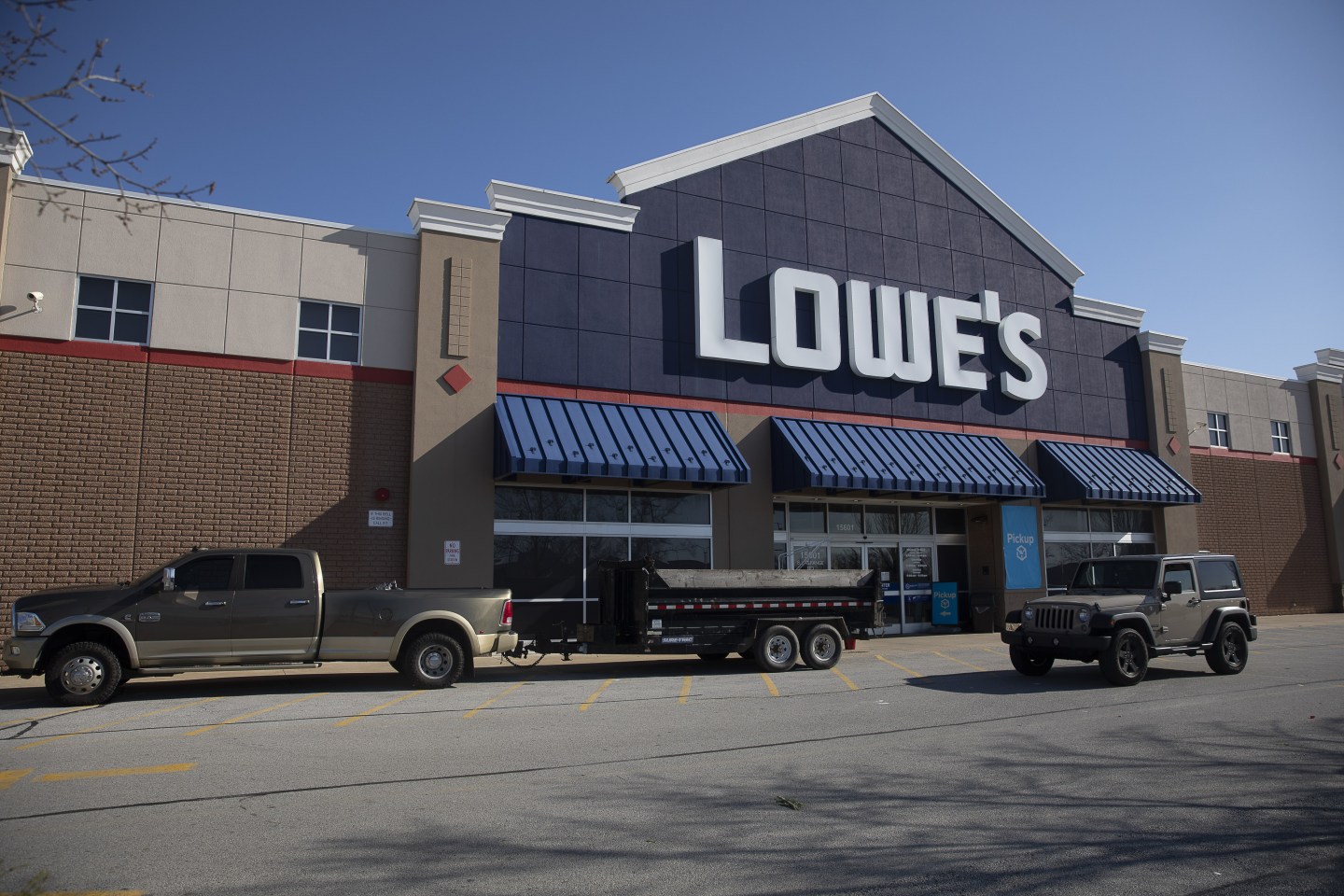
A Lowe's store in Orland Park, Illinois.
A Lowe's store in Orland Park, Illinois.Getty Images

Sometimes even a blowout quarter isn’t enough for Wall Street.

After Lowe’s on Wednesday reported U.S. comparable sales rose 30.4% last quarter, shares fell 6%. Home Depot’s very strong quarterly report on Tuesday, reflecting Americans’ continued spending on home projects during the pandemic, was also met with a stock price dip.

While some of that had to do Wall Street worries about the expenses at both companies linked to compensating workers and making stores safe during the COVID-19 pandemic, the hit to shares reflected a nagging fear among investors: how will Lowe’s and Home Depot keep up this torrid pace?

The companies hope to answer that question by branching out beyond their traditional bread-and-butter offerings. Next week’s Black Friday shopping occasion will provide some insight into how much customers will respond to newer products from these retailers. Lowe’s is making its biggest play yet for holiday season sales this year by adding fun to its assortment in an attempt to get beyond things like drywall and power tools. That means adding products like scooters, trampolines, exercise bikes, air hockey tables, and kitchen items on the assumption that people’s spending on their homes during the pandemic can go beyond setting up spaces suited for work-from-home and home schooling.

“We already service home office and home school needs, but we didn’t have a lot going on for the entertainment piece of it,” Lowe’s CEO Marvin Ellison tells Fortune. “Our data tells us that when the customer trusts us and buys products for their homes, they will trust us for buying other non-core items.”

He is taking a page from Home Depot’s playbook, which last year credited a strong Black Friday period, never previously that important to home improvement chains, for its stellar fourth quarter results. Last year, Home Depot created gifting areas in its stores and doubled down on home decor items. More recently, the company made Halloween a big sales event, enjoying strong results driven in part by a $300 12-foot skeleton that sold like hotcakes.

Both Lowe’s and Home Depot argue that even once COVID-19 fades and customers aren’t spending as much time at home, the boom will continue.

Ellison says that roughly two-thirds of revenue comes from things customers have no choice but to address, such as replacing a broken heater or appliance, or fixing a leak, so the bulk of the business is stable. Growth will come, he says, because of an aging of U.S. housing stock; some 50% of U.S. homes are older than 40 years and will need work in the coming years.

And unlike the 2009, when collapsing housing values dented spending on home improvement, this economic downturn has seen home prices hold up nicely, a trend that spurs homeowners to invest in their houses, and feel more invested in them, an idea one analyst on Wall Street echoed in a research note.

“We encourage investors to consider homeowners’ strengthened emotional attachment to their properties,” wrote Jefferies analyst Jonathan Matuszewski. What’s more, the analyst added, many large home improvement projects have been on hold because of social distancing requirements. “A wave of projects” could come once the vaccine arrives, he said.

More fundamentally, the companies see a cultural shift that will last beyond the current pandemic, with people likely to keep working from home more often even when offices re-open, and learning to love fixing stuff around the house.

“We’ve re-introduced people to home improvement during this period and doing it themselves,” Home Depot finance chief Richard McPhail told Fortune this week.


About the Author
Phil Wahba
By Phil WahbaSenior Writer
LinkedIn iconTwitter icon

Phil Wahba is a senior writer at Fortune primarily focused on leadership coverage, with a prior focus on retail.

See full bioRight Arrow Button Icon

Latest in Retail

millennial
CommentaryConsumer Spending
Meet the 2025 holiday white whale: the millennial dad spending $500+ per kid
By Phillip GoerickeDecember 12, 2025
1 day ago
McDonald
RetailRetail
Lululemon CEO Calvin McDonald to step down as quarterly profit dips 13%
By Anne D'Innocenzio and The Associated PressDecember 12, 2025
1 day ago
Sarandos
CommentaryAntitrust
Netflix, Warner, Paramount and antitrust: Entertainment megadeal’s outcome must follow the evidence, not politics or fear of integration
By Satya MararDecember 12, 2025
1 day ago
InvestingMarkets
Retail investors drive stocks to a pre-Christmas all-time high—and Wall Street sees a moment to sell
By Jim EdwardsDecember 12, 2025
1 day ago
Five panelists seated; two women and five men.
AIBrainstorm AI
The race to deploy an AI workforce faces one important trust gap: What happens when an agent goes rogue?
By Amanda GerutDecember 11, 2025
2 days ago
Oreo
RetailFood and drink
Zero-sugar Oreos headed to America for first time
By Dee-Ann Durbin and The Associated PressDecember 11, 2025
2 days ago

Most Popular

placeholder alt text
Economy
Tariffs are taxes and they were used to finance the federal government until the 1913 income tax. A top economist breaks it down
By Kent JonesDecember 12, 2025
1 day ago
placeholder alt text
Success
Apple cofounder Ronald Wayne sold his 10% stake for $800 in 1976—today it’d be worth up to $400 billion
By Preston ForeDecember 12, 2025
1 day ago
placeholder alt text
Success
40% of Stanford undergrads receive disability accommodations—but it’s become a college-wide phenomenon as Gen Z try to succeed in the current climate
By Preston ForeDecember 12, 2025
1 day ago
placeholder alt text
Economy
The Fed just ‘Trump-proofed’ itself with a unanimous move to preempt a potential leadership shake-up
By Jason MaDecember 12, 2025
1 day ago
placeholder alt text
Economy
For the first time since Trump’s tariff rollout, import tax revenue has fallen, threatening his lofty plans to slash the $38 trillion national debt
By Sasha RogelbergDecember 12, 2025
1 day ago
placeholder alt text
Success
Apple CEO Tim Cook out-earns the average American’s salary in just 7 hours—to put that into context, he could buy a new $439,000 home in just 2 days
By Emma BurleighDecember 12, 2025
1 day ago
Rankings
  • 100 Best Companies
  • Fortune 500
  • Global 500
  • Fortune 500 Europe
  • Most Powerful Women
  • Future 50
  • World’s Most Admired Companies
  • See All Rankings
Sections
  • Finance
  • Leadership
  • Success
  • Tech
  • Asia
  • Europe
  • Environment
  • Fortune Crypto
  • Health
  • Retail
  • Lifestyle
  • Politics
  • Newsletters
  • Magazine
  • Features
  • Commentary
  • Mpw
  • CEO Initiative
  • Conferences
  • Personal Finance
  • Education
Customer Support
  • Frequently Asked Questions
  • Customer Service Portal
  • Privacy Policy
  • Terms Of Use
  • Single Issues For Purchase
  • International Print
Commercial Services
  • Advertising
  • Fortune Brand Studio
  • Fortune Analytics
  • Fortune Conferences
  • Business Development
About Us
  • About Us
  • Editorial Calendar
  • Press Center
  • Work At Fortune
  • Diversity And Inclusion
  • Terms And Conditions
  • Site Map

© 2025 Fortune Media IP Limited. All Rights Reserved. Use of this site constitutes acceptance of our Terms of Use and Privacy Policy | CA Notice at Collection and Privacy Notice | Do Not Sell/Share My Personal Information
FORTUNE is a trademark of Fortune Media IP Limited, registered in the U.S. and other countries. FORTUNE may receive compensation for some links to products and services on this website. Offers may be subject to change without notice.