Companies have poured tens of billions into driverless vehicles, but they have yet to change how we get around—we still rely on cars and trucks driven by humans. One reason for this could be that companies have been focusing on the wrong problem: They have put all their efforts into vehicles and not the roads that carry them.
That is set to change thanks an ambitious new project in Michigan that will connect two of the state’s key cities—Detroit and Ann Arbor—with a new corridor dedicated just to autonomous vehicles. The plan is being led by Cavnue, an infrastructure startup, and with the support of traditional car companies like Ford and GM as well as Alphabet’s driverless car subsidiary, Waymo.
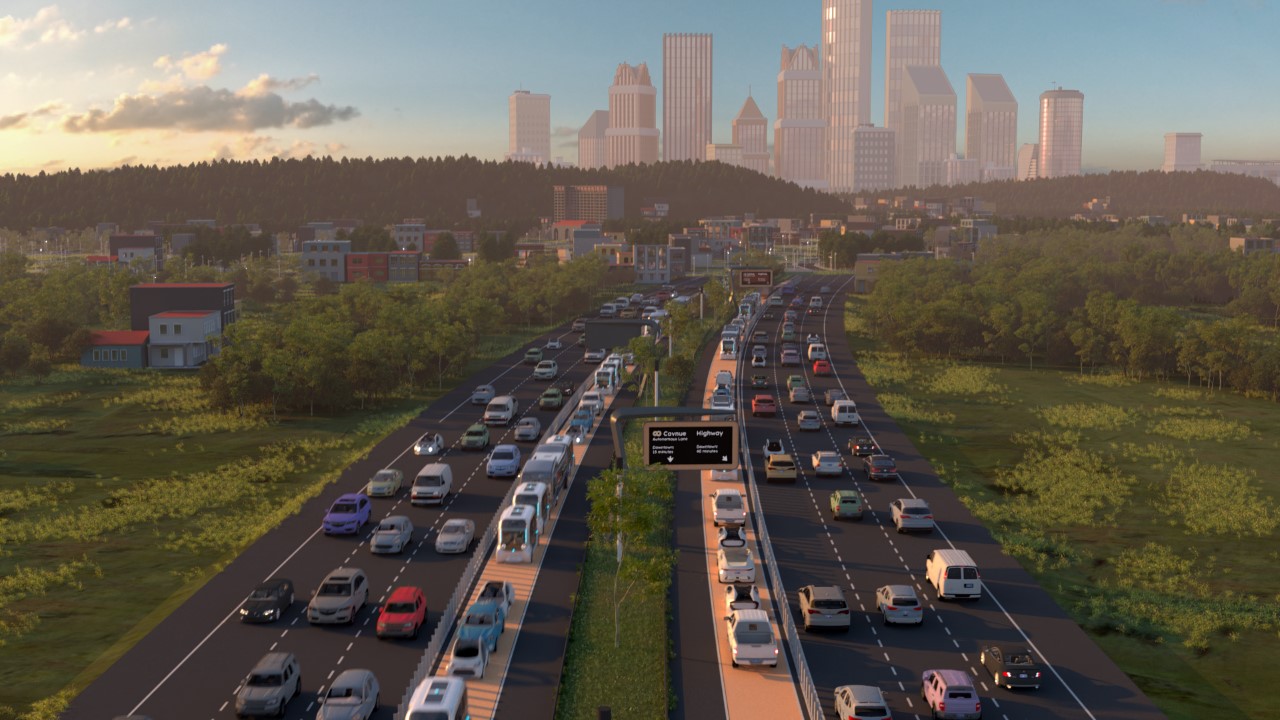
The plan calls for new roads to be built alongside existing routes, including Interstate 94, with links to destinations like the University of Michigan and Detroit Metropolitan airport. The new roads, depicted in the illustration above, will be accessible only to driverless vehicles.
The so-called road of the future, which was announced on Thursday by Michigan Gov. Gretchen Whitmer, amounts to an ambitious bid to reconceive both transportation and public transit. A press release describing the project hailed it as “the world’s most sophisticated roadway.”
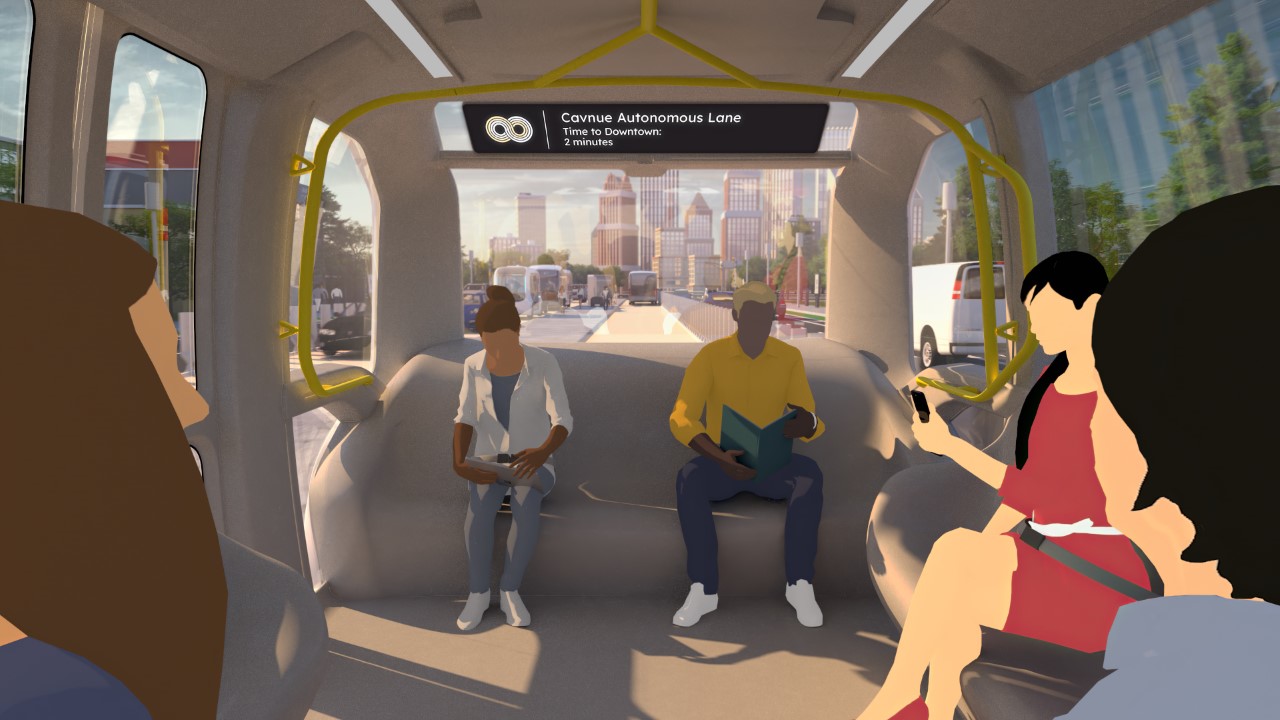
A key feature of the plan is the development of a common software standard that will let autonomous vehicles of all sorts—from cars to transport trucks to passenger shuttles—access the road. This provides a revenue opportunity for governments, which can charge private companies for access to the road, using the funds to subsidize transit. For transit users, driverless shuttles could be an affordable new way to get around, as shown in the image below:
It remains to be seen, of course, whether all of this will actually come to fruition. For now, the project calls for an initial 24-month planning phase after which the State of Michigan and startup Cavnue will decide whether to begin construction. Cavnue is a subsidiary of Sidewalk Infrastructure Partners (SIP), a holding company partly backed by Google parent Alphabet.
According to Cavnue, the public sector will not have to finance any of the first phase of the project, and if construction goes forward, the builders will explore a variety of funding options such as federal grants or fares from local businesses along the corridor.
In an interview with Fortune, Cavnue cofounder Jonathan Winer cited a “lot of nervousness” in the public sector over new technology and infrastructure projects. He said this stems from a shortage of funds—exacerbated by the pandemic—as well local governments’ experience with companies like Uber and Airbnb, which have been prone to flouting quality-of-life concerns.
In order to win the support of Michigan and local governments, Winer says Cavnue began by bringing together all manner of transportation interests—including road operators, public sector officials, and carmakers. At a convention in February, the various groups explored how dedicated routes for driverless cars could provide an alternative to light rail and other transit systems.
Winer adds that the occasion also underscored the challenge of finding practical uses for driverless vehicles—a challenge detailed in a recent Financial Times report that described “disillusionment” with the technology and “robotaxi failure.” The idea of “robotaxis” has been hyped for years as a new form of urban transportation, but companies have failed to develop autonomous cars capable of operating in cities.
“The general consensus is it’s harder than we thought,” he said. “If we’re spending billions on tech, we’ll need near-term commercial applications.”
In practice, Winer says, this means shifting the focus of the fledgling autonomous vehicle industry towards projects like the corridor between Detroit and Ann Arbor, which can allow autonomous vehicles to operate without challenges like urban traffic.
The Detroit project is also getting a boost from the traditional titans of Motor City, including Ford’s executive chairman, Bill Ford, who is the great-grandson of the company’s founder.
“Building out a connected corridor cements Michigan as a leader in creating a more connected, autonomous, and electrified future,” said Ford in a statement.
The “road of the future” project will also be a key proving ground for SIP, the holding company that created Cavnue. SIP is a spinoff of Sidewalk Labs, a subsidiary of Google’s parent company Alphabet, which seeks to remake cities with technology—but which has been dogged by privacy controversies and other setbacks.
Winer, who is also co-CEO of SIP, believes the company will be able to avoid Sidewalk’s missteps, in part because it is policy-focused and takes pains to consult public officials at the outset of its projects.
Earlier this year, SIP raised $400 million from Alphabet and investing giant Ontario Teachers’ Pension Plan. Cavnue is the company’s second major investment, coming after SIP’s decision to invest in a plant that aims to solve the problem of recycling plastic.
In addition to advisors from Ford, GM, and Waymo, Cavnue’s advisory board includes members from Argo AI, Arrival, BMW, Honda, Toyota, and TuSimple. The University of Michigan and the City of Detroit are also lending support to the project.
More must-read auto industry coverage from Fortune:
- An electric revolution is coming for American trucking
- Ford’s Jim Hackett had a bold vision—but couldn’t improve this all-important financial metric
- When reinventing a classic car name works—and why it fails
- How the U.S. IPO of a Chinese electric-vehicle maker defied Washington’s roadblocks
- Teslanomics: How to justify being the most valuable car company on earth