• Home
  • Latest
  • Fortune 500
  • Finance
  • Tech
  • Leadership
  • Lifestyle
  • Rankings
  • Multimedia
CommentaryCoronavirus

Passengers are afraid to fly. The right tools could help airlines woo them back

By
David Ziegler
David Ziegler
Down Arrow Button Icon
By
David Ziegler
David Ziegler
Down Arrow Button Icon
June 18, 2020, 12:30 PM ET
(Photo by -/AFP via Getty Images)

For an industry flush with success at the start of 2020, it’s remarkable how quickly commercial aviation went into a nose dive because of the COVID-19 health crisis, which has left most of the world’s airlines and countless equipment manufacturers in severe financial distress. 

In the short term, “the threat to the airline industry is grave,” Boeing CEO David Calhoun recently told NBC News. According to Calhoun, passenger traffic isn’t expected to rebound to its record 2019 levels for two to three years, with some airline executives anticipating a more pessimistic three-to-five-year recovery. For comparison, it took nearly three full years following the terrorist attacks on Sept. 11, 2001, for the airline industry to rebound, according to the U.S. Bureau of Transportation Statistics.      

Carriers and their equipment and services suppliers are exploring how to fundamentally rethink their industry to make travelers feel safe again, even as industrialized countries are still trying to wrest control of the pandemic that continues to ravage other parts of the world. Ultimately, resuscitating commercial aviation must start by restoring public confidence in the industry’s ability to make the end-to-end travel experience as safe as possible.

Whatever combination of steps the aviation industry takes will be only as effective as its effort to inform would-be air travelers of those actions and how they’re perceived in aggregate. Even small missteps by carriers could slow the recovery, with passenger confidence the linchpin to success. This means that the stewardship of aviation’s delicate course correction will be extremely important; everything the industry does will need to be seen through the lens of passengers’ well-being, not the airlines’. 

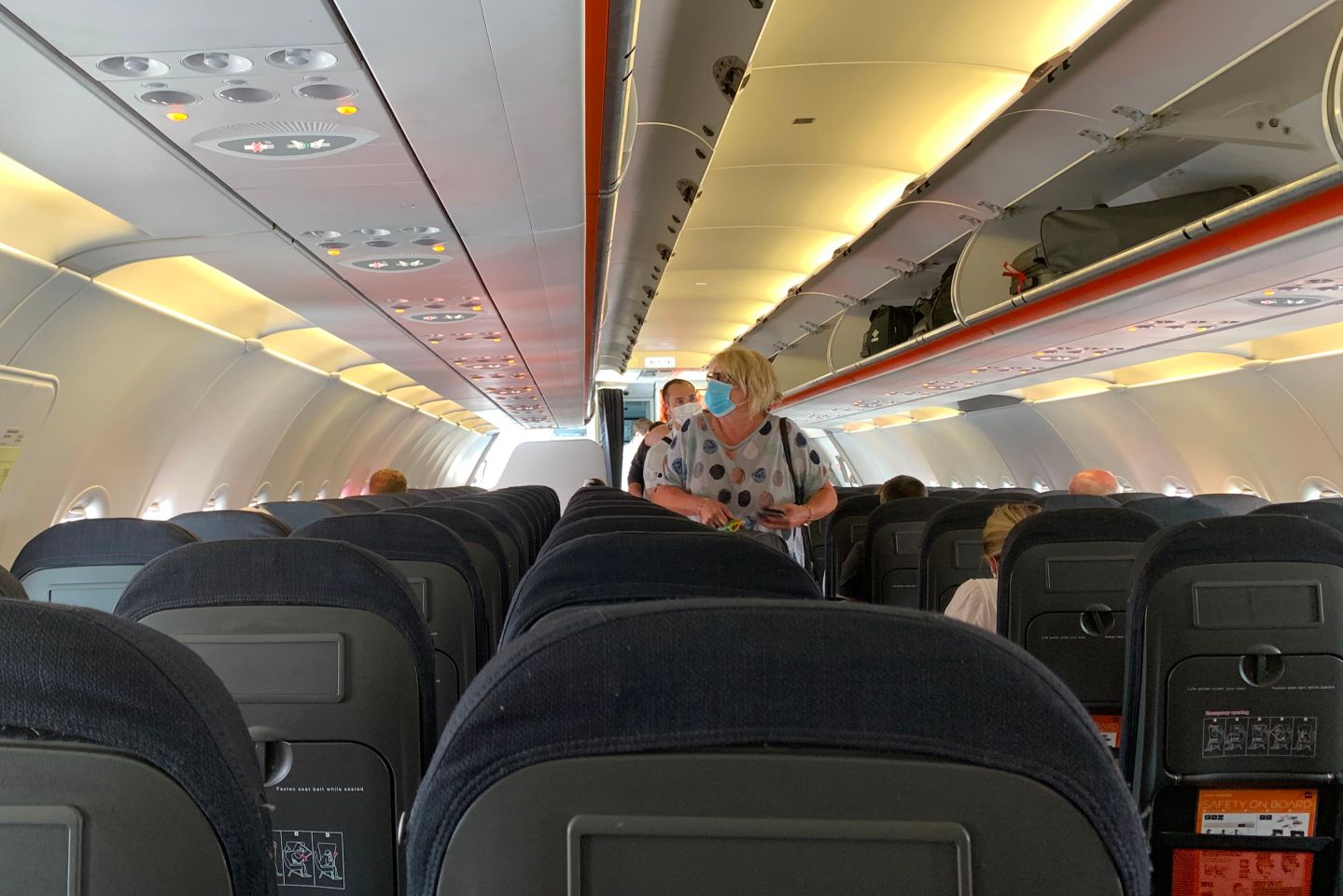
As it is shaping up, layers of safety are what the flying public can expect to experience as they resume air travel. This includes mandatory face coverings, social distancing, passenger health checks in a growing number of airports, and in all probability the reconfiguration of aircraft cabin interiors. Moreover, how to convince air travelers that flying commercially is safe amid the virus’s spread is a challenge shared among all industry players. 

On this last point, key vendors to the airline industry are quickly stepping up by offering ready-to-go solutions to leverage simulation and modeling of “contamination dispersal” in aircraft cabins and airport terminals. These tools should help airlines figure out and demonstrate to passengers how they are minimizing community spread. 

The good news is that today, all modern passenger jets already have very sophisticated cabin air systems with hospital-standard high-efficiency particulate air (HEPA) filters, so air is cleaned and kept moving on a continuing basis. A greater sense of security, however, requires taking an additional step. Today, seeing the unseen—how air flows—can create more than a sense of safety but visible proof of safety. 

Tools that can do this have already proven their abilities in the ground fight against COVID-19. When China needed to erect several medical facilities earlier this year in response to the coronavirus outbreak, the Central South Architectural Design Institute Company of China undertook the task of erecting multiple makeshift hospitals on an accelerated timeline. In addition to the logistical challenge, an HVAC (heating, ventilation, and air conditioning) system that minimized the risk of exposing hospital staff and noninfected patients to COVID-19 was imperative. 

By using real-world simulation of air circulation patterns, designers were able to determine which of their proposed ventilation layouts would be the most effective. 

Airlines and airports can employ the same simulation technology to help airlines and original equipment manufacturers (OEMs) establish how to minimize the dispersal of contaminants, based on different cabin passenger layouts and traffic patterns in airports. (For an example, see this video.) Airlines can efficiently simulate airflow and virus diffusion patterns in an aircraft cabin and work with a virtual model to redesign and test safety procedures. By creating high-rendering videos to show how their procedures work, they can communicate effectively with all stakeholders and increase passenger confidence. (My company, Dassault Systèmes, offers solutions that address several of these issues, including our Keep Them Operating and Passenger Experience solutions.)

Longer term, aviation’s OEMs may also choose to structurally modify the cabin itself to enhance onboard safety. But this action would take longer to implement, since the Federal Aviation Administration would have to certify any such changes, as was the case following 9/11, when OEMs upgraded cockpit doors to make them virtually impenetrable.

Another area of great uncertainty is the extent to which social distancing will be required in airports, including security queues—what tests will be required, and how will they be administered. This is a commercial issue for both airports and airlines, since retail outlets provide a lucrative source of revenue for airport operators, which helps reduce the charges made to airlines, according to Karen Dee, CEO of the Airport Operators Association.

Airports can use the same technology to create simulated models that help them optimize passenger flow and test the effectiveness of safety measures and procedures. By trying out their plans in a “virtual twin” of the airport first, they can optimize resources and minimize disruption when implementing those plans. Crucially, they can also create videos to demonstrate to workers and passengers that the environment is safe. (For an example of such a simulation, see this video.)

In the “new normal” that follows the pandemic, passenger safety needs to be built in at every stage, from design to departure and flight. And the steps that are taken to ensure passenger safety must be clearly articulated to give people assurances that they will be safe when they fly. Thanks to the combined efforts of companies across the aerospace ecosystem, that end-to-end approach is already in place. Now it’s time to act.

David Ziegler is the vice president of aerospace and defense at Dassault Systèmes. 

About the Author
By David Ziegler
See full bioRight Arrow Button Icon

Latest in Commentary

Finance
Lorem ipsum dolor sit amet, consectetur adipiscing elit, sed do eiusmod tempor incididunt ut labore et dolore magna aliqua. Ut enim ad minim veniam
By Fortune Editors
October 20, 2025
Finance
Lorem ipsum dolor sit amet, consectetur adipiscing elit, sed do eiusmod tempor incididunt ut labore et dolore magna aliqua. Ut enim ad minim veniam
By Fortune Editors
October 20, 2025
Finance
Lorem ipsum dolor sit amet, consectetur adipiscing elit, sed do eiusmod tempor incididunt ut labore et dolore magna aliqua. Ut enim ad minim veniam
By Fortune Editors
October 20, 2025
Finance
Lorem ipsum dolor sit amet, consectetur adipiscing elit, sed do eiusmod tempor incididunt ut labore et dolore magna aliqua. Ut enim ad minim veniam
By Fortune Editors
October 20, 2025
Finance
Lorem ipsum dolor sit amet, consectetur adipiscing elit, sed do eiusmod tempor incididunt ut labore et dolore magna aliqua. Ut enim ad minim veniam
By Fortune Editors
October 20, 2025
Finance
Lorem ipsum dolor sit amet, consectetur adipiscing elit, sed do eiusmod tempor incididunt ut labore et dolore magna aliqua. Ut enim ad minim veniam
By Fortune Editors
October 20, 2025

Most Popular

Finance
Lorem ipsum dolor sit amet, consectetur adipiscing elit, sed do eiusmod tempor incididunt ut labore et dolore magna aliqua. Ut enim ad minim veniam
By Fortune Editors
October 20, 2025
Finance
Lorem ipsum dolor sit amet, consectetur adipiscing elit, sed do eiusmod tempor incididunt ut labore et dolore magna aliqua. Ut enim ad minim veniam
By Fortune Editors
October 20, 2025
Finance
Lorem ipsum dolor sit amet, consectetur adipiscing elit, sed do eiusmod tempor incididunt ut labore et dolore magna aliqua. Ut enim ad minim veniam
By Fortune Editors
October 20, 2025
Finance
Lorem ipsum dolor sit amet, consectetur adipiscing elit, sed do eiusmod tempor incididunt ut labore et dolore magna aliqua. Ut enim ad minim veniam
By Fortune Editors
October 20, 2025
Finance
Lorem ipsum dolor sit amet, consectetur adipiscing elit, sed do eiusmod tempor incididunt ut labore et dolore magna aliqua. Ut enim ad minim veniam
By Fortune Editors
October 20, 2025
Finance
Lorem ipsum dolor sit amet, consectetur adipiscing elit, sed do eiusmod tempor incididunt ut labore et dolore magna aliqua. Ut enim ad minim veniam
By Fortune Editors
October 20, 2025
Rankings
  • 100 Best Companies
  • Fortune 500
  • Global 500
  • Fortune 500 Europe
  • Most Powerful Women
  • Future 50
  • World’s Most Admired Companies
  • See All Rankings
Sections
  • Finance
  • Leadership
  • Success
  • Tech
  • Asia
  • Europe
  • Environment
  • Fortune Crypto
  • Health
  • Retail
  • Lifestyle
  • Politics
  • Newsletters
  • Magazine
  • Features
  • Commentary
  • Mpw
  • CEO Initiative
  • Conferences
  • Personal Finance
  • Education
Customer Support
  • Frequently Asked Questions
  • Customer Service Portal
  • Privacy Policy
  • Terms Of Use
  • Single Issues For Purchase
  • International Print
Commercial Services
  • Advertising
  • Fortune Brand Studio
  • Fortune Analytics
  • Fortune Conferences
  • Business Development
About Us
  • About Us
  • Editorial Calendar
  • Press Center
  • Work At Fortune
  • Diversity And Inclusion
  • Terms And Conditions
  • Site Map
  • Facebook icon
  • Twitter icon
  • LinkedIn icon
  • Instagram icon
  • Pinterest icon

Latest in Commentary

powell
CommentaryMiddle class
Forget the K-Shape: We have a barbell economy—and the middle class is buckling under the weight
By Katica RoyJanuary 14, 2026
5 hours ago
engineer
Commentaryengineering
China graduates 1.3 million engineers per year, versus just 130,000 in the U.S. We need AI to bridge the gap
By Paul Eremenko and Ashish SrivastavaJanuary 14, 2026
7 hours ago
powell/trump
CommentaryFederal Reserve
Is Powell’s Fed head independence dead? Trump outfoxes himself this time
By Jeffrey SonnenfeldJanuary 13, 2026
1 day ago
paramount
CommentaryM&A
A cautionary Hollywood tale: the Ellisons’ lose-lose Paramount positioning
By Jeffrey Sonnenfeld and Stephen HenriquesJanuary 12, 2026
2 days ago
Walken
Commentarybeverages
Molson Coors CEO: We’re doing our part to solve society’s ‘occasion problem’ – and we’re getting some unexpected help
By Rahul GoyalJanuary 12, 2026
2 days ago
AsiaChina
What global executives need to ask about China in 2026
By Joe Ngai and Jeongmin SeongJanuary 11, 2026
3 days ago

Most Popular

placeholder alt text
Success
Despite his $2.6 billion net worth, MrBeast says he’s having to borrow cash and doesn’t even have enough money in his bank account to buy McDonald’s
By Emma BurleighJanuary 13, 2026
1 day ago
placeholder alt text
AI
'Godfather of AI' says the technology will create massive unemployment and send profits soaring — 'that is the capitalist system'
By Jason MaJanuary 12, 2026
2 days ago
placeholder alt text
Future of Work
'Microshifting,' an extreme form of hybrid working that breaks work into short, non-continuous blocks, is on the rise
By Nick LichtenbergJanuary 13, 2026
1 day ago
placeholder alt text
Economy
The longer the Supreme Court delays its tariff decision, the better it is for President Trump
By Jim EdwardsJanuary 13, 2026
1 day ago
placeholder alt text
Economy
Goldman Sachs top economist says Powell probe won’t change the Fed: 'Decisions are going to be made based on employment and inflation'
By Sasha RogelbergJanuary 12, 2026
2 days ago
placeholder alt text
Economy
Americans making more than $100,000 are quickly losing faith in the economy—and it's a red flag for the white-collar job market
By Tristan BoveJanuary 12, 2026
2 days ago

© 2025 Fortune Media IP Limited. All Rights Reserved. Use of this site constitutes acceptance of our Terms of Use and Privacy Policy | CA Notice at Collection and Privacy Notice | Do Not Sell/Share My Personal Information
FORTUNE is a trademark of Fortune Media IP Limited, registered in the U.S. and other countries. FORTUNE may receive compensation for some links to products and services on this website. Offers may be subject to change without notice.