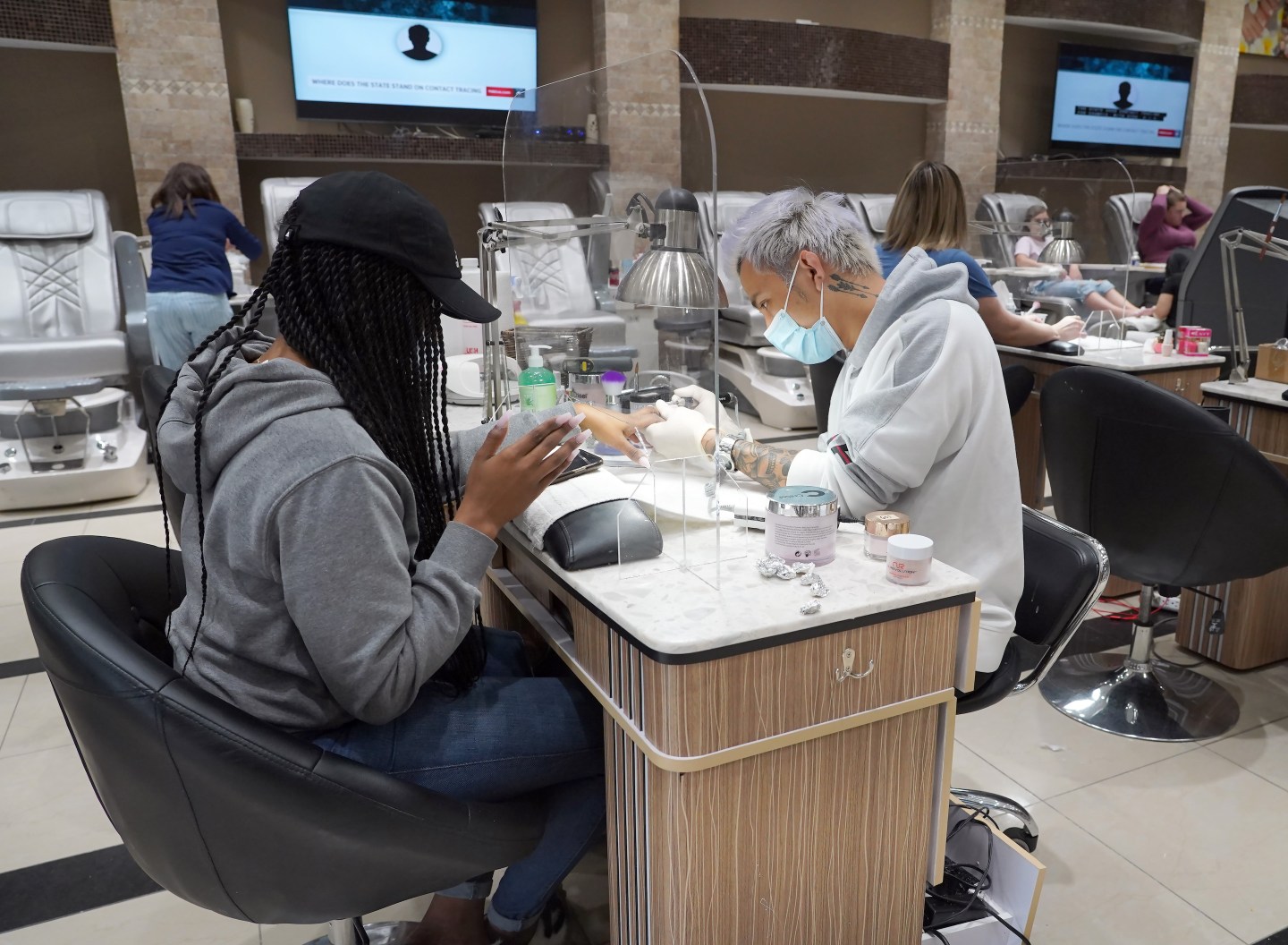
There is mounting pressure all across the U.S. for leaders to open businesses and ease the stay-at-home orders that have helped reduce COVID-19 infection rates and prevent a complete collapse of the health care system. Already, states like Georgia are poised to begin opening up gyms, nail salons, and even tattoo parlors.
But doing so at this time is not only dangerous, it’s also potentially a catastrophic decision. The fact is, we are still a long way from being able to safely reopen the U.S. economy. And if we proceed before we’re ready, we will find ourselves in an even worse position—as cases surge and the death toll rises.
Clearly, the suffering we’ve experienced in recent months has been significant. More than 22 million Americans have filed for unemployment, shattering previous records. Over 50 million children are out of school. Frontline workers and families are plagued with mental health issues and overwhelming exhaustion. Patients with ailments unrelated to COVID-19 are avoiding hospitals and doctor’s offices, risking serious health complications and even death. And due to repeated exposure to the coronavirus, countless health care professionals have fallen ill.
What we need right now is to make major investments in public health—not only to overcome the pandemic we face today, but also to prepare for the other public health crises of tomorrow. Never again should the economy be forced to a standstill to contend with the threat of a deadly pathogen.
To that end, here’s what must be done:
First, a national plan for testing, contact tracing, and patient isolation needs to be established. The full extent of COVID-19 infections and deaths in the U.S. is still unknown. And without a better understanding of what is happening on the ground and how it is impacting people, any move to reopen nonessential businesses and lift restrictions on public gatherings risks triggering an enormous second wave of infections and bringing our health care system to its knees once again. In fact, the Centers for Disease Control (CDC) director Robert Redfield has noted that if a second wave of infections later in the year were to coincide with flu season, the scenario could prove far more dire than what we have seen already.
The CDC, in coordination with state and local public health agencies, hospital systems, universities, and the private sector, must urgently develop and scale systems for testing active COVID-19 infections, as well as for serology tests that can detect the presence of antibodies in those who were previously infected. Early studies have indicated that the percentage of the population with antibodies for the novel coronavirus is several times greater than the percentage of the population that has tested positive for an active infection—meaning the disease is likely far more widespread than is currently measured.
This national testing effort must be coupled with significant new investments in federal, state, and local public health departments and agencies. The U.S. needs a single, national technology system for tracking the results of this expanded testing. The existing ILINet system for tracking flu-like disease outbreaks, managed by the CDC with inputs from health care providers across the country, offers a strong model. Local public health departments also need adequate funding and staff to effectively monitor local outbreaks and engage in contact tracing. To safely reopen the economy, the system must be able to effectively identify, notify, and isolate those who have been potentially infected after stay-at-home orders are eased.
New technologies must also play an important role in contact tracing and isolation. For instance, smartphone GPS functions can help alert public health departments if an individual who is supposed to remain at home has broken their isolation protocol. The CDC should be actively involved in any efforts by the private sector to develop smartphone-enabled tools for monitoring COVID-19 cases to ensure that strong regulations are in place to protect personal information and promote data security.
Second, there must be an ongoing, global program of vaccine development. Dozens of vaccine candidates and potential treatments for COVID-19, including using bone marrow cells to prevent deadly immune system overreactions in coronavirus patients, are already entering initial clinical trials—that’s the good news. But the global system for developing, testing, manufacturing, and scaling distribution of vaccines remains fractured and inefficient—meaning it will take months, if not years, to produce, manufacture, and distribute a safe and widely effective vaccine.
Government agencies, university researchers, and pharmaceutical companies around the world must come together under a common framework for sharing data and information on COVID-19, lab results for potential vaccines, manufacturing needs and methods, and outcomes from animal and human vaccine trials. The data-sharing framework should also include science-driven criteria for selecting the best vaccines to produce and distribute at scale. To help, more public, philanthropic, and private investment must be dedicated to accelerate research and development and help fund upgrades in scientists’ research infrastructure. In other words, this is a time for cooperation, not competition.
Finally, cross-sector collaborations are needed in order to prevent the next pandemic before it starts. A major challenge for the U.S. public health system is that we ramp up investments in response to disease-specific fights, and then allow resources to slack off when times are good. That puts us at a critical disadvantage when crises arise. For example, when SARS emerged in 2002 to 2003, vaccine development efforts were ramped up, only to be defunded when SARS disappeared. Had those candidates been developed, we would be much closer to developing vaccines for COVID-19.
The problems with the current system begin at the lab bench. The immune system is an immensely complex apparatus. We know that as people get older, their immune systems struggle to fight off run-of-the-mill infections. We also know that many vaccines don’t work nearly as well for elderly people as they do for younger adults. But we don’t know why because we haven’t invested enough in the research.
This limited knowledge about how to generate effective human immunity is unfortunately coinciding with the present-day crisis, as evidence shows that COVID-19 is more likely to lead to severe symptoms and higher rates of mortality in the elderly—and that even for younger, healthier patients, an immune system overreaction to the coronavirus can cause them to suddenly crash. Without a more robust understanding of the immune system, doctors are flying half-blind when trying to devise treatments.
All of this speaks to the reasons why the Harvard T.H. Chan School of Public Health and the global nonprofit Human Vaccines Project recently launched the Human Immunomics Initiative, a collaboration to improve understanding of the immune system and use that knowledge to accelerate the development of vaccines and treatments. And, over time, by bringing together experts from across fields, we expect the Human Immunomics Initiative to help address many of the most pressing challenges in public health, from the precipitous rise in autoimmune diseases to understanding how inflammation contributes to cardiovascular disease.
In truth, more collaborations like this one are needed—cross-sector programs that bring together laboratory scientists, public health experts, tech engineers, and others—to reexamine the fundamental underpinnings of human health and disease, translate those findings into new treatments, and disseminate those treatments to the public.
So while we aim to avoid a potentially catastrophic decision to reopen, we must learn from this COVID-19 pandemic that investing in and maintaining a strong public health infrastructure will not only protect the economy, but also improve health and save lives everywhere.
Michelle A. Williams is dean of the faculty at Harvard T.H. Chan School of Public Health.
Wayne C. Koff is president and CEO of the Human Vaccines Project.
Our mission to help you navigate the new normal is fueled by subscribers. To enjoy unlimited access to our journalism, subscribe today.
More opinion in Fortune:
—How we can prevent being caught off guard by a pandemic like the coronavirus ever again
—An Earth Day CEO summit shows how dramatically corporate values have changed
—Which companies’ stocks will thrive after the coronavirus crash?
—Northwestern Mutual CEO: 3 lessons learned from economic crises before COVID-19
—Listen to Leadership Next, a Fortune podcast examining the evolving role of CEO
—WATCH: CEO of Canada’s biggest bank on the keys to leading through the coronavirus
Listen to our audio briefing, Fortune 500 Daily











