The 2011 drama Contagion is trending on iTunes amid coronavirus fears. The movie follows the spread of a pandemic that’s eerily similar to the current one—a bat-related virus, first contracted in China and entirely new to humans, that spreads worldwide within weeks. The virus has “no treatment protocol and no vaccine.” Its first symptom is a cough.
In the movie, “every man for himself” social chaos ensues. In real life, we may be fighting over toilet paper and hand sanitizer, but I don’t foresee the extreme social response and violence of Contagion happening in this country.
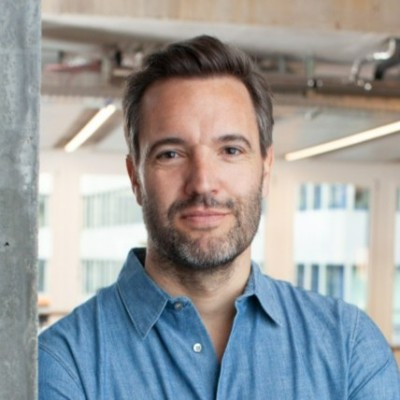
I’ve spent my career studying how violence starts and spreads. I saw it firsthand during my military service in the Gulf War; I saw it as a national security adviser to U.S. senators and as a former chief of staff at U.S. Customs and Border Protection. Now I study it in my work as a professor at Georgetown’s School of Foreign Service, and in my work with the many national security agencies that use the software I developed to combat terrorism, human and drug trafficking, and financial crime.
Here’s the behavioral science behind violence: Self-preservation is a human instinct. When there’s a shock to the population, as in the case of a war or pandemic, people fear scarcity. We worry about things needed to survive, we worry about taking care of our families, and we compete for limited goods. Sometimes we compete for goods we expect to become scarce, creating scarcity when it’s not otherwise likely—like today’s toilet paper shortage. Violence gets its start when expected scarcity threatens expected survival.
The empty grocery stores of Contagion may have parallels to our fast-emptying store shelves, but we’re not going to reach the same level of violence.
Why? Because, for one, the consequences of the fictional movie are much more dire. The mortality rate of the movie virus is 30%. A recent study of cases in Wuhan, China, estimated COVID-19’s mortality rate at 1.4%. The movie virus is deadly to people of all ages, including children and the young, triggering an instinctual panic over the propagation of the species and our genetic line; COVID-19 is mainly a risk to the elderly and immunocompromised.
We are also not experiencing the same level of scarcity of goods that would lead to widespread violence. For the most part, food and essential goods are available and being restocked daily in stores. Hoarding is being widely criticized. Even in Italy, where ventilators are in short supply, no one has overthrown the hospitals.
Additionally, when violence gets out of hand, it typically occurs when a society’s government is unable to adapt and respond. Our government’s actions may be open to criticism, but it has responded to quell people’s fears, whether it’s expanding telemedicine for Medicare patients, paying sick leave for hourly workers, or sending checks to Americans.
Even if this virus were deadlier, countries with weaker governments and fewer resources would be much more likely to see violence than the U.S. In places where the state is not strong enough, groups like drug gangs could expand their existing power during a pandemic because they have money and power. For example, Typhoon Haiyan, which devastated the Philippines in 2013, led to a surge in lawlessness and violence, including sexual and gender-based violence. When the government leaders showed weakness, armed gangs reigned.
Instead, Americans are translating their fears into a positive communal response. When we fall short of a scenario ripe for violence, what we often get instead is the formation of subcommunities in which members look out for one another. In my Arlington, Va., neighborhood, for example, we compiled a list of everyone who is elderly, ill, or unable to leave their home. Then we formed a system for getting groceries and essential items to them. The Washington Post called these groups “militias of caring.” We have come up with our own response, unprompted by the government, for helping each other. Neighborhoods around the country have reacted similarly.
As we face an increase in coronavirus diagnoses in the coming weeks, some may fear a Contagion-like scenario. But keep in mind that even relatively accurate movies like Contagion still must shock and entertain their viewers.
Instead, we should look for the goodness across our communities in responding to this pandemic. I feel reassured by the real-life human responses to this crisis that I’ve already seen.
Gary M. Shiffman is the creator of Giant Oak Search Technology (GOST) and author of the new book The Economics of Violence: How Behavioral Science Can Transform Our View of Crime, Insurgency, and Terrorism. He teaches economic science and national security at Georgetown University.
More coronavirus coverage from Fortune:
—Why Iceland’s approach to coronavirus testing may be better than America’s
—Everything you need to know about the coronavirus stimulus checks
—Glow sticks to surgical masks: Businesses pivot to tackle coronavirus shortages
—The world’s largest coronavirus lockdown is off to a rocky start
—The oil sector is quickly running out of storage for its unprecedented surplus
—The $2 trillion coronavirus stimulus package isn’t green, but it helps
—Listen to Leadership Next, a Fortune podcast examining the evolving role of CEOs
—WATCH: World leaders and health experts on how to stop the spread of COVID-19
Subscribe to Outbreak, a daily roundup of stories on the coronavirus pandemic and its impact on global business, delivered free to your inbox.