Subscribe to Fortune’s Outbreak newsletter for a daily roundup of stories on the coronavirus outbreak and its impact on global business.
“Bold.” “Aggressive.” “Extraordinary.” The U.S. Federal Reserve on Sunday took emergency measures, including slashing its benchmark interest rate to near zero, to buffer the economy from the effects of the ongoing coronavirus crisis.
The Fed’s moves, coming less than two weeks after an earlier interest-rate cut, replicated and accelerated monetary policy last seen at the depths of the 2008 financial crisis. The health-related crisis stemming from the COVID-19 pandemic is very different—but, the central bank seems to be indicating, the way it’s trending is just as dire.
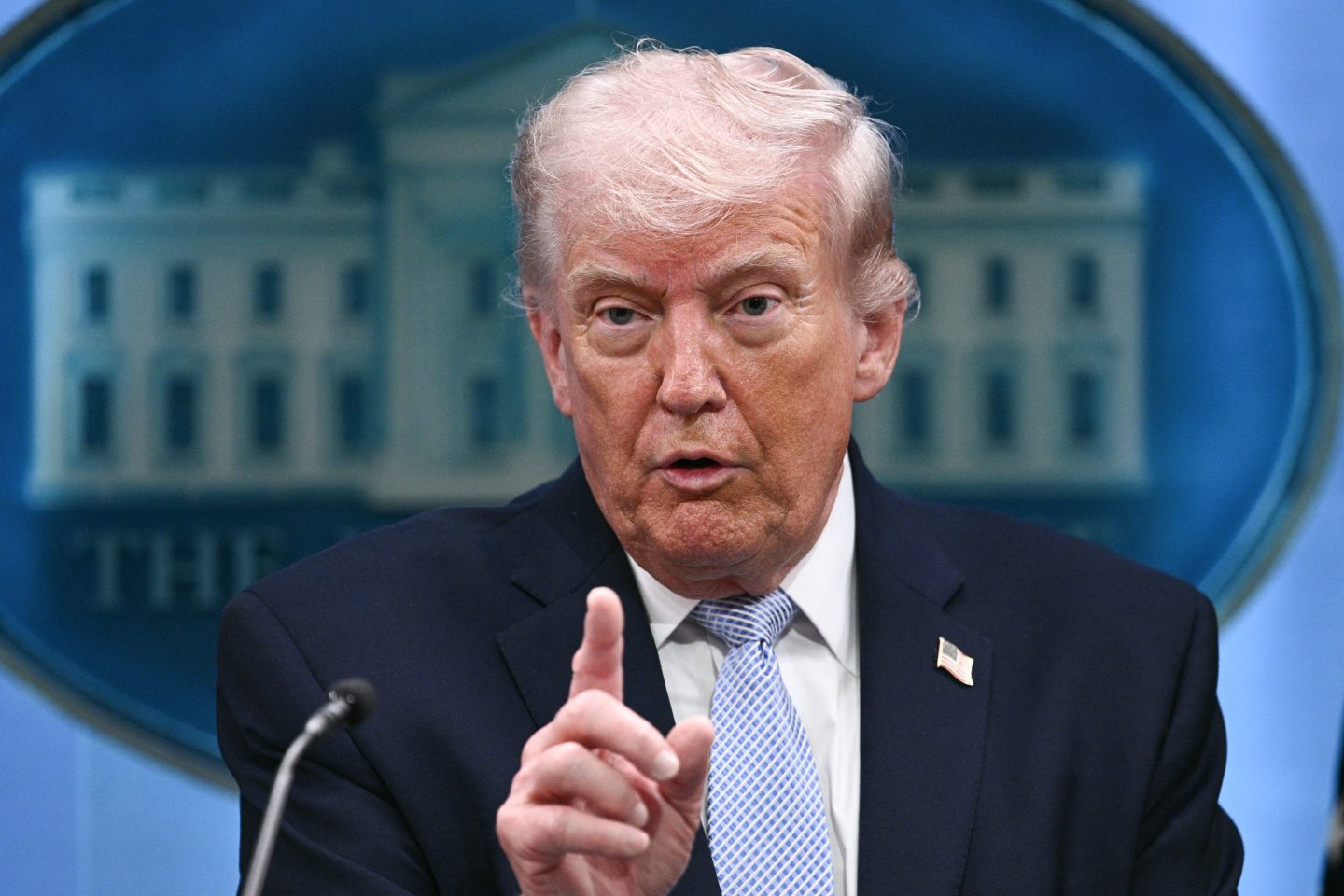
“We expect that the illness and the measures now being put in place to stem its spread will have a significant effect on economic activity in the near term,” Fed Chair Jerome Powell said on Sunday. “Those in travel, tourism, and hospitality industries are already seeing a sharp drop in business. In addition, the effects of the outbreak are restraining economic activity in many foreign economies, which is causing difficulties for U.S. industries that rely on global supply chains.”
So how much can the Fed really help fight the coronavirus crisis—and what do these massive central-bank decisions mean for the average American? Below, we looked at what the Fed’s decisions will—and won’t—do.
What does the Fed cutting interest rates to zero really mean?
On Sunday, the Federal Reserve slashed its benchmark interest rate to a range of 0% to 0.25% and pledged to buy $700 billion worth of government debt and mortgage-backed securities. It also expanded its “discount window” to banks and loosened its associated restrictions, hoping to encourage banks to lend out more money. Then, on Monday, the New York Fed also said it would conduct an overnight repo operation for an additional $500 billion, essentially increasing the amount of short-term lending available to financial institutions.
The central bank is hoping that all of this stabilizes financial markets, makes it easier for big companies to borrow money, and for banks to be willing to lend it out. The lower interest rates and the discount window are effectively reducing the cost of credit. By buying government debt and expanding the overnight repo market, the Fed is also seeking to increase market “liquidity,” or the amount of money that’s able to move around freely.
Why do big companies need cheaper credit right now?
Bluntly, to help them avoid going out of business. As Powell noted, airlines and other major industries are in serious trouble from COVID-19, since governments are banning travel and advising that their citizens stay quarantined at home. U.S. airlines alone employ some 750,000 people, so if the companies can’t pay their bills or get loans to cover the revenue shortfall, suddenly most of those jobs are at risk. Meanwhile, smaller businesses are equally in trouble; cities and states are mandating that restaurants, bars, cinemas, and concert venues close, leaving us all to responsibly huddle inside our homes, hoarding our toilet paper.
The rates set by the Fed help determine the price that banks charge for credit—mostly to corporate borrowers, but also eventually for your mortgage or credit card. If it’s easier and cheaper for big companies to borrow money right now, the thinking goes, these corporations can continue to pay their bills, postpone laying off workers, and avoid shutting down. All of which can stave off a recession.
About that R-word: The Fed last cut interest rates this low in the aftermath of the 2008 financial crisis. Does this mean we’re about to enter another recession?
It’s not looking good, as several economists told Fortune’s Shawn Tully by Friday. “”We’re getting closer to the recessionary tipping point,” Jared Franz, an economist at fund manager Capital Group said.
What else can the Fed do to help the economy? And would we ever see ‘negative’ interest rates here?
The Fed can’t do much more, at least in terms of interest rates. Powell said Sunday that the Fed is unlikely to cut rates below zero. Negative interest rates, which central banks in Europe and Japan have tried, mean that lenders effectively have to pay their borrowers (and depositors have to pay to store their cash). “We do not see negative policy rates as likely to be an appropriate policy response here in the United States,” Powell said Sunday.
The Fed also on Sunday announced a joint action with other central banks around the world, to ensure that other countries have enough dollar reserves on hand. And there are certain other monetary-policy levers that the central bank could pull, with Congressional approval, though that’s “not something we are actively considering right now,” Powell on Sunday.
He also emphasized that the Fed can only do so much to help small businesses and consumers in the current crisis. Monetary policy can only go so far, in other words, and can’t replace legislative measures such as the pending bill that would guarantee some paid sick leave and unemployment insurance benefits.
“We don’t have the tools to reach individuals and particularly small businesses, and other businesses, and people who may be out of work,” Powell said. “But this is a multifaceted problem. And it requires answers from different parts of the government and society.”
So what does the Fed’s interest rate cut mean for me and my family?
Short-term, not very much. It probably won’t help your favorite coffee shop survive, or allow you to find more hand sanitizer on drugstore shelves. But if you’re able to think about buying a house, you’ll probably be able to get a cheaper mortgage. Your credit card interest rates might eventually go down. On the flipside, the rates banks are willing to pay for your deposits will also go down—so those high-interest savings accounts, like the bull market, may be a thing of the past.
More must-read stories from Fortune:
—How to prepare your personal finances for a coronavirus recession
—Why the world’s stock markets kept going quiet last week
—The Fed made a bold move to calm shaky markets. But is it enough?
—Why return CEOs are usually bad news for a company’s stock
—Dormant PayPal Credit accounts are coming back to hurt credit scores
Subscribe to Fortune’s Bull Sheet for no-nonsense finance news and analysis daily.