• Home
  • Latest
  • Fortune 500
  • Finance
  • Tech
  • Leadership
  • Lifestyle
  • Rankings
  • Multimedia
Lifestylefeminism

Over 70 museums across the U.S. have committed to showcasing feminist art

By
Anna Ben Yehuda Rahmanan
Down Arrow Button Icon
By
Anna Ben Yehuda Rahmanan
Down Arrow Button Icon
March 2, 2020, 6:00 AM ET
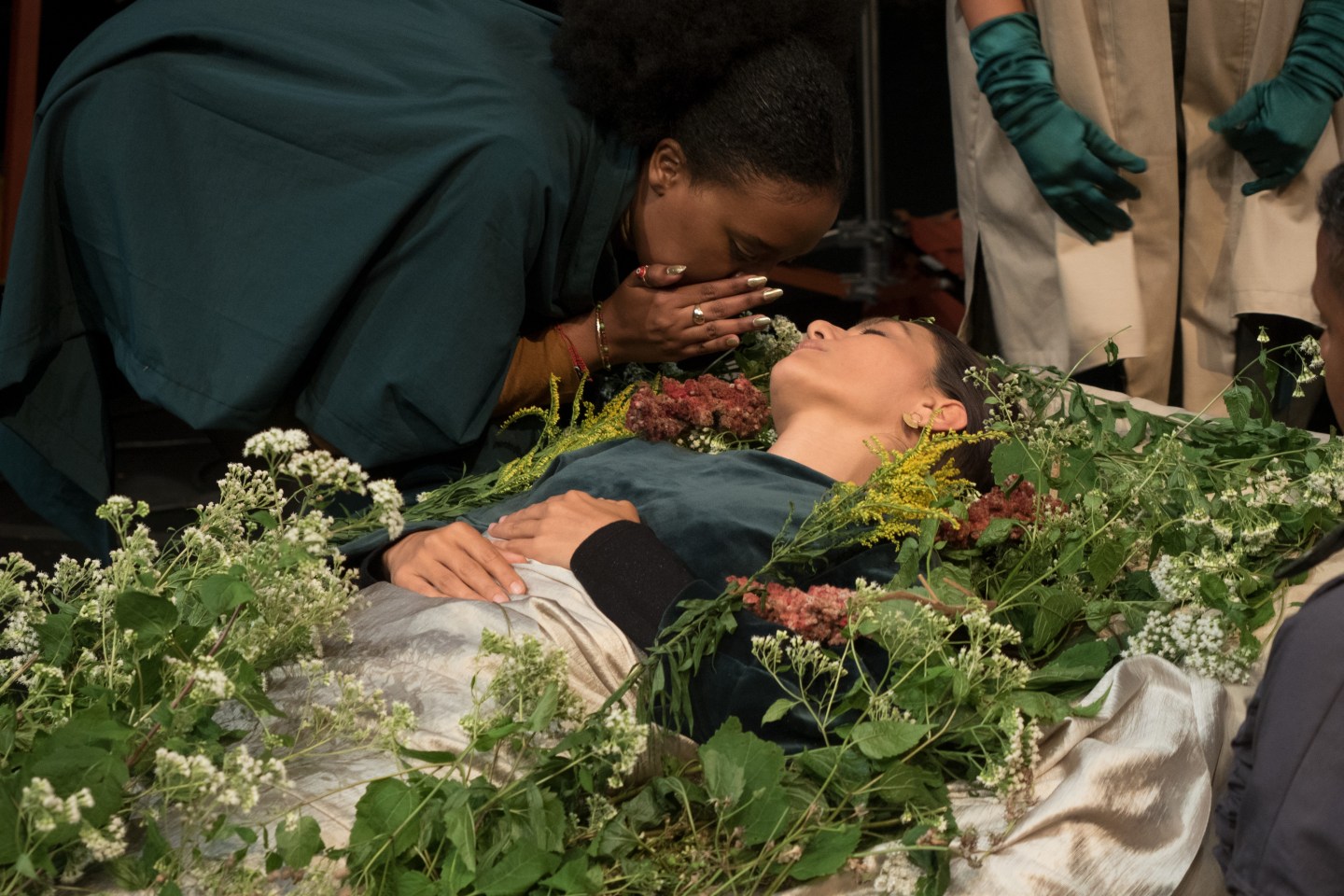
Production still from "Dicen que cabalga sobre un tigre" by Beatriz Santiago Muñoz.
Production still from "Dicen que cabalga sobre un tigre" by Beatriz Santiago Muñoz.Courtesy of Mick Bello/EMPAC

After witnessing the first Women’s March in Washington, D.C., in January 2017, Apsara DiQuinzio, curator of modern and contemporary art at the Berkeley Art Museum and Pacific Film Archive in California, wrote to a few of her art world colleagues and pitched the idea of a coalition dedicated to the advancement of feminist causes.

“We consider art as a catalyst for critical discourse and civic engagement, and we are creating a platform that’s informed by feminisms to establish a collaboration between art institutions in order for them to make their commitment to social justice and feminist causes known,” says DiQuinzio. “In general, we’re hoping to generate cultural awareness of feminist thoughts, experiences, and actions.”

That has resulted in a nationwide project that will kick off in September 2020, and will include a wide variety of museums—more than 70, as of today—that have committed to exploring all things feminist through exhibits, films, lectures, performances, and more.

“It is not only [about] focusing on women or projects by women,” DiQuinzio explains. “It is very much gender inclusive in the sense that it can be focusing on transgender artists or male artists who take up a specific feminist issue.”

Claudia Bernardi, “Pasa un Angel” (1998). Monotype fresco; 33 x 43 inches. Museum purchase, Segura Publishing Co. Archives. Scottsdale Museum of Contemporary Art.
Courtesy of the Scottsdale Museum of Contemporary Art

To DiQuinzio and her team at the Feminist Art Coalition (FAC), the term “feminism” is a comprehensive one. “That’s why we put it in the plural,” she says. “There are many different definitions and ideas about it, going back to before the word was even used. We want to be as open as possible when we’re talking about feminist-related issues.”

Artists and projects that want to be associated with the coalition must to be tied to an artistic institution in their respective cities. “Institutions are places where people can converge and have organized discussions, and ideas can be exchanged,” DiQuinzio explains. “So if you are an independent curator who wants to do a project, then you’d have to link up with a specific organization and present that project with an institution.”
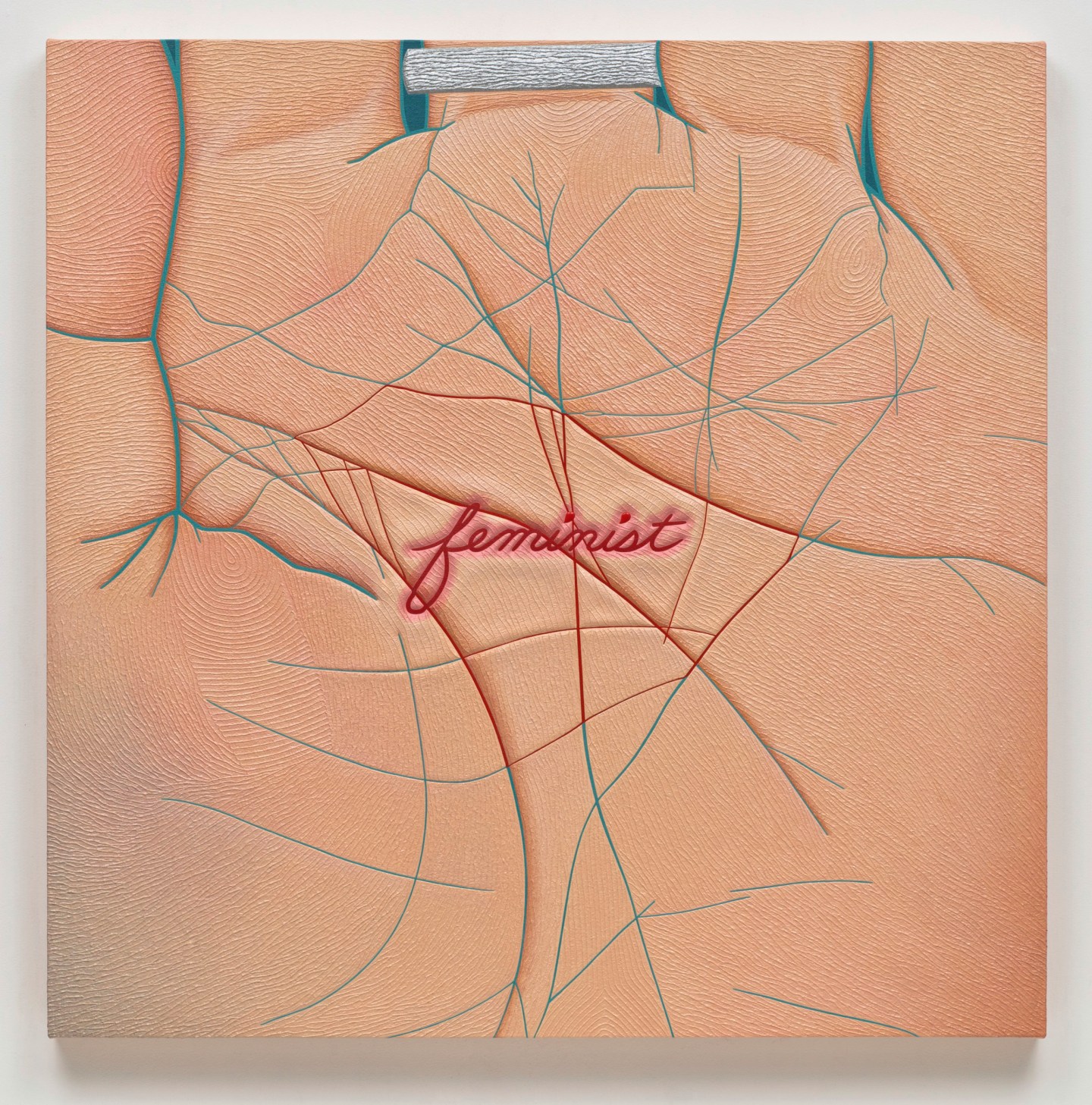
Linda Stark, “Stigmata” (2011). Oil on canvas over panel; 36 × 36 × 3 inches. University of California, Berkeley Art Museum and Pacific Film Archive; purchase made possible through a gift of the Paul L. Wattis Foundation.
Courtesy of the University of California, Berkeley Art Museum and Pacific Film Archive

Although the application window is still open, a slew of exhibits are already part of the cause. DiQuinzio herself is working on “New Time: Art and Feminisms in the 21st Century.” Set to open at the Berkeley Art Museum in the San Francisco Bay Area, the exhibit will delve into the scope of feminist art practices within the past 20 years.

In “Witch Hunt,” Los Angeles’ Hammer Museum is focusing on more than a dozen artists—Bouchra Khalili, Yael Bartana, and Vaginal Davis among them—exploring their work in depth. The Carpenter Center for the Visual Arts at Harvard University, on the other hand, is programming a series of public conversations and lectures.

Since the project’s inception, changes have taken place already: Starting off as a group of 12 women, the team is now led by a steering committee of six people. The project’s name has also undergone a transformation. “Initially, we were thinking of naming ourselves You Call Yourself a Feminist?” DiQuinzio says. “Then we realized we needed a larger umbrella that would work for many different-sized institutions, so we came up with the Feminist Art Coalition.”
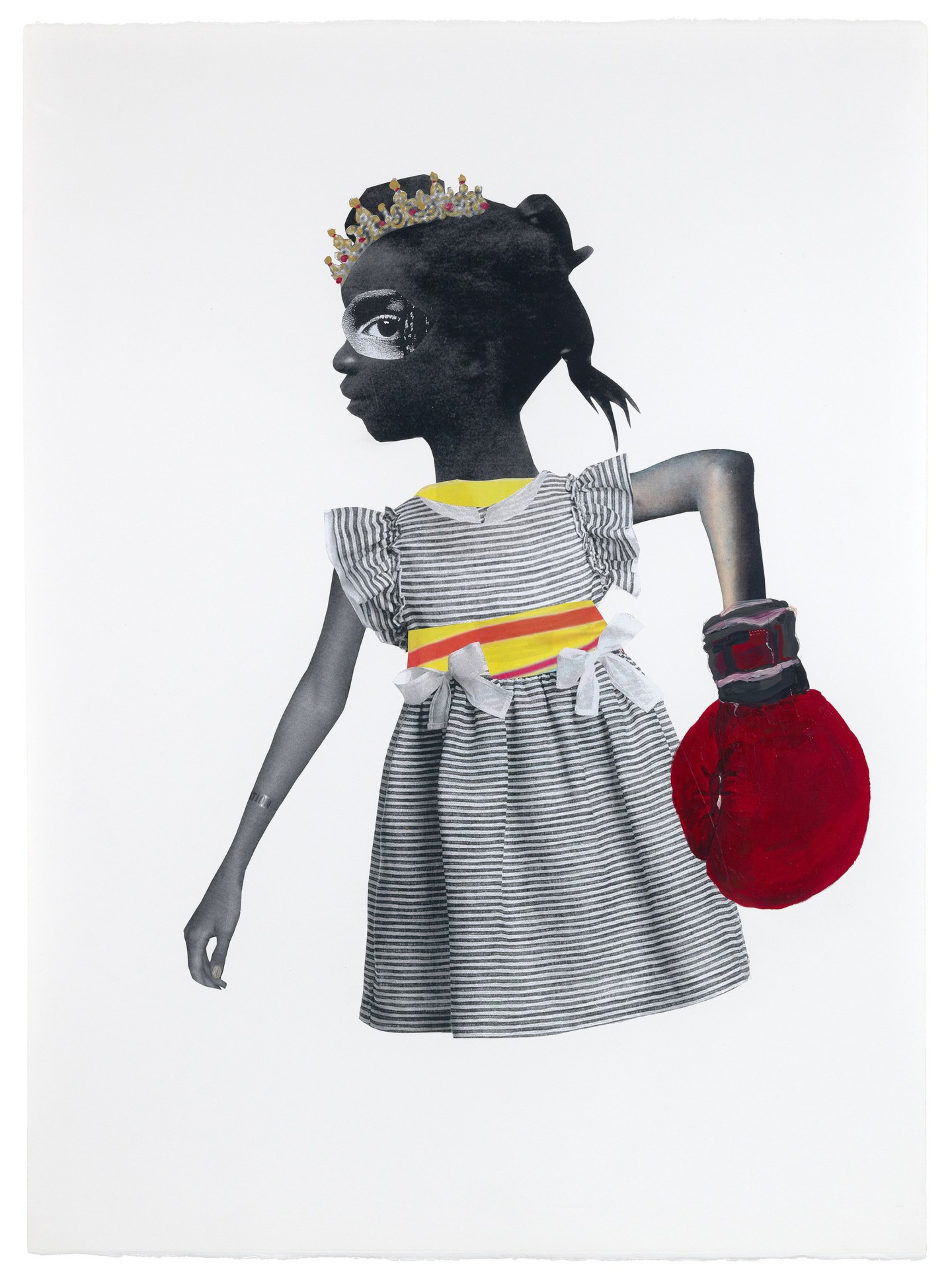
Deborah Roberts, “Glass Castles” (2017). Mixed media on paper, 30 x 22 inches. The Tang Teaching Museum collection.
Courtesy of the Tang Teaching Museum collection

Although scheduled in line with the upcoming U.S. presidential election, DiQuinzio notes that they are not trying to influence the political outcome of the race. “It’s more about creating spaces where important conversations about feminisms or gender issues or equality or ending oppressive regimes can take place in the lead-up to the election,” she says. “It’s about generating awareness around feminist-related issues, and those issues can be conservative or they can be liberal. It’s not meant to be a partisan-related issue.”

Although the initiative will come to a conclusion by the end of November, the founder is open to potentially expanding the scope of her original plans. As of now, there is nothing planned for beyond November. “It will depend on the interest and desire to continue it,” she says.

One thing is clear to DiQuinzio: Political and artistic efforts share commonalities. “Artists are people who are always engaged with the world around them,” she says. “So artists are some of our best barometers for social engagement and critical awareness, activism, and change. We can find those overlapping threads, and it is always important and necessary to do so.”

More must-read stories from Fortune:

—The drinks America’s best bartenders make for themselves
—Miami’s Balloo is a personal tribute to the chef’s Chinese, Indian, and Trinidadian roots
—Inside the most influential fashion show in menswear
—5 things Madewell’s CEO always packs when traveling
—WATCH: Can San Francisco Be Saved?

Follow Fortune on Flipboard to stay up-to-date on the latest news and analysis.

About the Author
By Anna Ben Yehuda Rahmanan
See full bioRight Arrow Button Icon

Latest in Lifestyle

Healthmeal delivery
Factor Meals Review 2025: Tester Approved
By Christina SnyderDecember 12, 2025
6 hours ago
Donald Trump
HealthHealth Insurance
‘Tragedy in the making’: Top healthcare exec on why insurance will spike to subsidize a tax cut to millionaires and billionaires
By Nick LichtenbergDecember 12, 2025
7 hours ago
HelloFresh meal delivery service.
Healthmeal delivery
HelloFresh Review : We Tasted Everything so You Don’t Have To
By Christina SnyderDecember 12, 2025
8 hours ago
Noom as best weight loss program
HealthWeight Loss
Noom Review (2025): Everything You Need to Know
By Christina SnyderDecember 12, 2025
9 hours ago
Tensed teenage girl writing on paper
SuccessColleges and Universities
40% of Stanford undergrads receive disability accommodations—but it’s become a college-wide phenomenon as Gen Z try to succeed in the current climate
By Preston ForeDecember 12, 2025
11 hours ago
SuccessHow I made my first million
Hinge CEO says he bribed students with Kit Kats to get the $550-million-a-year business off the ground: ‘I had to beg and borrow a lot‘
By Orianna Rosa RoyleDecember 12, 2025
12 hours ago

Most Popular

placeholder alt text
Economy
Tariffs are taxes and they were used to finance the federal government until the 1913 income tax. A top economist breaks it down
By Kent JonesDecember 12, 2025
16 hours ago
placeholder alt text
Success
At 18, doctors gave him three hours to live. He played video games from his hospital bed—and now, he’s built a $10 million-a-year video game studio
By Preston ForeDecember 10, 2025
3 days ago
placeholder alt text
Success
Palantir cofounder calls elite college undergrads a ‘loser generation’ as data reveals rise in students seeking support for disabilities, like ADHD
By Preston ForeDecember 11, 2025
1 day ago
placeholder alt text
Arts & Entertainment
'We're not just going to want to be fed AI slop for 16 hours a day': Analyst sees Disney/OpenAI deal as a dividing line in entertainment history
By Nick LichtenbergDecember 11, 2025
1 day ago
placeholder alt text
Success
40% of Stanford undergrads receive disability accommodations—but it’s become a college-wide phenomenon as Gen Z try to succeed in the current climate
By Preston ForeDecember 12, 2025
11 hours ago
placeholder alt text
Success
Apple cofounder Ronald Wayne sold his 10% stake for $800 in 1976—today it’d be worth up to $400 billion
By Preston ForeDecember 12, 2025
12 hours ago
Rankings
  • 100 Best Companies
  • Fortune 500
  • Global 500
  • Fortune 500 Europe
  • Most Powerful Women
  • Future 50
  • World’s Most Admired Companies
  • See All Rankings
Sections
  • Finance
  • Leadership
  • Success
  • Tech
  • Asia
  • Europe
  • Environment
  • Fortune Crypto
  • Health
  • Retail
  • Lifestyle
  • Politics
  • Newsletters
  • Magazine
  • Features
  • Commentary
  • Mpw
  • CEO Initiative
  • Conferences
  • Personal Finance
  • Education
Customer Support
  • Frequently Asked Questions
  • Customer Service Portal
  • Privacy Policy
  • Terms Of Use
  • Single Issues For Purchase
  • International Print
Commercial Services
  • Advertising
  • Fortune Brand Studio
  • Fortune Analytics
  • Fortune Conferences
  • Business Development
About Us
  • About Us
  • Editorial Calendar
  • Press Center
  • Work At Fortune
  • Diversity And Inclusion
  • Terms And Conditions
  • Site Map

© 2025 Fortune Media IP Limited. All Rights Reserved. Use of this site constitutes acceptance of our Terms of Use and Privacy Policy | CA Notice at Collection and Privacy Notice | Do Not Sell/Share My Personal Information
FORTUNE is a trademark of Fortune Media IP Limited, registered in the U.S. and other countries. FORTUNE may receive compensation for some links to products and services on this website. Offers may be subject to change without notice.