
China famously spends more on importing semiconductor chips than it does on importing oil. This bit of trivia illustrates China’s deep dependency on foreign chips and is especially notable given China’s outsize efforts to break the habit. Even now, after years of investments, China still lags far behind the U.S. in manufacturing the tiny chips that power your iPhone, Samsung Galaxy, or Huawei Mate. But the nation’s escalating tensions with the U.S.—home of giant chipmakers like Intel and Qualcomm—may be spurring China’s firms and supply chains to finally catch up.
Semiconductor silicon chips have formed the backbone of the technological revolution, helping to power mobile phones, computers, driverless cars, and ‘smart’ devices. And they’ve doubled in computing power every two years—an industry principle known as Moore’s Law—spurring the unprecedented era of technological growth.
China has devoted resources to developing the crucial components since the 1950s. But chips have proven particularly difficult to manufacture since innovation is costly, and their rapid advancement is difficult to catch up with. In 2017, for example, Intel alone spent over $13 billion on research and development for semiconductors.
In China, state-led semiconductor initiatives have proved inadequate to meet even domestic demand. A large, well-funded state push in the 1990s famously yielded few results. Yet the need for advanced chips only grew as the country opened up in the 1990s and 2000s and became more technologically advanced. In the 2000s, the country again attempted to spur innovation by transforming the industry; it privatized much of the sector, introduced tax benefits, and created new funds. That effort too was largely fruitless.
According to Christopher Thomas, a managing partner at McKinsey focused on semiconductors, China’s semiconductor investments have often proved too small and dispersed to make any significant dent in the global marketplace.
Seeking self-sufficiency
In 2015, the Chinese government introduced yet another initiative, releasing a set of tech-focused policy goals called “Made in China 2025,” which aimed for 40% self-sufficiency in semiconductors by 2020, and 70% by 2025. This policy came with massive investment pledges into the technology, such as the $30 billion semiconductor fund announced last month.
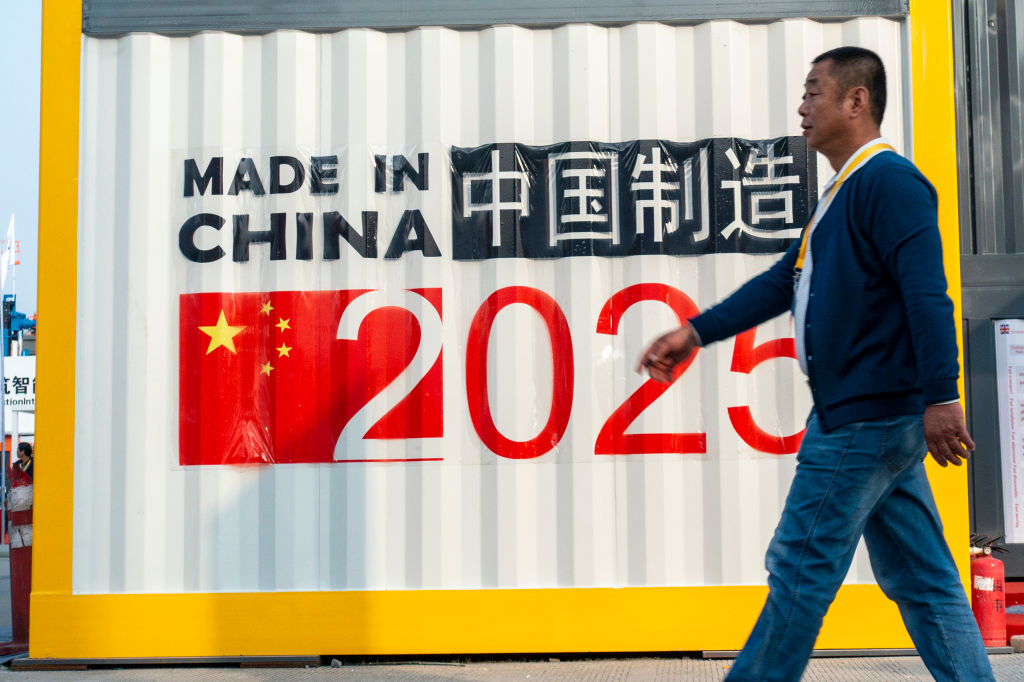
While the country has made some progress, as of last year it had reached only about 15% self-sufficiency, according to the Nikkei Asian Review. “In manufacturing there’s been no structural changes in the industry in the last five years,” said Thomas.
But there’s a growing body of evidence that suggests a new era in China’s chipmaking is underway. In this case, it seems, conflict with the U.S. is incentivizing China to innovate.
A trade war trickles down
The 16-month U.S.-China trade war hasn’t hit chips directly, but the industry has endured its trickle-down effects. Starting in July 2018, successive rounds of tariffs levied from the U.S. and China put a strain on technology companies in both countries that rely on semiconductors as related equipment got caught in the tit-for-tat. That led to higher prices; firms like Intel have even begun shifting supply chains away from China. The industry’s trade association recently championed discussion of a U.S.-China trade deal, and called for the two sides to “remove harmful tariffs.”
Then there’s the matter of blacklisting, another mechanism employed by the U.S. that’s had a stymying effect on Chinese tech. Last May, the U.S. added Huawei and over 70 affiliated companies to the government’s entity list—essentially a blacklist—because the U.S. viewed it as a national security threat. In recent weeks, the list has grown, with the U.S. adding a number of top A.I. firms to it. The new entries depend on advanced chips, but the classification makes it nearly impossible for U.S. firms to supply them with the parts they need.
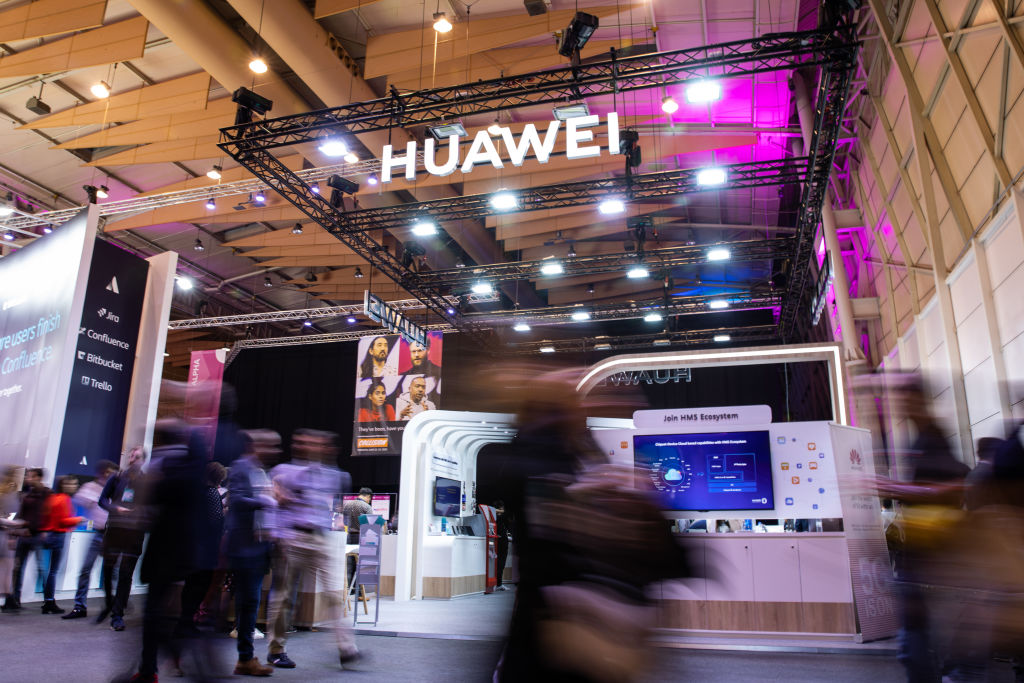
The U.S. reportedly even urged a foreign chipmaker Taiwan Semiconductor Manufacturing Company, the world’s largest, to stop selling chips to Huawei over security fears, according to the Financial Times. The government of Taiwan, which is closely tied to TSMC, denied the report and vowed to continue its relationship with Huawei.
China’s homemade chips
Amid all this tension, Chinese tech giants have ramped up their own chip production. Huawei itself introduced a new A.I.-powered chip to the market in August to help process large data. Likewise, Alibaba, the Chinese tech and e-commerce giant, announced in September it had developed its own A.I.-chip for use in its cloud computing services. These chips represent significant strides, but the firms still remain largely dependent on importing chips from outside mainland China’s borders. Just a few days ago, Huawei’s top executives made a trip to Taiwan to ensure that TSMC could continue supplying them with the most advanced chips.
The U.S.’s decisions to leverage its chipmaking dominance seems to be hurting China in the short-term, said investor Ben Harburg, a managing partner at MSA Captial in Beijing. But farther down the road, he said, “the loser is the United States.”
“Where the investment is going today, and where the capital is flowing today, is in (China’s) replacement, self-sufficiency industries (like) chips,” he said at Fortune’s Global Tech Forum in Guangzhou last week. “[D]ecoupling supply chains, capital markets, [and] talent ultimately breeds a system internally of self-sufficiency for China.”
Gan Jie, professor of finance at Cheung Kong Graduate School of Business takes a similar long view: “Ten years down the road, China will be more of an equal partner in terms of the technology war,” she said. Because the U.S. has such an advantage now in semiconductors, its threats to withhold the technology from China sting. But as China gains in chipmaking and general technological prowess, “[the U.S.] will be forced to be more collaborative,” she said.
Harburg said he sees an increasingly “balkanized and bifurcated world” emerging in the chip space, with the U.S. and China operating their own distinct production chains that third parties may ultimate have to choose between.
Should supply chains fully split, it’d be an undesirable outcome for major chipmakers, since integrating supply chains globally is critical to keeping costs down, transferring technology, and fostering innovation.
As China seeks to grow its chipmaking prowess, one longterm question is whether the effort will spur the emergence of two separate markets—one in the U.S. and another in China—or if China will simply become a more equal player in the global chipmaking landscape. A more immediate question, however, is whether China’s current innovation spurt will bear more fruit than those of the past.
More must-read stories from Fortune:
—China’s Singles’ Day sales blew past Black Friday and Cyber Monday—Energy companies say the oil glut—and shrinking profits—aren’t over
—Why China’s digital currency is a “wake-up call” for the U.S.
—Fintechs TransferWise and GoCardless team up
Catch up with Data Sheet, Fortune’s daily digest on the business of tech.
Sign up for the Fortune Features email list so you don’t miss our biggest features, exclusive interviews, and investigations.