• Home
  • News
  • Fortune 500
  • Tech
  • Finance
  • Leadership
  • Lifestyle
  • Rankings
  • Multimedia
Commentarypublic safety

Transportation Safety Head: It’s Time to Lower the Legal BAC Limit to .05%

By
Robert L. Sumwalt
Robert L. Sumwalt
Down Arrow Button Icon
By
Robert L. Sumwalt
Robert L. Sumwalt
Down Arrow Button Icon
September 29, 2019, 6:00 AM ET
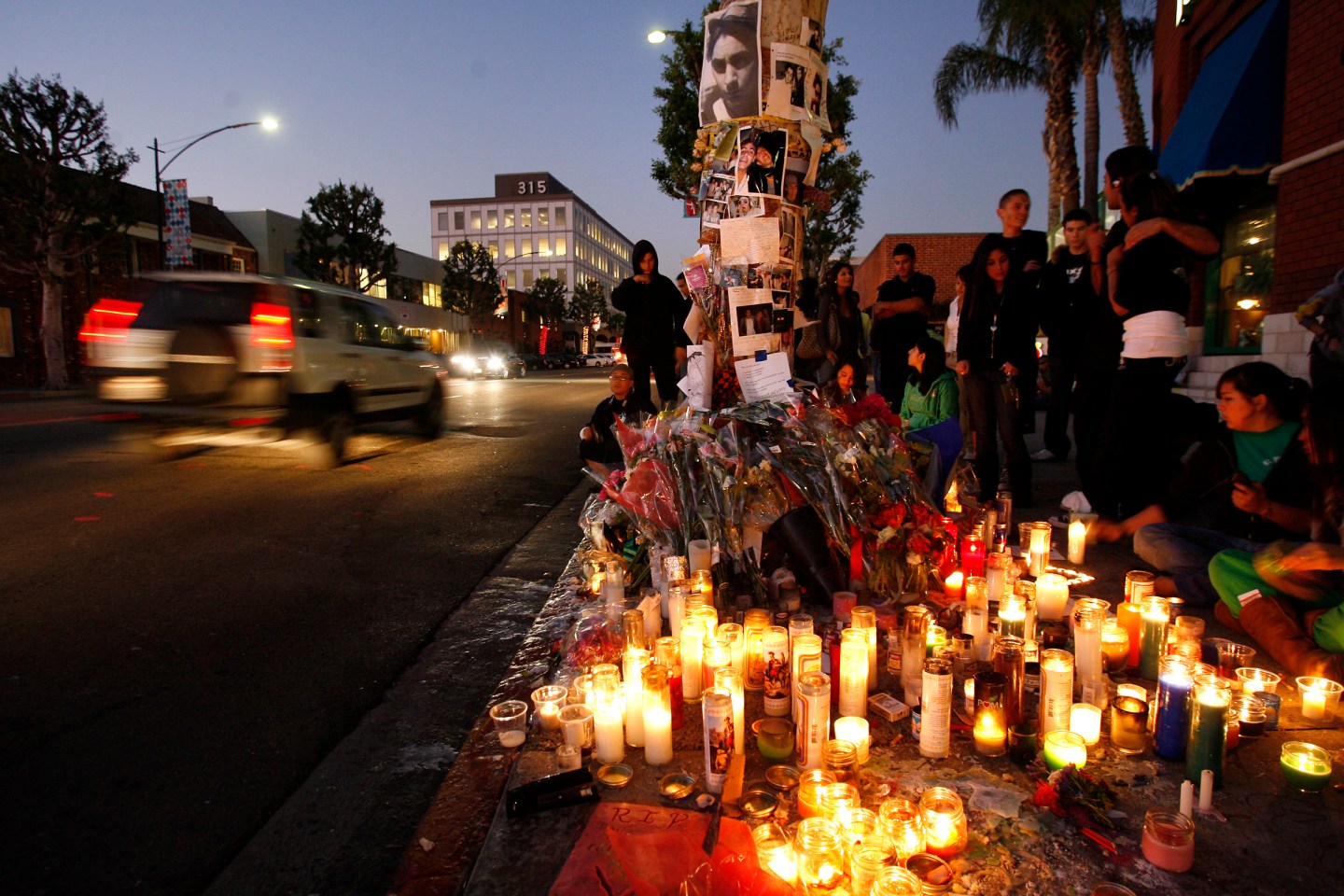
Students from Beverly Hills High School and friends hold a vigil on the 300 block of S. Beverly Drive in Beverly Hills on Tuesday, December 5, 2006 for Vahagn Satian, 17, who was killed in a drunk driving traffic accident on Saturday night.
Students from Beverly Hills High School and friends hold a vigil on the 300 block of S. Beverly Drive in Beverly Hills on Tuesday, December 5, 2006 for Vahagn Satian, 17, who was killed in a drunk driving traffic accident on Saturday night. Beverly Hills police said that "Prison Break" actor Lane Garrison was at the wheel of his SUV and had apparently been drinking before it crashed killing the Beverly Hills High School student. (Photo by Myung J. Chun/Los Angeles Times via Getty Images)Myung J. Chun—Los Angeles Times via Getty Images

My agency, the National Transportation Safety Board (NTSB), investigates accidents and issues recommendations, which, if acted upon, save lives, prevent injuries, and preserve property.

Lowering the threshold for drunk driving from .08% blood alcohol content (BAC) to .05% would accomplish all of these things. It is estimated that lowering the BAC in every state to .05% could potentially save up to 1,790 lives a year.

Saving lives is obviously our first priority. But what far too many people don’t understand is that there is also an economic advantage to saving those lives.

In 2015, the National Highway Traffic Safety Administration published a report that found that the total economic cost of motor vehicle crashes in 2010 was $242 billion, or 1.6% of America’s GDP. “Included in these losses are lost productivity, medical costs, legal and court costs, emergency service costs (EMS), insurance administration costs, congestion costs, property damage, and workplace losses,” it reads.

“Alcohol-involved crashes accounted for $52 billion or 22% of all economic costs,” continues the report. 

In the NTSB’s 2013 safety report, we noted studies that found an increased crash risk beginning at .04% BAC and nearly doubling by .08%. Our study also noted that more than 100 countries across the globe, including 25 of 27 European Union member countries, have established maximum BAC limits of .05% or below, according to the World Health Organization and International Center for Alcohol Policies. 

At .05%, drivers begin to be measurably impaired and suffer reduced coordination, weakened ability to track moving objects, difficulty steering, and diminished response to emergency driving situations. Readers with commercial fleets know that a driver in commercial transportation is limited to .04%, not .08%.

The NTSB has been recommending the change to .05% or lower since 2013. One state, Utah, lowered its BAC from .08% to .05% on Dec. 30, 2018. There’s only one full quarter of data to describe the results, but the state’s experience thus far is promising: The Utah Highway Patrol reports a 43% decrease in alcohol-related crashes and a 70% decrease in resulting deaths.

That’s a big change for a narrow band of BAC. How could it save so many lives, when people keep drinking anyway—especially since so many crashes happen above .08%, the bottom of the legal range?

The answer is that with a lower legal limit, people don’t necessarily change the amount they drink. They just don’t drink and drive.

Reducing the BAC limit acts as a broad deterrent. It lowers the incidence of crashes and crash deaths at all BAC levels, not just those in the narrow range between .05% and .08%.

Think about what we teach our kids. We do not tell them, You should only drive a little drunk. We teach them not to drink and drive.

And that’s the goal: separating drinking from driving.

In the past 10 years, more than 100,000 people have died in crashes in which at least one driver had a BAC of .08% or above. On the economic side, there are medical costs, missed work due to injury or disability, insurance payouts, lost market productivity, and so on.

Americans can drink responsibly. And they can drive responsibly. But nobody can responsibly drink and drive.

In 2019, four more states—California, Michigan, New York, and Oregon—introduced bills to reduce the legal limit to .05%. It is the NTSB’s hope that these or similar bills will eventually succeed in these four states and beyond.

States that lower the limit will improve their citizens’ safety, and that is reason enough to do so.

But they will also discontinue unnecessary drags on their economies—as Utah is doing, and as about 100 countries around the world have done.

Robert L. Sumwalt is the chairman of the National Transportation Safety Board.

More opinion in Fortune:

—To protect against cyber attacks, companies must address data manipulation. Here’s how
—Punishing sexual predators isn’t enough. We need to give them a path to make things right
—There are concrete ways businesses can help lower student debt
—Opportunity zones aren’t a gimmick—they’re a legitimate investment option
—Latin America is a growing tech hub. But it needs to invest in its talent
Listen to our audio briefing, Fortune 500 Daily


About the Author
By Robert L. Sumwalt
See full bioRight Arrow Button Icon

Latest in Commentary

Google.org
CommentaryTech
Nonprofits are solving 21st century problems—they need 21st century tech
By Maggie Johnson and Shannon FarleyDecember 8, 2025
7 hours ago
Will Dunham is President and Chief Executive Officer of the American Investment Council
CommentaryRetirement
Private equity is being villainized in the retirement debate — even as it provides diversification and outperforms public markets long-term
By Will DunhamDecember 8, 2025
7 hours ago
Justin Hotard, CEO of Nokia
CommentaryGen Z
Nokia CEO: The workforce is becoming AI-native. Leadership has to evolve
By Justin HotardDecember 8, 2025
11 hours ago
Alex Amouyel is the President and CEO of Newman’s Own Foundation
Commentaryphilanthropy
Following in Paul Newman and Yvon Chouinard’s footsteps: There are more ways for leaders to give it away in ‘the Great Boomer Fire Sale’ than ever
By Alex AmouyelDecember 7, 2025
1 day ago
Amit Walia
CommentaryM&A
Why the timing was right for Salesforce’s $8 billion acquisition of Informatica — and for the opportunities ahead
By Amit WaliaDecember 6, 2025
2 days ago
Steve Milton is the CEO of Chain, a culinary-led pop-culture experience company founded by B.J. Novak and backed by Studio Ramsay Global.
CommentaryFood and drink
Affordability isn’t enough. Fast-casual restaurants need a fandom-first approach
By Steve MiltonDecember 5, 2025
3 days ago

Most Popular

placeholder alt text
Real Estate
The 'Great Housing Reset' is coming: Income growth will outpace home-price growth in 2026, Redfin forecasts
By Nino PaoliDecember 6, 2025
2 days ago
placeholder alt text
Politics
Supreme Court to reconsider a 90-year-old unanimous ruling that limits presidential power on removing heads of independent agencies
By Mark Sherman and The Associated PressDecember 7, 2025
1 day ago
placeholder alt text
AI
Nvidia CEO says data centers take about 3 years to construct in the U.S., while in China 'they can build a hospital in a weekend'
By Nino PaoliDecember 6, 2025
2 days ago
placeholder alt text
Economy
The most likely solution to the U.S. debt crisis is severe austerity triggered by a fiscal calamity, former White House economic adviser says
By Jason MaDecember 6, 2025
2 days ago
placeholder alt text
Uncategorized
Transforming customer support through intelligent AI operations
By Lauren ChomiukNovember 26, 2025
12 days ago
placeholder alt text
Investing
Netflix’s $5.8 billion breakup fee for Warner among largest ever
By Elizabeth Fournier and BloombergDecember 6, 2025
2 days ago
Rankings
  • 100 Best Companies
  • Fortune 500
  • Global 500
  • Fortune 500 Europe
  • Most Powerful Women
  • Future 50
  • World’s Most Admired Companies
  • See All Rankings
Sections
  • Finance
  • Leadership
  • Success
  • Tech
  • Asia
  • Europe
  • Environment
  • Fortune Crypto
  • Health
  • Retail
  • Lifestyle
  • Politics
  • Newsletters
  • Magazine
  • Features
  • Commentary
  • Mpw
  • CEO Initiative
  • Conferences
  • Personal Finance
  • Education
Customer Support
  • Frequently Asked Questions
  • Customer Service Portal
  • Privacy Policy
  • Terms Of Use
  • Single Issues For Purchase
  • International Print
Commercial Services
  • Advertising
  • Fortune Brand Studio
  • Fortune Analytics
  • Fortune Conferences
  • Business Development
About Us
  • About Us
  • Editorial Calendar
  • Press Center
  • Work At Fortune
  • Diversity And Inclusion
  • Terms And Conditions
  • Site Map

© 2025 Fortune Media IP Limited. All Rights Reserved. Use of this site constitutes acceptance of our Terms of Use and Privacy Policy | CA Notice at Collection and Privacy Notice | Do Not Sell/Share My Personal Information
FORTUNE is a trademark of Fortune Media IP Limited, registered in the U.S. and other countries. FORTUNE may receive compensation for some links to products and services on this website. Offers may be subject to change without notice.









