• Home
  • Latest
  • Fortune 500
  • Finance
  • Tech
  • Leadership
  • Lifestyle
  • Rankings
  • Multimedia
Commentary

We Can Fix the Racial Wealth Gap by Reforming Hiring Practices

By
Molly Bashay
Molly Bashay
,
Amanda Bergson-Shilcock
, and
Melissa Johnson
Melissa Johnson
Down Arrow Button Icon
By
Molly Bashay
Molly Bashay
,
Amanda Bergson-Shilcock
, and
Melissa Johnson
Melissa Johnson
Down Arrow Button Icon
September 3, 2019, 10:31 AM ET
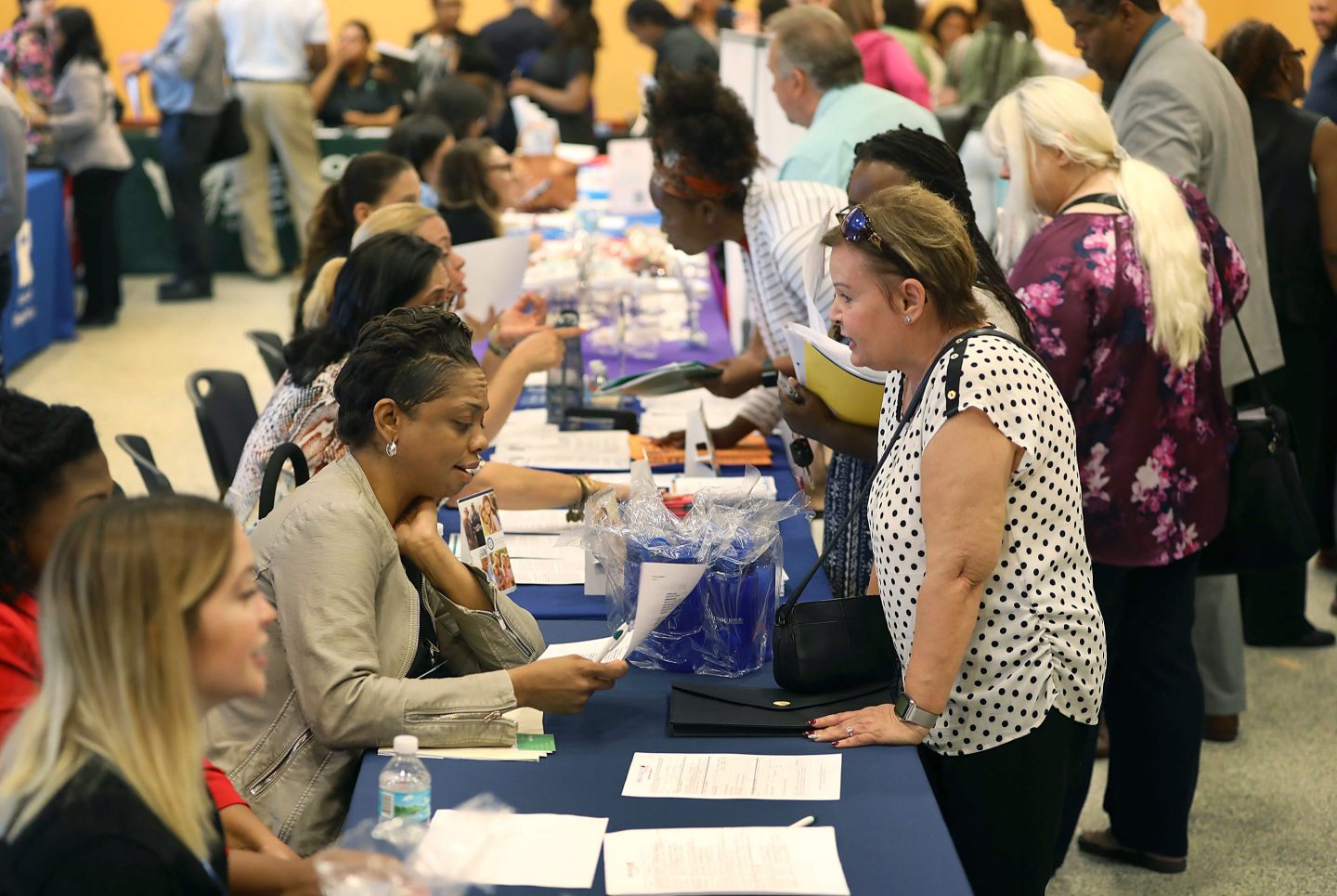
people at a job fair 2019
MIAMI, FLORIDA - APRIL 05: People attend a job fair put on by Miami-Dade County and other sponsors on April 05, 2019 in Miami, Florida. The job fair was being held as the Labor Department released its monthly hiring and unemployment figures for March which showed that 196,000 jobs were added last month, a rebound from the February report. (Photo by Joe Raedle/Getty Images)Joe Raedle—Getty Images

September is National Workforce Development Month, a month designated by Congress to highlight the importance of giving workers better access to education and training. It’s also an opportunity to directly address the employment, income, and wealth disparities that preclude far too many people of color from economic security.

The gaps are serious: In 2017, middle-income white households had eight times as much wealth ($86,100) as middle-income black households ($11,000), and 10 times as much wealth as middle-income Latinx households ($8,600). At the low-wage end of the labor market, wages that haven’t kept pace with inflation disproportionately impact workers of color. As recently as 2015, a full 75% of white workers earned at least $15 per hour, compared to 60% of black workers, 59% of Native American workers, and 51% of Latinx workers.

Public policy decisions have played a key role in forming these inequities, and therefore, must be an integral part of the solution. And one place to start is on the hiring practices that result in racially inequitable outcomes for people of color. These include automatically excluding applicants based on their criminal history, performing credit score checks, and imposing unnecessary degree requirements. 

Because most employers choose not to hire formerly incarcerated workers, mandating criminal background checks has a disproportionately negative impact on hiring prospects for black and Latinx workers, given decades of ill-advised policies—like mandatory minimums—that have resulted in higher incarceration rates among these groups. 

A persistent racial wealth gap also leaves low-income black and Latinx families with even fewer resources to cover financial challenges, which has a ripple effect on the credit scores of those groups. Using credit checks in the hiring process often prevents financially insecure workers of color from opportunity based on the lingering effects of racist systems. 

And while a specific degree may be important for success with a particular employer, explicitly requiring any degree instead of focusing on the skills required for that position further exacerbates racial disparities in employment—given the lower educational attainment levels among people of color due to financial constraints, or the result of K-12 educational tracking, which separates students into different groups, classrooms, or learning pathways by perceived ability level.

There are ways to make hiring practices fairer. Sector partnerships—regional collaboratives between local employers, workforce and education systems, human services providers, and other community stakeholders—can implement practices that advance, and not hinder, racial equity. For example, a 2018 survey by the Ray Marshall Center and the University of Texas found that some members of the 13 sector partnerships surveyed counseled employers against automatically excluding potential employees using criminal background checks and credit checks. And sector partnerships can also attract members who reflect the racial and ethnic communities that they serve, who can further advise local members on how to make their hiring practices more inclusive.

But increasing opportunities for people of color also relies on building relationships even before building skills. That’s why pre-apprenticeship and pre-employment programs are so important. They’re a modern answer to building trade unions—a major source of apprenticeships—which still had “Caucasian only” clauses in their constitutions through the mid-20th century. Even after nondiscrimination legislation was passed in 1963, participation rates for youth of color in apprenticeships continued to suffer because of lack of program awareness and access.

These days, pre-employment and pre-apprenticeship programs create formal on-ramps for workers to employers looking to hire—a more equitable form of access than requiring workers to rely on personal networks, which are often segregated. They expose workers to different work environments to prepare them for apprenticeships while also addressing barriers to employment, such as childcare and transportation.

Developing fairer workforce policies is more important now than ever. By 2030, people of color will make up more than half of our nation’s workforce, according to a study by the Center for American Progress. And by 2035, the Pew Research Center estimates that immigrants will represent more than one in five working-age adults.

The increase in America’s racial diversity is an opportunity to embrace racial equity as an economic and moral imperative. A study commissioned by the W.K. Kellogg Foundation shows that more than 25% of the growth in U.S. economic productivity between 1960 and 2008 was “associated with reducing occupational barriers” for black people and women. And another study shows that the economy would have been $2.5 trillion larger in 2015 had the racial wealth gap been closed.

Workforce development isn’t the only answer. But it’s a crucial component to addressing the vast employment, income, and wealth inequalities that persist. 

Molly Bashay is a state policy analyst at National Skills Coalition. Amanda Bergson-Shilcock is a senior fellow at National Skills Coalition. Melissa Johnson is a state policy director at National Skills Coalition. 

More opinion in Fortune:

—Girls Who Code CEO: Men need to be brave in the service of women
—Delivering on the promise of purpose beyond profits
—Regulate fintechs for what they do, not what they don’t
—Retaining good employees is tougher than ever, but offering paid family leave can help
—Supporting LGBT employees is a patriotic act
Listen to our audio briefing, Fortune 500 Daily


About the Authors
By Molly Bashay
See full bioRight Arrow Button Icon
By Amanda Bergson-Shilcock
See full bioRight Arrow Button Icon
By Melissa Johnson
See full bioRight Arrow Button Icon

Latest in Commentary

Finance
Lorem ipsum dolor sit amet, consectetur adipiscing elit, sed do eiusmod tempor incididunt ut labore et dolore magna aliqua. Ut enim ad minim veniam
By Fortune Editors
October 20, 2025
Finance
Lorem ipsum dolor sit amet, consectetur adipiscing elit, sed do eiusmod tempor incididunt ut labore et dolore magna aliqua. Ut enim ad minim veniam
By Fortune Editors
October 20, 2025
Finance
Lorem ipsum dolor sit amet, consectetur adipiscing elit, sed do eiusmod tempor incididunt ut labore et dolore magna aliqua. Ut enim ad minim veniam
By Fortune Editors
October 20, 2025
Finance
Lorem ipsum dolor sit amet, consectetur adipiscing elit, sed do eiusmod tempor incididunt ut labore et dolore magna aliqua. Ut enim ad minim veniam
By Fortune Editors
October 20, 2025
Finance
Lorem ipsum dolor sit amet, consectetur adipiscing elit, sed do eiusmod tempor incididunt ut labore et dolore magna aliqua. Ut enim ad minim veniam
By Fortune Editors
October 20, 2025
Finance
Lorem ipsum dolor sit amet, consectetur adipiscing elit, sed do eiusmod tempor incididunt ut labore et dolore magna aliqua. Ut enim ad minim veniam
By Fortune Editors
October 20, 2025

Most Popular

Finance
Lorem ipsum dolor sit amet, consectetur adipiscing elit, sed do eiusmod tempor incididunt ut labore et dolore magna aliqua. Ut enim ad minim veniam
By Fortune Editors
October 20, 2025
Finance
Lorem ipsum dolor sit amet, consectetur adipiscing elit, sed do eiusmod tempor incididunt ut labore et dolore magna aliqua. Ut enim ad minim veniam
By Fortune Editors
October 20, 2025
Finance
Lorem ipsum dolor sit amet, consectetur adipiscing elit, sed do eiusmod tempor incididunt ut labore et dolore magna aliqua. Ut enim ad minim veniam
By Fortune Editors
October 20, 2025
Finance
Lorem ipsum dolor sit amet, consectetur adipiscing elit, sed do eiusmod tempor incididunt ut labore et dolore magna aliqua. Ut enim ad minim veniam
By Fortune Editors
October 20, 2025
Finance
Lorem ipsum dolor sit amet, consectetur adipiscing elit, sed do eiusmod tempor incididunt ut labore et dolore magna aliqua. Ut enim ad minim veniam
By Fortune Editors
October 20, 2025
Finance
Lorem ipsum dolor sit amet, consectetur adipiscing elit, sed do eiusmod tempor incididunt ut labore et dolore magna aliqua. Ut enim ad minim veniam
By Fortune Editors
October 20, 2025
Fortune Secondary Logo
Rankings
  • 100 Best Companies
  • Fortune 500
  • Global 500
  • Fortune 500 Europe
  • Most Powerful Women
  • World's Most Admired Companies
  • See All Rankings
  • Lists Calendar
Sections
  • Finance
  • Fortune Crypto
  • Features
  • Leadership
  • Health
  • Commentary
  • Success
  • Retail
  • Mpw
  • Tech
  • Lifestyle
  • CEO Initiative
  • Asia
  • Politics
  • Conferences
  • Europe
  • Newsletters
  • Personal Finance
  • Environment
  • Magazine
  • Education
Customer Support
  • Frequently Asked Questions
  • Customer Service Portal
  • Privacy Policy
  • Terms Of Use
  • Single Issues For Purchase
  • International Print
Commercial Services
  • Advertising
  • Fortune Brand Studio
  • Fortune Analytics
  • Fortune Conferences
  • Business Development
  • Group Subscriptions
About Us
  • About Us
  • Lists Calendar
  • Press Center
  • Work At Fortune
  • Terms And Conditions
  • Site Map
  • About Us
  • Lists Calendar
  • Press Center
  • Work At Fortune
  • Terms And Conditions
  • Site Map
  • Facebook icon
  • Twitter icon
  • LinkedIn icon
  • Instagram icon
  • Pinterest icon

Latest in Commentary

frank
CommentaryVisa
Visa CMO: AI agents are your new customers — here’s how to sell to them
By Frank Cooper IIIApril 22, 2026
14 hours ago
shlomit
Commentarycyber
The Mythos meeting focused on the wrong AI risk to banks. Here’s the one nobody is talking about
By Shlomit WagmanApril 22, 2026
17 hours ago
one piece
CommentaryPersonal Finance
Gen Z is doing (almost) everything right with money—and still getting burned
By Beth KoblinerApril 22, 2026
22 hours ago
beard
CommentaryEducation
Yale asked the right question. Now the rest of higher education owes an answer
By Steve BeardApril 22, 2026
22 hours ago
trump
Commentarynational debt
America’s national debt is heading to 175% of GDP. Here’s why no president—including Trump—has the will to stop it
By Steve H. Hanke and David M. WalkerApril 22, 2026
23 hours ago
edelman
CommentaryHealth
70% of people believe at least one divisive health claim. Science needs a new playbook
By Richard EdelmanApril 22, 2026
24 hours ago

Most Popular

‘Something sinister’: What we know about the FBI probe into dead and missing scientists linked to space and military industries
Economy
‘Something sinister’: What we know about the FBI probe into dead and missing scientists linked to space and military industries
By Jim EdwardsApril 22, 2026
23 hours ago
The tables have turned: Florida and Texas are the biggest losers in the housing market as Ohio emerges a surprise winner
Real Estate
The tables have turned: Florida and Texas are the biggest losers in the housing market as Ohio emerges a surprise winner
By Sydney LakeApril 21, 2026
2 days ago
'Something sinister could be happening': FBI looks into dead or missing nuclear and space defense scientists tied to NASA, Blue Origin, and SpaceX
Politics
'Something sinister could be happening': FBI looks into dead or missing nuclear and space defense scientists tied to NASA, Blue Origin, and SpaceX
By Catherina GioinoApril 21, 2026
2 days ago
John Ternus, the man stepping into Tim Cook and Steve Jobs' shoes, is a 25-year Apple veteran with zero LinkedIn posts
C-Suite
John Ternus, the man stepping into Tim Cook and Steve Jobs' shoes, is a 25-year Apple veteran with zero LinkedIn posts
By Kelvin Chan and The Associated PressApril 21, 2026
2 days ago
Palantir published a mini manifesto calling some cultures ‘harmful’ and ‘middling’ and said Silicon Valley has ‘a moral debt’ to the U.S.
AI
Palantir published a mini manifesto calling some cultures ‘harmful’ and ‘middling’ and said Silicon Valley has ‘a moral debt’ to the U.S.
By Marco Quiroz-GutierrezApril 22, 2026
1 day ago
$166 billion in tariff refunds just became available, but small businesses may already be at a disadvantage
Law
$166 billion in tariff refunds just became available, but small businesses may already be at a disadvantage
By Sasha RogelbergApril 20, 2026
2 days ago

© 2026 Fortune Media IP Limited. All Rights Reserved. Use of this site constitutes acceptance of our Terms of Use and Privacy Policy | CA Notice at Collection and Privacy Notice | Do Not Sell/Share My Personal Information
FORTUNE is a trademark of Fortune Media IP Limited, registered in the U.S. and other countries. FORTUNE may receive compensation for some links to products and services on this website. Offers may be subject to change without notice.