• Home
  • Latest
  • Fortune 500
  • Finance
  • Tech
  • Leadership
  • Lifestyle
  • Rankings
  • Multimedia
CommentaryAmazon HQ2

Amazon’s HQ2 Circus Is Nothing New—It’s Been Playing Governments Since the Beginning

By
Charlie Thaxton
Charlie Thaxton
Down Arrow Button Icon
By
Charlie Thaxton
Charlie Thaxton
Down Arrow Button Icon
November 21, 2018, 3:23 PM ET
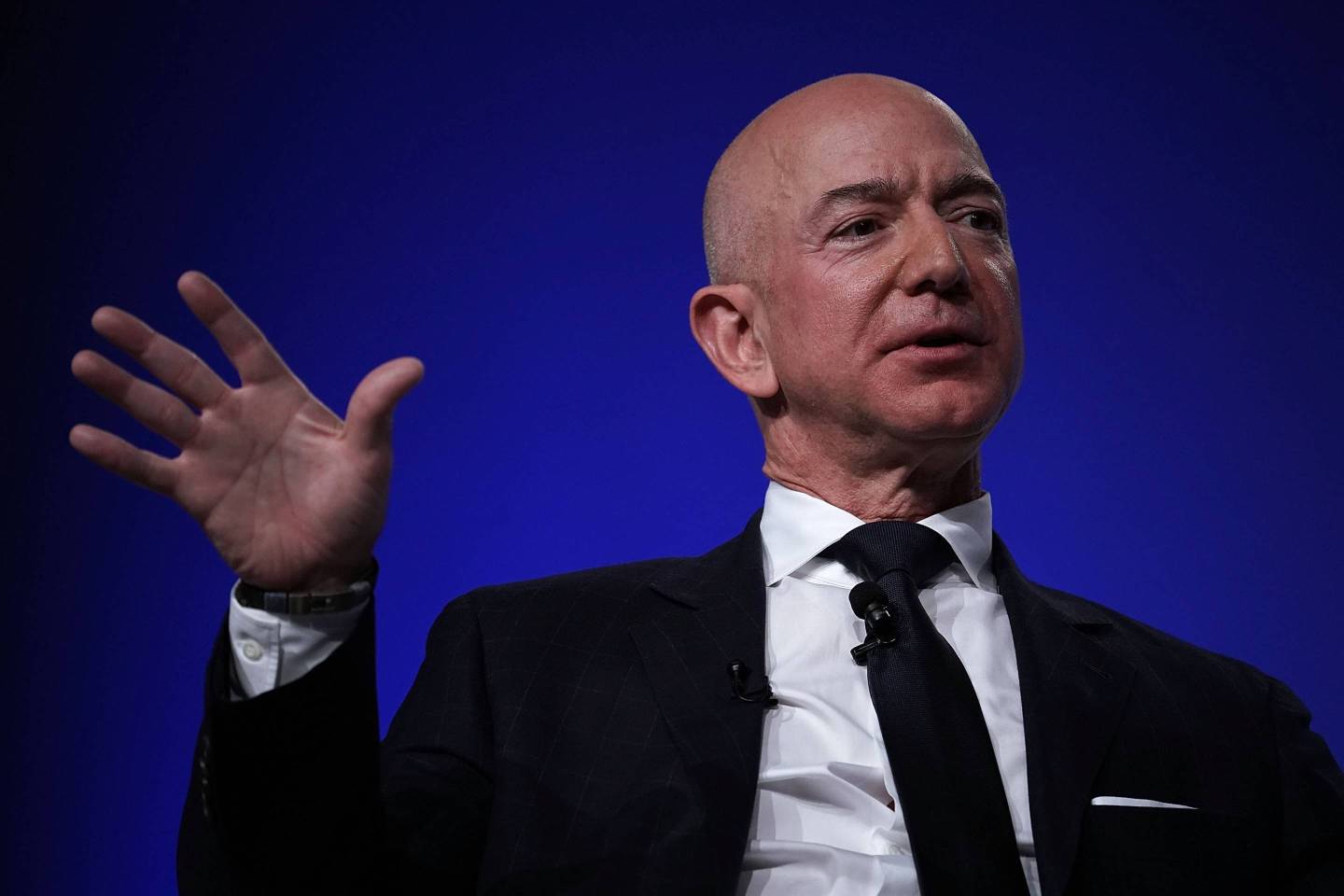
Amazon CEO Jeff Bezos speaks at an event hosted by the Air Force Association on Sept. 19, 2018 in National Harbor, Md.
NATIONAL HARBOR, MD - SEPTEMBER 19: Amazon CEO Jeff Bezos, founder of space venture Blue Origin and owner of The Washington Post, participates in an event hosted by the Air Force Association September 19, 2018 in National Harbor, Maryland. Bezos talked about innovating in large organizations as well as staying on the cutting edge in the space industry. (Photo by Alex Wong/Getty Images)Alex Wong—Getty Images

Amazon created a media circus around its search for a second headquarters, or HQ2, which ultimately ended in it splitting the location between New York City and the greater Washington, D.C., area.

Its tactics should come as no surprise. Amazon has a long history of manipulating governments to secure favors that give it an undeserved competitive advantage—extracting public money for its own enrichment, and finding ways around tax obligations—starting from the very origins of the company in the mid-1990s.

Jeff Bezos famously planted Amazon, then an online bookseller, in Washington state instead of the more tech- and talent-saturated California. The founder was upfront in his admission that his aim was to dodge sales taxes in the nation’s most populous state. In a 1996 interview with Fast Company, Bezos mentioned that he even considered establishing Amazon on an American Indian reservation near San Francisco in order to be in California yet not be obligated to collect its sales tax.

Over the next 20 years, Amazon carefully skirted sales taxes in most other states too. The effort was worth it. Not having to collect sales tax gave Amazon, in effect, a price advantage over brick and mortar retailers, who, by virtue of their physical presence, had to charge sales tax—even for online purchases. Shoppers increasingly chose Amazon for big-ticket items, allowing the company to solidify a pivotal early lead in e-commerce. Amazon now captures almost $1 of every $2 Americans spend online.

In time, this sales tax advantage began to run out, as Amazon’s growth led it to locate warehouses in more states. But the company managed to find another way to game the public: demanding subsidies for new facilities. Desperate for jobs, in some cases because of Amazon’s impact on Main Street, officials in Kenosha, Wis.; Baltimore; West Columbia, S.C.; and dozens of other communities opened their checkbooks. Between 2005 and 2014, Amazon built 77 fulfillment centers, more than half of which were funded by subsidies totaling $613 million, according to research from our organization, the Institute for Local Self-Reliance. Currently, the total amount of subsidies allotted to Amazon (this figure includes all Amazon-owned facilities) is at least $1.6 billion, based on calculations by corporate subsidy watchdog Good Jobs First.

And now in New York and northern Virginia, Amazon stands to pick up giveaways totaling more than $4.6 billion.

There’s evidence that incentives like these do not, in fact, spur job growth, and there’s also reason to believe they don’t promote long-run economic growth either.

But the most serious and undertheorized consequence of these giveaways is how they hasten market concentration. Local governments spend between $45 and $90 billion dollars each year subsidizing companies, and 90% of these dollars go to big businesses. These companies often don’t have any special investment or stake in the communities they settle in, and often backtrack on their initial promises—something that Amazon has done itself in the past.

These advantages allow firms like Amazon to capture more and more of the economy. Amazon is conquering a dizzying array of new markets, from streaming video, to cloud computing, to apparel production, to voice assistants. This has smoothed the way forward for Amazon, which, as my colleague Stacy Mitchell points out in The Nation, seeks to become the market, not just dominate it.

The negative effects of monopolization bear out in macroeconomic data. It isn’t coincidental that sharply increasing market concentration has coincided with declining entrepreneurship and business creation rates or slowing dynamism among both firms and workers. Using public dollars to tighten Amazon’s grip on the economy means that startups, innovation, and entrepreneurship will all suffer down the line.

We need to do much more to examine subsidies not simply as inefficient and wasteful, but as the anticompetitive tools they are. In Europe, tax incentives are seen as instruments of monopoly power, and competition officials can and do block them on antitrust grounds.

Monopolies are bad for consumer choice and market competition, but they’re also bad for our civic and political well-being. Consolidation deprives Americans of new ideas, new jobs, and new opportunities. And Amazon expanding in already wealthy areas like New York City and D.C. will have amplifying effects on political polarization too, adding new fuel to the divide between the few places that are prospering and the many regions left behind.

Amazon is coming to New York and D.C., but its profits will be going to itself.

Charlie Thaxton is a researcher with the Institute for Local-Self Reliance, which has published several reports about Amazon’s market power.


About the Author
By Charlie Thaxton
See full bioRight Arrow Button Icon

Latest in Commentary

Finance
Lorem ipsum dolor sit amet, consectetur adipiscing elit, sed do eiusmod tempor incididunt ut labore et dolore magna aliqua. Ut enim ad minim veniam
By Fortune Editors
October 20, 2025
Finance
Lorem ipsum dolor sit amet, consectetur adipiscing elit, sed do eiusmod tempor incididunt ut labore et dolore magna aliqua. Ut enim ad minim veniam
By Fortune Editors
October 20, 2025
Finance
Lorem ipsum dolor sit amet, consectetur adipiscing elit, sed do eiusmod tempor incididunt ut labore et dolore magna aliqua. Ut enim ad minim veniam
By Fortune Editors
October 20, 2025
Finance
Lorem ipsum dolor sit amet, consectetur adipiscing elit, sed do eiusmod tempor incididunt ut labore et dolore magna aliqua. Ut enim ad minim veniam
By Fortune Editors
October 20, 2025
Finance
Lorem ipsum dolor sit amet, consectetur adipiscing elit, sed do eiusmod tempor incididunt ut labore et dolore magna aliqua. Ut enim ad minim veniam
By Fortune Editors
October 20, 2025
Finance
Lorem ipsum dolor sit amet, consectetur adipiscing elit, sed do eiusmod tempor incididunt ut labore et dolore magna aliqua. Ut enim ad minim veniam
By Fortune Editors
October 20, 2025

Most Popular

Finance
Lorem ipsum dolor sit amet, consectetur adipiscing elit, sed do eiusmod tempor incididunt ut labore et dolore magna aliqua. Ut enim ad minim veniam
By Fortune Editors
October 20, 2025
Finance
Lorem ipsum dolor sit amet, consectetur adipiscing elit, sed do eiusmod tempor incididunt ut labore et dolore magna aliqua. Ut enim ad minim veniam
By Fortune Editors
October 20, 2025
Finance
Lorem ipsum dolor sit amet, consectetur adipiscing elit, sed do eiusmod tempor incididunt ut labore et dolore magna aliqua. Ut enim ad minim veniam
By Fortune Editors
October 20, 2025
Finance
Lorem ipsum dolor sit amet, consectetur adipiscing elit, sed do eiusmod tempor incididunt ut labore et dolore magna aliqua. Ut enim ad minim veniam
By Fortune Editors
October 20, 2025
Finance
Lorem ipsum dolor sit amet, consectetur adipiscing elit, sed do eiusmod tempor incididunt ut labore et dolore magna aliqua. Ut enim ad minim veniam
By Fortune Editors
October 20, 2025
Finance
Lorem ipsum dolor sit amet, consectetur adipiscing elit, sed do eiusmod tempor incididunt ut labore et dolore magna aliqua. Ut enim ad minim veniam
By Fortune Editors
October 20, 2025
Fortune Secondary Logo
Rankings
  • 100 Best Companies
  • Fortune 500
  • Global 500
  • Fortune 500 Europe
  • Most Powerful Women
  • Future 50
  • World’s Most Admired Companies
  • See All Rankings
Sections
  • Finance
  • Fortune Crypto
  • Features
  • Leadership
  • Health
  • Commentary
  • Success
  • Retail
  • Mpw
  • Tech
  • Lifestyle
  • CEO Initiative
  • Asia
  • Politics
  • Conferences
  • Europe
  • Newsletters
  • Personal Finance
  • Environment
  • Magazine
  • Education
Customer Support
  • Frequently Asked Questions
  • Customer Service Portal
  • Privacy Policy
  • Terms Of Use
  • Single Issues For Purchase
  • International Print
Commercial Services
  • Advertising
  • Fortune Brand Studio
  • Fortune Analytics
  • Fortune Conferences
  • Business Development
About Us
  • About Us
  • Editorial Calendar
  • Press Center
  • Work At Fortune
  • Diversity And Inclusion
  • Terms And Conditions
  • Site Map
Fortune Secondary Logo
  • About Us
  • Editorial Calendar
  • Press Center
  • Work At Fortune
  • Diversity And Inclusion
  • Terms And Conditions
  • Site Map
  • Facebook icon
  • Twitter icon
  • LinkedIn icon
  • Instagram icon
  • Pinterest icon

Latest in Commentary

putin
CommentaryRussia
Exclusive analysis: we looked at the 400 western firms still in Russia. Their paltry size strips Putin’s bluff bare naked
By Jeffrey Sonnenfeld, Stephen Henriques, Jake Waldinger and Giuseppe ScottoFebruary 27, 2026
14 hours ago
roth
CommentaryLeadership
The AI resource reallocation challenge: How can companies capture the value of time?
By Erik RothFebruary 27, 2026
16 hours ago
will
CommentaryAdvertising
I’m one of America’s top pollsters and I’ve got a warning for the AI companies: customers aren’t sold on ads
By Will JohnsonFebruary 27, 2026
19 hours ago
the pitt
CommentaryDEI
‘The Pitt’: a masterclass display of DEI in action 
By Robert RabenFebruary 26, 2026
2 days ago
david booth
CommentaryMarkets
3 lessons from investing’s ‘moneyball’ moment
By David BoothFebruary 25, 2026
3 days ago
CommentaryCulture
Gen Z’s enthusiasm for all things touchable is resurrecting the analog economy—and costing parents
By Luba KassovaFebruary 24, 2026
3 days ago

Most Popular

placeholder alt text
Innovation
An MIT roboticist who cofounded bankrupt robot vacuum maker iRobot says Elon Musk’s vision of humanoid robot assistants is ‘pure fantasy thinking’
By Marco Quiroz-GutierrezFebruary 25, 2026
2 days ago
placeholder alt text
Success
Jeff Bezos says being lazy, not working hard, is the root of anxiety: ‘The stress goes away the second I take that first step’
By Sydney LakeFebruary 25, 2026
2 days ago
placeholder alt text
Commentary
'The Pitt': a masterclass display of DEI in action 
By Robert RabenFebruary 26, 2026
2 days ago
placeholder alt text
Economy
It’s more than George Clooney moving to France: America is becoming the ‘uncool’ country that people want to move away from
By Nick LichtenbergFebruary 27, 2026
19 hours ago
placeholder alt text
Success
Gen Z Olympic champion Eileen Gu says she rewires her brain daily to be more successful—and multimillionaire founder Arianna Huffington says it really does work
By Orianna Rosa RoyleFebruary 25, 2026
3 days ago
placeholder alt text
Law
China's government intervenes to show Michigan scientists were carrying worms, not biological materials
By Ed White and The Associated PressFebruary 26, 2026
1 day ago

© 2026 Fortune Media IP Limited. All Rights Reserved. Use of this site constitutes acceptance of our Terms of Use and Privacy Policy | CA Notice at Collection and Privacy Notice | Do Not Sell/Share My Personal Information
FORTUNE is a trademark of Fortune Media IP Limited, registered in the U.S. and other countries. FORTUNE may receive compensation for some links to products and services on this website. Offers may be subject to change without notice.