• Home
  • Latest
  • Fortune 500
  • Finance
  • Tech
  • Leadership
  • Lifestyle
  • Rankings
  • Multimedia
CommentaryMinimum Wage

The Minimum Wage Just Turned 80. Economists Don’t Give It Enough Credit

By
James K. Galbraith
James K. Galbraith
and
Bethany Cianciolo
Bethany Cianciolo
Down Arrow Button Icon
By
James K. Galbraith
James K. Galbraith
and
Bethany Cianciolo
Bethany Cianciolo
Down Arrow Button Icon
June 25, 2018, 8:00 AM ET
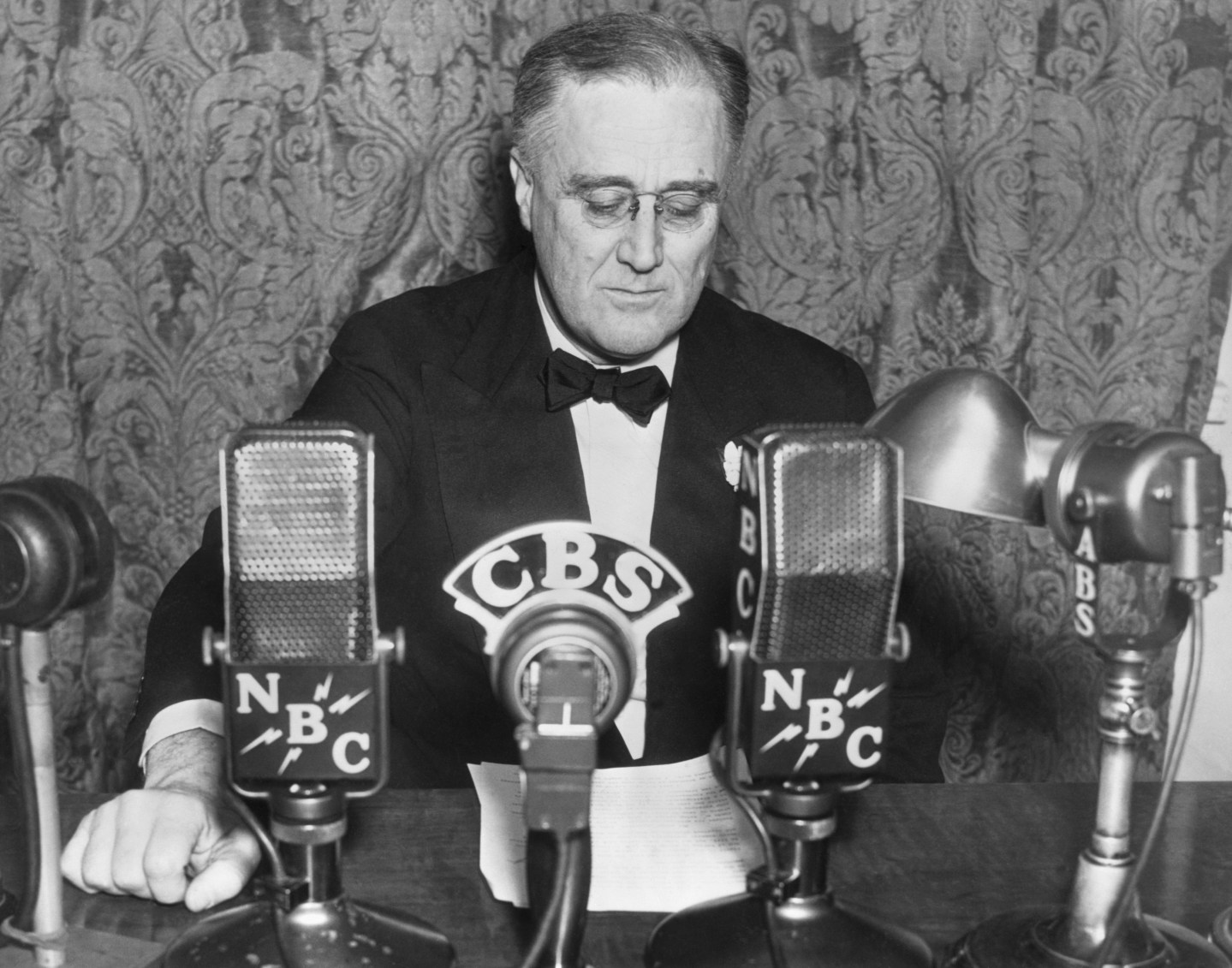
Franklin D. Roosevelt Giving Radio Address
Franklin D. Roosevelt addresssing the nation over the radio in one of his "Fireside chats." Undated photograph.Bettmann Archive

The minimum wage is a pathetic little thing. First enacted in 1938 at 25 cents per hour, it was largely a sop to the International Ladies’ Garment Workers’ Union, one of the very few for whose members, even then, such a pittance might matter. Domestic servants and farmworkers—persons of color, not coincidentally—were excluded. And for most of the 80 years since, the effect of the federal minimum on wages and welfare has been small.

Why has this been so? First, the real value of the minimum is low. That value reached a peak 50 years ago under President Lyndon B. Johnson in 1968, at about $10.50 in today’s money. It was then eroded by inflation and political neglect, and is today no higher than it was around 1980.

Second, because the level is so low, few workers are affected. In 2016, the total number of workers earning at the minimum or below was just 2.2 million—not even 3% of the employed workforce at that time. A very large share of those were young, with half of minimum wage workers age 25 or younger, and many of those earned tips in addition to their wages.

And yet, few economic policies have been subjected to such obsessive criticism, in particular by mainstream (which is to say, conservative) economists, as the minimum wage.

Economists teach that markets reward each worker exactly according to what he or she contributes, not more nor less. Hence the wage that is, is right and just. Further, they say that by meddling in the “labor market,” government can only set a minimum wage that is too high, and employers will not hire those workers. Unemployment is the result of this well-meaning but misguided practice.

As often happens, the facts do not agree. One famous study showed that a higher minimum wage in one of two neighboring cities led to more fast-food jobs in the city where the minimum went up. Why? Because with higher wages, workers quit less frequently, and turnover went down.

But there’s more. The Swedes discovered in the 1950s that high wage standards promote productivity, improving the performance of industry, therefore raising living conditions for the whole country. More equal countries have more economic mobility. But they also have less economic stress, less compulsion to seek better jobs, and therefore less internal migration and less unemployment.

The minimum wage is an efficient regulation. It doesn’t cost much to oversee. It is simple and it is largely self-enforcing. It is not a burden on the federal budget. And it is a blessing for Social Security, since with higher wages, payroll tax collections improve.

A minimum wage at $15 per hour as demanded by workers in fast food and other low-wage services would give a raise, in most cases modest, to about 40% of American workers. It would put some pressure on businesses that currently pay less—but by and large, what they lose in labor costs they’d make back in sales to a more prosperous clientele.

So should the minimum be raised? Of course it should. States such as Texas and Florida would benefit, because they have too many low-wage workers, too much poverty, and too many people who are getting food stamps and other welfare since they aren’t getting paid enough.

At the deepest level, the minimum wage embodies justice. It speaks to the words of Martin Luther King Jr. that “all labor has dignity”—and so deserves a decent rate of pay. Productivity and pragmatism have nothing to do with this. It is a moral judgment, based on the belief that the community has the final right to set standards by which all members of the community must abide.

For this reason above all, Happy Birthday, minimum wage.

James K. Galbraith is the Lloyd M. Bentsen, Jr. Chair in Government and Business Relations in the LBJ School of Public Affairs at The University of Texas at Austin.


About the Authors
By James K. Galbraith
See full bioRight Arrow Button Icon
By Bethany Cianciolo
See full bioRight Arrow Button Icon

Latest in Commentary

Sarandos
CommentaryAntitrust
Netflix’s takeover of Warner Brothers is a nightmare for consumers
By Ike BrannonDecember 11, 2025
12 hours ago
student
CommentaryEducation
International students skipped campus this fall — and local economies lost $1 billion because of it
By Bjorn MarkesonDecember 10, 2025
1 day ago
jobs
Commentaryprivate equity
There is a simple fix for America’s job-quality crisis: actually give workers a piece of the business 
By Pete StavrosDecember 9, 2025
2 days ago
Jon Rosemberg
CommentaryProductivity
The cult of productivity is killing us
By Jon RosembergDecember 9, 2025
2 days ago
Trump
CommentaryTariffs and trade
AI doctors will be good at science but bad at business, and big talk with little action means even higher drugs prices: 10 healthcare predictions for 2026 from top investors
By Bob Kocher, Bryan Roberts and Siobhan Nolan ManginiDecember 9, 2025
2 days ago
Google.org
CommentaryTech
Nonprofits are solving 21st century problems—they need 21st century tech
By Maggie Johnson and Shannon FarleyDecember 8, 2025
3 days ago

Most Popular

placeholder alt text
Success
At 18, doctors gave him three hours to live. He played video games from his hospital bed—and now, he’s built a $10 million-a-year video game studio
By Preston ForeDecember 10, 2025
2 days ago
placeholder alt text
Investing
Baby boomers have now 'gobbled up' nearly one-third of America's wealth share, and they're leaving Gen Z and millennials behind
By Sasha RogelbergDecember 8, 2025
3 days ago
placeholder alt text
Economy
‘Be careful what you wish for’: Top economist warns any additional interest rate cuts after today would signal the economy is slipping into danger
By Eva RoytburgDecember 10, 2025
1 day ago
placeholder alt text
Politics
Exclusive: U.S. businesses are getting throttled by the drop in tourism from Canada: ‘I can count the number of Canadian visitors on one hand’
By Dave SmithDecember 10, 2025
2 days ago
placeholder alt text
Success
Netflix–Paramount bidding wars are pushing Warner Bros CEO David Zaslav toward billionaire status—he has one rule for success: ‘Never be outworked’
By Preston ForeDecember 10, 2025
1 day ago
placeholder alt text
Economy
‘We have not seen this rosy picture’: ADP’s chief economist warns the real economy is pretty different from Wall Street’s bullish outlook
By Eleanor PringleDecember 11, 2025
14 hours ago
Rankings
  • 100 Best Companies
  • Fortune 500
  • Global 500
  • Fortune 500 Europe
  • Most Powerful Women
  • Future 50
  • World’s Most Admired Companies
  • See All Rankings
Sections
  • Finance
  • Leadership
  • Success
  • Tech
  • Asia
  • Europe
  • Environment
  • Fortune Crypto
  • Health
  • Retail
  • Lifestyle
  • Politics
  • Newsletters
  • Magazine
  • Features
  • Commentary
  • Mpw
  • CEO Initiative
  • Conferences
  • Personal Finance
  • Education
Customer Support
  • Frequently Asked Questions
  • Customer Service Portal
  • Privacy Policy
  • Terms Of Use
  • Single Issues For Purchase
  • International Print
Commercial Services
  • Advertising
  • Fortune Brand Studio
  • Fortune Analytics
  • Fortune Conferences
  • Business Development
About Us
  • About Us
  • Editorial Calendar
  • Press Center
  • Work At Fortune
  • Diversity And Inclusion
  • Terms And Conditions
  • Site Map

© 2025 Fortune Media IP Limited. All Rights Reserved. Use of this site constitutes acceptance of our Terms of Use and Privacy Policy | CA Notice at Collection and Privacy Notice | Do Not Sell/Share My Personal Information
FORTUNE is a trademark of Fortune Media IP Limited, registered in the U.S. and other countries. FORTUNE may receive compensation for some links to products and services on this website. Offers may be subject to change without notice.