• Home
  • Latest
  • Fortune 500
  • Finance
  • Tech
  • Leadership
  • Lifestyle
  • Rankings
  • Multimedia
CommentaryDodd-Frank

Barney Frank: The GOP’s Bait-and-Switch on Wall Street Reform

By
Barney Frank
Barney Frank
Down Arrow Button Icon
By
Barney Frank
Barney Frank
Down Arrow Button Icon
December 11, 2016, 10:00 AM ET
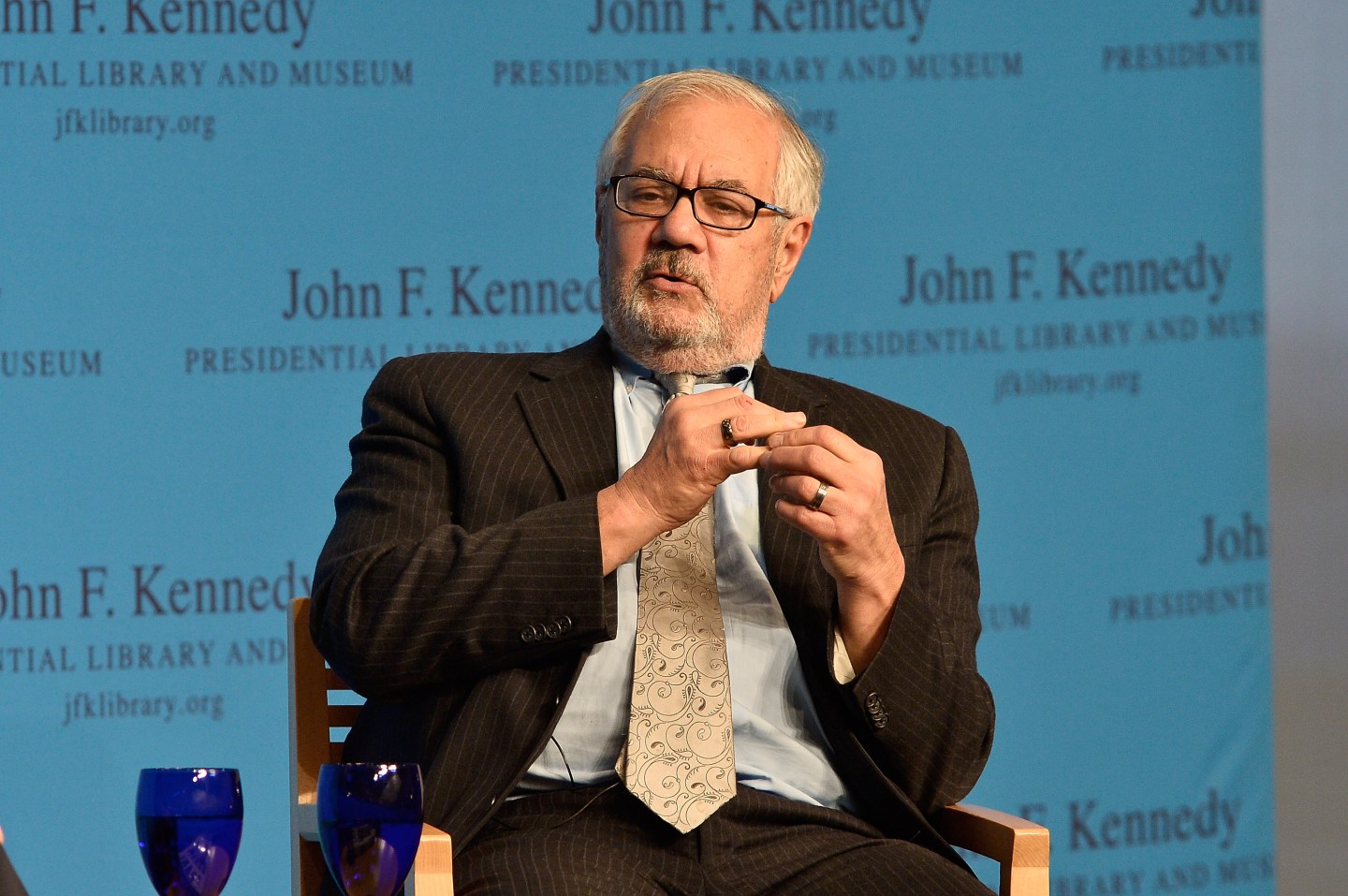
Barney Frank Discusses New Memoir "Frank"
BOSTON, MA - APRIL 06: Former U.S. Representative Barney Frank (D) talks about his new memoir "FRANK" at The John F. Kennedy Presidential Library And Museum on April 6, 2015 in Boston, Massachusetts. (Photo by Paul Marotta/Getty Images)Paul Marotta—Getty Images

It has three different names. Magicians call it misdirection; in sales, it is bait-and-switch; the political term is strategic communication. They all describe the effort to get your audience to focus on one thing so that you can persuade it to accept something else.

The most prominent example of this in the current policy debate is the campaign to win support for repeal of the law I introduced in the House in 2009, the Wall Street Reform and Consumer Protection Act, also known as Dodd-Frank. Proponents say repeal is necessary to protect banks’ ability to lend, while saying nothing about the much greater effect it would have on freeing the largest financial institutions from the law’s significant restraints on their ability to engage in high-stakes trading, especially in derivatives.

It is an understandable choice from the advocacy standpoint. Both politically and economically, lending beats trading in any ranking. But it so misrepresents reality that it goes beyond strategic communication and approaches bait-and-switch. And it ignores the fact that due to Dodd-Frank’s restrictions on risky trades, large financial institutions have actually increased their lending practices.

For example, the New York Times noted earlier this month that “[Goldman Sachs CEO Lloyd] Blankfein … has had to guide it through the raft of new regulations … which have limited the firm’s ability to make big profits from trading.” What is Goldman doing to try to make up that loss? Increasing lending, of course! The article continues that Blankfein “has built up a new division to offer financial services to ordinary Americans, including Marcus, an online lending service.” An April Wall Street Journal article explained a drop in several big bank earnings by pointing out, “Postcrisis regulations have made it harder for trading desks to bet the banks’ own money…”

And how does the proposed Dodd-Frank repeal affect this shift from trading to lending? “It may become less necessary if Mr. Trump’s administration eases the restrictions on Wall Street firms,” the Times article concludes.

Nor is this the only evidence that the argument that the new rules hinder lending is a smokescreen thrown up by defenders of ending the restraints on trading. The new forms of lending that have appeared in the past few years further refute the argument that the law inhibits making loans. This reality in the economy reflects the reality of the statute. Dodd-Frank puts new restraints on trading—requiring margin and transparency, and forcing most formerly over-the-counter deals to go through clearing houses. Only one provision affects all lending: a requirement that sellers of securities based on loans take the first 5% of any losses. And even this does not apply to mortgages, because the regulators unwisely decided not to apply it in that context.

The only provision that constrains lending is the prohibition on making mortgage loans to people with neither the income nor the wealth to repay them. Given the role that improvidently granted mortgages played in the 2007–08 crash, it is unsurprising that not even those most committed to undoing the law are mentioning this provision.


The paradox is that the one provision of the law the detractors most often cite in their defense of lending is the one that instructs banks to focus on that activity at the expense of the unmentioned, yet intended, beneficiary: trading. That of course is the Volcker Rule, which significantly restricts the amount of trading banks can do with their own money—leaving them with making loans as their major permitted form of business.

There are two areas where current U.S. law probably has a restrictive effect on bank lending. The laws that seek to inhibit money laundering—aimed at combatting drug smuggling and terrorism—do complicate lending decisions, but these are not part of Dodd-Frank and would be unaffected if the law were repealed. It must be noted that while we liberals are often blamed for overly restrictive regulation, the strongest support for the harshest efforts to enlist banks in law enforcement cooperation come from the political right.

That leaves one place where a change should be made to Dodd-Frank to ease a negative impact on lending. Community banks, advised by lawyers who may be overly but understandably cautious, spend more money than we had anticipated demonstrating that they do nothing prohibited by the Volcker Rule. This is a solvable problem. Federal Reserve Governor Daniel Tarullo has proposed exempting banks of less than $10 billion in assets from the Volcker Rule. That, along with additional exemptions from similar rules, frees small banks up to lend freely without any adverse consequences.

These restrictions on lending do not make the case for rolling back financial regulation writ large. Reduced community bank lending does not mean that economically beneficial loans aren’t made, but rather that they are made by larger rather than smaller banks. This does not diminish the total amount of loans in the economy, but it is still an undesirable outcome. The solution proposed by Governor Tarullo resolves this problem without letting banks like Goldman Sachs get back into unrestrained trading.

Barney Frank is a former U.S. representative from Massachusetts and chairman of the House Financial Services Committee.


About the Author
By Barney Frank
See full bioRight Arrow Button Icon

Latest in Commentary

Finance
Lorem ipsum dolor sit amet, consectetur adipiscing elit, sed do eiusmod tempor incididunt ut labore et dolore magna aliqua. Ut enim ad minim veniam
By Fortune Editors
October 20, 2025
Finance
Lorem ipsum dolor sit amet, consectetur adipiscing elit, sed do eiusmod tempor incididunt ut labore et dolore magna aliqua. Ut enim ad minim veniam
By Fortune Editors
October 20, 2025
Finance
Lorem ipsum dolor sit amet, consectetur adipiscing elit, sed do eiusmod tempor incididunt ut labore et dolore magna aliqua. Ut enim ad minim veniam
By Fortune Editors
October 20, 2025
Finance
Lorem ipsum dolor sit amet, consectetur adipiscing elit, sed do eiusmod tempor incididunt ut labore et dolore magna aliqua. Ut enim ad minim veniam
By Fortune Editors
October 20, 2025
Finance
Lorem ipsum dolor sit amet, consectetur adipiscing elit, sed do eiusmod tempor incididunt ut labore et dolore magna aliqua. Ut enim ad minim veniam
By Fortune Editors
October 20, 2025
Finance
Lorem ipsum dolor sit amet, consectetur adipiscing elit, sed do eiusmod tempor incididunt ut labore et dolore magna aliqua. Ut enim ad minim veniam
By Fortune Editors
October 20, 2025

Most Popular

Finance
Lorem ipsum dolor sit amet, consectetur adipiscing elit, sed do eiusmod tempor incididunt ut labore et dolore magna aliqua. Ut enim ad minim veniam
By Fortune Editors
October 20, 2025
Finance
Lorem ipsum dolor sit amet, consectetur adipiscing elit, sed do eiusmod tempor incididunt ut labore et dolore magna aliqua. Ut enim ad minim veniam
By Fortune Editors
October 20, 2025
Finance
Lorem ipsum dolor sit amet, consectetur adipiscing elit, sed do eiusmod tempor incididunt ut labore et dolore magna aliqua. Ut enim ad minim veniam
By Fortune Editors
October 20, 2025
Finance
Lorem ipsum dolor sit amet, consectetur adipiscing elit, sed do eiusmod tempor incididunt ut labore et dolore magna aliqua. Ut enim ad minim veniam
By Fortune Editors
October 20, 2025
Finance
Lorem ipsum dolor sit amet, consectetur adipiscing elit, sed do eiusmod tempor incididunt ut labore et dolore magna aliqua. Ut enim ad minim veniam
By Fortune Editors
October 20, 2025
Finance
Lorem ipsum dolor sit amet, consectetur adipiscing elit, sed do eiusmod tempor incididunt ut labore et dolore magna aliqua. Ut enim ad minim veniam
By Fortune Editors
October 20, 2025
Rankings
  • 100 Best Companies
  • Fortune 500
  • Global 500
  • Fortune 500 Europe
  • Most Powerful Women
  • Future 50
  • World’s Most Admired Companies
  • See All Rankings
Sections
  • Finance
  • Leadership
  • Success
  • Tech
  • Asia
  • Europe
  • Environment
  • Fortune Crypto
  • Health
  • Retail
  • Lifestyle
  • Politics
  • Newsletters
  • Magazine
  • Features
  • Commentary
  • Mpw
  • CEO Initiative
  • Conferences
  • Personal Finance
  • Education
Customer Support
  • Frequently Asked Questions
  • Customer Service Portal
  • Privacy Policy
  • Terms Of Use
  • Single Issues For Purchase
  • International Print
Commercial Services
  • Advertising
  • Fortune Brand Studio
  • Fortune Analytics
  • Fortune Conferences
  • Business Development
About Us
  • About Us
  • Editorial Calendar
  • Press Center
  • Work At Fortune
  • Diversity And Inclusion
  • Terms And Conditions
  • Site Map

© 2025 Fortune Media IP Limited. All Rights Reserved. Use of this site constitutes acceptance of our Terms of Use and Privacy Policy | CA Notice at Collection and Privacy Notice | Do Not Sell/Share My Personal Information
FORTUNE is a trademark of Fortune Media IP Limited, registered in the U.S. and other countries. FORTUNE may receive compensation for some links to products and services on this website. Offers may be subject to change without notice.


Most Popular

placeholder alt text
Politics
Buddhist monks peace-walking from Texas to DC persist even after being run over on highway outside Houston
By The Associated PressDecember 30, 2025
2 days ago
placeholder alt text
Europe
George Clooney moves to France and sends a strong message about the American Dream
By Nick LichtenbergDecember 30, 2025
2 days ago
placeholder alt text
Health
Lay's drastically rebrands after disturbing finding: 42% of consumers didn't know their chips were made out of potatoes
By Matty Merritt and Morning BrewDecember 31, 2025
1 day ago
placeholder alt text
Retail
Starbucks CEO Brian Niccol says a Reddit thread about people interviewing at the company convinced him his 'Back to Starbucks' plan is working
By Sasha RogelbergDecember 31, 2025
1 day ago
placeholder alt text
C-Suite
Exiting CEO left each employee at his family-owned company a $443,000 gift—but they have to stay 5 more years to get all of it
By Nick LichtenbergDecember 30, 2025
2 days ago
placeholder alt text
Environment
'I opened her door and the wind caught me, and I went flying': The U.S. Arctic air surge is sweeping northerners off their feet
By Holly Ramer and The Associated PressDecember 30, 2025
2 days ago

Latest in Commentary

MGI
CommentaryProductivity
The world is awash in wealth but starved for productivity—and that imbalance is distorting growth, debt, and opportunity. We need AI to come through
By Jan Mischke, Olivia White and Rebecca J. AndersonDecember 31, 2025
1 day ago
Zohran, Trump
Commentarywork culture
Strange political bedfellows not that strange in the season of the new nihilism
By Ian ChaffeeDecember 31, 2025
1 day ago
Moreland
CommentaryRetirement
Retirement is changing. Here’s why companies need to change, too
By Mary MorelandDecember 31, 2025
1 day ago
worker
CommentaryJobs
Erased: what 2025 revealed about America’s real economic risk
By Katica RoyDecember 31, 2025
1 day ago
Wesley Yin is a Professor of economics at UCLA in the Luskin School of Public Affairs and Anderson School of Management
CommentaryIPOs
Privatizing Fannie Mae and Freddie Mac the wrong way risks a second Great Recession
By Wesley YinDecember 30, 2025
2 days ago
TV
CommentaryMedia
Television is a state of mind: why user experience will define the next era of media
By Lin CherryDecember 30, 2025
2 days ago