• Home
  • Latest
  • Fortune 500
  • Finance
  • Tech
  • Leadership
  • Lifestyle
  • Rankings
  • Multimedia
CommentaryChina

What China’s Black Monday Teaches Investors One Year Later

By
Hugh Young
Down Arrow Button Icon
By
Hugh Young
Down Arrow Button Icon
August 23, 2016, 8:00 PM ET
Asian Markets Continue To Fall on Fears Of China Slowdown
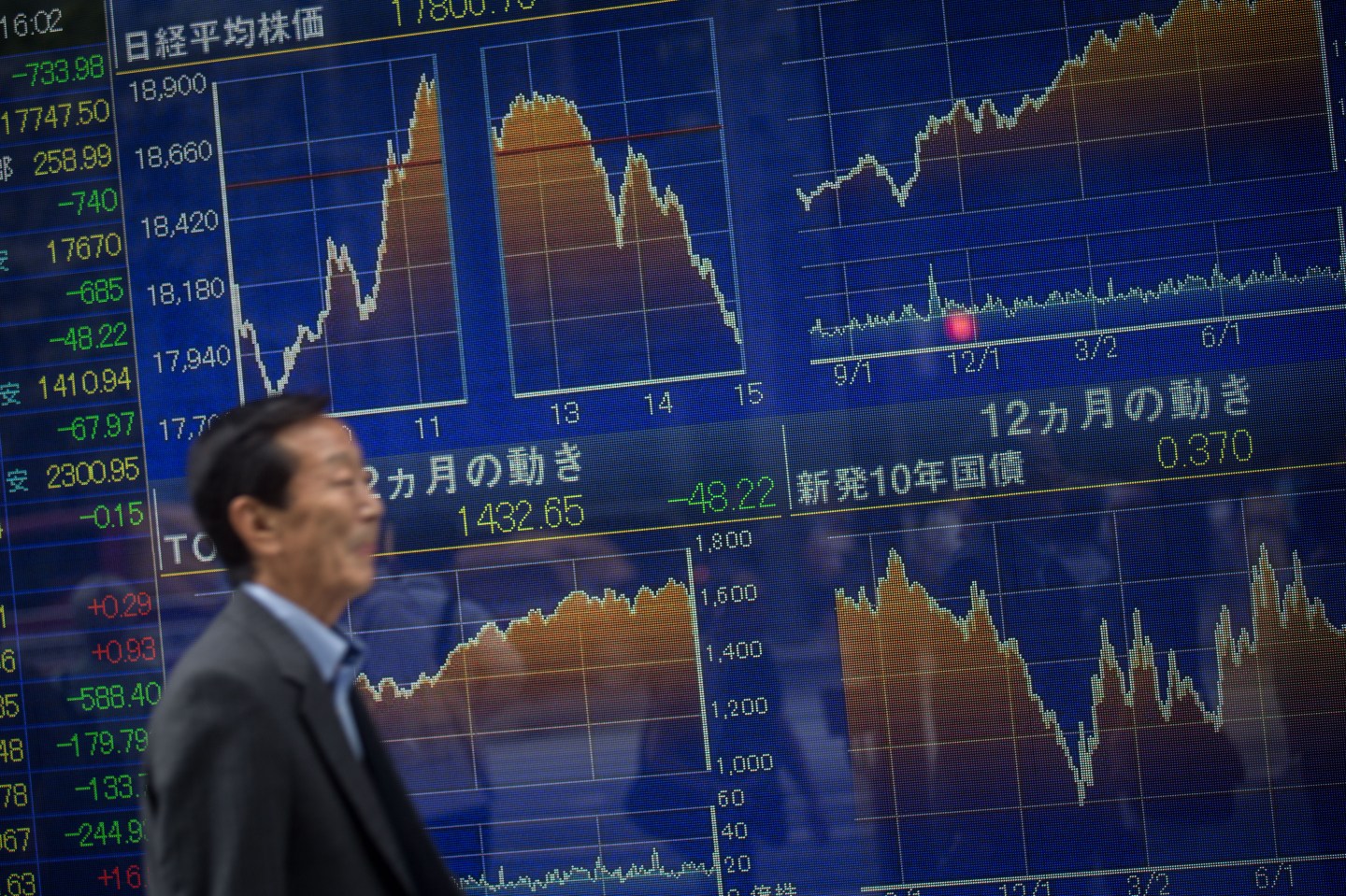
TOKYO, JAPAN - AUGUST 25: A man walks past a screen showing global stock market information on the street in Tokyo on August 25, 2015. Japan's share prices dropped nearly 4.0 percent, closing at 17,806.70 following a 4.6% plunge on "Black Monday" to the lowest level seen since late February. (Photo by Chris McGrath/Getty Images)Chris McGrath — Getty Images

Hugh Young is a managing director at Aberdeen Asset Management Asia.

This week marks the anniversary of last year’s stock market crash that some have dubbed China’s Black Monday. Shanghai shares fell 8.5% on August 24, triggering losses on exchanges around the world and causing mayhem in currency and commodity markets.

Apart from the financial losses, the market meltdown damaged the reputation of China’s policymakers. The technocrats who had steered the country through the global financial crisis were humbled as investor capitulation showed the limits of their power to control markets. Investors questioned assumptions about a soft landing for an economy that could no longer sustain its relentless pace of growth. There was talk China would trigger the next financial crisis.

Around the same time, people started monitoring the renminbi for signs of economic vulnerability. Currency weakness, it was argued, clearly meant devaluation – a sure sign that something was amiss. The real reason – that a weaker yuan was a symptom of currency liberalization – was, for many people, less convincing.

One year on, and although the prospects for a sustainable global recovery seem just as remote, things in China have stabilized. Despite another stock market scare at the start of this year, government stimulus is bearing fruit, even if that means slowing reforms crucial to long-term development.

Does this mean China has turned a corner? Only if you ignore a long list of problems that include: ballooning debt; declining corporate profitability; and the countless state-owned businesses such as steelmakers and miners that provide work for entire towns, but struggle to survive.

True, the property market has picked up. Housing inventory levels are starting to clear and construction activity has been recovering: cities such as Nanjing and Hefei have only three to four months of housing stock based on current rates of sale, although these are exceptional. The pace of capital outflows has been decelerating because of capital controls.

When the renminbi weakens, investors haven’t panicked. Better policy communication – central bank officials have started sharing their views on state media – means more people understand why this is happening: with the Chinese currency now guided by a trade-weighted basket of 11 currencies, its relationship with the US dollar will be more volatile.

The problem now is that China’s debt – an intricate web connecting government-linked businesses, state-controlled banks and the bond markets – has snowballed since the global financial crisis. Combined corporate, household, government and bank debt rose from 164% of GDP to 247% between 2008 and last year. However, only a fraction – around $150 billion – is debt denominated in a foreign currency, even after a surge in US dollar bond issuance from China over the past five years.

How much of all this debt can turn bad? Nobody knows: estimates range widely from nearly 7 trillion yuan to some 23 trillion yuan, depending on different assumptions. That’s around $1 trillion at the lower end of these estimates, or some 10% of China’s $10 trillion economy.

Although President Xi Jinping is thought to favor a hard-line approach – shutting commercially unviable state-owned companies, imposing discipline on government-linked borrowers – China’s solution so far has been to unleash more stimulus, albeit on a smaller scale than previous rounds. While this buys time, it also creates even more debt.

So will there be a debt-inspired meltdown soon? The answer is: probably not.

Most of China’s debt is denominated in renminbi, which means, in the worst case scenario, the central government can print money to bail out government-linked borrowers deemed systemically important; Beijing can direct lending at the government banks so this source of financing is less likely to dry up; China is also a net exporter and lender of capital, which means the economy doesn’t rely on fickle foreigners to fund any deficits.

However, stimulus can only be a temporary solution. It can help delay the sudden pull-back of credit financing or abrupt asset value depreciation that, historically, have been catalysts of financial crises. But stimulus cannot replace the reforms needed to fix the massive distortions created by the misallocation of capital into unproductive industries and investments.

To China’s credit, policymakers have made some progress here: they are tackling the problem of moral hazard in the bond market by letting a handful of state-owned companies default on repayments; the financial system is beginning to differentiate between credit risks which, while still rudimentary by global standards, is a breakthrough for local markets.

As global risks grow policymakers have to reconcile the desire for stability with the need for essential reforms. Tough choices lie ahead.

About the Author
By Hugh Young
See full bioRight Arrow Button Icon

Latest in Commentary

Finance
Lorem ipsum dolor sit amet, consectetur adipiscing elit, sed do eiusmod tempor incididunt ut labore et dolore magna aliqua. Ut enim ad minim veniam
By Fortune Editors
October 20, 2025
Finance
Lorem ipsum dolor sit amet, consectetur adipiscing elit, sed do eiusmod tempor incididunt ut labore et dolore magna aliqua. Ut enim ad minim veniam
By Fortune Editors
October 20, 2025
Finance
Lorem ipsum dolor sit amet, consectetur adipiscing elit, sed do eiusmod tempor incididunt ut labore et dolore magna aliqua. Ut enim ad minim veniam
By Fortune Editors
October 20, 2025
Finance
Lorem ipsum dolor sit amet, consectetur adipiscing elit, sed do eiusmod tempor incididunt ut labore et dolore magna aliqua. Ut enim ad minim veniam
By Fortune Editors
October 20, 2025
Finance
Lorem ipsum dolor sit amet, consectetur adipiscing elit, sed do eiusmod tempor incididunt ut labore et dolore magna aliqua. Ut enim ad minim veniam
By Fortune Editors
October 20, 2025
Finance
Lorem ipsum dolor sit amet, consectetur adipiscing elit, sed do eiusmod tempor incididunt ut labore et dolore magna aliqua. Ut enim ad minim veniam
By Fortune Editors
October 20, 2025

Most Popular

Finance
Lorem ipsum dolor sit amet, consectetur adipiscing elit, sed do eiusmod tempor incididunt ut labore et dolore magna aliqua. Ut enim ad minim veniam
By Fortune Editors
October 20, 2025
Finance
Lorem ipsum dolor sit amet, consectetur adipiscing elit, sed do eiusmod tempor incididunt ut labore et dolore magna aliqua. Ut enim ad minim veniam
By Fortune Editors
October 20, 2025
Finance
Lorem ipsum dolor sit amet, consectetur adipiscing elit, sed do eiusmod tempor incididunt ut labore et dolore magna aliqua. Ut enim ad minim veniam
By Fortune Editors
October 20, 2025
Finance
Lorem ipsum dolor sit amet, consectetur adipiscing elit, sed do eiusmod tempor incididunt ut labore et dolore magna aliqua. Ut enim ad minim veniam
By Fortune Editors
October 20, 2025
Finance
Lorem ipsum dolor sit amet, consectetur adipiscing elit, sed do eiusmod tempor incididunt ut labore et dolore magna aliqua. Ut enim ad minim veniam
By Fortune Editors
October 20, 2025
Finance
Lorem ipsum dolor sit amet, consectetur adipiscing elit, sed do eiusmod tempor incididunt ut labore et dolore magna aliqua. Ut enim ad minim veniam
By Fortune Editors
October 20, 2025
Rankings
  • 100 Best Companies
  • Fortune 500
  • Global 500
  • Fortune 500 Europe
  • Most Powerful Women
  • Future 50
  • World’s Most Admired Companies
  • See All Rankings
Sections
  • Finance
  • Leadership
  • Success
  • Tech
  • Asia
  • Europe
  • Environment
  • Fortune Crypto
  • Health
  • Retail
  • Lifestyle
  • Politics
  • Newsletters
  • Magazine
  • Features
  • Commentary
  • Mpw
  • CEO Initiative
  • Conferences
  • Personal Finance
  • Education
Customer Support
  • Frequently Asked Questions
  • Customer Service Portal
  • Privacy Policy
  • Terms Of Use
  • Single Issues For Purchase
  • International Print
Commercial Services
  • Advertising
  • Fortune Brand Studio
  • Fortune Analytics
  • Fortune Conferences
  • Business Development
About Us
  • About Us
  • Editorial Calendar
  • Press Center
  • Work At Fortune
  • Diversity And Inclusion
  • Terms And Conditions
  • Site Map

© 2025 Fortune Media IP Limited. All Rights Reserved. Use of this site constitutes acceptance of our Terms of Use and Privacy Policy | CA Notice at Collection and Privacy Notice | Do Not Sell/Share My Personal Information
FORTUNE is a trademark of Fortune Media IP Limited, registered in the U.S. and other countries. FORTUNE may receive compensation for some links to products and services on this website. Offers may be subject to change without notice.


Latest in Commentary

unemployed
CommentaryLayoffs
The AI efficiency illusion: why cutting 1.1 million jobs will stifle, not scale, your strategy
By Katica RoyDecember 18, 2025
12 hours ago
Muddu
CommentaryIT
IT service is reaching its breaking point. At Salesforce, we see 3 tipping points
By Muddu SudhakarDecember 18, 2025
16 hours ago
small business
CommentaryLayoffs
Our data shows that companies of 500 and fewer workers mostly avoided the AI layoffs. They’re making AI work for them
By Gabby BurlacuDecember 18, 2025
17 hours ago
Sophia Romee is the General Manager of the GenAI Studio at the College Board
CommentaryEducation
Gen Z is on the fence about AI in the classroom. That’s a good thing
By Sophia RomeeDecember 18, 2025
17 hours ago
Tim Parker
CommentaryAutos
How Bentley’s brand is creating business advantage in disruptive times 
By Tim ParkerDecember 18, 2025
20 hours ago
layoffs
CommentaryLayoffs
The AI layoff wave is just beginning — and it’s by design
By Kevin OakesDecember 17, 2025
2 days ago

Most Popular

placeholder alt text
Economy
The $38 trillion national debt is to blame for over $1 trillion in annual interest payments from here on out, CRFB says
By Nick LichtenbergDecember 17, 2025
2 days ago
placeholder alt text
C-Suite
Red Lobster CEO Damola Adamolekun says the key to being a better leader is being a better person: ‘Leadership is self-improvement’
By Sydney LakeDecember 17, 2025
2 days ago
placeholder alt text
AI
'Robots are going to be amongst us': Qualcomm exec says buckle up for the next 5 years. Your car is going to be the first shoe to drop
By Nino PaoliDecember 17, 2025
2 days ago
placeholder alt text
Success
As millions of Gen Zers face unemployment, McDonald's CEO dishes out some tough love career advice for navigating the market: ‘You've got to make things happen for yourself’
By Preston ForeDecember 16, 2025
3 days ago
placeholder alt text
Success
Britain’s defense chief calls on Gen Z grads leaving university to skip corporate jobs and join the military as war with Russia becomes a growing risk
By Emma BurleighDecember 17, 2025
2 days ago
placeholder alt text
Future of Work
LinkedIn CEO says it's 'outdated' to have a five-year career plan: It's a 'little bit foolish' considering the pace AI is changing the workplace
By Sydney LakeDecember 18, 2025
16 hours ago