• Home
  • News
  • Fortune 500
  • Tech
  • Finance
  • Leadership
  • Lifestyle
  • Rankings
  • Multimedia
Tech

AT&T Bets on Entertainment to Keep Its Network Busy

By
Aaron Pressman
Aaron Pressman
Down Arrow Button Icon
By
Aaron Pressman
Aaron Pressman
Down Arrow Button Icon
May 17, 2016, 7:11 PM ET
Getty Images

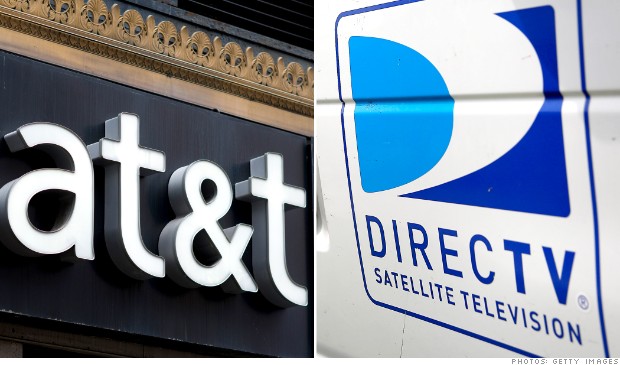
There has been a fair amount of confusion over AT&T’s strategy to extend its network both to outer space (with the purchase of DirecTV) and south of the border (with the acquisition of two Mexican wireless services) last year.

Neither play was as simple as adding more paying customers, although that didn’t hurt. Instead, the additions were also intended to bring greater scale and leverage to some of the telecom giant’s ongoing efforts, and to find new sources of revenue growth at a time when its mainstay—the U.S. wireless market—appears to be slowing.

The addition of DirecTV and its 20 million satellite video subscribers, for example, immediately gave AT&T much greater scale to negotiate better deals with cable channel owners, Hollywood studios, and other content creators that the company could not previously achieve with its meager 6 million traditional cable customers.

Get Data Sheet, Fortune’s technology newsletter.

In turn, the greater sway with content providers could let AT&T (T) create more appealing and lower cost Internet video services that companies like Apple (AAPL), Sony (SNE), and Verizon (VZ) have struggled to pull off. AT&T has already announced three different Internet-delivered video services arriving by year end, supported with both subscription fees and advertising. If the company succeeds, video subscription revenue will grow, profit margins will expand, and advertising revenue—currently around $1 billion—will multiply exponentially.

The Mexican play requires building a faster wireless network and more fiber connections on the ground. AT&T has already committed to spending $3 billion. Once the bigger, faster network comes online, AT&T wants to leverage its investments to expand both its video entertainment and enterprise services for businesses south of the U.S. border.

Ultimately, the goal is to create maximum demand for AT&T’s wired and wireless networks. “From the dawn of time, what we have made our money on and what we’re good at is moving a bit around,” John Stankey explained in a talk at a cable industry conference in Boston on Tuesday. Stankey runs AT&T’s video efforts, but used to oversee the company’s telecom services.

This Is the Place Where AT&T Stops Hackers

Asked about some of the company’s investments in content companies, Stankey was frank about the goal. “We do entertainment because it drives bits on our network, not necessarily because we’re great at entertainment,” he said.

But while both the DirecTV and Mexican moves can be justified, there is a faint whiff of the kind of empire-building that got AT&T into trouble in the 1990s, when then-CEO Michael Armstrong first built—then dismantled—a $100 billion consumer cable and Internet infrastructure. Facing the popping of the Internet bubble, the fraud engulfing competitor WorldCom, and the collapse of the telecom capital markets simultaneously, Armstrong had to sell off his cable empire for half what he paid just to keep AT&T solvent.

AT&T Acquiring Video Streaming Platform Quickplay

Stankey and his boss, AT&T CEO Randall Stephenson, are betting that they can capture significant chunks of the growing market for Internet delivered video and digital advertising, particularly from millennials. But they also run the risk that the markets change in ways that work against them rather than for them, if mobile revenues started shrinking quickly or cord cutting accelerated, for example.

Hopefully for Stankey and Stephenson—and their investors—things will work out better than they did for Armstrong.


About the Author
By Aaron Pressman
See full bioRight Arrow Button Icon

Latest in Tech

Future of WorkJamie Dimon
Jamie Dimon says even though AI will eliminate some jobs ‘maybe one day we’ll be working less hard but having wonderful lives’
By Jason MaDecember 7, 2025
13 minutes ago
CryptoCryptocurrency
So much of crypto is not even real—but that’s starting to change
By Pete Najarian and Joe BruzzesiDecember 7, 2025
5 hours ago
Elon Musk
Big TechSpaceX
SpaceX to offer insider shares at record-setting $800 billion valuation
By Edward Ludlow, Loren Grush, Lizette Chapman, Eric Johnson and BloombergDecember 6, 2025
19 hours ago
Big TechApple
Apple rocked by executive departures, with chip chief at risk of leaving next
By Mark Gurman and BloombergDecember 6, 2025
21 hours ago
Nvidia CEO Jensen Huang said China is better equipped for an AI data center buildout than the U.S.
AITech
Nvidia CEO says data centers take about 3 years to construct in the U.S., while in China ‘they can build a hospital in a weekend’
By Nino PaoliDecember 6, 2025
24 hours ago
Arts & EntertainmentMedia
Former Amazon Studios boss warns the Netflix-Warner Bros. deal will make Hollywood ‘a system that circles a single sun’
By Jason MaDecember 6, 2025
1 day ago

Most Popular

placeholder alt text
AI
Nvidia CEO says data centers take about 3 years to construct in the U.S., while in China 'they can build a hospital in a weekend'
By Nino PaoliDecember 6, 2025
24 hours ago
placeholder alt text
Real Estate
The 'Great Housing Reset' is coming: Income growth will outpace home-price growth in 2026, Redfin forecasts
By Nino PaoliDecember 6, 2025
1 day ago
placeholder alt text
Economy
The most likely solution to the U.S. debt crisis is severe austerity triggered by a fiscal calamity, former White House economic adviser says
By Jason MaDecember 6, 2025
19 hours ago
placeholder alt text
Big Tech
Mark Zuckerberg rebranded Facebook for the metaverse. Four years and $70 billion in losses later, he’s moving on
By Eva RoytburgDecember 5, 2025
2 days ago
placeholder alt text
Asia
Despite their ‘no limits’ friendship, Russia is paying a nearly 90% markup on sanctioned goods from China—compared with 9% from other countries
By Jason MaNovember 29, 2025
8 days ago
placeholder alt text
Success
Nvidia CEO Jensen Huang admits he works 7 days a week, including holidays, in a constant 'state of anxiety' out of fear of going bankrupt
By Jessica CoacciDecember 4, 2025
3 days ago
Rankings
  • 100 Best Companies
  • Fortune 500
  • Global 500
  • Fortune 500 Europe
  • Most Powerful Women
  • Future 50
  • World’s Most Admired Companies
  • See All Rankings
Sections
  • Finance
  • Leadership
  • Success
  • Tech
  • Asia
  • Europe
  • Environment
  • Fortune Crypto
  • Health
  • Retail
  • Lifestyle
  • Politics
  • Newsletters
  • Magazine
  • Features
  • Commentary
  • Mpw
  • CEO Initiative
  • Conferences
  • Personal Finance
  • Education
Customer Support
  • Frequently Asked Questions
  • Customer Service Portal
  • Privacy Policy
  • Terms Of Use
  • Single Issues For Purchase
  • International Print
Commercial Services
  • Advertising
  • Fortune Brand Studio
  • Fortune Analytics
  • Fortune Conferences
  • Business Development
About Us
  • About Us
  • Editorial Calendar
  • Press Center
  • Work At Fortune
  • Diversity And Inclusion
  • Terms And Conditions
  • Site Map

© 2025 Fortune Media IP Limited. All Rights Reserved. Use of this site constitutes acceptance of our Terms of Use and Privacy Policy | CA Notice at Collection and Privacy Notice | Do Not Sell/Share My Personal Information
FORTUNE is a trademark of Fortune Media IP Limited, registered in the U.S. and other countries. FORTUNE may receive compensation for some links to products and services on this website. Offers may be subject to change without notice.