• Home
  • News
  • Fortune 500
  • Tech
  • Finance
  • Leadership
  • Lifestyle
  • Rankings
  • Multimedia
LeadershipSupreme Court

Justice Scalia’s Death: This Changes Everything

By
Roger Parloff
Roger Parloff
Down Arrow Button Icon
By
Roger Parloff
Roger Parloff
Down Arrow Button Icon
February 13, 2016, 9:06 PM ET
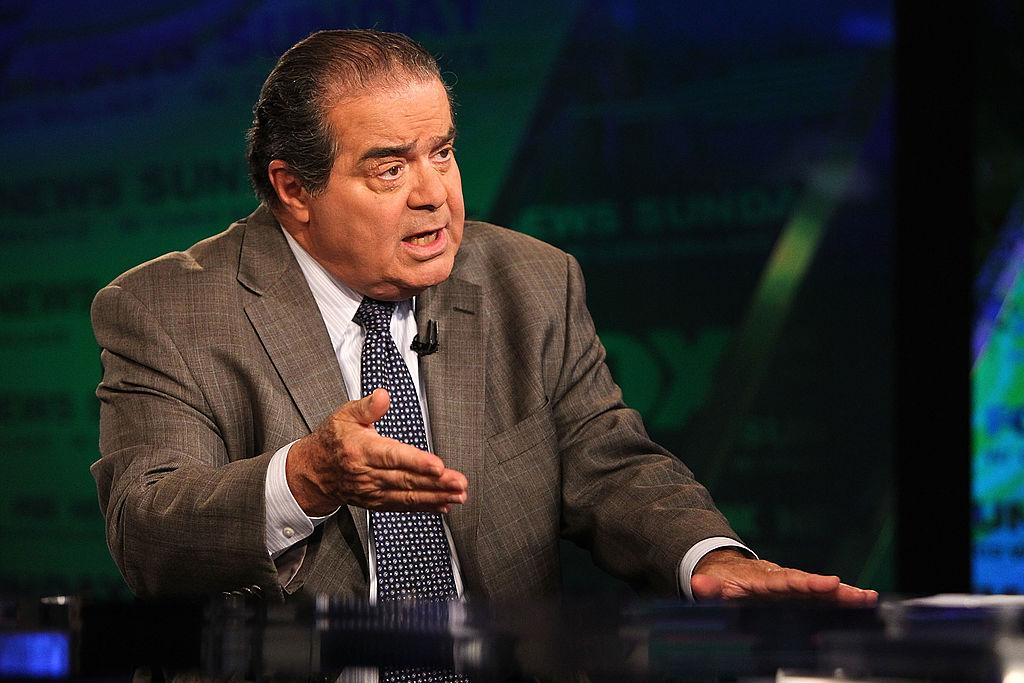
U.S. Supreme Court Justice Antonin Scalia
Paul Morigi—Getty Images

It is hard to imagine the death of anyone in government today—including the President himself—having a greater impact on the everyday life of most Americans than that of Associate Justice Antonin Scalia, who died on Saturday in Texas at 79.

On our closely divided Supreme Court, which sooner or later seems to decide all of the most emotionally freighted political questions of the day—affirmative action, abortion, gun rights, gay rights, labor and employment issues, immigration, Obamacare, the death penalty, and on it goes—a decisive, conservative 5-4 majority has just been shaved to a 4-4 toss-up.

But Scalia was not just one of five conservative votes on that Court. For the last 29 years, he has been the conservative faction’s most commanding, most combative, most entertaining, and most influential voice, both among lawyers and, more remarkably, among the general population.

He refined, redirected, championed, and popularized the notion of “originalism”—the idea that the Constitution’s words should be interpreted the way they were understood at the time they were written or ratified. Today, the doctrine probably has many more adherents among non-lawyers, like Tea Partiers, than it does among lawyers. Its popularity owes much to Scalia’s stylish, persuasive advocacy in terms that lay people could understand.

In the wake of Scalia’s death—reportedly from natural causes—Court watchers are now in the process of combing through a docket that, until now, everyone thought they already understood. They are recounting the remaining votes, rehandicapping the outcomes, and checking to see how the lower court decided the case. This last factor—largely ignored until now—has just become crucial. That’s because when the Court renders a tie vote of 4-4, the lower court decision stands, although it has no precedential weight.

The consensus appears to be that the Senate will not permit President Obama to appoint Scalia’s replacement, and that the 4-4 stalemate will therefore persist until at least the November elections. (President Obama has already pledged to make a nomination, and Charles Grassley, head of the Senate Judiciary Committee, has already pledged to never let it see the light of day.)

That means that a cloud of uncertainty will loom over the remainder of the Court’s current term (ending in late June) and well into the next one (which begins in October).

Court watchers (like Tom Goldstein, publisher of SCOTUSblog) believe that one of the first altered case outcomes, as a result of Scalia’s death, will likely be Friedrichs v. California Teachers Association, a case in which it had been expected that the Court would strike down laws requiring non-union public employees to pay public-sector union dues.

President Obama’s executive orders on immigration also now seem less likely to be struck down by the Court. But since the lower courts also enjoined his orders, it’s not clear that the government will prevail. (See, for instance, Ian Millhiser, of Think Progress.)

As for this term’s important affirmative action case, Fisher v. University of Texas, it is actually not expected to be directly affected by Scalia’s death, since Justice Elena Kagan had recused herself from hearing that case, leaving only three liberal-leaning justices on the bench. That case still seems to be in the hands of Anthony Kennedy.

What does Scalia’s death mean specifically for the business docket? That’s harder to say, Goldstein writes in an email, since those cases aren’t as reliably split along ideological lines.

“But going forward,” he says, “the business community has lost a reliable and strong voice for limiting lawsuits, including class actions.”

About the Author
By Roger Parloff
See full bioRight Arrow Button Icon

Latest in Leadership

CryptoCryptocurrency
Binance names cofounder Yi He as new co-CEO
By Jeff John RobertsDecember 3, 2025
1 hour ago
Anthropic cofounder and CEO Dario Amodei
AIEye on AI
How Anthropic’s safety first approach won over big business—and how its own engineers are using its Claude AI
By Jeremy KahnDecember 2, 2025
12 hours ago
Workplace CultureSports
Exclusive: Billionaire Michele Kang launches $25 million U.S. Soccer institute that promises to transform the future of women’s sports
By Emma HinchliffeDecember 2, 2025
13 hours ago
Man on private jet
SuccessWealth
CEO of $5.6 billion Swiss bank says country is still the ‘No. 1 location’ for wealth after voters reject a tax on the ultrarich
By Jessica CoacciDecember 2, 2025
14 hours ago
Big TechInstagram
Instagram CEO calls staff back to the office 5 days a week to build a ‘winning culture’—while canceling every recurring meeting
By Marco Quiroz-GutierrezDecember 2, 2025
14 hours ago
layoffs
EconomyLayoffs
What CEOs say about AI and what they mean about layoffs and job cuts: Goldman Sachs peels the onion
By Nick LichtenbergDecember 2, 2025
14 hours ago

Most Popular

placeholder alt text
Economy
Ford workers told their CEO 'none of the young people want to work here.' So Jim Farley took a page out of the founder's playbook
By Sasha RogelbergNovember 28, 2025
5 days ago
placeholder alt text
Success
Warren Buffett used to give his family $10,000 each at Christmas—but when he saw how fast they were spending it, he started buying them shares instead
By Eleanor PringleDecember 2, 2025
21 hours ago
placeholder alt text
Economy
Elon Musk says he warned Trump against tariffs, which U.S. manufacturers blame for a turn to more offshoring and diminishing American factory jobs
By Sasha RogelbergDecember 2, 2025
14 hours ago
placeholder alt text
C-Suite
MacKenzie Scott's $19 billion donations have turned philanthropy on its head—why her style of giving actually works
By Sydney LakeDecember 2, 2025
21 hours ago
placeholder alt text
North America
Jeff Bezos and Lauren Sánchez Bezos commit $102.5 million to organizations combating homelessness across the U.S.: ‘This is just the beginning’
By Sydney LakeDecember 2, 2025
16 hours ago
placeholder alt text
AI
More than 1,000 Amazon employees sign open letter warning the company's AI 'will do staggering damage to democracy, our jobs, and the earth’
By Nino PaoliDecember 2, 2025
23 hours ago
Rankings
  • 100 Best Companies
  • Fortune 500
  • Global 500
  • Fortune 500 Europe
  • Most Powerful Women
  • Future 50
  • World’s Most Admired Companies
  • See All Rankings
Sections
  • Finance
  • Leadership
  • Success
  • Tech
  • Asia
  • Europe
  • Environment
  • Fortune Crypto
  • Health
  • Retail
  • Lifestyle
  • Politics
  • Newsletters
  • Magazine
  • Features
  • Commentary
  • Mpw
  • CEO Initiative
  • Conferences
  • Personal Finance
  • Education
Customer Support
  • Frequently Asked Questions
  • Customer Service Portal
  • Privacy Policy
  • Terms Of Use
  • Single Issues For Purchase
  • International Print
Commercial Services
  • Advertising
  • Fortune Brand Studio
  • Fortune Analytics
  • Fortune Conferences
  • Business Development
About Us
  • About Us
  • Editorial Calendar
  • Press Center
  • Work At Fortune
  • Diversity And Inclusion
  • Terms And Conditions
  • Site Map

© 2025 Fortune Media IP Limited. All Rights Reserved. Use of this site constitutes acceptance of our Terms of Use and Privacy Policy | CA Notice at Collection and Privacy Notice | Do Not Sell/Share My Personal Information
FORTUNE is a trademark of Fortune Media IP Limited, registered in the U.S. and other countries. FORTUNE may receive compensation for some links to products and services on this website. Offers may be subject to change without notice.