How the growth of China is affecting the global economy continues to be a big wildcard on investors’ minds but how the world’s second largest economy is spreading its “soft power” is an emerging conversation that’s worth taking a closer look as the country’s relationship with Hollywood continues to blossom.
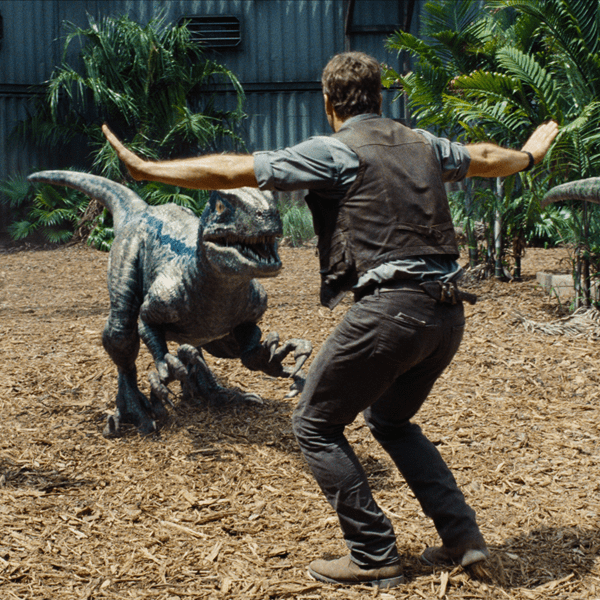
This week, Chinese conglomerate Dalian Wanda Group signed an acquisition deal with Legendary Entertainment, the Hollywood production company behind movies, such as Jurassic World and Godzilla. This follows others deals in Hollywood. Last March, Lions Gate got things going when it closed a $375-million film financing deal with Hunan TV. Government-owned China Film Group then invested in Universal’s Furious 7 and Sony’s Pixels. China’s Huayi Bros. Media Corp took a stake in 18 of STX’s movie projects while Chinese private-equity firm Hony Capital also invested heavily.
And before buying its stake in Legendary for $3.5 billion, the Dalian Wanda Corp partially financed last year’s Southpaw, starring Jake Gyllenhaal. (The conglomerate also bought AMC Cinema Chain for 2.6 billion in 2012 — a move that looked to be an attempt at strengthening its soft power stateside.)
China’s economy may be slowing, but their love of films certainty isn’t. The country is now the world’s second-largest film market, taking in 16% of global box office revenues in 2015. China is adding the equivalent of 10 new multiplexes every week. China’s theatrical movie business is growing 10 times faster than its GDP. That’s good news that means bigger dollar signs for Hollywood.
Paramount Pictures’ 2014 Transformers: Age of Extinction, which starred China’s Bingbing Li and was set partly in Hong Kong, became the third-highest grossing film in China by taking in $320 million in that nation alone. Last year’s Jurassic World and Avengers: Age of Ultron made a combined $619 million in China. Furious 7, the 2015 top earner in China, made $391 million in the country, which was more than it made at the box office in the United States. More recently, Star Wars: The Force Awakens, gobbled up an estimated $33 million this past weekend in the biggest Saturday open ever in China for any film. A good sign for the New Year as China and Hollywood become firm bed buddies.
It’s not just Hollywood films finding success in the country either. “Made-in-China” movies are reaping benefits from the country’s growing domestic audience. The animated film Monster Hunt became the highest grossing Chinese-made movie ever, raking in over $381 million in domestic box office, making it the fifth highest-grossing film in China of all time.
But as Chinese moviegoers becomes a reliable revenue stream for Hollywood, questions around its long-term stability get louder. How much will Chinese-made films impact the popularity of Hollywood films in China? For now, China’s growing love affair with movies still largely benefits Tinsel Town; but with the quality of Chinese films on the rise, could interest in U.S. films by Chinese audiences wane?
Case in point: Furious 7 was the highest grossing film in China, but 7 of the top 10 box office draws in 2015 were actually Chinese-made movies. China’s film quota also doesn’t help either. The government allows only 34 foreign films to be released in China each year, pushing some films to delay their releases even as big global openings are becoming the norm. The new Star Wars film was bumped to 2016 in China.
But whether this is a zero-sum game between Hollywood and China’s expanding film industry is still yet to be seen. And both could still benefit side-by-side.
After all, Hollywood’s biggest and most successful blockbusters – from the action-packed to the animated – tend to resonate beyond the U.S., often rely on having a wide-global appeal and could thrive in China without competing too much with the country’s homegrown films. And with so much Chinese investment now flowing into Hollywood regularly from China, the rewards that can be reaped from blockbuster films that appeal in both countries (and beyond), benefits all parties involved.
But with the increasing quality of Chinese-made films, here’s another question: Is China’s film industry becoming a “Hollywood East,” which could some day make a push into the American market? Or is its future going to be more like India’s Bollywood, which produces twice as many films as the U.S. (often more) and has a larger domestic audience, but lacks crossover success?
Whatever happens in my point of view, it’s a win-win. Many have been lamenting the fall of the movie business as fewer people in America go to the theatres and more stay home watching Netflix and chilling. But now there’s more money to make great films and a billion new consumers that will watch them. China can help save this storytelling art form from being replaced by the 30- second YouTube video.
Brad Grossman is the founder and CEO of Zeitguide, a consultancy that guides business leaders on cultural trends.