If I’m elected president… I’m going to institute zero-based budgeting, which assesses every program every year, and eliminates those programs that are obsolete.
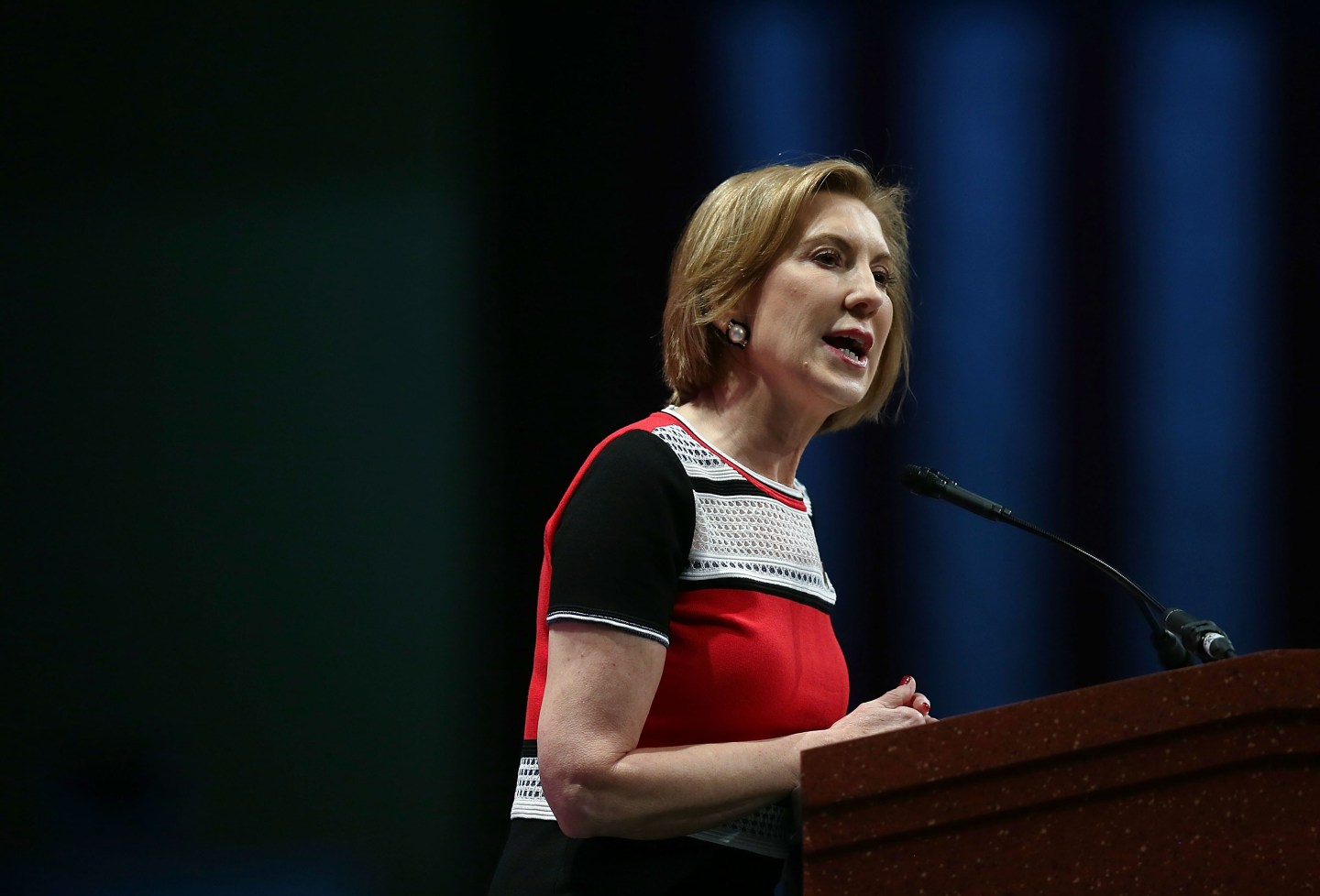
This was Jimmy Carter’s presidential campaign promise in 1976. Thirty-nine years later, presidential candidate Carly Fiorina is once again promising economy and efficiency in government spending through zero-based budgeting.
What, then, is zero-based budgeting, and is it really the cure-all—as it’s portrayed to be—for our government’s spending woes?
Zero-based budgeting: nuts and bolts
Budgets, whether they be simple household budgets or massive governmental budgets, are used to control spending.
Most of us start our household budget by reviewing what we spent last year and then adding or subtracting from our prior spending based on what we expect to happen in the future.
For example, we might expect to use the same amount of gasoline in the future, but, since prices are declining, we reduce the last year’s budgeted amount to reflect the price decline. The underlying assumption is that we will be participating in the same activities at the same levels as we did last year, with only small changes.
This is called “incremental budgeting” and is widely used in both business and government because the budgeting process is straightforward, and the resulting budget is easy to understand.
Unfortunately, in government the incremental method is often accompanied by a “use-it-or-lose-it” mentality. If a department head doesn’t use all of her department’s budget by year end, she will likely have a smaller one next year. Research suggests that this mentality is responsible for the well-documented year-end spending sprees by governmental agencies, and that this spending often goes toward lower-priority, lower-quality projects.
On the other hand, zero-based budgeting assumes nothing. It was designed to control spending by questioning the value of all activities, measuring the effectiveness and efficiency of each, and eliminating those that cannot be justified.
To achieve this end, zero-based budgeting starts all budgets from scratch. This means that every expenditure begins at zero and undergoes scrutiny every year to determine whether the purpose and amount of the expense is appropriate.
As applied to our household budget, instead of simply adjusting the budget line for the decline in gas prices, we would start the gasoline budget by asking whether we need to drive at all and work our way up from there.
When used in government, zero-based budgeting requires that every program, agency, and department justify every activity and every expense, every year. Presumably, there is no “use-it-or-lose-it” mentality and no incentive to use up last year’s budget as a way to get more next year.
It’s nothing new
As shown by the opening quotations, zero-based budgeting is not new in business or in government.
It gained attention in 1970 when Peter Pyhrr wrote about Texas Instruments’ (TXN) experience with it in the Harvard Business Review. As governor of Georgia, Jimmy Carter first implemented the budgeting process for his state’s budget. In 1976, President Carter brought the method to the federal government.
The zero-based budgeting process at the federal level required many steps and resulted in massive amounts of information and paperwork. Each agency within the government was required to identify logical “decision units” within its budget. Each unit would then create a “decision package” that included its proposed expenditures along with measures of efficiency and effectiveness.
The package included the unit’s budget request, which had to be made at four different funding levels ranging from the minimum required for viability of the program to a level high enough to provide additional services. All decision packages within a manager’s control were then ranked and advanced up the administrative ladder for additional review, revision and prioritization.
Zero-based budgeting proved to be complicated and time-consuming and did not result in cost savings. It was abandoned by President Ronald Reagan early in his first term.
Aside from the time commitment and complexity, because it requires a fresh look each year, zero-based budgeting is focused on the short run and is difficult to apply to long-run decisions and continuing functions of government like public education and entitlement programs. It also creates competition and conflict among departments and agencies over resource allocation.
Most importantly, even after all of the decision units, packages and justifications are made, in the end, Congress and the president remain responsible for deciding whether to keep or eliminate programs. Regardless of the budgeting process used, their decisions are subject to the pressures of constituents, campaign contributors and lobbyists.
Since the late 1970s, some states and local governmental units have flirted with modifications of zero-based budgeting.
One modification is to use zero-based budgeting on one part of the budget, and the incremental method on the rest. In this case, a department might be given 80% of its past budget, while using zero-based budgeting to justify any additional amounts. Another modification is to use zero-based budgeting every few years as a periodic review of the unit.
In 2009 and again in 2012, New Hampshire used zero-base agency reviews for its state budget analysis and planning. The process included a review of agency missions, legal requirements, organizational charts, and alternatives to existing practices. The state budget director reported that the reviews helped streamline agency responsibilities.
Still, most governmental units rely on the incremental method because the resulting budget is simple to understand, and less labor-intensive to create.
Zero-based budgeting in business
Along with a renewed focus on zero-based budgeting in government, proponents point to a renewed interest in the method in the business sector.
Companies that cannot raise prices to improve profits might be attracted to zero-based budgeting as a way to control costs. Other businesses want a fresh view of company operations and might turn to zero-based budgeting as a way to evaluate everything from the ground up.
However, zero-based budgeting may not the best method for every company. For example, those that are more innovative may be willing to take chances and spend on projects that may not be viewed as the most cost-effective.
In its focus on the short run, zero-based budgeting may inhibit long-run strategic planning. It is complex and costly to implement and demands a real change in company-wide thinking and a long-term commitment from senior management. For all of the talk of its resurgence in business, Bain’s 2015 survey of management tools reports about 10% of the over 13,000 businesses it surveys use zero-based budgeting. However, the survey also indicates a 75% satisfaction rate among those companies.
CFO lists six companies that use zero-based budgeting: Coca-Cola (KO), Kellogg (K), Campbell Soup (CPB), ConAgra (CAG), Boston Scientific (BSX), and Tribune Publishing. The most recent quarterly financial statements of these six companies indicate that Kellogg has not yet adopted the method, and, of the other five, three reported decreases in operating costs of 1.6% to 3.5%, and two reported increases of 2.1% to 2.9%.
Could it curb government spending?
Prior experience and disadvantages aside, zero-based budgeting appeals to a serious desire to free the governmental budgeting process from old assumptions and not let past spending control the future.
In any form, zero-based budgeting is a complex, time-consuming, and costly process. New proposals to adopt zero-based budgeting should clearly state how past mistakes will be avoided and must be accompanied by a thoughtful analysis of whether the benefits will be worth the cost.
Finally, and most importantly, Congress and the president must be committed to ignore political pressures and to respect the outcomes of the budgeting process. If, in the end, they are unwilling to do that, it really doesn’t matter which process is used.
This piece was originally published on The Conversation.












