• Home
  • Latest
  • Fortune 500
  • Finance
  • Tech
  • Leadership
  • Lifestyle
  • Rankings
  • Multimedia

Trendingnow

1

The Iran conflict has disrupted oil supply. Gulf states are now looking to multi-billion-dollar investments in renewables 

2

Erin Brockovich, the activist who defeated a utility giant and inspired a Julia Roberts film, is pushing data centers to be more transparent

3

Current price of oil as of June 1, 2026

1

The Iran conflict has disrupted oil supply. Gulf states are now looking to multi-billion-dollar investments in renewables 

2

Erin Brockovich, the activist who defeated a utility giant and inspired a Julia Roberts film, is pushing data centers to be more transparent

3

Current price of oil as of June 1, 2026
CommentaryFederal Reserve

Kevin Warsh’s Fed criticisms make sense, but he’s got a ‘cleanest dirty shirt’ problem. Here’s the triple dilemma he faces

By
Daniel J. Arbess
Daniel J. Arbess
Down Arrow Button Icon
By
Daniel J. Arbess
Daniel J. Arbess
Down Arrow Button Icon
February 5, 2026, 8:00 AM ET
Daniel J. Arbess is the CEO of Xerion Investments, a co-founder of No Labels, and a lifetime member of the Council on Foreign Relations.
warsh
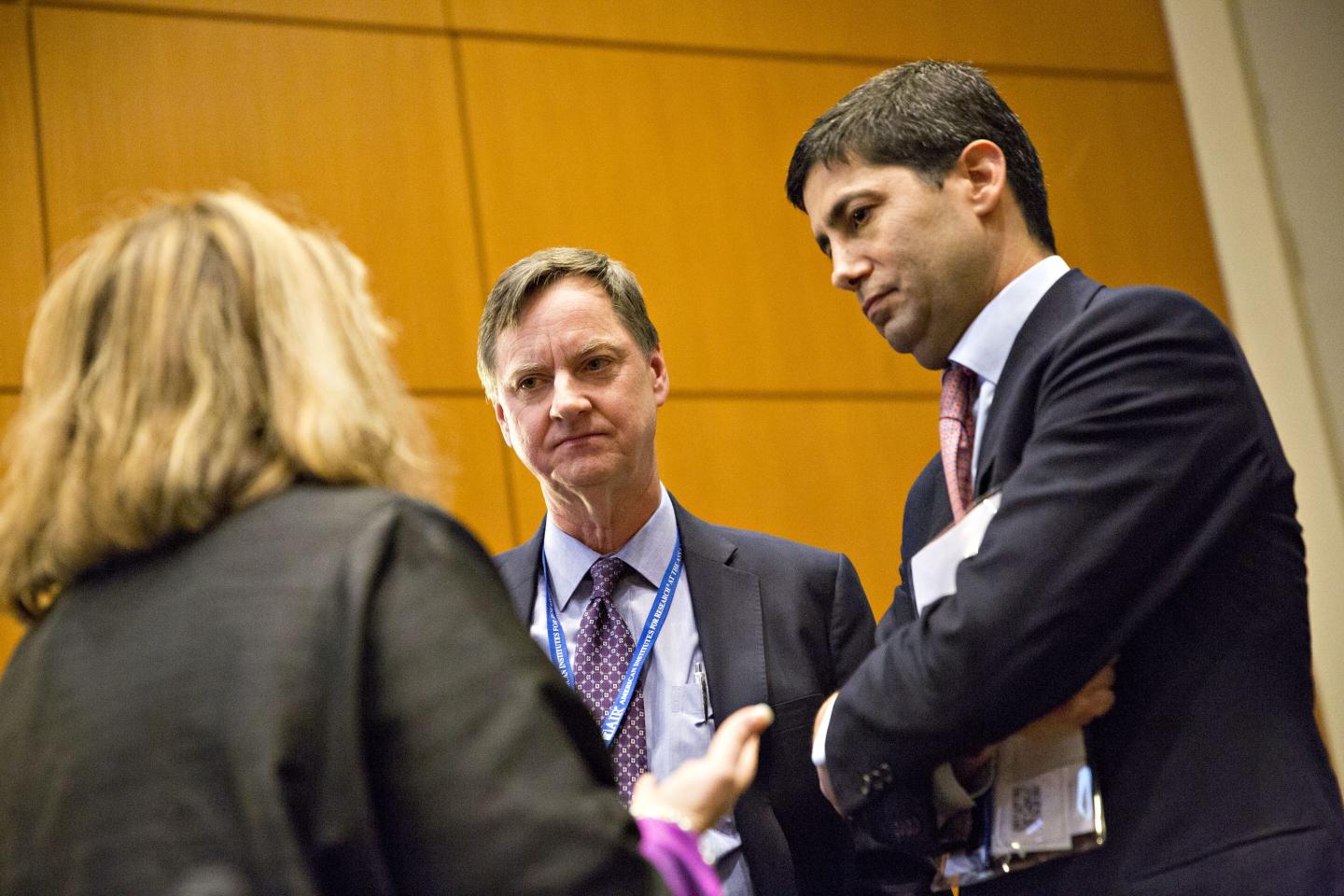
Charles Evans, president of the U.S. Federal Reserve Bank of Chicago, center, and Kevin Warsh, former governor of the U.S. Federal Reserve, right, speak to a panelist following a session at the American Economic Association (AEA) annual conference in Chicago, Illinois, U.S., on Friday, Jan. 6, 2017.Daniel Acker/Bloomberg via Getty Images

The debate since President Trump nominated Kevin Warsh as his next Fed Chair has centered on whether Mr. Warsh will line up with the administration’s call for lower rates. That would be easy enough. The larger question is what magic he’ll have to cut policy rates while simultaneously shrinking the Fed’s massive holdings of Treasuries–and how he’ll do both without market mayhem that threatens the Fed’s self-mandated “financial stability”? 

Recommended Video

Businesses and households care less about the Fed’s policy rate for overnight loans. They want to know how much “term premium” they’re required above the policy rate to borrow for longer. Bond markets set that price, not the Fed—unless they want to keep yields artificially low buy buying the bonds themselves. That’s the lazy solution that has been used for the past 17 years, exploding the Fed’s balance sheet holdings from $800 billion to almost $9 trillion between the ’08 financial crisis and COVID, and it’s still $6.6 trillion today after inflation-induced “tightening”.

Having followed Kevin Warsh’s thinking for years, I believe he makes a solid case for reducing the Fed’s holdings and letting private markets price duration risk. He resigned from the Fed Board in 2011 precisely because he opposed the continuation of quantitative easing—the policy of Fed buying long-dated Treasuries and mortgage-backed securities to suppress yields. He argued then, and has repeated since, that QE created a dangerous dependency: financial markets addicted to central bank liquidity, lawmakers enabled to pile on debt without consequence, and a misallocation of capital that planted seeds for future instability. “My overriding concern about continued QE,” Warsh said in 2018, “involves the misallocations of capital in the economy and the misallocation of responsibility in our government.”

The Treasury was wise to refinance as much and as long duration as possible for before being forced by transitional inflation to raise policy rates in 2022. The weighted average maturity of marketable Treasury debt declined to just 49 months during the 2008 crisis as Treasury scrambled to raise cash through short-term bills. By 2025, average maturities had maturities had stretched back out to 71 months. 

Warsh’s problem will be what happens as the current $4.2 trillion of Treasury securities still held on the Fed balance sheet matures. If he lets the Fed’s holdings refinance in private markets, he can expect the clearing price for duration to be significantly higher than the Fed received on its balance sheet holdings in the lower interest rate environment. That will be a burden on the businesses and families, and an even larger budgetary burden for the Federal government already paying $1 trillion in interest in the national debt, more than defense and any single healthcare program. 

This year’s refinancing calendar will be at least as aggressive as it was last year, when roughly $9 trillion of mostly short-term bills matured and were rolled over in short duration. Warsh will almost a much flexibility this year, as most near-term maturities are short-term bills that can be rolled forward again. If he is right about the disinflationary efficiency gains of AI and other technologies, there may even be room for lower policy rates, yielding interest savings. 

Warsh’s first test will be how the Fed handles the roughly $500 billion of seven-to-ten-year duration Treasuries maturing in the next year. If the Fed follows Warsh’s principles and allows long-dated Fed holdings to mature without reinvestment, private markets must absorb that duration. Don’t be surprised if markets demand more than 4.3% to hold U.S. sovereign credit for up to ten years in the present fiscal environment.

The trilemma

Kevin Warsh faces a trilemma over the horizon. He can shrink the balance sheet and accept higher long-term yields—which works against the administration’s stated goal of reducing borrowing costs and could destabilize a housing market already frozen by 7% mortgage rates. He can maintain the Fed’s holdings at lower yields, perpetuating the “monetary dominance” he has long criticized. Or he can pursue the go-to can-kicking option: rolling maturing securities into shorter duration, effectively converting the Fed’s portfolio into a de facto floating-rate liability while deferring the private sector’s absorption of term risk.

Which option is least bad? The first option risks a private market repricing of risk assets leading to potential recession. The second abandons the intellectual framework that apparently motivated Warsh’s interest in the position. The third might buy time but at the cost of leaving the market undersupplied with term credit, and with the fundamental fiscal problem still worsening as deficits compound and debt service consumes an ever-larger share of federal outlays. The Fed will have a couple of years to work with before the COVID-era longer duration bonds mature.

Where is Paul Ryan when we need him? He was the last fiscally responsible Republican leader, who declared in 2012 that “a defining responsibility of government is to steer our nation clear of a debt crisis while there is still time”. That time has grown shorter. Warsh understands the stakes better than most. 

Bill Gross’ “cleanest dirty shirt” in the global monetary system is becoming harder for everyone to wear. Whether Kevin Warsh can navigate a graceful exit from the Fed’s extraordinary interventions—or whether markets will impose their own solution would be the defining question of his tenure.

The opinions expressed in Fortune.com commentary pieces are solely the views of their authors and do not necessarily reflect the opinions and beliefs of Fortune.

About the Author
By Daniel J. Arbess
See full bioRight Arrow Button Icon

Latest in Commentary

Finance
Lorem ipsum dolor sit amet, consectetur adipiscing elit, sed do eiusmod tempor incididunt ut labore et dolore magna aliqua. Ut enim ad minim veniam
By Fortune Editors
October 20, 2025
Finance
Lorem ipsum dolor sit amet, consectetur adipiscing elit, sed do eiusmod tempor incididunt ut labore et dolore magna aliqua. Ut enim ad minim veniam
By Fortune Editors
October 20, 2025
Finance
Lorem ipsum dolor sit amet, consectetur adipiscing elit, sed do eiusmod tempor incididunt ut labore et dolore magna aliqua. Ut enim ad minim veniam
By Fortune Editors
October 20, 2025
Finance
Lorem ipsum dolor sit amet, consectetur adipiscing elit, sed do eiusmod tempor incididunt ut labore et dolore magna aliqua. Ut enim ad minim veniam
By Fortune Editors
October 20, 2025
Finance
Lorem ipsum dolor sit amet, consectetur adipiscing elit, sed do eiusmod tempor incididunt ut labore et dolore magna aliqua. Ut enim ad minim veniam
By Fortune Editors
October 20, 2025
Finance
Lorem ipsum dolor sit amet, consectetur adipiscing elit, sed do eiusmod tempor incididunt ut labore et dolore magna aliqua. Ut enim ad minim veniam
By Fortune Editors
October 20, 2025

Most Popular

Finance
Lorem ipsum dolor sit amet, consectetur adipiscing elit, sed do eiusmod tempor incididunt ut labore et dolore magna aliqua. Ut enim ad minim veniam
By Fortune Editors
October 20, 2025
Finance
Lorem ipsum dolor sit amet, consectetur adipiscing elit, sed do eiusmod tempor incididunt ut labore et dolore magna aliqua. Ut enim ad minim veniam
By Fortune Editors
October 20, 2025
Finance
Lorem ipsum dolor sit amet, consectetur adipiscing elit, sed do eiusmod tempor incididunt ut labore et dolore magna aliqua. Ut enim ad minim veniam
By Fortune Editors
October 20, 2025
Finance
Lorem ipsum dolor sit amet, consectetur adipiscing elit, sed do eiusmod tempor incididunt ut labore et dolore magna aliqua. Ut enim ad minim veniam
By Fortune Editors
October 20, 2025
Finance
Lorem ipsum dolor sit amet, consectetur adipiscing elit, sed do eiusmod tempor incididunt ut labore et dolore magna aliqua. Ut enim ad minim veniam
By Fortune Editors
October 20, 2025
Finance
Lorem ipsum dolor sit amet, consectetur adipiscing elit, sed do eiusmod tempor incididunt ut labore et dolore magna aliqua. Ut enim ad minim veniam
By Fortune Editors
October 20, 2025
Fortune Secondary Logo
Rankings
  • 100 Best Companies
  • Fortune 500
  • Global 500
  • Fortune 500 Europe
  • Most Powerful Women
  • World's Most Admired Companies
  • See All Rankings
  • Lists Calendar
Sections
  • Finance
  • Fortune Crypto
  • Features
  • Leadership
  • Health
  • Commentary
  • Success
  • Retail
  • Mpw
  • Tech
  • Lifestyle
  • CEO Initiative
  • Asia
  • Politics
  • Conferences
  • Europe
  • Newsletters
  • Personal Finance
  • Environment
  • Magazine
  • Education
Customer Support
  • Frequently Asked Questions
  • Customer Service Portal
  • Privacy Policy
  • Terms Of Use
  • Single Issues For Purchase
  • International Print
Commercial Services
  • Advertising
  • Fortune Brand Studio
  • Fortune Analytics
  • Fortune Conferences
  • Business Development
  • Group Subscriptions
About Us
  • About Us
  • Press Center
  • Work At Fortune
  • Terms And Conditions
  • Site Map
  • About Us
  • Press Center
  • Work At Fortune
  • Terms And Conditions
  • Site Map
  • Facebook icon
  • Twitter icon
  • LinkedIn icon
  • Instagram icon
  • Pinterest icon

Latest in Commentary

Allison Danielsen is CEO, Tallo.
CommentaryCareers
My wrist injury derailed my college plans. It’s why I’m a CEO today
By Allison DanielsenMay 31, 2026
2 days ago
treble
CommentaryElections
I built a startup from scratch and still nearly died because of a broken healthcare system. That’s why I’m running for Congress
By Jonathan TrebleMay 31, 2026
2 days ago
bn
CommentaryEducation
Bill Nye: Companies say there’s a skills gap. They’re wrong — and students can prove it
By Bill NyeMay 31, 2026
2 days ago
soccer moms
CommentarySports
Why soccer moms are shaping the future of football in the U.S.
By Ruslan BashirovMay 31, 2026
2 days ago
Matt Rogers
Commentarystart-ups
I worked with Steve Jobs at Apple, where every OS update killed startups. AI founders are about to face the same thing
By Matt RogersMay 30, 2026
3 days ago
sam
CommentaryChips
The AI economy could crash on mounting chip costs — and those token costs won’t help
By Rakesh KumarMay 30, 2026
3 days ago

Most Popular

The Iran conflict has disrupted oil supply. Gulf states are now looking to multi-billion-dollar investments in renewables 
Energy
The Iran conflict has disrupted oil supply. Gulf states are now looking to multi-billion-dollar investments in renewables 
By Melissa HancockJune 1, 2026
15 hours ago
Erin Brockovich, the activist who defeated a utility giant and inspired a Julia Roberts film, is pushing data centers to be more transparent
Environment
Erin Brockovich, the activist who defeated a utility giant and inspired a Julia Roberts film, is pushing data centers to be more transparent
By Marco Quiroz-GutierrezJune 1, 2026
12 hours ago
Current price of oil as of June 1, 2026
Personal Finance
Current price of oil as of June 1, 2026
By Joseph HostetlerJune 1, 2026
17 hours ago
Current price of silver as of Monday, June 1, 2026
Personal Finance
Current price of silver as of Monday, June 1, 2026
By Joseph HostetlerJune 1, 2026
18 hours ago
After issuing more than $20 billion in tariff refunds, the Trump administration is now pursuing legal action to bring the process to a standstill
Law
After issuing more than $20 billion in tariff refunds, the Trump administration is now pursuing legal action to bring the process to a standstill
By Sasha RogelbergJune 1, 2026
13 hours ago
I wrote that Boomers were choking America’s economy. Their responses to me were revealing
Personal Finance
I wrote that Boomers were choking America’s economy. Their responses to me were revealing
By Nick LichtenbergMay 31, 2026
2 days ago

© 2026 Fortune Media IP Limited. All Rights Reserved. Use of this site constitutes acceptance of our Terms of Use and Privacy Policy | CA Notice at Collection and Privacy Notice | Do Not Sell/Share My Personal Information
FORTUNE is a trademark of Fortune Media IP Limited, registered in the U.S. and other countries. FORTUNE may receive compensation for some links to products and services on this website. Offers may be subject to change without notice.