
• Home
  • Latest
  • Fortune 500
  • Finance
  • Tech
  • Leadership
  • Lifestyle
  • Rankings
  • Multimedia

Trendingnow

1

Pentagon accuses Alibaba, Baidu and BYD, three of China's biggest companies, of supporting the Chinese military

2

Analysts expected oil to surge above $200 but China has quietly kept prices half of that—and can’t for much longer

3

Costco CEO Ron Vachris rose from forklift driver to the C-suite without a college degree: ‘Don’t chase a title’ is the career advice that got him there

1

Pentagon accuses Alibaba, Baidu and BYD, three of China's biggest companies, of supporting the Chinese military

2

Analysts expected oil to surge above $200 but China has quietly kept prices half of that—and can’t for much longer

3

Costco CEO Ron Vachris rose from forklift driver to the C-suite without a college degree: ‘Don’t chase a title’ is the career advice that got him there
Techfacial recognition

Walmart’s Use of Sci-fi Tech To Spot Shoplifters Raises Privacy Questions

Jeff John Roberts
By
Jeff John Roberts
Jeff John Roberts
Editor, Finance and Crypto
Down Arrow Button Icon
Jeff John Roberts
By
Jeff John Roberts
Jeff John Roberts
Editor, Finance and Crypto
Down Arrow Button Icon
November 9, 2015, 7:30 AM ET
549600875
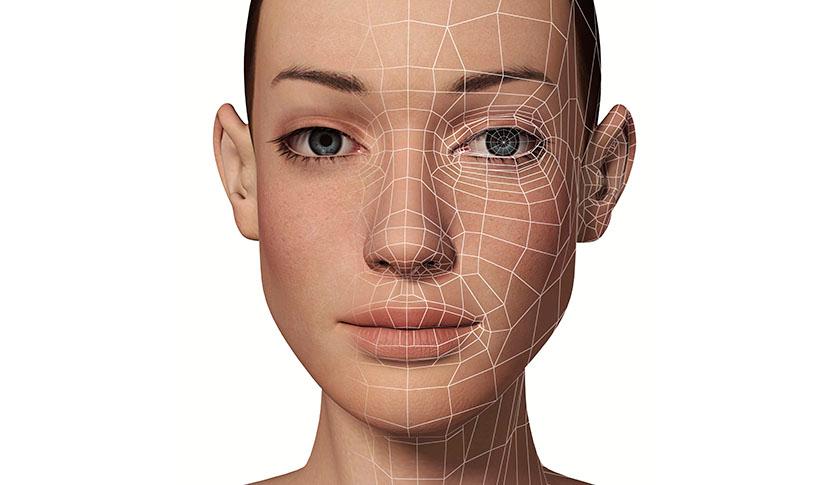
Female Head with biometric facial mapPhotograph by Alfred Pasieka — Getty Images/Science Photo Libra

In the old days, when a store caught someone stealing, a detective would march the thief to a backroom and take his picture with a Polaroid camera. The photo would be added to the retailer’s in-house rogues gallery to help store security keep an eye out for bad guys.

But earlier this year, Walmart (WMT) showed how times have changed. It tested a system that scanned the face of everyone entering several of its stores, identified suspected shoplifters, and instantly alerted store security on their mobile devices.

The potential of such facial recognition technology has been discussed for years. But now some stores are actually using it.

Walmart’s experiment, which it ended after several months, highlights the powerful high-tech tools available to retailers to reduce theft. However, it also raises questions about whether stores should have to follow rules when using the technology to protect shoppers’ privacy.

“Put a grid on their face”

Joe Rosenkrantz, CEO of FaceFirst, a Southern California company that sells a facial recognition system to retailers, promises to “transform security at every store.” He says FaceFirst software is being used by several Fortune 500 retailers, which he declined to name because on non-disclosure agreements.

“The system is smart enough to notify a loss prevention associate on their iPhone within seven seconds,” says Rosenkrantz,

The automated notifications can include a profile of the suspect, as well as a “corporate directive” of how to respond. All store security has to do is scout the aisles to find the person in question and confront them.

Retailers using FaceFirst do not, however, save a photo record of everyone coming in the store. Instead, the software is set to find matches against an existing gallery of alleged offenders. Images of innocent shoppers are discarded. Stores only retain photos of suspects (or people who resemble them) who security staff have previously flagged.

“We give them a mobile app,” says Rosenkrantz. “It makes it so they can zap someone’s face. It puts a grid on their face [for future identification]”

Images from FaceFirst’s marketing material show how this might work in practice. Here is a screenshot from its brochure for retailers (the company also sells software to law enforcement and the military):

Here is another image from the same brochure, which depicts how the technology can match an image of someone who enters a store against the store’s database, and then transmit the relevant information to a computer or phone:

Screenshot 2015-10-29 02.36.42

So who is actually using FaceFirst? The topic is a sensitive one and retailers are skittish about discussing it.

A handful of national retailers contacted by Fortune revealed little: Home Depot says it does not use face scanning software. Walgreens says it has no contract with FaceFirst, and added it does not discuss specific security measures. Target, meanwhile, would not confirm or deny if the company uses the software.

The only company that acknowledged using the software was Walmart. According to a spokesperson, the retailer tested facial recognition software in stores across several states for several months, but then discontinued the practice earlier this year.

“We were looking for a concrete business rationale … It didn’t have the ROI,” or return on investment, the spokesperson says.

The explanation suggests that any savings Walmart had by reducing shoplifting failed to offset the cost of deploying and using the technology. The company declined to discuss any specifics about how many suspected shoplifters it identified or describe the accuracy of the software.

Biometrics and who owns your face

Facial recognition software is hardly new. Casinos have used it for years as has the military and law enforcement, but it has remained controversial A program giving facial recognition-equipped iPads and smartphones to all San Diego police officers is under scrutiny, in part due to a New York Times report that suggested police may be forcing innocent people to be scanned.

Meanwhile, tech giants like Facebook (FB) and Google are becoming increasingly accurate at automatic face “tagging.” Their computers learn to recognize individuals based on certain features in their face by creating a “faceprint.” The services can then prompt users to identify people in social media photos. In some cases like Facebook’s “Moments”, they simply add names to faces automatically.

However, not everyone is comfortable with companies using their face like this. In Illinois, consumers have filed class action suits against Facebook and photo-service Shutterfly for violating a state law related to biometrics. In European countries and Canada, meanwhile, automated photo tagging features are unavailable because regulators are uneasy about their privacy implications.

Such controversies over facial recognition could become more common. The reason is that the technology has improved significantly in recent years, leading more companies to adopt it for consumer purposes. Although the technology is most commonly used by retailers for detecting shoplifters, some stores are exploring whether facial recognition could serve as a way to identify and reward loyal customers. Indeed, a site called “Facedeals” invites people to submit a scan of their face in return for discounts from local businesses.

Despite the marketing, however, the accuracy of facial recognition in retail stores is unclear. While Rosenkrantz, of FaceFirst, says his company’s software is accurate in the 98% to 100% range, others are skeptical. A source familiar with experiments by major retailers and unaffiliated with FaceFirst says that companies have concluded that facial recognition is “not ready for prime time.”

This may because computer computers can have trouble recognizing faces when shadows obscure them or when people wear hats or glasses. The success rate also depends on having good quality photos of suspects to compare to. In the case of retailers, FaceFirst offers to help its clients build an initial database of suspects based on a store’s existing photo records (including Polaroids).

Whatever the state of the technology, however, U.S. retailers are likely to continue their experiments, especially as there are few laws that prevent them from doing so.

Legal vacuum

“The whole issue of facial recognition and biometrics has been discussed for a while, and there’s no consensus of how the privacy structure should work,” says Jeffrey Neuburger, a lawyer who heads the privacy and data security group at Proskauer in New York.

He explained that the debate turns on whether companies must notify shoppers that they are using the technology, or offer opt-out options. However, an initiative to create rules fell apart last summer when nine privacy groups quit a Commerce Department working group, saying industry would not agree to even basic boundaries on facial recognition. Since then, civil liberties groups like the Electronic Frontier Foundation continue to decry the lack of oversight.

A spokesperson for the the Commerce Department group that is overseeing the policy process said in a statement: “While NTIA is disappointed that some stakeholders chose to stop participating in this effort aimed at developing a privacy code of conduct related to commercial uses of facial recognition technology, other stakeholders told NTIA that they want to continue to make progress on this issue and so the process is moving forward. In response, NTIA held a meeting on July 28, and we expect to convene another meeting in December or early January.”

As for Wal-Mart, the company declined to comment on the privacy implications of the technology.

The upshot is that, for now, companies have more or less free rein to operate as they wish in the U.S. when it comes to using facial recognition tools. The only exceptions are Illinois and Texas, where state laws limit collection of biometric data. California, which is typically active on consumer privacy issues, is considering a bill that would prevent online vendors from collecting students’ biometric information, but does not have more wide-ranging laws.

As for the federal government, Neuburger says the Federal Trade Commission could conceivably try to regulate the industry under its unfair trade practice authority, but that the agency is not able to create news laws on its own. Meanwhile, he says Congress is unlikely to pass sweeping laws about privacy and facial recognition anytime soon.

“I don’t think people are fully aware of it,” Neuburger says. “People see tagging in Facebook and Shutterfly. But I don’t think they’re fully aware that when they walk into a retailer, their face might be scanned and added to a database.”

This story was updated on 11/10 to include Commerce Department statement.

To learn more about how tech is changing daily life, see how Facebook’s CEO wants to create AI systems “that are better than humans.”

About the Author
Jeff John Roberts
By Jeff John RobertsEditor, Finance and Crypto
LinkedIn iconTwitter icon

Jeff John Roberts is the Finance and Crypto editor at Fortune, overseeing coverage of the blockchain and how technology is changing finance.

See full bioRight Arrow Button Icon

Latest in Tech

Finance
Lorem ipsum dolor sit amet, consectetur adipiscing elit, sed do eiusmod tempor incididunt ut labore et dolore magna aliqua. Ut enim ad minim veniam
By Fortune Editors
October 20, 2025
Finance
Lorem ipsum dolor sit amet, consectetur adipiscing elit, sed do eiusmod tempor incididunt ut labore et dolore magna aliqua. Ut enim ad minim veniam
By Fortune Editors
October 20, 2025
Finance
Lorem ipsum dolor sit amet, consectetur adipiscing elit, sed do eiusmod tempor incididunt ut labore et dolore magna aliqua. Ut enim ad minim veniam
By Fortune Editors
October 20, 2025
Finance
Lorem ipsum dolor sit amet, consectetur adipiscing elit, sed do eiusmod tempor incididunt ut labore et dolore magna aliqua. Ut enim ad minim veniam
By Fortune Editors
October 20, 2025
Finance
Lorem ipsum dolor sit amet, consectetur adipiscing elit, sed do eiusmod tempor incididunt ut labore et dolore magna aliqua. Ut enim ad minim veniam
By Fortune Editors
October 20, 2025
Finance
Lorem ipsum dolor sit amet, consectetur adipiscing elit, sed do eiusmod tempor incididunt ut labore et dolore magna aliqua. Ut enim ad minim veniam
By Fortune Editors
October 20, 2025

Most Popular

Finance
Lorem ipsum dolor sit amet, consectetur adipiscing elit, sed do eiusmod tempor incididunt ut labore et dolore magna aliqua. Ut enim ad minim veniam
By Fortune Editors
October 20, 2025
Finance
Lorem ipsum dolor sit amet, consectetur adipiscing elit, sed do eiusmod tempor incididunt ut labore et dolore magna aliqua. Ut enim ad minim veniam
By Fortune Editors
October 20, 2025
Finance
Lorem ipsum dolor sit amet, consectetur adipiscing elit, sed do eiusmod tempor incididunt ut labore et dolore magna aliqua. Ut enim ad minim veniam
By Fortune Editors
October 20, 2025
Finance
Lorem ipsum dolor sit amet, consectetur adipiscing elit, sed do eiusmod tempor incididunt ut labore et dolore magna aliqua. Ut enim ad minim veniam
By Fortune Editors
October 20, 2025
Finance
Lorem ipsum dolor sit amet, consectetur adipiscing elit, sed do eiusmod tempor incididunt ut labore et dolore magna aliqua. Ut enim ad minim veniam
By Fortune Editors
October 20, 2025
Finance
Lorem ipsum dolor sit amet, consectetur adipiscing elit, sed do eiusmod tempor incididunt ut labore et dolore magna aliqua. Ut enim ad minim veniam
By Fortune Editors
October 20, 2025
Fortune Secondary Logo
Rankings
  • 100 Best Companies
  • Fortune 500
  • Global 500
  • Fortune 500 Europe
  • Most Powerful Women
  • World's Most Admired Companies
  • See All Rankings
  • Lists Calendar
Sections
  • Finance
  • Fortune Crypto
  • Features
  • Leadership
  • Health
  • Commentary
  • Success
  • Retail
  • Mpw
  • Tech
  • Lifestyle
  • CEO Initiative
  • Asia
  • Politics
  • Conferences
  • Europe
  • Newsletters
  • Personal Finance
  • Environment
  • Magazine
  • Education
Customer Support
  • Frequently Asked Questions
  • Customer Service Portal
  • Privacy Policy
  • Terms Of Use
  • Single Issues For Purchase
  • International Print
Commercial Services
  • Advertising
  • Fortune Brand Studio
  • Fortune Analytics
  • Fortune Conferences
  • Business Development
  • Group Subscriptions
About Us
  • About Us
  • Press Center
  • Work At Fortune
  • Terms And Conditions
  • Site Map
  • About Us
  • Press Center
  • Work At Fortune
  • Terms And Conditions
  • Site Map
  • Facebook icon
  • Twitter icon
  • LinkedIn icon
  • Instagram icon
  • Pinterest icon

Latest in Tech

Bridgit Mendler speaks on stage at Fortune Brainstorm Tech 2026 in Aspen, Colorado.
Startups & VentureBrainstorm Tech
The space economy’s next frontier is in ground infrastructure, Northwood Space CEO says
By Sebastian HerreraJune 10, 2026
2 hours ago
Digital sovereignty isn’t the same thing as digital isolation. Asia’s governments should be careful
Commentarydata sovereignty
Digital sovereignty isn’t the same thing as digital isolation. Asia’s governments should be careful
By Leonard LimJune 10, 2026
6 hours ago
Microsoft co-founder Bill Gates (C) arrives for a closed-door interview with the House Oversight Committee on Capitol Hill in Washington, DC, on June 10, 2026.
LawBill Gates
Gates testifies on Epstein: previous Fortune investigation reveals payments to his ex-girlfriend, $1M Microsoft deal
By Eva Roytburg, Joey Cappelletti, Hannah Schoenbaum and The Associated PressJune 10, 2026
7 hours ago
How the World Cup is a high-stakes stage for Big Tech’s AI push
NewslettersCIO Intelligence
How the World Cup is a high-stakes stage for Big Tech’s AI push
By John KellJune 10, 2026
8 hours ago
Anthropic accused of ‘secret sabotage’ as Claude Fable 5 silently limits capabilities for AI researchers and developers
AIAnthropic
Anthropic accused of ‘secret sabotage’ as Claude Fable 5 silently limits capabilities for AI researchers and developers
By Sharon GoldmanJune 10, 2026
10 hours ago
A 5-week course and a guaranteed job: Meta commits $115 million to solve the skilled-trades shortage stalling its AI build-out
Future of WorkMeta
A 5-week course and a guaranteed job: Meta commits $115 million to solve the skilled-trades shortage stalling its AI build-out
By Jacqueline MunisJune 10, 2026
10 hours ago

Most Popular

Pentagon accuses Alibaba, Baidu and BYD, three of China's biggest companies, of supporting the Chinese military
Asia
Pentagon accuses Alibaba, Baidu and BYD, three of China's biggest companies, of supporting the Chinese military
By Kate O'Keeffe and BloombergJune 8, 2026
2 days ago
Analysts expected oil to surge above $200 but China has quietly kept prices half of that—and can’t for much longer
Energy
Analysts expected oil to surge above $200 but China has quietly kept prices half of that—and can’t for much longer
By Sasha RogelbergJune 10, 2026
9 hours ago
Costco CEO Ron Vachris rose from forklift driver to the C-suite without a college degree: ‘Don’t chase a title’ is the career advice that got him there
Success
Costco CEO Ron Vachris rose from forklift driver to the C-suite without a college degree: ‘Don’t chase a title’ is the career advice that got him there
By Preston ForeJune 8, 2026
3 days ago
A ‘MAGA Warrior’ Texas ag chief is publicly blasting the USDA over a flesh-eating pest threatening America's beef supply
North America
A ‘MAGA Warrior’ Texas ag chief is publicly blasting the USDA over a flesh-eating pest threatening America's beef supply
By Marco Quiroz-GutierrezJune 10, 2026
18 hours ago
Marc Lore’s robots make 500 burrito bowls an hour. A human can make 45
Innovation
Marc Lore’s robots make 500 burrito bowls an hour. A human can make 45
By Amanda GerutJune 9, 2026
1 day ago
Current price of oil as of June 10, 2026
Personal Finance
Current price of oil as of June 10, 2026
By Joseph HostetlerJune 10, 2026
14 hours ago

© 2026 Fortune Media IP Limited. All Rights Reserved. Use of this site constitutes acceptance of our Terms of Use and Privacy Policy | CA Notice at Collection and Privacy Notice | Do Not Sell/Share My Personal Information
FORTUNE is a trademark of Fortune Media IP Limited, registered in the U.S. and other countries. FORTUNE may receive compensation for some links to products and services on this website. Offers may be subject to change without notice.