• Home
  • Latest
  • Fortune 500
  • Finance
  • Tech
  • Leadership
  • Lifestyle
  • Rankings
  • Multimedia
TechGoogle

Google’s victory in book-scanning case is a huge win for fair use

By
Mathew Ingram
Mathew Ingram
Down Arrow Button Icon
By
Mathew Ingram
Mathew Ingram
Down Arrow Button Icon
October 16, 2015, 4:49 PM ET
Facebook And Other Apps For iPhone And HTC Mobile Handsets
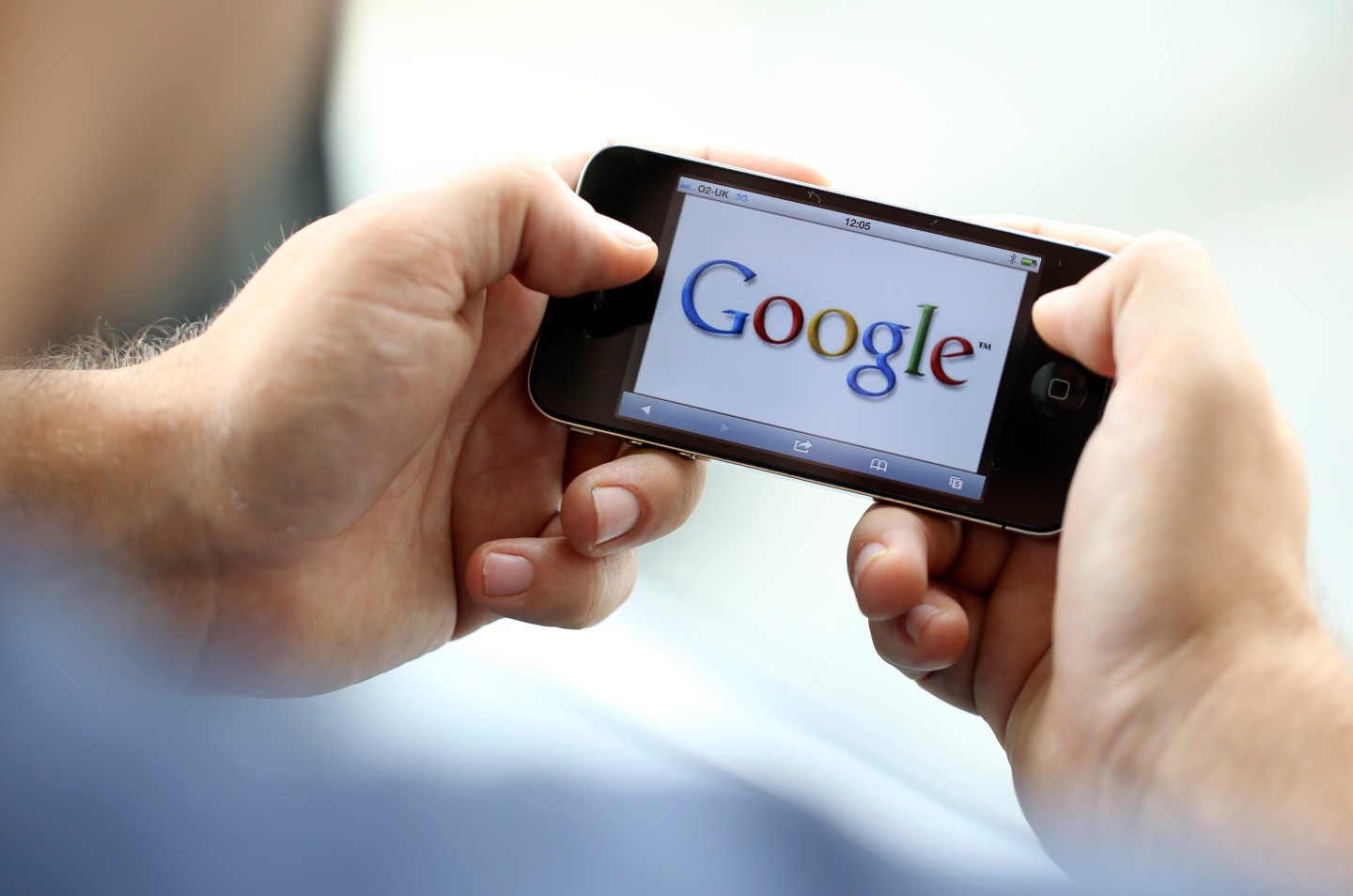
The Google Inc. company logo is seen on an Apple Inc. iPhone 4 smartphone in this arranged photograph in London, U.K., on Wednesday, Aug. 29, 2012. Apple Inc. is seeking a U.S. sales ban on eight models of Samsung Electronics Co. smartphones and the extension of a preliminary ban on a tablet computer after winning a patent trial against the South Korean company. Photographer: Chris Ratcliffe/Bloomberg via Getty ImagesChris Ratcliffe — Bloomberg via Getty Images

Google won a decisive victory on Friday in a copyright-infringement case that the Authors Guild originally launched almost a decade ago. A federal appeals court ruled that the company’s book-scanning project, which has turned millions of books into searchable digital files, is entitled to the full protection of the “fair use” clause in copyright law.

The case is hugely important, not just for Google (now part of a larger holding company called Alphabet) and the authors whose works are being digitized, but for the principle of fair use itself. Copyright law may be murky and difficult to pin down at the best of times, but interpreting the concept of fair use often makes regular copyright law look like a day at the beach.

That’s because what qualifies as fair use—which theoretically lets anyone use copyrighted content without having to get permission from the creator or rights-holder—isn’t specifically spelled out in federal copyright law. It’s something that ultimately has to be decided by a court, and even then the judges have to consider four factors before they can come to a decision. Those factors are:

  1. The purpose of the infringing use, specifically whether it qualifies as “transformative”
  2. The nature of the original content (i.e., whether it is artistic or commercial)
  3. The amount and “substantiality” of the original content that is used in the derivative work
  4. Whether the infringing use will affect the market for the original product or content

What’s interesting about the Google case is that this isn’t just some random website using an animated GIF of a football game — as happened recently with Deadspin, which got the site’s Twitter account suspended briefly (incorrectly, I would argue). This is a $450-billion web giant copying millions of books, and then using them in part to feed its massive, money-spinning search empire.

Does fair use apply to web giants?

The part about Google being a multibillion-dollar entity was clearly what caused the Authors Guild to fight the case for so long—arguably long after it had already become obvious that it would probably lose. For the Guild, this was a classic case of David versus Goliath, with book authors representing the David character and Google the clearly evil Goliath using the work of others for its own purposes.

The appeals court, however, pointed out in its decision that the purpose of copyright law is not to guarantee authors a living, nor is it to give them exclusive control over who uses their work and how. The purpose of the law is to provide an incentive for people to create artistic works because doing this benefits society—and ultimately, the social benefit of Google Books outweighed the infringement aspect.

The money quote from the Second Circuit's Google Books decision. #copyright pic.twitter.com/CAFn9zLdFu

— Bill Donahue (@Bill__Donahue) October 16, 2015

The key part of the ruling is that the book-scanning project was fundamentally “transformative” in nature. In other words, Google isn’t just copying the books it scans and indexes — it uses those copies to provide searchable “snippets” or short sections of each work so that users can find books more easily.

Book search is a public good

What Google does is significantly different from simply copying books wholesale and then putting them on the Internet, the court said. And it provides a clear social benefit. It also provides a potential benefit to authors themselves, since it makes their work much easier to find, which is why some authors opposed the long-running case launched by their union. But the Guild refused to give up.

The Guild says that it plans to appeal the case to the Supreme Court, but copyright experts like law professor James Grimmelmann say it is unlikely that they will be successful, given the history of previous decisions in the case.

https://twitter.com/carlmalamud/status/655039831462948864

If the fair use aspect of Google Books wasn’t already obvious, a recent decision by another federal court—in a case related to the Authors Guild vs. Google—showed that the Guild’s challenge was likely to fail. In that case, the authors’ group sued the Hathi Trust, a collective of universities that partnered with Google on the scanning project. In 2012, a federal court rejected the Guild’s argument and found that what Google was doing clearly qualified as fair use.

This is the second time that a Google (GOOG) service has been ruled to be fair use (if you don’t count the previous decisions in the Authors Guild case). In 2007, the company won a case launched by the adult entertainment company Perfect 10, which argued that Google was infringing its copyright by posting thumbnail images of its photos. The court decided that this use was also “transformative” and that the benefits of providing a searchable index of thumbnails outweighed any infringement.

The Google Books decision doesn’t mean that the web giant can do whatever it wants with other people’s content and have that covered by fair use. But it does invalidate the argument that something done by a commercial entity can’t possibly qualify as fair use. And that’s an important point at a time when copyright holders seem to have all the power, and fair use often gets overlooked because it is seen as too confusing and not relevant.

You can follow Mathew Ingram on Twitter at @mathewi, and read all of his posts here or via his RSS feed. And please subscribe to Data Sheet, Fortune’s daily newsletter on the business of technology.


About the Author
By Mathew Ingram
See full bioRight Arrow Button Icon

Latest in Tech

Finance
Lorem ipsum dolor sit amet, consectetur adipiscing elit, sed do eiusmod tempor incididunt ut labore et dolore magna aliqua. Ut enim ad minim veniam
By Fortune Editors
October 20, 2025
Finance
Lorem ipsum dolor sit amet, consectetur adipiscing elit, sed do eiusmod tempor incididunt ut labore et dolore magna aliqua. Ut enim ad minim veniam
By Fortune Editors
October 20, 2025
Finance
Lorem ipsum dolor sit amet, consectetur adipiscing elit, sed do eiusmod tempor incididunt ut labore et dolore magna aliqua. Ut enim ad minim veniam
By Fortune Editors
October 20, 2025
Finance
Lorem ipsum dolor sit amet, consectetur adipiscing elit, sed do eiusmod tempor incididunt ut labore et dolore magna aliqua. Ut enim ad minim veniam
By Fortune Editors
October 20, 2025
Finance
Lorem ipsum dolor sit amet, consectetur adipiscing elit, sed do eiusmod tempor incididunt ut labore et dolore magna aliqua. Ut enim ad minim veniam
By Fortune Editors
October 20, 2025
Finance
Lorem ipsum dolor sit amet, consectetur adipiscing elit, sed do eiusmod tempor incididunt ut labore et dolore magna aliqua. Ut enim ad minim veniam
By Fortune Editors
October 20, 2025

Most Popular

Finance
Lorem ipsum dolor sit amet, consectetur adipiscing elit, sed do eiusmod tempor incididunt ut labore et dolore magna aliqua. Ut enim ad minim veniam
By Fortune Editors
October 20, 2025
Finance
Lorem ipsum dolor sit amet, consectetur adipiscing elit, sed do eiusmod tempor incididunt ut labore et dolore magna aliqua. Ut enim ad minim veniam
By Fortune Editors
October 20, 2025
Finance
Lorem ipsum dolor sit amet, consectetur adipiscing elit, sed do eiusmod tempor incididunt ut labore et dolore magna aliqua. Ut enim ad minim veniam
By Fortune Editors
October 20, 2025
Finance
Lorem ipsum dolor sit amet, consectetur adipiscing elit, sed do eiusmod tempor incididunt ut labore et dolore magna aliqua. Ut enim ad minim veniam
By Fortune Editors
October 20, 2025
Finance
Lorem ipsum dolor sit amet, consectetur adipiscing elit, sed do eiusmod tempor incididunt ut labore et dolore magna aliqua. Ut enim ad minim veniam
By Fortune Editors
October 20, 2025
Finance
Lorem ipsum dolor sit amet, consectetur adipiscing elit, sed do eiusmod tempor incididunt ut labore et dolore magna aliqua. Ut enim ad minim veniam
By Fortune Editors
October 20, 2025
Fortune Secondary Logo
Rankings
  • 100 Best Companies
  • Fortune 500
  • Global 500
  • Fortune 500 Europe
  • Most Powerful Women
  • Future 50
  • World’s Most Admired Companies
  • See All Rankings
Sections
  • Finance
  • Fortune Crypto
  • Features
  • Leadership
  • Health
  • Commentary
  • Success
  • Retail
  • Mpw
  • Tech
  • Lifestyle
  • CEO Initiative
  • Asia
  • Politics
  • Conferences
  • Europe
  • Newsletters
  • Personal Finance
  • Environment
  • Magazine
  • Education
Customer Support
  • Frequently Asked Questions
  • Customer Service Portal
  • Privacy Policy
  • Terms Of Use
  • Single Issues For Purchase
  • International Print
Commercial Services
  • Advertising
  • Fortune Brand Studio
  • Fortune Analytics
  • Fortune Conferences
  • Business Development
About Us
  • About Us
  • Editorial Calendar
  • Press Center
  • Work At Fortune
  • Diversity And Inclusion
  • Terms And Conditions
  • Site Map
Fortune Secondary Logo
  • About Us
  • Editorial Calendar
  • Press Center
  • Work At Fortune
  • Diversity And Inclusion
  • Terms And Conditions
  • Site Map
  • Facebook icon
  • Twitter icon
  • LinkedIn icon
  • Instagram icon
  • Pinterest icon

Latest in Tech

daron acemoglu
AILayoffs
The Nobel laureate who co-wrote ‘Why Nations Fail’ warns U.S. democracy won’t survive unless these two things change
By Jake AngeloFebruary 22, 2026
14 hours ago
jesse
CommentaryDEI
A decade ago, I had a front row seat as Jesse Jackson held big tech firms accountable for being overwhelmingly white and male
By Brennan Nevada JohnsonFebruary 22, 2026
14 hours ago
Man wearing a suit awkwardly takes a video call on a laptop
Future of WorkInterview
Recruiter reveals broken Zoom interview etiquette: bathrobes, yoga, and outsourcing thinking to AI
By Nick LichtenbergFebruary 22, 2026
15 hours ago
werfel
CommentaryTaxes
Former IRS Commissioner: Here’s how we used AI to create immediate value when taxpayers scrutinized every dollar
By Danny WerfelFebruary 22, 2026
16 hours ago
LawMedia
DOJ probes Netflix’s power over filmmakers in Warner deal review
By Josh Sisco and BloombergFebruary 21, 2026
1 day ago
Big TechTech
Microsoft CEO Satya Nadella says Bill Gates told him his big bet on OpenAI would be a flop: ‘Yeah, you’re going to burn this billion dollars’
By Marco Quiroz-GutierrezFebruary 21, 2026
1 day ago

Most Popular

placeholder alt text
Innovation
The U.S. spent $30 billion to ditch textbooks for laptops and tablets: The result is the first generation less cognitively capable than their parents
By Sasha RogelbergFebruary 21, 2026
2 days ago
placeholder alt text
Big Tech
Peter Thiel and other tech billionaires are publicly shielding their children from the products that made them rich
By Marco Quiroz-GutierrezFebruary 21, 2026
2 days ago
placeholder alt text
Economy
New Fed report proves Milton Friedman and Joe Biden understood something vital about immigration—and explains why growth may sputter under Trump
By Shawn TullyFebruary 22, 2026
15 hours ago
placeholder alt text
Startups & Venture
'I have a chip on my shoulder.' Phoebe Gates wants her $185 million AI startup Phia to succeed with 'no ties to my privilege or my last name'
By Sydney LakeFebruary 21, 2026
2 days ago
placeholder alt text
Success
40% of Stanford undergrads receive disability accommodations—but it's become a college-wide phenomenon as Gen Z try to succeed in the current climate
By Preston ForeFebruary 21, 2026
1 day ago
placeholder alt text
Economy
Trump's sudden decision to hike his new tariff rate to 15% is 'something of an eff you' to the U.K., which thought it had a better deal for 10%
By Jason MaFebruary 21, 2026
1 day ago

© 2026 Fortune Media IP Limited. All Rights Reserved. Use of this site constitutes acceptance of our Terms of Use and Privacy Policy | CA Notice at Collection and Privacy Notice | Do Not Sell/Share My Personal Information
FORTUNE is a trademark of Fortune Media IP Limited, registered in the U.S. and other countries. FORTUNE may receive compensation for some links to products and services on this website. Offers may be subject to change without notice.