• Home
  • Latest
  • Fortune 500
  • Finance
  • Tech
  • Leadership
  • Lifestyle
  • Rankings
  • Multimedia
CommentaryAmazon

How a ruthless workplace culture kills innovation

By
Didier Elzinga
Didier Elzinga
Down Arrow Button Icon
By
Didier Elzinga
Didier Elzinga
Down Arrow Button Icon
August 20, 2015, 10:28 AM ET
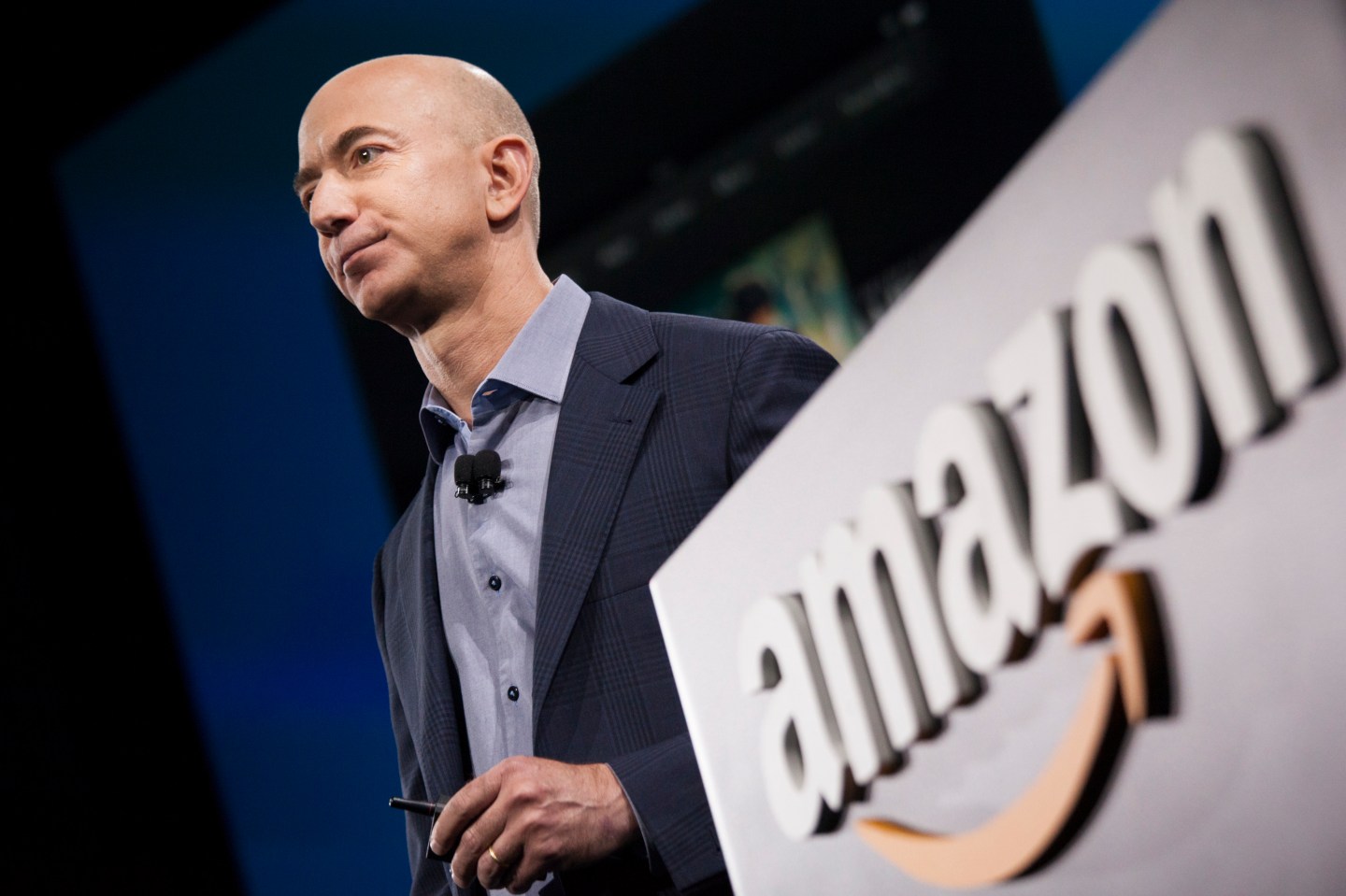
Amazon Unveils Its First Smartphone
Amazon.com founder and CEO Jeff Bezos presents the company's first smartphone, the Fire Phone, on June 18, 2014 in Seattle, Washington. Photograph by David Ryder — Getty Images

In a 2010 commencement speech at Princeton University, Amazon CEO Jeff Bezos said: “Cleverness is a gift, kindness is a choice. Gifts are easy — they’re given after all. Choices can be hard. You can seduce yourself with your gifts if you’re not careful, and if you do, it’ll probably be to the detriment of your choices.”

Bezos’ remarks is an insightful and powerful call to consider the choices that we make and the impact they have. This is a CEO who just ‘gets it,’ but interestingly enough, The New York Times overlooked this part of his Princeton speech when it described how a ruthless Bezos did not “beg or appeal to sentiment” in getting his grandmother to quit smoking. “He just did the math, calculating that every puff cost her a few minutes,” The New York Timesreported.

It’s hard to know what is going on at Amazon, and I’m not here to debate whether or not this is a true representation of the company that exists today. I really could not tell you.

However, what interests me is debunking the myth being perpetuated that say in order to be disruptive like Amazon (AMZN), one has to act like the company that The New York Times piece reported that it is, whether real or imagined.

Having a ruthless culture is about efficiency, and that can work for some companies. But ruthlessness is not innovation. It does not feed disruption.

I can tell you that a number of companies have been hugely successful, disrupting long standing industries, without the need to be culturally ruthless. Airbnb, Adobe, Slack, SquareSpace and Warby Parker are just a few that equate people with profit. No one would argue that they aren’t disruptive.

These companies are thriving because they actively cultivate and foster environments where people matter.

According to Culture Amp’s 2015 Benchmark report — which surveyed 60,000 employees across 100 of the world’s most innovative tech companies — employees at these companies are far more positive than those in other industries.

In particular, they are more likely to recommend their company as a great place to work (83% vs. 73% in other industries) and are more motivated to put in discretionary effort (70% vs. 57 % in other industries).

One great way to assess if an organization is likely to be innovative or disruptive is to ask employees if they agree with the statement “We are encouraged to be innovative even though some of our initiatives may not succeed.” Being able to take risks, being able to fail is fundamental to creating an environment where innovation can take place.

Neuroscience has also proven that cultures that foster “fear,” or are not open to risk, can actually affect “brain plasticity,” making “rewiring” more difficult. Organizational consultant Kevin Weitz says neuroscience has shown that the “hardwiring” of a limbic-driven fear response in organizations suggests that over many years employees’ brains have become acutely trained to be fearful and cautious.

Most disruptive tech companies get that they need to embrace risk-taking — internally and externally. That is the freedom to fail. What the Valley does really well — and is talked about in the commentary on Amazon — is give those people taking risks the data they need to assess what works and what doesn’t.

And on this we can all agree — data is the new lifeblood of companies. What we are seeing across hundreds of the world’s most innovative companies is not the result of ruthless, Darwinian corporations, but deeply innovative and risk-taking cultures. These are two opposed goals — not the same thing.

And to succeed in creating disruptive organizations in the face of increased competition for both tech talent and market share, we need to foster an environment that values its people.

Those who don’t act accordingly will run the risk of losing people to companies that value their employees more.

And who would choose to stay with that kind of an operation?

“I know I would leave such a company,” Bezos said in a memo to the Amazon staff that was a response to the article. Anyone opting to work for the company depicted in The New York Times piece, he added, would be crazy to stay.

On this, he is right.

Didier Elzinga is CEO and co-founder of Culture Amp, a culture analytics platform.

About the Author
By Didier Elzinga
See full bioRight Arrow Button Icon

Latest in Commentary

Dr. Javier Cárdenas is the director of the Rockefeller Neuroscience Institute NeuroPerformance Innovation Center.
Commentaryconcussions
Fists, not football: There is no concussion protocol for domestic violence survivors
By Javier CárdenasDecember 12, 2025
22 minutes ago
Gary Locke is the former U.S. ambassador to China, U.S. secretary of commerce, and governor of Washington.
CommentaryChina
China is winning the biotech race. Patent reform is how we catch up
By Gary LockeDecember 12, 2025
27 minutes ago
millennial
CommentaryConsumer Spending
Meet the 2025 holiday white whale: the millennial dad spending $500+ per kid
By Phillip GoerickeDecember 12, 2025
37 minutes ago
Sarandos
CommentaryAntitrust
Netflix, Warner, Paramount and antitrust: Entertainment megadeal’s outcome must follow the evidence, not politics or fear of integration
By Satya MararDecember 12, 2025
2 hours ago
CommentaryLeadership
Leading the agentic enterprise: What the next wave of AI demands from CEOs
By François Candelon, Amartya Das, Sesh Iyer, Shervin Khodabandeh and Sam RansbothamDecember 12, 2025
4 hours ago
Sarandos
CommentaryAntitrust
Netflix’s takeover of Warner Brothers is a nightmare for consumers
By Ike BrannonDecember 11, 2025
1 day ago

Most Popular

placeholder alt text
Success
At 18, doctors gave him three hours to live. He played video games from his hospital bed—and now, he’s built a $10 million-a-year video game studio
By Preston ForeDecember 10, 2025
2 days ago
placeholder alt text
Success
Palantir cofounder calls elite college undergrads a ‘loser generation’ as data reveals rise in students seeking support for disabilities, like ADHD
By Preston ForeDecember 11, 2025
23 hours ago
placeholder alt text
Investing
Baby boomers have now 'gobbled up' nearly one-third of America's wealth share, and they're leaving Gen Z and millennials behind
By Sasha RogelbergDecember 8, 2025
4 days ago
placeholder alt text
Economy
‘We have not seen this rosy picture’: ADP’s chief economist warns the real economy is pretty different from Wall Street’s bullish outlook
By Eleanor PringleDecember 11, 2025
1 day ago
placeholder alt text
Uncategorized
Transforming customer support through intelligent AI operations
By Lauren ChomiukNovember 26, 2025
16 days ago
placeholder alt text
Success
What it takes to be wealthy in America: $2.3 million, Charles Schwab says
By Sydney LakeDecember 11, 2025
1 day ago
Rankings
  • 100 Best Companies
  • Fortune 500
  • Global 500
  • Fortune 500 Europe
  • Most Powerful Women
  • Future 50
  • World’s Most Admired Companies
  • See All Rankings
Sections
  • Finance
  • Leadership
  • Success
  • Tech
  • Asia
  • Europe
  • Environment
  • Fortune Crypto
  • Health
  • Retail
  • Lifestyle
  • Politics
  • Newsletters
  • Magazine
  • Features
  • Commentary
  • Mpw
  • CEO Initiative
  • Conferences
  • Personal Finance
  • Education
Customer Support
  • Frequently Asked Questions
  • Customer Service Portal
  • Privacy Policy
  • Terms Of Use
  • Single Issues For Purchase
  • International Print
Commercial Services
  • Advertising
  • Fortune Brand Studio
  • Fortune Analytics
  • Fortune Conferences
  • Business Development
About Us
  • About Us
  • Editorial Calendar
  • Press Center
  • Work At Fortune
  • Diversity And Inclusion
  • Terms And Conditions
  • Site Map

© 2025 Fortune Media IP Limited. All Rights Reserved. Use of this site constitutes acceptance of our Terms of Use and Privacy Policy | CA Notice at Collection and Privacy Notice | Do Not Sell/Share My Personal Information
FORTUNE is a trademark of Fortune Media IP Limited, registered in the U.S. and other countries. FORTUNE may receive compensation for some links to products and services on this website. Offers may be subject to change without notice.










