• Home
  • Latest
  • Fortune 500
  • Finance
  • Tech
  • Leadership
  • Lifestyle
  • Rankings
  • Multimedia
LeadershipRoad to Wealth

China’s stock market roller coaster: The lesson from Mao Zedong that Beijing is forgetting

By
Minxin Pei
Minxin Pei
Down Arrow Button Icon
By
Minxin Pei
Minxin Pei
Down Arrow Button Icon
August 19, 2015, 10:02 AM ET
CHINA-ECONOMY-STOCKS
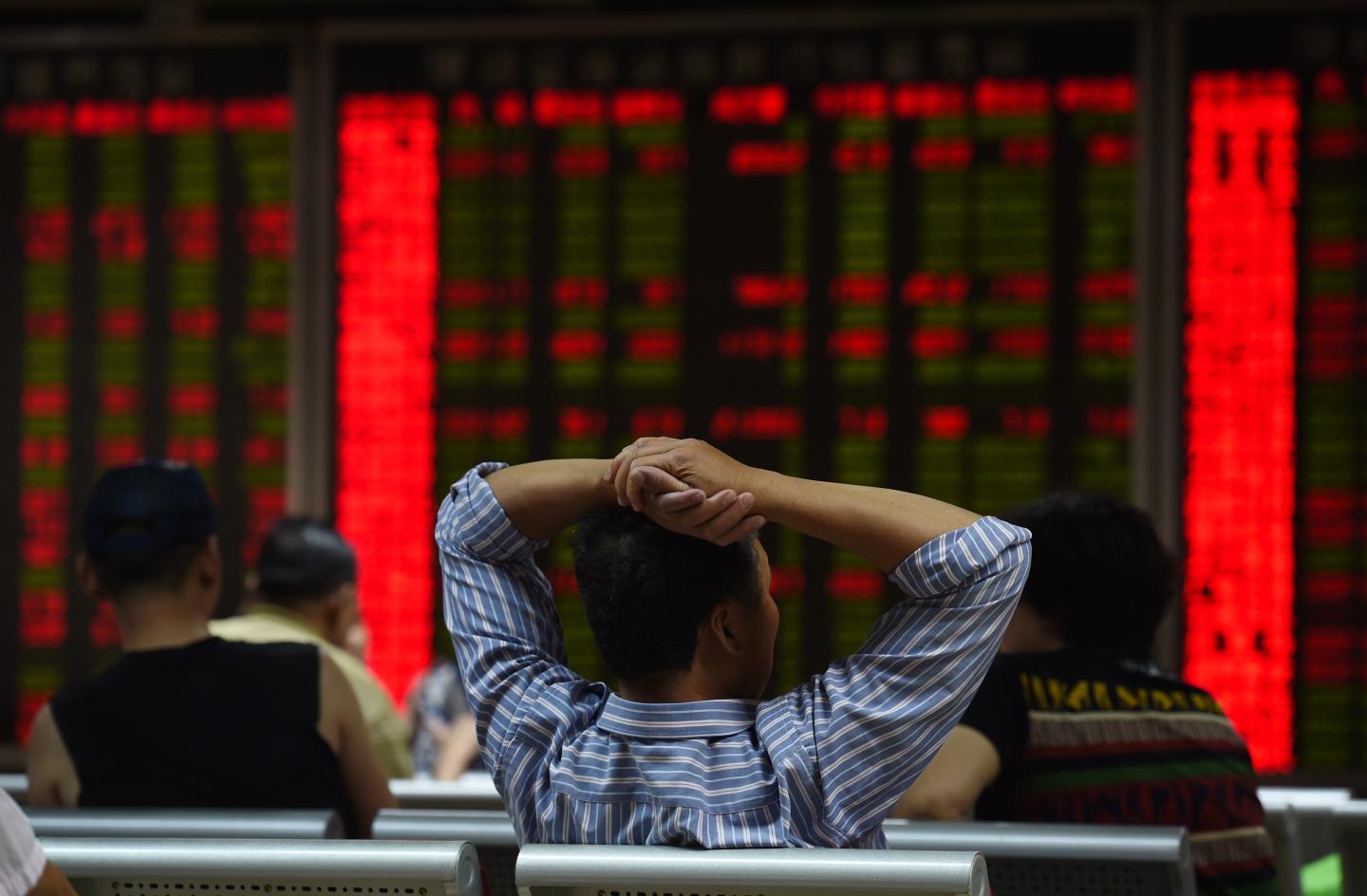
An investor looks at screens showing stock market movements at a securities company in Beijing on July 9, 2015. China's market regulator has barred major shareholders and executives of listed companies from selling their shares for the next six months, it said in a statement, the latest government action to stem a slide in the markets. AFP PHOTO / GREG BAKER (Photo credit should read GREG BAKER/AFP/Getty Images)Photograph by Greg Baker — AFP/Getty Images

Mao Zedong, who led the Chinese Communist Party (CCP) to victory against impossible odds in 1949, is known mostly as a ruthless dictator. But he was also a brilliant military strategist who developed a theory called the “people’s war” that later inspired insurgency movements all over the world. The basic premise: Even a modern military force cannot win a prolonged war against committed and resourceful guerrillas who have the support of the wider population.

Today, of course, the CCP is not facing an insurgency (except perhaps in the restive Xinjiang province) within its borders. But its leaders seem to have forgotten Mao’s insight when they decided to intervene in China’s crashing stock market in early July. By pumping more than a trillion yuan into the market, Chinese leaders thought that they could restore confidence and stabilize the market. While Beijing’s willingness to “shock and awe” China’s tens of millions of retail investors did temporarily shore up the stock market, it soon became clear that Chinese investors, armed with yuan and under-appreciated financial sophistication, have outsmarted their leaders.

As shown by the two big drops in Chinese stock indexes on July 27 and August 18, when the Shanghai Composite plunged 8.5% and 6.1% respectively (although the market recovered slightly on August 19), Chinese retail investors, who account for roughly 80% of trading, have learned how to take advantage of Beijing’s market rescue operation by buying low and selling high. This financial equivalent of the “people’s war” has thrown a wrench into Beijing’s plan to keep the bubble afloat, leaving the government with a huge bill. (Goldman Sachs estimates that the Chinese government has already spent nearly $150 billion in stock purchases.)

What makes these two market swoons unique is that both occurred when the Shanghai Index reached 4,000, a level at which the market literally screams “sell” because fundamentals do not justify such lofty valuations. If retail investors are patient and time their trades well, they can wait until the index drops to around 3,500 before piling back in. For unknown reasons, the Chinese government has picked this number as its last line of defense and signaled that its rescue efforts will flag when the index hits 4,000 (on August 14, when the Shanghai Index nearly touched 4,000, China Securities Finance Corp., the government’s main vehicle for buying stocks, announced that it would no longer conduct daily interventions to influence market prices). Beijing’s behavior since early July suggests that when the Shanghai Index falls to around 3,500, the government would “do whatever it takes” to pump up stock prices, but only up to 4,000. If you are trading against Beijing and understand this rule, you can make a tidy profit by selling high and buying low within this range.

The arbitrary designation may be an expensive tactical mistake in Beijing’s prosecution of a war of investor psychology against its own people. But Beijing is committing another, even more worrisome strategic error.

Those well-versed in counter-insurgency literature know that an ultimate victory against foes waging a Maoist “people’s war” is impossible without winning the “hearts and minds” of the people. Translated into everyday financial terms, winning the “hearts and minds” of Chinese investors today means that Beijing must first revive investor optimism and confidence in the Chinese economy with bold and credible plans of reform.

Sadly, in the week preceding the August 18 market plunge, China rolled out two important economic policies that only inspired pessimism and skepticism. One was the decision to devalue the currency by the People’s Bank of China (PBOC) on August 11. Instead of greeting this as a positive step toward making the Chinese currency more flexible, most investors saw devaluation as a desperate act to promote exports. The message of deep pessimism, though unintended by the government, appeared to have reached the investors and probably influenced their decision to hit the “sell” button a few days later.

Beijing also outlined a reform program for its state-owned enterprises. Unfortunately, the more people know about the plan, the less they like it. For one, the plan is all platitudes and zero specifics. And it insists on retaining majority state ownership, thus making meaningful governance and management reform impossible.

Mao’s successors likely do not think about their economic decisions in the same way the late revolutionary leader thought about insurgency. But given their unflattering record in stemming the stock market rout since July, Chinese leaders need to dust off Mao’s long-forgotten treatises on the “people’s war” and see what they can learn from the “Great Teacher.”

Minxin Pei is the Tom and Margot Pritzker ’72 Professor of Government at Claremont McKenna College and a non-resident senior fellow of the German Marshall Fund of the United States

About the Author
By Minxin Pei
See full bioRight Arrow Button Icon

Latest in Leadership

AIDating apps
Hinge’s founder and CEO is stepping down to start a new AI-first dating app
By Marco Quiroz-GutierrezDecember 11, 2025
43 minutes ago
Nela Richardson, chief economist at Automatic Data Processing Inc. (ADP), at a Bloomberg Television interview during the Kansas City Federal Reserve's Jackson Hole Economic Policy Symposium in Moran, Wyoming, US, on Thursday, Aug. 22, 2024.
EconomyEmployment
‘We have not seen this rosy picture’: ADP’s chief economist warns the real economy is pretty different from Wall Street’s bullish outlook
By Eleanor PringleDecember 11, 2025
1 hour ago
Nvidia CEO Jensen Huang arrives for a meeting with Republican members of the Senate Banking Committee in the Dirksen building on Wednesday, December 3, 2025.
NewslettersCEO Daily
Business leaders make their 2026 predictions for the Magnificent 7: ‘I’d rather be in Jensen’s seat than anywhere else’
By Diane BradyDecember 11, 2025
2 hours ago
SuccessFortune The Good Life
Student discounts made him a millionaire, a heart condition made him rethink life—now this millennial founder spends half the year in the French Alps
By Orianna Rosa RoyleDecember 11, 2025
5 hours ago
Panelists at Fortune Brainstorm AI.
Workplace CultureBrainstorm AI
AI is already taking over managers’ busywork—and it’s forcing companies to reset expectations
By Beatrice NolanDecember 10, 2025
17 hours ago
Curly haired woman in a black dress speaking.
AIBrainstorm AI
Actress Natasha Lyonne dropped out of NYU and watched movies instead. Now, she’s helping to shape the future of AI
By Amanda GerutDecember 10, 2025
17 hours ago

Most Popular

placeholder alt text
Success
At 18, doctors gave him three hours to live. He played video games from his hospital bed—and now, he’s built a $10 million-a-year video game studio
By Preston ForeDecember 10, 2025
1 day ago
placeholder alt text
Politics
Exclusive: U.S. businesses are getting throttled by the drop in tourism from Canada: ‘I can count the number of Canadian visitors on one hand’
By Dave SmithDecember 10, 2025
1 day ago
placeholder alt text
Economy
‘Be careful what you wish for’: Top economist warns any additional interest rate cuts after today would signal the economy is slipping into danger
By Eva RoytburgDecember 10, 2025
19 hours ago
placeholder alt text
Economy
‘Fodder for a recession’: Top economist Mark Zandi warns about so many Americans ‘already living on the financial edge’ in a K-shaped economy 
By Eva RoytburgDecember 9, 2025
2 days ago
placeholder alt text
Uncategorized
Transforming customer support through intelligent AI operations
By Lauren ChomiukNovember 26, 2025
15 days ago
placeholder alt text
Success
Netflix–Paramount bidding wars are pushing Warner Bros CEO David Zaslav toward billionaire status—he has one rule for success: ‘Never be outworked’
By Preston ForeDecember 10, 2025
21 hours ago
Rankings
  • 100 Best Companies
  • Fortune 500
  • Global 500
  • Fortune 500 Europe
  • Most Powerful Women
  • Future 50
  • World’s Most Admired Companies
  • See All Rankings
Sections
  • Finance
  • Leadership
  • Success
  • Tech
  • Asia
  • Europe
  • Environment
  • Fortune Crypto
  • Health
  • Retail
  • Lifestyle
  • Politics
  • Newsletters
  • Magazine
  • Features
  • Commentary
  • Mpw
  • CEO Initiative
  • Conferences
  • Personal Finance
  • Education
Customer Support
  • Frequently Asked Questions
  • Customer Service Portal
  • Privacy Policy
  • Terms Of Use
  • Single Issues For Purchase
  • International Print
Commercial Services
  • Advertising
  • Fortune Brand Studio
  • Fortune Analytics
  • Fortune Conferences
  • Business Development
About Us
  • About Us
  • Editorial Calendar
  • Press Center
  • Work At Fortune
  • Diversity And Inclusion
  • Terms And Conditions
  • Site Map

© 2025 Fortune Media IP Limited. All Rights Reserved. Use of this site constitutes acceptance of our Terms of Use and Privacy Policy | CA Notice at Collection and Privacy Notice | Do Not Sell/Share My Personal Information
FORTUNE is a trademark of Fortune Media IP Limited, registered in the U.S. and other countries. FORTUNE may receive compensation for some links to products and services on this website. Offers may be subject to change without notice.