• Home
  • Latest
  • Fortune 500
  • Finance
  • Tech
  • Leadership
  • Lifestyle
  • Rankings
  • Multimedia
TechInfrastructure

Why tweeting potholes and smart bridges won’t solve our infrastructure problems

By
David Z. Morris
David Z. Morris
Down Arrow Button Icon
By
David Z. Morris
David Z. Morris
Down Arrow Button Icon
July 6, 2015, 9:00 AM ET
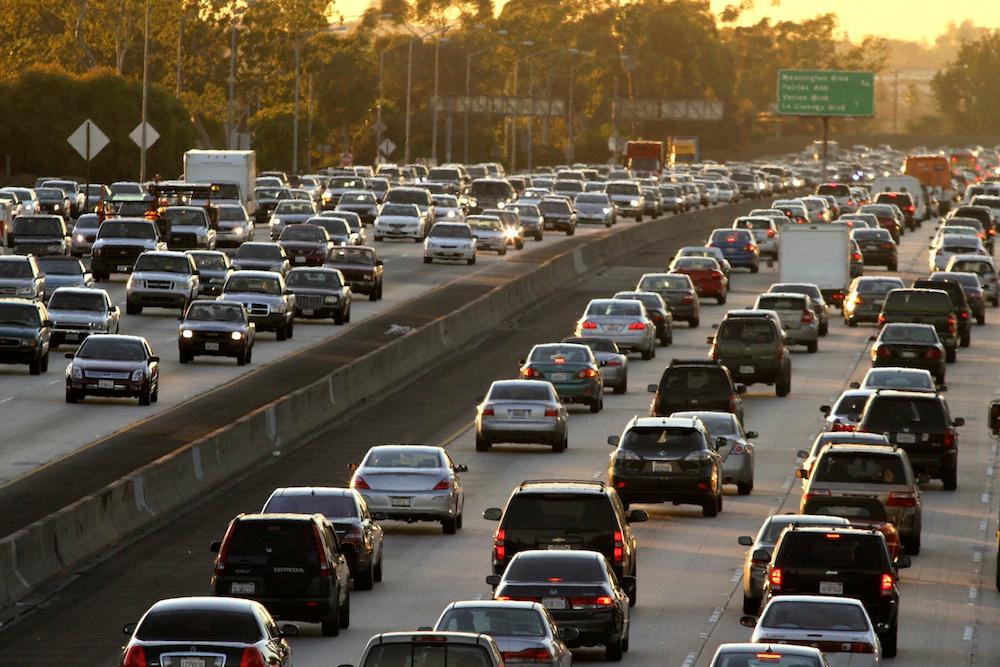
Heavy traffic at rush hour on the Interstate 10 Freeway in Los Angeles, California
Photograph by Jonathan Alcorn — Bloomberg via Getty Images

Last month, an advertising agency in Panama debuted a ‘tweeting pothole’—a small disc that could be placed in a road defect, and would tweet a maintenance request to the nation’s Department of Public Works whenever it was driven over. The stunt went viral in the U.S., a testament to the global nature of infrastructure frustration—and a hint at the ways technology can help.

According to the Federal Highway Administration, more than one fourth of major urban roads in the U.S. are rated in substandard or poor condition, and over 67,000 bridges are either closed or under use restrictions. Legislative shortsightedness has left federal highway funding subject to a series of stopgap bills that are hamstringing state-level efforts to plan for needed improvements, and even basic maintenance.

Dysfunctional highways cost all Americans, but the trucking industry catches the brunt. “We pay a penalty for rough roads,” says Darrin Roth, vice president of highway policy for the American Trucking Association. Roth says potholes mean higher maintenance costs and lower fuel efficiency, while disruptions like bridge failures and wrecks add to emissions, labor costs, and the chance for accidents.

The ATA found that congestion caused by inadequate or closed roads cost the industry about $9.21 billion in 2013, a 1.4 percent increase in congestion waste over 2012. 141 million hours were lost. That’s the equivalent of 51,000 truck drivers—and their chugging trucks—stuck in traffic for the entire year.

On Main Street, that adds up to about $29 per year in added costs to each American.

The tweeting pothole, in its scaled-down way, suggests tech’s power to help. Providing an early alert, through Twitter or more formal channels, can keep a small fault from becoming a big one, or from causing too much damage or disruption in the meantime.

This is even more important for bridges. In 2007, the I-35W Mississippi River Bridge in the heart of Minneapolis collapsed—a failure the National Transportation Safety Board attributed to a combination of design flaws and excess weight. In addition to killing 13 people, the collapse rerouted about 140,000 daily vehicle trips for more than a year.

When it was rebuilt as the St. Anthony Falls Bridge, the I-35 span was turned into a “smart bridge” using 500 sensors measuring bridge loads, movement, and integrity. The data is monitored for signs of degradation by researchers at the University of Minnesota, in what amounts to a beefed-up version of the tweeting pothole.

Another important gridlock-busting technology is traffic monitoring cameras and high-tech urban traffic centers. The cameras allow much faster clearing of accidents from highways, which according to Roth is one of the most important ways to increase highway shipping efficiency.

Traffic centers also help manage urban traffic flow by timing lights. While these are traditionally manual affairs, the Pittsburgh-based startup Surtrac is demonstrating 25% reduced travel times with its swarmlike approach to ‘smart’ traffic signaling.

Even in the absence of street-level tech, truckers carry potential efficiencies in their pockets—literally. Just like the rest of us, smartphones help truckers plan routes as traffic and driving conditions shift. And trucks go one better, with systems able to plan things like acceleration based on topographic databases.

All that high-tech efficiency might dull the pain as states skip expensive lane expansions and even maintenance. But as Roth points out, a navigation system “doesn’t solve the problem if all the alternative routes are congested.”

Most of the roads we travel on, Roth says, are still rooted in the time of their construction in the 1950s and 1960s, when traffic loads were much lighter. It’ll take Congress, not Google Maps, to give us the highways we need.

About the Author
By David Z. Morris
See full bioRight Arrow Button Icon

Latest in Tech

Finance
Lorem ipsum dolor sit amet, consectetur adipiscing elit, sed do eiusmod tempor incididunt ut labore et dolore magna aliqua. Ut enim ad minim veniam
By Fortune Editors
October 20, 2025
Finance
Lorem ipsum dolor sit amet, consectetur adipiscing elit, sed do eiusmod tempor incididunt ut labore et dolore magna aliqua. Ut enim ad minim veniam
By Fortune Editors
October 20, 2025
Finance
Lorem ipsum dolor sit amet, consectetur adipiscing elit, sed do eiusmod tempor incididunt ut labore et dolore magna aliqua. Ut enim ad minim veniam
By Fortune Editors
October 20, 2025
Finance
Lorem ipsum dolor sit amet, consectetur adipiscing elit, sed do eiusmod tempor incididunt ut labore et dolore magna aliqua. Ut enim ad minim veniam
By Fortune Editors
October 20, 2025
Finance
Lorem ipsum dolor sit amet, consectetur adipiscing elit, sed do eiusmod tempor incididunt ut labore et dolore magna aliqua. Ut enim ad minim veniam
By Fortune Editors
October 20, 2025
Finance
Lorem ipsum dolor sit amet, consectetur adipiscing elit, sed do eiusmod tempor incididunt ut labore et dolore magna aliqua. Ut enim ad minim veniam
By Fortune Editors
October 20, 2025

Most Popular

Finance
Lorem ipsum dolor sit amet, consectetur adipiscing elit, sed do eiusmod tempor incididunt ut labore et dolore magna aliqua. Ut enim ad minim veniam
By Fortune Editors
October 20, 2025
Finance
Lorem ipsum dolor sit amet, consectetur adipiscing elit, sed do eiusmod tempor incididunt ut labore et dolore magna aliqua. Ut enim ad minim veniam
By Fortune Editors
October 20, 2025
Finance
Lorem ipsum dolor sit amet, consectetur adipiscing elit, sed do eiusmod tempor incididunt ut labore et dolore magna aliqua. Ut enim ad minim veniam
By Fortune Editors
October 20, 2025
Finance
Lorem ipsum dolor sit amet, consectetur adipiscing elit, sed do eiusmod tempor incididunt ut labore et dolore magna aliqua. Ut enim ad minim veniam
By Fortune Editors
October 20, 2025
Finance
Lorem ipsum dolor sit amet, consectetur adipiscing elit, sed do eiusmod tempor incididunt ut labore et dolore magna aliqua. Ut enim ad minim veniam
By Fortune Editors
October 20, 2025
Finance
Lorem ipsum dolor sit amet, consectetur adipiscing elit, sed do eiusmod tempor incididunt ut labore et dolore magna aliqua. Ut enim ad minim veniam
By Fortune Editors
October 20, 2025
Fortune Secondary Logo
Rankings
  • 100 Best Companies
  • Fortune 500
  • Global 500
  • Fortune 500 Europe
  • Most Powerful Women
  • World's Most Admired Companies
  • See All Rankings
  • Lists Calendar
Sections
  • Finance
  • Fortune Crypto
  • Features
  • Leadership
  • Health
  • Commentary
  • Success
  • Retail
  • Mpw
  • Tech
  • Lifestyle
  • CEO Initiative
  • Asia
  • Politics
  • Conferences
  • Europe
  • Newsletters
  • Personal Finance
  • Environment
  • Magazine
  • Education
Customer Support
  • Frequently Asked Questions
  • Customer Service Portal
  • Privacy Policy
  • Terms Of Use
  • Single Issues For Purchase
  • International Print
Commercial Services
  • Advertising
  • Fortune Brand Studio
  • Fortune Analytics
  • Fortune Conferences
  • Business Development
  • Group Subscriptions
About Us
  • About Us
  • Press Center
  • Work At Fortune
  • Terms And Conditions
  • Site Map
  • About Us
  • Press Center
  • Work At Fortune
  • Terms And Conditions
  • Site Map
  • Facebook icon
  • Twitter icon
  • LinkedIn icon
  • Instagram icon
  • Pinterest icon

Latest in Tech

AstraZeneca CFO Aradhana Sarin
BankingCFO Daily
How AstraZeneca’s 17,000 AI-certified employees are helping it reach a ‘stretch goal’ of $80 billion in revenue
By Sheryl EstradaApril 30, 2026
2 hours ago
agentic
CommentaryAI agents
Why your data infrastructure — not your AI model — will determine whether Agentic AI scales
By Jeffrey Sonnenfeld, Stephen Henriques, Catherine Dai and Zander JeinthanuttkanontApril 30, 2026
2 hours ago
The startup that wants to give surgeons X-ray vision
NewslettersTerm Sheet
The startup that wants to give surgeons X-ray vision
By Allie GarfinkleApril 30, 2026
2 hours ago
Google Cloud CEO Thomas Kurian at Fortune Brainstorm AI 2025 in San Francisco. (Photo: Stuart Isett/Fortune)
NewslettersFortune Tech
Google Cloud is almost one-fifth of Alphabet’s business
By Andrew NuscaApril 30, 2026
3 hours ago
Photo: Donald Trump
Big TechMarkets
With no end in sight, Trump considers new options in Iran war—including the ‘Dark Eagle’ hypersonic missile
By Jim EdwardsApril 30, 2026
4 hours ago
Google Cloud revenue is now 18% of Alphabet’s business. Is this the beginning of the end of Google’s search identity?
Big TechGoogle
Google Cloud revenue is now 18% of Alphabet’s business. Is this the beginning of the end of Google’s search identity?
By Alexei OreskovicApril 29, 2026
12 hours ago

Most Popular

Apple cofounder Ronald Wayne—whose stake would be worth up to $400 billion had he not sold it in 1976—says that at 91, he has no regrets
Success
Apple cofounder Ronald Wayne—whose stake would be worth up to $400 billion had he not sold it in 1976—says that at 91, he has no regrets
By Preston ForeApril 27, 2026
3 days ago
Jamie Dimon gets candid about national debt: ‘There will be a bond crisis, and then we’ll have to deal with it’
Economy
Jamie Dimon gets candid about national debt: ‘There will be a bond crisis, and then we’ll have to deal with it’
By Eleanor PringleApril 29, 2026
1 day ago
‘They left me no choice’: Powell isn’t going anywhere—blocking Trump from another Fed appointee
Banking
‘They left me no choice’: Powell isn’t going anywhere—blocking Trump from another Fed appointee
By Eva RoytburgApril 29, 2026
19 hours ago
‘The cost of compute is far beyond the costs of the employees’: Nvidia executive says right now AI is more expensive than paying human workers
AI
‘The cost of compute is far beyond the costs of the employees’: Nvidia executive says right now AI is more expensive than paying human workers
By Sasha RogelbergApril 28, 2026
2 days ago
‘Take the money and run’: Johns Hopkins economist Steve Hanke on why the UAE quit OPEC
Energy
‘Take the money and run’: Johns Hopkins economist Steve Hanke on why the UAE quit OPEC
By Shawn TullyApril 29, 2026
1 day ago
More than two-thirds of U.S. schools say they’re unable to afford the cost of student free lunch—and MAHA’s dietary guidelines may make it worse
Economy
More than two-thirds of U.S. schools say they’re unable to afford the cost of student free lunch—and MAHA’s dietary guidelines may make it worse
By Sasha RogelbergApril 29, 2026
1 day ago

© 2026 Fortune Media IP Limited. All Rights Reserved. Use of this site constitutes acceptance of our Terms of Use and Privacy Policy | CA Notice at Collection and Privacy Notice | Do Not Sell/Share My Personal Information
FORTUNE is a trademark of Fortune Media IP Limited, registered in the U.S. and other countries. FORTUNE may receive compensation for some links to products and services on this website. Offers may be subject to change without notice.