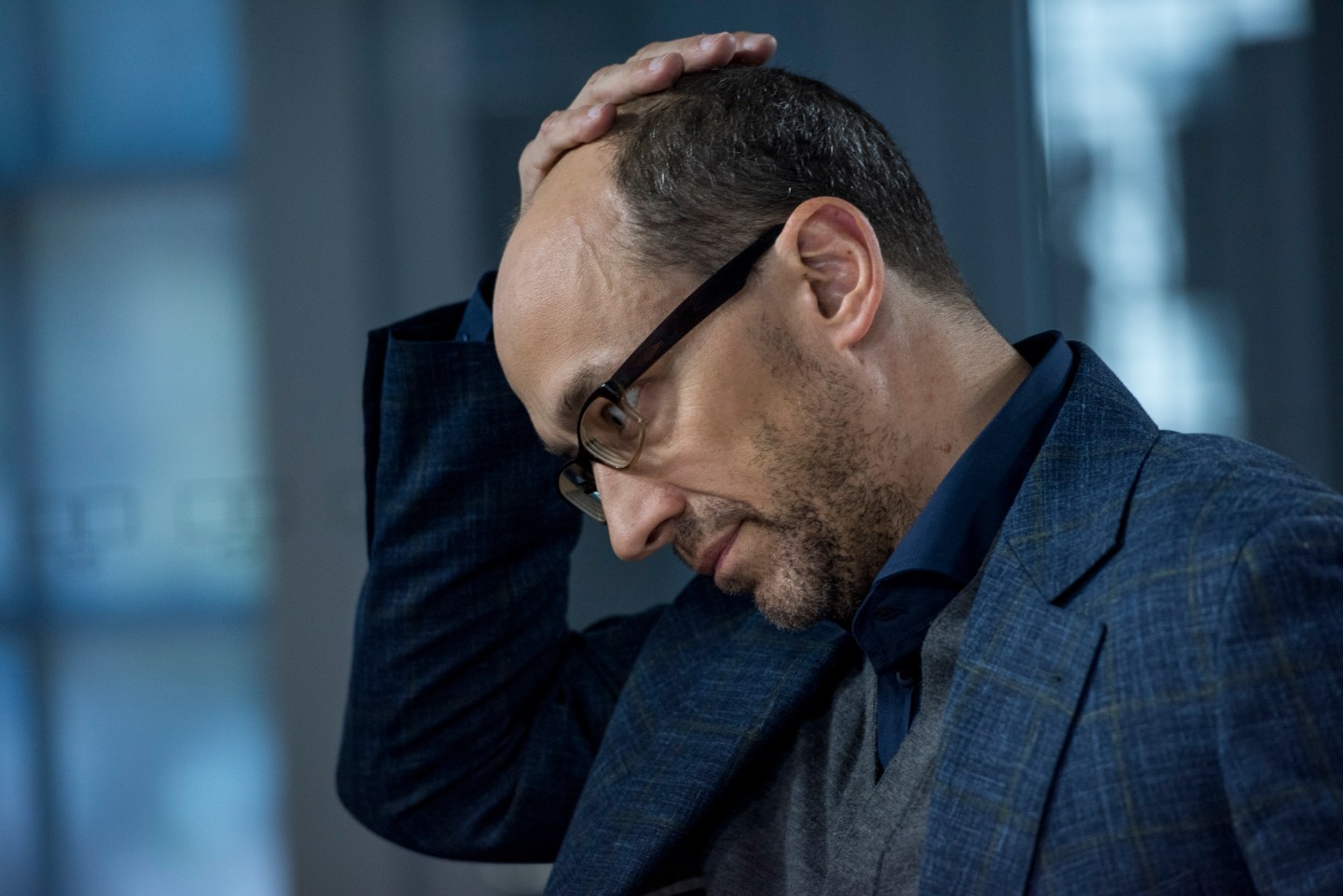
It took Wall Street exactly two months and two days to fall out of love with Twitter. On November 7, 2013, the company had the smoothest tech-industry IPO since Facebook’s faceplant of a public debut, and its chief executive Dick Costolo, who oversaw the flawless road show, share allocation, pricing, and listing, was praised as a champion executor. Twitter (TWTR) stock soared 73% on its first day of trading.
Twitter’s IPO was the culmination of a successful five-year tenure for Costolo, who can take credit for whipping Twitter into IPO-worthy shape. Before Costolo, the popular narrative goes, any success Twitter had experienced was in spite of itself. The money-bleeding, fail-whaling company was chaotic, lost, rife with founder power grabs, and leakier than a wicker canoe.
When Costolo, a one-time comedian who’d had modest successes as an entrepreneur, became Twitter’s chief operating officer in 2009 (and the next year, CEO), he shook things up. He replaced the entire board, including prominent investors Fred Wilson and Bijan Sabet, to halt leaks. He oversaw the hiring of Adam Bain, who created Twitter’s entire advertising business. When Twitter filed its Form S-1 to go public, it reported 198% year-on-year revenue growth. Costolo was popular among employees, who on Thursday gushed with support of him on Twitter using the hashtag #thankyoudickc as if he’d died rather than resigned. In 2013, Costolo was named one of Time‘s 10 most influential tech CEOs.
But as a public company with a $32 billion valuation, Costolo’s early credit quickly turned to blame. Twitter’s shares took their first hit on January 9, 2014 after three analysts downgraded the stock prior to the company’s first quarterly earnings report. Twitter has been playing defense ever since, and the company’s stock price has languished as a result.
It’s a stark turnaround from Twitter’s cushy life as a well-funded private company, where a lack of profits is something to celebrate and turnover of key employees could be brushed off as “growing pains.” It’s also a warning sign to any so-called “unicorn” startup that expects its big exit to be an IPO. As venture investor Alan Patricof likes to say, these companies will have to be valued on a multiple of their earnings at some point. It explains why very few companies—tech or otherwise—have gone public this year, and the most valuable ones, like Uber, don’t intend to.

The lesson of Dick Costolo’s Twitter tenure is clear: Do not go public unless you are wildly profitable and growing like gangbusters. That strategy has worked out well for Facebook, its stock rising 31% each year and its a bungled IPO a distant memory. Others, like Etsy, On Deck Capital, and Castlight Health are all learning this lesson the hard way. In December, Twitter co-founder Evan Williams scolded Wall Street short-termism. “Wall Street does not have a sophisticated understanding of what creates value in this world,” he told Fortune.

Wall Street’s complaints for Twitter are myriad. It isn’t profitable. Its key metrics, including monthly active users, aren’t growing. It isn’t mainstream enough, like Snapchat or Instagram. The product is confusing. The ads aren’t that compelling. Even Chris Sacca, an early Twitter investor who says he “bleeds” Twitter’s signature aquamarine, has a college essay’s worth of strongly worded suggestions for improvement. It’s beginning to feel like Twitter is doomed to live forever as company that can’t fulfill its potential.
Costolo’s attempts to address the complaints in the public’s eye—subject to more intense scrutiny than Twitter had as a private company—have fallen short. With regard to its primary product, for example, Twitter has struggled to create meaningful improvements. As my colleague Mathew Ingram pointed out on Thursday:
There have been no less than five heads of product at Twitter, and none were able to put together a consistent vision and get buy-in from a board and a CEO who were more concerned about protecting the stock price and their venture backers.
Costolo failed at doing the things that protect a stock price, too. Twitter doubled its revenues every year it was a public company, which is an impressive feat. But it never turned a profit, which is what investors demanded.
Worse, Twitter lost its magic ability to lure in new users—the very thing that propelled it through its rocky early years. Costolo even tried to shift the narrative on user growth, pointing to the number of people who see Tweets embedded around the Web (500 million) instead of how many people actually use Twitter (just under 300 million). The company announced plans to begin monetizing those “logged-out” users.
Investors didn’t buy the strategy. It’s not clear even Costolo bought it. Before his resignation this week, Costolo offered to resign last November, and again in February, he said on a media call Thursday. The third time, the board agreed.
It’s possible no one could have done a better job at cleaning up Twitter and taking it public than Dick Costolo. It’s also possible anyone could do a better job of making investors happy than him. The only clear thing is that investors decided long ago that they’d lost faith in Costolo. Once that happens, it wouldn’t have mattered what he did. For a public company as high profile and highly valued as Twitter, it’s nearly impossible for a CEO to win the faith back. Investors are fickle, so if there’s a target on your back, you’re as good as dead. Want proof? Twitter shares were up 4% in after-hours trading on the news of Costolo’s resignation.
Previous coverage on Fortune:
Ingram: Twitter is officially adrift now. Who will rescue it?
Rao: Outgoing Twitter CEO explains he didn’t want to be a lame duck
Lorenzetti: Dick Costolo said his job was safe a month ago
Primack: Twitter CEO Dick Costolo is out, Jack Dorsey back in
Nusca: How many quarters will Dick Costolo last?
Subscribe to Data Sheet, Fortune’s daily newsletter on the business of technology.