• Home
  • Latest
  • Fortune 500
  • Finance
  • Tech
  • Leadership
  • Lifestyle
  • Rankings
  • Multimedia
CommentaryGreece

Why Greece’s economy will get worse before it gets better

By
Douglas J. Elliott
Douglas J. Elliott
Down Arrow Button Icon
By
Douglas J. Elliott
Douglas J. Elliott
Down Arrow Button Icon
April 22, 2015, 5:00 AM ET
GREECE-EU-VOTE
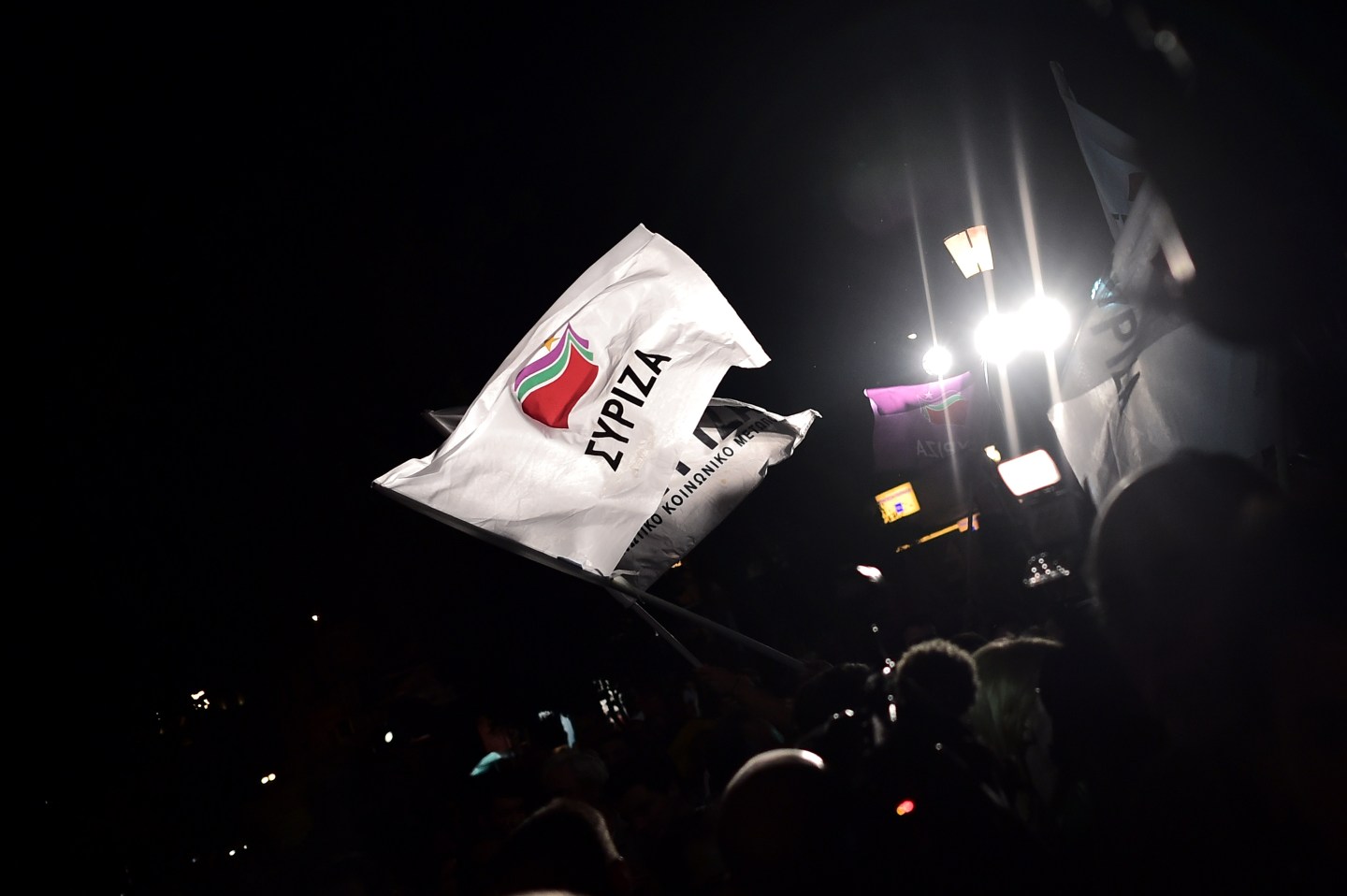
Syriza's supporters wave flags during a speech of their party's leader Alexis Tsipras, candidate to head the European Commission for the European Left, after the results of the European elections, outside the Athens University, on May 25, 2014. Greece's anti-austerity leftist party Syriza held a slight lead in European Parliament elections, exit polls showed on Sunday. Syriza's 39-year-old leader Alexis Tsipras said the government had lost its legitimacy and called for national elections.. AFP PHOTO / ARIS MESSINIS (Photo credit should read ARIS MESSINIS/AFP/Getty Images)Photograph by Aris Messinis — AFP/Getty Images

Greece, which is quickly running out of cash, pledged to its euro zone partners in February that by the end of April it would agree with creditors on a comprehensive list of actions to unlock its remaining bailout funding.

The debt-troubled nation was supposed to present the list to euro zone finance ministers on Friday, but it’s unlikely that a package will be agreed even by the end of the month.

As a result, in the next several weeks, the situation in Greece may deteriorate rapidly. The country could eventually fall out of the Euro, despite the intention on all sides to avoid that outcome.

This would likely plunge Greece into a renewal of the depression it was just exiting. Europe would suffer as well, although not as badly, with growth falling significantly. America would also be impacted, given that the European Union EU is our largest trading partner: we would lose jobs and profits as the EU imports less from us and as the U.S. dollar got even stronger, hurting our exports to all parts of the world. A more radicalized and alienated Greece could also become a serious geo-political nuisance for us, with close ties to Russia, its cultural cousin.

Though the timeline is uncertain, the odds are that a deal will be cut that avoids this very painful outcome, but there is a real possibility of disaster because of the conflicting views and political situations of the key parties.

The good news is that there is indeed a deal to be made. The broad outlines have been clear to experts for a couple of months. The interest rate Greece pays on its massive debt to the other nations in Europe would be cut to nearly zero and payments would be pushed out another decade or two, but there would be no reduction in the amount that would eventually need to be repaid. Europe would agree to accept Greek budgets that are a little less austere, but still are in surplus prior to the payment of interest. Greece would agree to further economic reforms, but Europe would allow more choice in which ones and how they are implemented, and even rollback of some very unpopular parts of prior agreements.

Importantly, Greece would have to accept that the generous funding is contingent on actually implementing agreed reforms and that this process would be monitored by the lenders.

Greece would have to compromise more than its European partners, but both sides would have to cross lines they have drawn in the sand. Europe would have to accept that the previous economic programs they foisted on Greece were flawed and substantial modifications needed. Greece would have to accept that most of their problems are their own fault and that borrowing hundreds of billions of euros from the rest of Europe inevitably requires handing over some control to the lenders and accepting painful reforms.

The core problem of the negotiations is that the new Syriza Party government in Greece views the world very differently from the governments in the rest of Europe. “Syriza” is a Greek acronym for “The Party of the Radical Left” and those last two words should be taken very seriously. Long-term members of Syriza, such as most of the members of Parliament, are suspicious of, or even actively hostile to, capitalism and the European system of economic governance. They do not see why Greece should follow a path of “reforms” that read to them like a right-wing wish list. Further, they have no previous governing experience and had no reasonable expectation of ever being in charge even 18 months ago. They have never gone through the internal fights that are necessary to move from a party of ideology to one of actual governance. As a result, their campaign promises were unrealistic and they do not have an internal consensus to back away from some of them.

Equally fundamentally, Greece is misreading its own importance to Europe. Yes, it would be very painful for its partners if Greece fell out of the Euro, since this would call the foundations of the monetary union into question and renew the Euro Crisis, and it is true the money could be found to accede to the Greek demands. However, Germany and much of the rest of Europe, believes that giving into what they see as unreasonable demands by a newly elected radical left government will guarantee that such governments arise in Spain (where Podemos is very much like Syriza) and eventually in other countries. This political contagion could be very damaging, leading to far worse risks than just Greece leaving the Euro.

For its part, Europe is being too rigid in its demands and has not accepted its share of the responsibility for the Greek economic and humanitarian disaster of the last few years that was caused in part by EU-mandated austerity programs. Europe does have to move too, just not nearly as far as the Greeks do.

My fear, and best guess, is that negotiations will have to break down and trigger damaging economic consequences in Greece and the rest of Europe before the two sides have the incentives and political rationale to agree to what should already have been agreed. The risk, of course, is that we could get the ever-growing economic and political damage, but not the eventual agreement. Europe has muddled through the earlier crisis rounds, and the ugly process is likely to work again, but this could be the time they fail to snatch compromise from the jaws of defeat.

Douglas J. Elliott is a Fellow in Economic Studies at The Brookings Institution.

About the Author
By Douglas J. Elliott
See full bioRight Arrow Button Icon

Latest in Commentary

Finance
Lorem ipsum dolor sit amet, consectetur adipiscing elit, sed do eiusmod tempor incididunt ut labore et dolore magna aliqua. Ut enim ad minim veniam
By Fortune Editors
October 20, 2025
Finance
Lorem ipsum dolor sit amet, consectetur adipiscing elit, sed do eiusmod tempor incididunt ut labore et dolore magna aliqua. Ut enim ad minim veniam
By Fortune Editors
October 20, 2025
Finance
Lorem ipsum dolor sit amet, consectetur adipiscing elit, sed do eiusmod tempor incididunt ut labore et dolore magna aliqua. Ut enim ad minim veniam
By Fortune Editors
October 20, 2025
Finance
Lorem ipsum dolor sit amet, consectetur adipiscing elit, sed do eiusmod tempor incididunt ut labore et dolore magna aliqua. Ut enim ad minim veniam
By Fortune Editors
October 20, 2025
Finance
Lorem ipsum dolor sit amet, consectetur adipiscing elit, sed do eiusmod tempor incididunt ut labore et dolore magna aliqua. Ut enim ad minim veniam
By Fortune Editors
October 20, 2025
Finance
Lorem ipsum dolor sit amet, consectetur adipiscing elit, sed do eiusmod tempor incididunt ut labore et dolore magna aliqua. Ut enim ad minim veniam
By Fortune Editors
October 20, 2025

Most Popular

Finance
Lorem ipsum dolor sit amet, consectetur adipiscing elit, sed do eiusmod tempor incididunt ut labore et dolore magna aliqua. Ut enim ad minim veniam
By Fortune Editors
October 20, 2025
Finance
Lorem ipsum dolor sit amet, consectetur adipiscing elit, sed do eiusmod tempor incididunt ut labore et dolore magna aliqua. Ut enim ad minim veniam
By Fortune Editors
October 20, 2025
Finance
Lorem ipsum dolor sit amet, consectetur adipiscing elit, sed do eiusmod tempor incididunt ut labore et dolore magna aliqua. Ut enim ad minim veniam
By Fortune Editors
October 20, 2025
Finance
Lorem ipsum dolor sit amet, consectetur adipiscing elit, sed do eiusmod tempor incididunt ut labore et dolore magna aliqua. Ut enim ad minim veniam
By Fortune Editors
October 20, 2025
Finance
Lorem ipsum dolor sit amet, consectetur adipiscing elit, sed do eiusmod tempor incididunt ut labore et dolore magna aliqua. Ut enim ad minim veniam
By Fortune Editors
October 20, 2025
Finance
Lorem ipsum dolor sit amet, consectetur adipiscing elit, sed do eiusmod tempor incididunt ut labore et dolore magna aliqua. Ut enim ad minim veniam
By Fortune Editors
October 20, 2025
Rankings
  • 100 Best Companies
  • Fortune 500
  • Global 500
  • Fortune 500 Europe
  • Most Powerful Women
  • Future 50
  • World’s Most Admired Companies
  • See All Rankings
Sections
  • Finance
  • Leadership
  • Success
  • Tech
  • Asia
  • Europe
  • Environment
  • Fortune Crypto
  • Health
  • Retail
  • Lifestyle
  • Politics
  • Newsletters
  • Magazine
  • Features
  • Commentary
  • Mpw
  • CEO Initiative
  • Conferences
  • Personal Finance
  • Education
Customer Support
  • Frequently Asked Questions
  • Customer Service Portal
  • Privacy Policy
  • Terms Of Use
  • Single Issues For Purchase
  • International Print
Commercial Services
  • Advertising
  • Fortune Brand Studio
  • Fortune Analytics
  • Fortune Conferences
  • Business Development
About Us
  • About Us
  • Editorial Calendar
  • Press Center
  • Work At Fortune
  • Diversity And Inclusion
  • Terms And Conditions
  • Site Map
  • Facebook icon
  • Twitter icon
  • LinkedIn icon
  • Instagram icon
  • Pinterest icon

© 2026 Fortune Media IP Limited. All Rights Reserved. Use of this site constitutes acceptance of our Terms of Use and Privacy Policy | CA Notice at Collection and Privacy Notice | Do Not Sell/Share My Personal Information
FORTUNE is a trademark of Fortune Media IP Limited, registered in the U.S. and other countries. FORTUNE may receive compensation for some links to products and services on this website. Offers may be subject to change without notice.


Most Popular

placeholder alt text
Success
Even with $850 billion to his name, Elon Musk admits ‘money can’t buy happiness.’ But billionaire Mark Cuban says it’s not so simple
By Preston ForeFebruary 6, 2026
2 days ago
placeholder alt text
Success
Nestlé’s CEO drinks 8 coffees a day, but says Gen Z staffers are his secret to staying sharp by ‘learning constantly’
By Emma BurleighFebruary 5, 2026
3 days ago
placeholder alt text
Success
Gen Z Patriots quarterback Drake Maye still drives a 2015 pickup truck even after it broke down on the highway—despite his $37 million contract
By Sasha RogelbergFebruary 7, 2026
22 hours ago
placeholder alt text
Success
Larry Ellison and Jeff Bezos have seen more than $66 billion swiped from their net worths since the start of this year as AI-driven slump sees tech billionaires’ wealth free-fall
By Emma BurleighFebruary 6, 2026
2 days ago
placeholder alt text
Personal Finance
Current price of gold as of February 6, 2026
By Danny BakstFebruary 6, 2026
2 days ago
placeholder alt text
Crypto
Bitcoin whales and ETFs are bailing out of the market; UBS warns: ‘Crypto is not an asset’
By Jim EdwardsFebruary 6, 2026
2 days ago

Latest in Commentary

sarandos
CommentaryAntitrust
Netflix dominates streaming. No wonder it’s trying to redefine the market
By Hal SingerFebruary 7, 2026
15 hours ago
johnsson
Commentaryvaluations
When the music stops: the unravelling of AI companies’ flawed valuations
By Mikael JohnssonFebruary 6, 2026
2 days ago
desantis
CommentaryLeadership
Understanding corporate leaders’ muted Minnesota response: the example of Disney, Florida and conservative retaliation
By Alessandro Piazza and The ConversationFebruary 5, 2026
3 days ago
grace
CommentaryRobotics
I’m a 25-year-old founder who loves robots but too many humanoids are militant and creepy-looking. Things need to change—just look at Elon Musk
By Grace BrownFebruary 5, 2026
3 days ago
sam wolf
Commentaryactivist investing
Activist investors are more dangerous to CEOs than ever. Here are 3 ways to safeguard your leadership
By Sam WolfFebruary 5, 2026
3 days ago
warsh
CommentaryFederal Reserve
Kevin Warsh’s Fed criticisms make sense, but he’s got a ‘cleanest dirty shirt’ problem. Here’s the triple dilemma he faces
By Daniel J. ArbessFebruary 5, 2026
3 days ago