• Home
  • News
  • Fortune 500
  • Tech
  • Finance
  • Leadership
  • Lifestyle
  • Rankings
  • Multimedia
Tech

Meet the Latest Scary Form of Social Media Fraud

By
Jeff John Roberts
Jeff John Roberts
Editor, Finance and Crypto
Down Arrow Button Icon
By
Jeff John Roberts
Jeff John Roberts
Editor, Finance and Crypto
Down Arrow Button Icon
November 11, 2016, 1:31 PM ET
FINDING NEMO, Dory, Marlin, Angler fish, 2003, (c) Walt Disney/courtesy Everett Collection
FINDING NEMO, Dory, Marlin, Angler fish, 2003, (c) Walt Disney/courtesy Everett CollectionWalt Disney Co.—Courtesy of Everett Collection ©Walt Disney Co./Courtesy Everett Collection

It’s called “Angler Phishing” and, yes, the name is from the scary deep-sea fish in the movie Finding Nemo. It refers to a clever new scam in which crooks impersonate the social media teams of banks and retailers in order to trick consumers into disclosing sensitive personal information.

The scam started popping up this year, and it works like this: A consumer has a question for a bank or a retailer but instead of using phone or email, they turn to Twitter (TWTR) to ask for help. Consumers know these companies have special teams to watch social media, so they are not surprised when they get a response. Unfortunately, this response may come from a cyber-crook instead of the company.

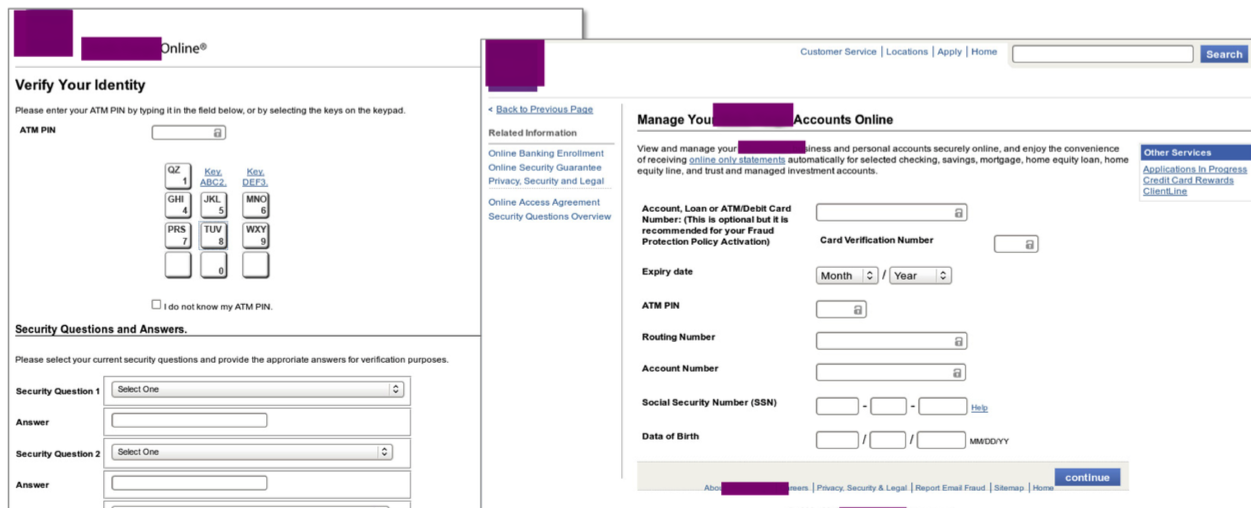
The crooks use realistic-looking social media accounts and, once the consumer responds, they quickly direct them to a fake website. The fake website is designed to look exactly like a real bank or retail site, prompting the consumer to enter information such as his or her login and password.

Here’s a screenshot, courtesy of Proofpoint (PFPT), which provides a real life example:

angler phishing

And here is what happens when the customer clicks on the link supplied by the helpful social media support agent, who is actually a crook. (Obviously, in both these pictures, the names of the social media accounts have been changed, and the bank’s logo has been blocked out.)
screen-shot-2016-11-11-at-12-41-47-pm

You get the idea. Both the social media agent and the website feel so real that the customer discloses all sorts of information without realizing they’re doing it. As a final kicker, once the consumer has entered all that data, the crooks will often say “thank you” and redirect the victim back to the real company website (more details here).

“The bad guys put it all together—a social media account, the website, even fake email accounts—to create a whole environment,” says Devin Redmond, a VP at Proofpoint, a firm that protects companies against email and social fraud scams.

In terms of damage, the con artists will typically use the information to go after consumers’ bank accounts directly or else to open credit cards in their name.

Get Data Sheet, Fortune’s technology newsletter.

Redmond says the “angler phishing” scam is mostly found on Twitter, but is now also turning up on Facebook (FB) and Instagram, where brands deploy social media teams to engage with consumers. He says the new con is proving effective because consumers have come to expect a response from the brands on social media, and because the crooks produce fake accounts that look so realistic.

Meanwhile, cyber criminals are already discovering other twists on the scam such as by hijacking the LinkedIn accounts of insurance brokers and wealth management advisors in order to prompt clients to hand over information.

Consumers who fall for the new phishing scam are typically reimbursed by the companies. But for brands, which have for years been exhorted to engage with their customers on social media, it’s an unpleasant reminder that crooks will follow them to those new platforms.

(This story was updated at 2:30pm ET to correct the name of Devin Redmond.)

About the Author
By Jeff John RobertsEditor, Finance and Crypto
LinkedIn iconTwitter icon

Jeff John Roberts is the Finance and Crypto editor at Fortune, overseeing coverage of the blockchain and how technology is changing finance.

See full bioRight Arrow Button Icon

Latest in Tech

CryptoCryptocurrency
So much of crypto is not even real—but that’s starting to change
By Pete Najarian and Joe BruzzesiDecember 7, 2025
1 hour ago
Elon Musk
Big TechSpaceX
SpaceX to offer insider shares at record-setting $800 billion valuation
By Edward Ludlow, Loren Grush, Lizette Chapman, Eric Johnson and BloombergDecember 6, 2025
15 hours ago
Big TechApple
Apple rocked by executive departures, with chip chief at risk of leaving next
By Mark Gurman and BloombergDecember 6, 2025
18 hours ago
Nvidia CEO Jensen Huang said China is better equipped for an AI data center buildout than the U.S.
AITech
Nvidia CEO says data centers take about 3 years to construct in the U.S., while in China ‘they can build a hospital in a weekend’
By Nino PaoliDecember 6, 2025
20 hours ago
Arts & EntertainmentMedia
Former Amazon Studios boss warns the Netflix-Warner Bros. deal will make Hollywood ‘a system that circles a single sun’
By Jason MaDecember 6, 2025
21 hours ago
Jay Clayton
LawCrime
25-year DEA veteran charged with helping Mexican drug cartel launder millions of dollars, secure guns and bombs
By Dave Collins, Michael R. Sisak and The Associated PressDecember 6, 2025
22 hours ago

Most Popular

placeholder alt text
AI
Nvidia CEO says data centers take about 3 years to construct in the U.S., while in China 'they can build a hospital in a weekend'
By Nino PaoliDecember 6, 2025
20 hours ago
placeholder alt text
Real Estate
The 'Great Housing Reset' is coming: Income growth will outpace home-price growth in 2026, Redfin forecasts
By Nino PaoliDecember 6, 2025
1 day ago
placeholder alt text
Economy
The most likely solution to the U.S. debt crisis is severe austerity triggered by a fiscal calamity, former White House economic adviser says
By Jason MaDecember 6, 2025
16 hours ago
placeholder alt text
Big Tech
Mark Zuckerberg rebranded Facebook for the metaverse. Four years and $70 billion in losses later, he’s moving on
By Eva RoytburgDecember 5, 2025
2 days ago
placeholder alt text
Asia
Despite their ‘no limits’ friendship, Russia is paying a nearly 90% markup on sanctioned goods from China—compared with 9% from other countries
By Jason MaNovember 29, 2025
8 days ago
placeholder alt text
Success
Nvidia CEO Jensen Huang admits he works 7 days a week, including holidays, in a constant 'state of anxiety' out of fear of going bankrupt
By Jessica CoacciDecember 4, 2025
3 days ago
Rankings
  • 100 Best Companies
  • Fortune 500
  • Global 500
  • Fortune 500 Europe
  • Most Powerful Women
  • Future 50
  • World’s Most Admired Companies
  • See All Rankings
Sections
  • Finance
  • Leadership
  • Success
  • Tech
  • Asia
  • Europe
  • Environment
  • Fortune Crypto
  • Health
  • Retail
  • Lifestyle
  • Politics
  • Newsletters
  • Magazine
  • Features
  • Commentary
  • Mpw
  • CEO Initiative
  • Conferences
  • Personal Finance
  • Education
Customer Support
  • Frequently Asked Questions
  • Customer Service Portal
  • Privacy Policy
  • Terms Of Use
  • Single Issues For Purchase
  • International Print
Commercial Services
  • Advertising
  • Fortune Brand Studio
  • Fortune Analytics
  • Fortune Conferences
  • Business Development
About Us
  • About Us
  • Editorial Calendar
  • Press Center
  • Work At Fortune
  • Diversity And Inclusion
  • Terms And Conditions
  • Site Map

© 2025 Fortune Media IP Limited. All Rights Reserved. Use of this site constitutes acceptance of our Terms of Use and Privacy Policy | CA Notice at Collection and Privacy Notice | Do Not Sell/Share My Personal Information
FORTUNE is a trademark of Fortune Media IP Limited, registered in the U.S. and other countries. FORTUNE may receive compensation for some links to products and services on this website. Offers may be subject to change without notice.