• Home
  • Latest
  • Fortune 500
  • Finance
  • Tech
  • Leadership
  • Lifestyle
  • Rankings
  • Multimedia

Trendingnow

1

Jeff Bezos wants the bottom half of earners to pay zero income tax—he says nurses making just $75K should save $12K a year

2

Uber CEO says rideshare 'freed up' his son from having to get a driver’s license—and he's one of many Gen Zers who aren’t willing to drive

3

Inside the 'stealth wealth' playbook: How Silicon Valley's elite buy multimillion-dollar mansions without leaving a paper trail

1

Jeff Bezos wants the bottom half of earners to pay zero income tax—he says nurses making just $75K should save $12K a year

2

Uber CEO says rideshare 'freed up' his son from having to get a driver’s license—and he's one of many Gen Zers who aren’t willing to drive

3

Inside the 'stealth wealth' playbook: How Silicon Valley's elite buy multimillion-dollar mansions without leaving a paper trail
HealthScience

I study orangutans and found that wildfires made them sound like heavy smokers. They also got lazier and started binge-eating

By
Wendy M. Erb
Wendy M. Erb
and
The Conversation
The Conversation
Down Arrow Button Icon
By
Wendy M. Erb
Wendy M. Erb
and
The Conversation
The Conversation
Down Arrow Button Icon
June 25, 2023, 11:41 AM ET
Orangutan
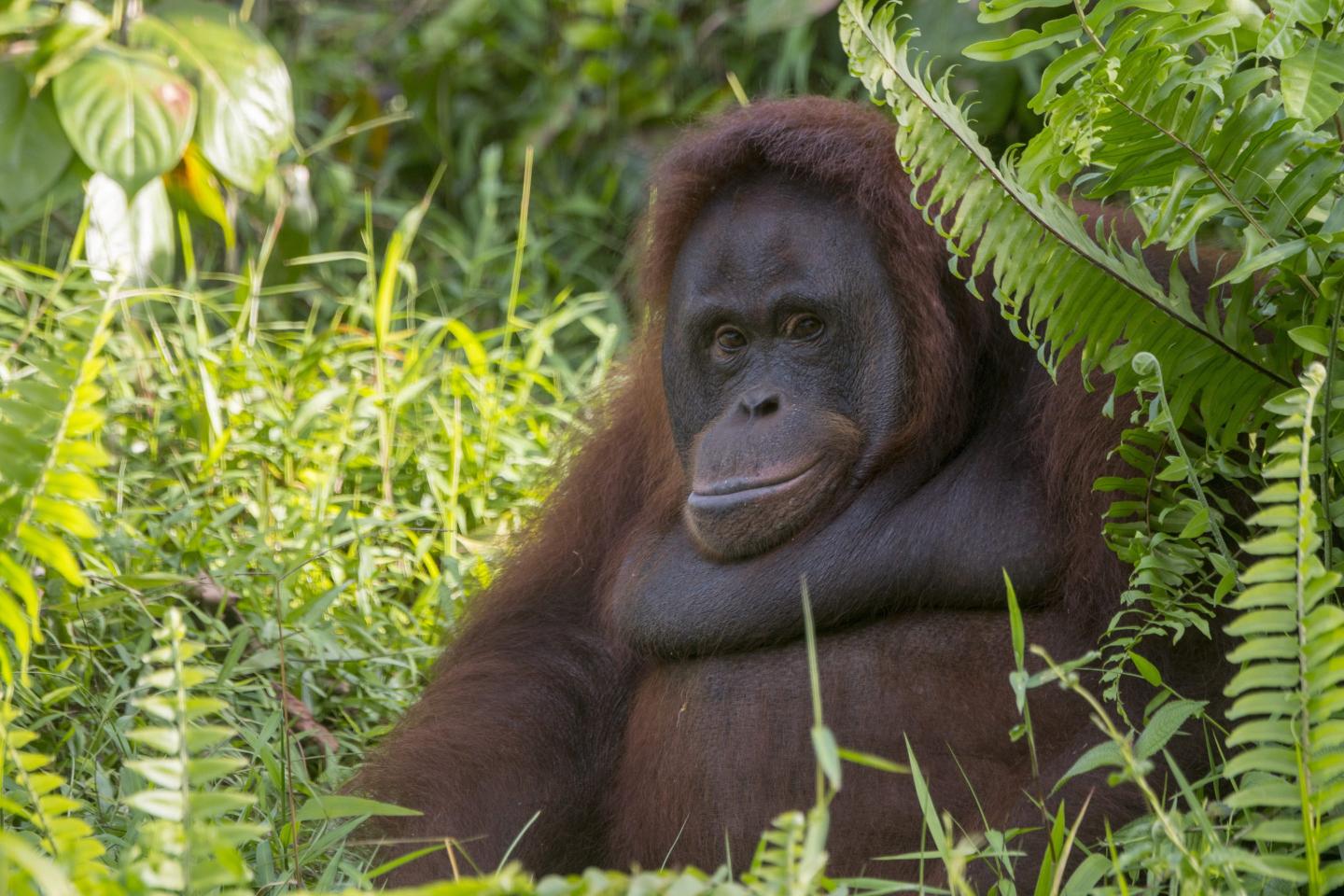
If we all have to deal with more wildfires in the future, we should pay attention to what it does to our cousins, the Orangutans.Wolfgang Kaehler/LightRocket via Getty Images

Bornean orangutans are one of three orangutan species, all critically endangered. They thrive in carbon-rich peat swamp forests on the Indonesian island of Borneo. These habitats are also the sites of massive wildfires.

Indonesian wildfires in 2015 caused some of the worst fire-driven air pollution ever recorded. The fires were driven by an El Niño climatic cycle, which caused especially dry weather in the region.

Compared to other wildfires, peatland fires smolder underground and produce exceptionally high levels of hazardous gases and particulate matter – a leading cause of global pollution-related deaths and illnesses.

Orangutans are well known as an “indicator species” – one that can serve as a proxy for the health of an ecosystem. Changes in their environments often cause conspicuous changes in the apes’ health and behavior. Frequent and persistent exposure to toxic smoke could have severe consequences for orangutans and other wildlife.

Toxic air pollution also poses serious health and safety risks for researchers. However, remote sensing techniques, such as satellite images, GPS data and acoustic monitoring, are increasingly popular ways to track wildlife populations and see how creatures respond to changes in their environments.

I have studied the behavior, ecology and acoustic communication of wild primates in Indonesia since 2005. In a new study, my co-authors and I investigated how wild orangutans in Borneo were affected by toxic emissions from Indonesia’s 2015 peatland wildfires – by studying their voices.

Smoke exposure poses long-term risks

Around the world, wildfires are on the rise. They often produce a thick blanket of haze that contains diverse hazardous gases and particulate matter, or PM. Most recently, smoke from Canadian wildfires blanketed the U.S. East Coast and Midwest in early June 2023, turning skies orange and triggering public health alerts.

Studies have shown that human health risks from wildfire smoke include respiratory and cardiovascular illnesses, systemic inflammation and premature death. Much less is known about how smoke affects wildlife, but in a pair of studies published in 2021 and 2022, scientists at the California National Primate Research Center reported alarming findings.

After less than two weeks of exposure to high concentrations of particulate matter – in particular, ultrafine particles measuring less than 2.5 microns in diameter, which are known as PM2.5 – captive rhesus macaques suffered a spike in pregnancy loss. What’s more, surviving fetuses and infants suffered long-term effects on lung capacity, immune responses, inflammation, cortisol levels, behavior and memory.

During Indonesia’s 2015 fires, Borneo’s air had particulate matter concentrations nearly an order of magnitude higher than the levels in these studies. This made the potential implications for people and wildlife who gasped through Indonesia’s wildfire smoke for nearly two months extremely worrying.

Orangutans in the haze

I was studying wild orangutans in the forests of Indonesian Borneo when the 2015 fires started. My colleagues and I at the Tuanan Orangutan Research Station tracked local fires and patrolled nearby hot spots to assess the risk of fire spreading to our research area.

Wearing N-95 masks, we continued to monitor orangutans in hopes of learning how the animals were coping with encroaching fires and thick smoke. A few weeks into the fire season, I noticed a difference in the sound of the males’ “long call,” which was the focus of my research.

Long calls are booming vocalizations that can be heard over distances of more than half a mile (1 kilometer). Orangutans are semi-solitary and live in dispersed communities, so these calls serve an important social role. Adult males make them to advertise their prowess to listening females in the area and to scare off any eavesdropping rival males. A couple of weeks after the smoke had appeared, I thought these males sounded raggedy – a little like humans who smoke a lot.

We observed the orangutans for 44 days during the fires, until large blazes encroached on our study area. At that point, we stopped the study to help extinguish the blazes with local firefighting teams and other government and nonprofit groups. Fires burned in our study area for three weeks.

Using data that we collected before, during and after the fires, I led an analysis of this Bornean orangutan population’s behavior and health. My co-authors and I found that in the weeks after the fires, the apes reduced their activities – resting more and traveling shorter distances – and consumed more calories than normal.

But although they were eating more and moving less, we found by collecting and testing the apes’ urine that they were still burning stored fat – a sign that they somehow were using up more energy. We hypothesized that the cause might be inflammation – the swelling, fever, pain and fatigue that human and animal bodies experience in response to infection or injury.

Sentinel sounds

Studies have shown that when humans are exposed to particulate matter, they can experience inflammation, both in their respiratory tracts and throughout their bodies. We wanted to know whether inhaling wildfire smoke would cause vocal changes in orangutans, just as inhaling cigarette smoke does in humans.

For this study, my co-authors and I carefully analyzed more than 100 sound recordings of four male orangutans that we followed before and during the fires to measure their vocal responses to wildfire smoke. Research has shown that a suite of vocal features – including pitch, vocal harshness or hoarseness, and shaky voice – reflects the underlying health and condition of both human and nonhuman animals. We were looking for acoustic clues about how this toxic air might be affecting the orangutans.

During the fires and for several weeks after the smoke cleared, these males called less frequently than usual. Normally, orangutans call about six times a day. But during the fires, their call rate was cut in half. Their voices dropped in pitch, showing more vocal harshness and irregularities.

Collectively, these features of vocal quality have been linked to inflammation, stress and disease – including COVID-19 – in human and nonhuman animals.

Listening to vocal species

Increasingly frequent and prolonged exposure to toxic smoke could have severe consequences for orangutans and other animals. Our research highlights the urgent need to understand the long-term and far-ranging effects of peatland fires in Indonesia, which is one of the most biodiverse countries in the world.

By uncovering the linkages between acoustic, behavioral and energetic shifts in orangutans, our study highlights a way for scientists and wildlife managers to safely monitor the health of orangutans and other animals. Using passive acoustic monitoring to study vocally active indicator species, like orangutans, could unlock critical insights into wildfire smoke’s effects on wildlife populations worldwide.

Wendy M. Erb is Postdoctoral Associate in Conservation Bioacoustics, Cornell University.

This article is republished from The Conversation under a Creative Commons license. Read the original article.

The Fortune 500 Innovation Forum will convene Fortune 500 executives, U.S. policy officials, top founders, and thought leaders to help define what’s next for the American economy, Nov. 16-17 in Detroit. Apply here.
About the Authors
By Wendy M. Erb
See full bioRight Arrow Button Icon
By The Conversation
See full bioRight Arrow Button Icon

Latest in Health

Finance
Lorem ipsum dolor sit amet, consectetur adipiscing elit, sed do eiusmod tempor incididunt ut labore et dolore magna aliqua. Ut enim ad minim veniam
By Fortune Editors
October 20, 2025
Finance
Lorem ipsum dolor sit amet, consectetur adipiscing elit, sed do eiusmod tempor incididunt ut labore et dolore magna aliqua. Ut enim ad minim veniam
By Fortune Editors
October 20, 2025
Finance
Lorem ipsum dolor sit amet, consectetur adipiscing elit, sed do eiusmod tempor incididunt ut labore et dolore magna aliqua. Ut enim ad minim veniam
By Fortune Editors
October 20, 2025
Finance
Lorem ipsum dolor sit amet, consectetur adipiscing elit, sed do eiusmod tempor incididunt ut labore et dolore magna aliqua. Ut enim ad minim veniam
By Fortune Editors
October 20, 2025
Finance
Lorem ipsum dolor sit amet, consectetur adipiscing elit, sed do eiusmod tempor incididunt ut labore et dolore magna aliqua. Ut enim ad minim veniam
By Fortune Editors
October 20, 2025
Finance
Lorem ipsum dolor sit amet, consectetur adipiscing elit, sed do eiusmod tempor incididunt ut labore et dolore magna aliqua. Ut enim ad minim veniam
By Fortune Editors
October 20, 2025

Most Popular

Finance
Lorem ipsum dolor sit amet, consectetur adipiscing elit, sed do eiusmod tempor incididunt ut labore et dolore magna aliqua. Ut enim ad minim veniam
By Fortune Editors
October 20, 2025
Finance
Lorem ipsum dolor sit amet, consectetur adipiscing elit, sed do eiusmod tempor incididunt ut labore et dolore magna aliqua. Ut enim ad minim veniam
By Fortune Editors
October 20, 2025
Finance
Lorem ipsum dolor sit amet, consectetur adipiscing elit, sed do eiusmod tempor incididunt ut labore et dolore magna aliqua. Ut enim ad minim veniam
By Fortune Editors
October 20, 2025
Finance
Lorem ipsum dolor sit amet, consectetur adipiscing elit, sed do eiusmod tempor incididunt ut labore et dolore magna aliqua. Ut enim ad minim veniam
By Fortune Editors
October 20, 2025
Finance
Lorem ipsum dolor sit amet, consectetur adipiscing elit, sed do eiusmod tempor incididunt ut labore et dolore magna aliqua. Ut enim ad minim veniam
By Fortune Editors
October 20, 2025
Finance
Lorem ipsum dolor sit amet, consectetur adipiscing elit, sed do eiusmod tempor incididunt ut labore et dolore magna aliqua. Ut enim ad minim veniam
By Fortune Editors
October 20, 2025
Fortune Secondary Logo
Rankings
  • 100 Best Companies
  • Fortune 500
  • Global 500
  • Fortune 500 Europe
  • Most Powerful Women
  • World's Most Admired Companies
  • See All Rankings
  • Lists Calendar
Sections
  • Finance
  • Fortune Crypto
  • Features
  • Leadership
  • Health
  • Commentary
  • Success
  • Retail
  • Mpw
  • Tech
  • Lifestyle
  • CEO Initiative
  • Asia
  • Politics
  • Conferences
  • Europe
  • Newsletters
  • Personal Finance
  • Environment
  • Magazine
  • Education
Customer Support
  • Frequently Asked Questions
  • Customer Service Portal
  • Privacy Policy
  • Terms Of Use
  • Single Issues For Purchase
  • International Print
Commercial Services
  • Advertising
  • Fortune Brand Studio
  • Fortune Analytics
  • Fortune Conferences
  • Business Development
  • Group Subscriptions
About Us
  • About Us
  • Press Center
  • Work At Fortune
  • Terms And Conditions
  • Site Map
  • About Us
  • Press Center
  • Work At Fortune
  • Terms And Conditions
  • Site Map
  • Facebook icon
  • Twitter icon
  • LinkedIn icon
  • Instagram icon
  • Pinterest icon

© 2026 Fortune Media IP Limited. All Rights Reserved. Use of this site constitutes acceptance of our Terms of Use and Privacy Policy | CA Notice at Collection and Privacy Notice | Do Not Sell/Share My Personal Information
FORTUNE is a trademark of Fortune Media IP Limited, registered in the U.S. and other countries. FORTUNE may receive compensation for some links to products and services on this website. Offers may be subject to change without notice.


Latest in Health

r
HealthHealth
The quiet $8 billion crisis: long COVID costs keep rising as Washington looks away
By Bruce Y. Lee, Hannah Dimmick and The ConversationMay 24, 2026
19 hours ago
mental
Healthmental health
500,000 people were locked in state psychiatric hospitals. Their descendants can’t find out why
By Mike Stobbe, Nick Lichtenberg and The Associated PressMay 24, 2026
20 hours ago
Someone leafs through titles stacked in a library
AIResearch
AI hallucinations are infiltrating expert work—and entering the permanent body of knowledge
By Tristan BoveMay 24, 2026
1 day ago
d
HealthHospitals
Meet the hospital dogs ‘making a real difference’ by getting sick kids to smile
By Laura Ungar and The Associated PressMay 23, 2026
2 days ago
Ashley Yetman
Commentarydisruption
Everyone is blaming AI for the death of ‘craft.’ Take a good look in the mirror
By Ashley YetmanMay 23, 2026
2 days ago
The health benefits of saunas: backed by research and experts 
HealthHealth
The health benefits of saunas: backed by research and experts 
By Katie MooreMay 22, 2026
3 days ago

Most Popular

Jeff Bezos wants the bottom half of earners to pay zero income tax—he says nurses making just $75K should save $12K a year
Success
Jeff Bezos wants the bottom half of earners to pay zero income tax—he says nurses making just $75K should save $12K a year
By Preston ForeMay 21, 2026
4 days ago
Uber CEO says rideshare 'freed up' his son from having to get a driver’s license—and he's one of many Gen Zers who aren’t willing to drive
Lifestyle
Uber CEO says rideshare 'freed up' his son from having to get a driver’s license—and he's one of many Gen Zers who aren’t willing to drive
By Sasha RogelbergMay 24, 2026
23 hours ago
Inside the 'stealth wealth' playbook: How Silicon Valley's elite buy multimillion-dollar mansions without leaving a paper trail
Real Estate
Inside the 'stealth wealth' playbook: How Silicon Valley's elite buy multimillion-dollar mansions without leaving a paper trail
By Sydney LakeMay 24, 2026
24 hours ago
Indeed chief economist says we’re entering an era of ‘great mismatch’ thanks to a generational imbalance of workers
Success
Indeed chief economist says we’re entering an era of ‘great mismatch’ thanks to a generational imbalance of workers
By Emma BurleighMay 22, 2026
3 days ago
This 39-year-old quit his lineman job during the pandemic and built a $50 million company in his backyard
Success
This 39-year-old quit his lineman job during the pandemic and built a $50 million company in his backyard
By Nick LichtenbergMay 23, 2026
2 days ago
Bolt CEO says he let go of his entire HR team for creating problems that didn’t exist: ‘Those problems disappeared when I let them go’ 
Workplace Culture
Bolt CEO says he let go of his entire HR team for creating problems that didn’t exist: ‘Those problems disappeared when I let them go’ 
By Preston ForeMay 19, 2026
6 days ago